



The EU Deforestation Regulation Dilution and Europe’s SDG Credibility
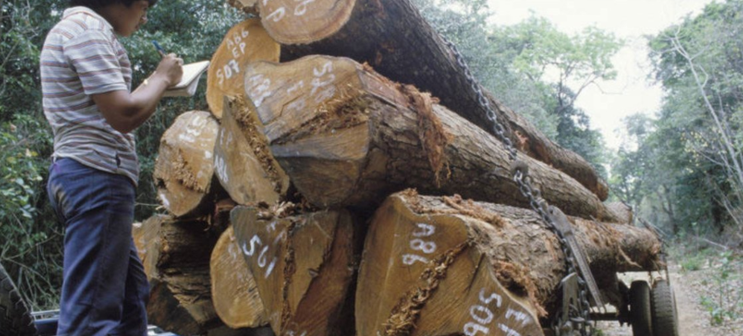
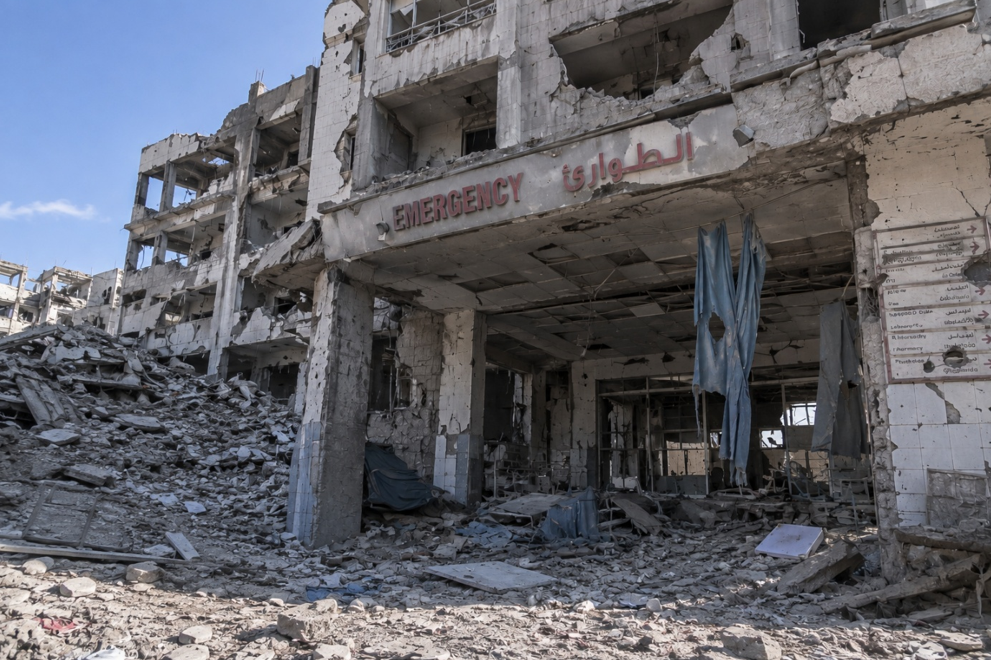
Source: UN News https://news.un.org/en/story/2016/05/529172
By Delfina Fiammenghi / GICJ
Introduction
On Thursday, 13 November 2025, lawmakers in the European Parliament adopted the first Omnibus Simplification package, significantly scaling back elements of the EU’s environmental compliance architecture and exempting a large majority of companies from mandatory sustainability disclosure.
This recalibration sits uneasily with the EU’s repeated commitments to the 2030 Agenda for Sustainable Development, particularly, for instance, SDG 12 (Responsible Consumption and Production), SDG 13 (Climate Action) and SDG 15 (Life on Land), which presume stronger, not weaker, supply-chain accountability.
This deregulatory agenda has since gathered pace. With “competitiveness” elevated as a political priority, on 4 December 2025, the European Parliament and the Council reached a provisional political agreement to postpone and target the revision of the EU Deforestation Regulation (“EUDR”). The amending regulation was subsequently published in the Official Journal of the European Union on 23 December 2025.
This shift is hardly surprising, since in opening her second term, Ursula von der Leyen explicitly pledges to “make business much easier all across Europe” [1], still, it poses a substantive threat to the Right to a Healthy, Clean, and Sustainable Environment (UNGA Res 76/300). Deforestation linked to consumption within the Union is demonstrably connected to the dispossession of Indigenous peoples and the infringement of land tenure rights, protected under UNDRIP and ILO Convention 169. The dilution of supply-chain safeguards risks incentivizing the displacement of forest-dependent communities, thereby impacting their Right to Food, Water, and Cultural Identity. Furthermore, the curtailment of transparency mechanisms restricts the Right to Information and may impede access to an Effective Remedy, as provided for under the UNGPs.
As FAO and UNEP-WCMC data identify agricultural expansion as the primary driver of tropical forest loss, the EU’s consumption footprint creates clear Extraterritorial Obligations.
The EUDR as Originally Designed and the Wider Shift Against Environmental Regulation
The first version of the EUDR was published in the Official Journal of the European Union on 9 June 2023. It belonged to a broader EU legislative agenda on supply chains, alongside instruments such as the EU Conflict Minerals Regulation, the Corporate Sustainability Due Diligence Directive (CSDDD), and the Corporate Sustainability Reporting Directive (CSRD), an agenda now materially reshaped by the concluded Sustainability Omnibus package.
In its original form, the EUDR prohibits operators and traders from placing on, or making available within, the EU market certain commodities, such as cattle, cocoa, coffee, oil palm, soya, and wood, as well as derived products, unless they are “deforestation-free.” In practical terms, this means that products may be marketed in the EU only if they were produced on land that has not been subject to deforestation or forest degradation after December 31st, 2020.
To operationalise this prohibition, the regulation requires operators and traders to submit a due diligence statement confirming that their products have not caused deforestation or forest degradation anywhere in the world. Under Article 9 of the Directive, the statement must include detailed information about the imported goods, including product descriptions, quantities, supplier data, and the geolocation of production sites.
Importantly, even before the recent downsizing revision, the EUDR already contained mechanisms designed to calibrate and eventually drastically soften burdens for the involved actors. Indeed, operators’ obligations depend on a Commission-run benchmarking system categorising countries as low, standard, or high risk. That classification determines the scope of due diligence for importers: commodities sourced from “high-risk” countries trigger more stringent requirements, while “low-risk” sourcing benefits from simplified obligations.
Accordingly, where relevant commodities are sourced from low-risk countries, operators and traders are generally not required to conduct a risk assessment or adopt risk-mitigation measures.
The Revised EUDR. Postponement, Narrowing of Scope, and a Built-in Review
Despite the pre-existing flexibility channels, the political agreement of 4 December 2025 postponed the regulation’s application across the board: until 30 December 2026 for medium and large operators, and until 30 June 2027 for micro and small operators.
The amendment also narrows the regulation’s operational reach by limiting the obligation to submit due diligence statements to operators first placing products on the market, rather than also applying to “traders”, defined as any person in the supply chain, other than the operator, who, during commercial activity, makes relevant products available on the EU market.
Finally, the revision introduces a further institutional pathway for dilution: the European Commission must conduct a simplification review by 30 April 2026, assessing administrative burdens and impacts. Depending on its outcome, this review could lead to additional amendments that further weaken the regulation’s original effectiveness.
Why the Substance Still Matters: the Continuing Impact of Deforestation
The stakes are difficult to overstate.
Published on a five-year cycle, the 2025 edition of the relevant Global Forest Resources Assessment was released during the Global Forest Observations Initiative (GFOI) Plenary in Bali, Indonesia. It reports a decline in forest expansion, from 9.88 million hectares annually in 2000-2015, to 6.78 million in 2015–2025 [2].
Also, according to key findings referenced by the United Nations Food and Agriculture Organisation (FAO), forest ecosystems worldwide continue to face severe pressure, with Africa, alongside South America, remaining the main regions where deforestation is advancing. The same two regions that host some of the planet’s most critical forest “lungs,”.
Recent figures illustrate the scale of the trend in the Congo Basin: in 2020, the region lost more than 600,000 hectares of primary forest, representing a 9% increase compared to 2019. Over the longer term, the losses are equally stark. Between 2002 and 2020, the Republic of the Congo lost about 42% of its primary rainforest, while in the same period, the Central African Republic lost roughly 169,000 hectares of its primary rainforest [3]. These trends are not only an environmental emergency; they are also a direct social and economic shock. Around 60 million people living in or near Congo Basin forests rely directly on forest ecosystems for livelihoods, food, materials, and income. The forest economy also supports an estimated 40 million additional people in nearby urban centres through supply chains and ecosystem services, so when forests disappear, the loss is felt far beyond the forest edge [4]. This environmental disruption raises a fundamental tension with the goals set under the in 2030 Agenda for Sustainable Development, which establishes a comprehensive and people-centred set of universal targets. By adopting the Agenda, states have recognized that sustainable development in its three dimensions, social, economic, and environmental, and the protection of the environment, including ecosystems, contribute to and promote human well-being and the full enjoyment of all human rights for present and future generations. Yet the continued commission or toleration of large-scale deforestation sits uneasily with that commitment: it erodes livelihoods and social protection for forest-dependent and forest-linked communities, undermines the economic foundations of local and regional supply chains, and accelerates environmental degradation that disproportionately harms those already most vulnerable, forgetting that all human rights are universal, interdependent and interrelated.
UNEP’s World Conservation Monitoring Centre (UNEP-WCMC) underlines the structural drivers behind the deforestation trend: agricultural expansion is the major cause of forest degradation and biodiversity loss. In recent years, more than 90% of tropical deforestation has been directly or indirectly driven by agriculture.
In this picture, the EU’s consumption footprint remains central, with the EU widely identified as a major importer of tropical deforestation and associated emissions. Between 2005 and 2013, it is reported to have caused more deforestation through imports of agricultural commodities than any other jurisdiction, before being surpassed by China in 2014.
European countries' crucial role when it comes to environmental degradation is not something new. Further, from a historical perspective, large-scale extraction of timber and the expansion of plantation-style agriculture across Africa were closely connected to colonial economic systems in the early twentieth century. Colonial administrations frequently asserted control over extensive forest areas and oriented land use toward export production, which encouraged the clearing of primary forests and the conversion of ecosystems into commercially profitable crops. After independence, many states inherited governance and economic structures shaped by that period, often under-resourced and unevenly institutionalised. These conditions have, in turn, helped sustain external influence, by foreign governments and corporate actors, to the detriment of the national economy, social welfare and environmental management [5].
Commodities most associated with embedded tropical deforestation in EU imports include soy, palm oil, and beef, followed by wood products, cocoa, and coffee, precisely the product categories targeted by the EUDR. On that basis, UNEP-WCMC stresses that safeguarding the climate and respecting the rights and needs of forest-based communities requires precisely the kind of import-linked legal constraint the EUDR was designed to impose: ensuring that trade tied to the EU market does not drive global deforestation or forest degradation [6].
The SDG Framework. What “Backsliding” Signals
The 17 Sustainable Development Goals (SDGs) adopted by the United Nations in 2015 constitute a global agenda for 2030. At their core is an integrated understanding of development: progress is not sustainable if it is achieved at the expense of environmental integrity, social sustainability, and reduced inequality. From this perspective, sustainable supply chain management is not a niche corporate practice but a governance tool for delivering SDG outcomes. Protecting ecosystems while supporting economic and social development requires embedding sustainability into supply chains through traceability, risk-based due diligence, and accountability frameworks that influence corporate behaviour and market incentives. Establishing a meaningful relationship between SDG objectives and managerial practice is therefore not optional: it is central to how the SDGs are intended to function in a trade-integrated world.
Read through that lens, the EU’s current trajectory represents more than technical tinkering. By weakening import-linked constraints on deforestation, the EU risks signalling that environmental and social objectives are subordinate to short-term administrative convenience, undermining both corporate incentives and the credibility of its development commitments.
This is an account of the actual attitude of the EU toward environmental policies, and how the “high-risk” label provided under the EUDR is applied in practice. At present, the countries subjected to high-risk scrutiny include Russia, Belarus, North Korea, and Myanmar [7], a list that raises a broader question about the extent to which sustainability governance is filtered through the EU’s wider geopolitical priorities [8].
The same logic is visible in the EUDR’s broader political economy: after twenty years of negotiations, the EU and Mercosur on 17 January 2026 formally signed one of the world’s largest free-trade zones, covering more than 700 million people across the EU and the Mercosur partners (Argentina, Brazil, Paraguay, and Uruguay, with Bolivia expected to join later), and the political timing matters. In the run-up to (and alongside) the politically agreed EU–Mercosur deal, South American partners pressed for a softer application of strict deforestation controls, arguing that the compliance costs would translate into altered market access and trade terms, pressure that has, in turn, contributed to shaping the EU’s evolving approach to the regulation. Indeed, the agreement’s most contentious gains are concentrated precisely in the sectors most closely associated with deforestation risk, above all beef and other agricultural commodities.
The EU’s willingness to postpone and narrow the operational bite of the EUDR sends a signal that “sustainability conditionality” in trade can be negotiated downward when it becomes politically inconvenient, a dynamic that directly affects the credibility of supply-chain governance. If accomplishing the SDGs depends on alignment between economic governance and social and environmental objectives, the EU’s recent steps on postponement of its environmental norms, with further potential roll-back, do not obviously move in that direction.
Geneva International Centre for Justice (GICJ) underscores that deforestation and forest degradation are inherently transboundary phenomena, driven by globally traded commodities, and that responsibility therefore cannot rest solely with producing countries. Importing markets, including the EU, play a constitutive role: they shape incentives and standards, and they structure demand in ways that can either reward sustainable production or entrench destructive land-use change. Seen through this lens, the EU’s current trajectory, marked by the weakening of measures designed to curb deforestation and the environmental and human-rights harms embedded in consumption, is untenable. It should be reversed and realigned with the Sustainable Development Goals, a universally endorsed framework that carries unique political weight and reflects shared obligations across all UN Member States. GICJ calls therefore for the full implementation of the EUDR, aligned with the International Covenant on Economic, Social and Cultural Rights (ICESCR). Statutory accountability and supply-chain due diligence are not administrative burdens; they are essential components of the Right to Life and Human Dignity.
References
[1] European Commission, 21 January 2025, ‘Special Address by President von der Leyen at the World Economic Forum’ https://ec.europa.eu/commission/presscorner/detail/el/speech_25_285
[2] Food and Agriculture Organisation of the United Nations (FAO), Global Forest Resources Assessment 2025, 21 October 2025 https://www.fao.org/forest-resources-assessment
[3] Food and Agriculture Organisation of the United Nations (FAO), Global Forest Resources Assessment 2025: Key findings, 21 October 2025 https://openknowledge.fao.org/server/api/core/bitstreams/2dee6e93-1988-4659-aa89-30dd20b43b15/content/FRA-2025/key-findings.html
[4] World Bank, Sustainable Congo Basin Forest Economies (P505923): Project Information Document (PID), Concept Stage, 12 July 2024
[5] United Nations University Institute for Natural Resources in Africa (UNU-INRA), ‘Scoping Study of Research-to-Action Priorities for Reversing Environmental Degradation in Africa and Asia’, January 2024
[6] UN Environment Programme World Conservation Monitoring Centre (UNEP-WCMC), ‘UNEP-WCMC supports implementation of European Union deforestation regulation’, Sep 2025, https://www.unep-wcmc.org/en/news/unep-wcmc-supports-implementation-of-european-union-deforestation-regulation
[7] European Commission (Green Forum), ‘Country Classification List’, accessed 7 January 2026, https://green-forum.ec.europa.eu/nature-and-biodiversity/deforestation-regulation-implementation/eudr-cooperation-and-partnerships/country-classification-list_en
[8] European Commission (Green Forum), ‘Deforestation Regulation implementation’, accessed 7 January 2026, https://green-forum.ec.europa.eu/nature-and-biodiversity/deforestation-regulation-implementation_en#due-diligence