



Sudan: the Forgotten War
A report on the most severe humanitarian emergency worldwide and the largest international displacement crisis
By Léa Farge / GICJ
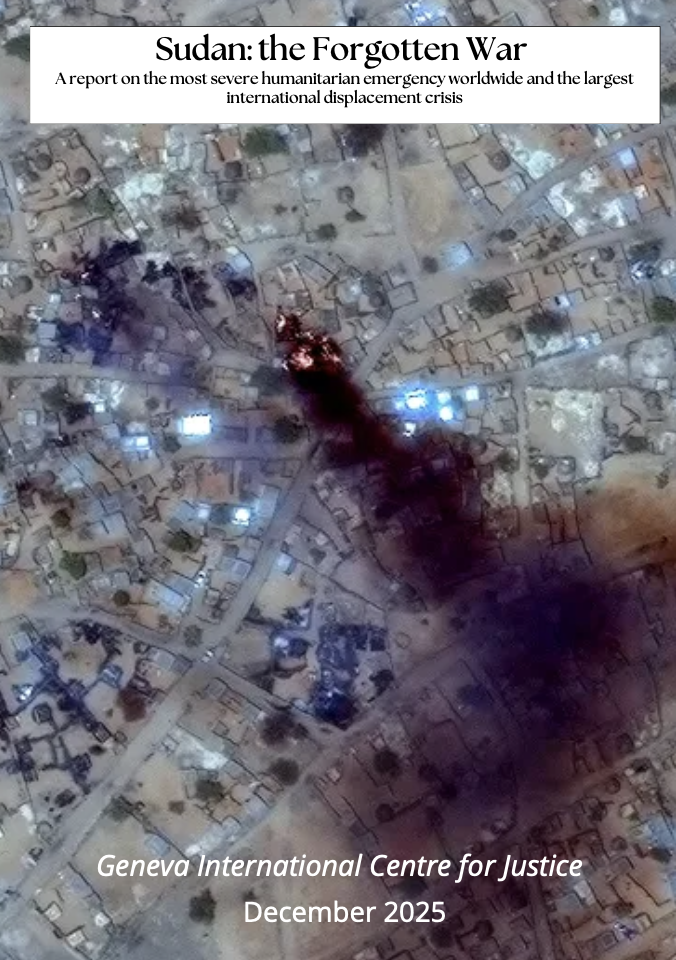
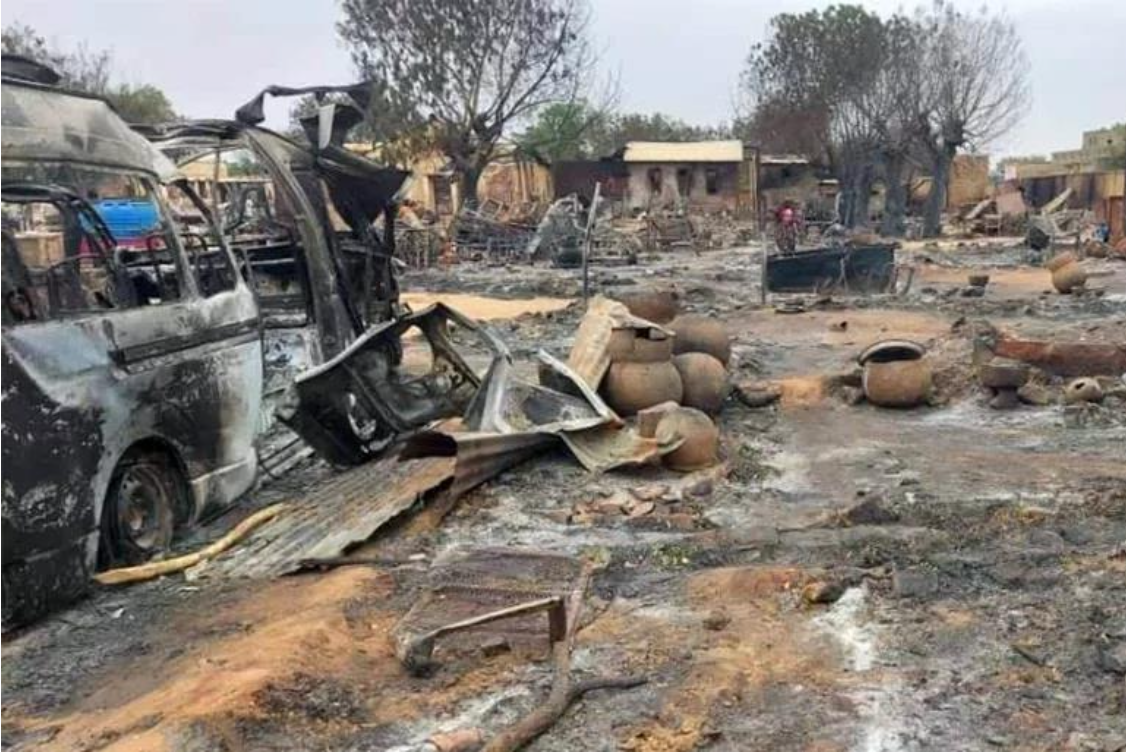
The war in Sudan constitutes one of the most severe humanitarian crises in the world, with civilians overwhelmingly bearing the consequences of the violence. Satellite imagery reveals widespread destruction, including bloodshed visible on the ground. Despite the magnitude of the atrocities committed, the conflict remains insufficiently known and inadequately covered by international media.
This report situates the current war within Sudan’s historical and political trajectory in order to clarify its root causes. Colonial rule entrenched deep regional and ethnic inequalities that were reinforced after independence through cycles of civil war, military coups and authoritarian governance. The thirty-year dictatorship of Omar al-Bashir consolidated systems of exclusion, repression and impunity. Several dynamics and methods employed during the Darfur genocide of 2003 are again visible in the present conflict.
The report analyses the causes and consequences of the war that erupted in April 2023, when two former allies with their respective armed groups, the Sudanese Armed Forces (SAF) and the Rapid Support Forces (RSF), turned into rivals competing for power. This struggle has resulted in widespread war crimes, crimes against humanity and acts amounting to genocide. The fall of El Fasher in October 2025 and the current escalation of violence in Kordofan illustrate the scale and systematic nature of the atrocities committed.
The United Nations has warned that Sudan is facing the most extreme humanitarian emergency globally. The deliberate use of famine and sexual violence as weapons of war, the recruitment and trafficking of children, and the systematic targeting of civilian infrastructure point to the commission of genocidal acts. Sudan is also experiencing the world’s largest displacement crisis, with more than ten million people forced to flee, many dying on the road or surviving in overcrowded camps where disease and deprivation are widespread.
The report further examines the decisive role of external actors who provide military, financial and political support to the belligerents in exchange for access to Sudanese resources, particularly gold. Although consistently denied, such foreign involvement has significantly prolonged and intensified the conflict.
Geneva International Centre for Justice (GICJ) calls for an immediate ceasefire, the protection of civilians, unhindered humanitarian access, the cessation of all external support to the warring parties, increased humanitarian assistance and funding, and accountability for crimes committed. GICJ stresses that entrenched impunity has been a central driver of violence in Sudan. Continued international inaction risks further atrocities and seriously undermines the credibility and effectiveness of the multilateral human rights system grounded in international law and international humanitarian law.
To read the full report, click on the image below.