



HRC61: Interactive Dialogue on the Human Rights Situation in and around El Fasher
61st Session of the Human Rights Council
09 February – 04 April
Item: Interactive Dialogue on the Human Rights Situation in and around El Fasher
09 February 2026
By Patience Baibare/GICJ
Executive Summary
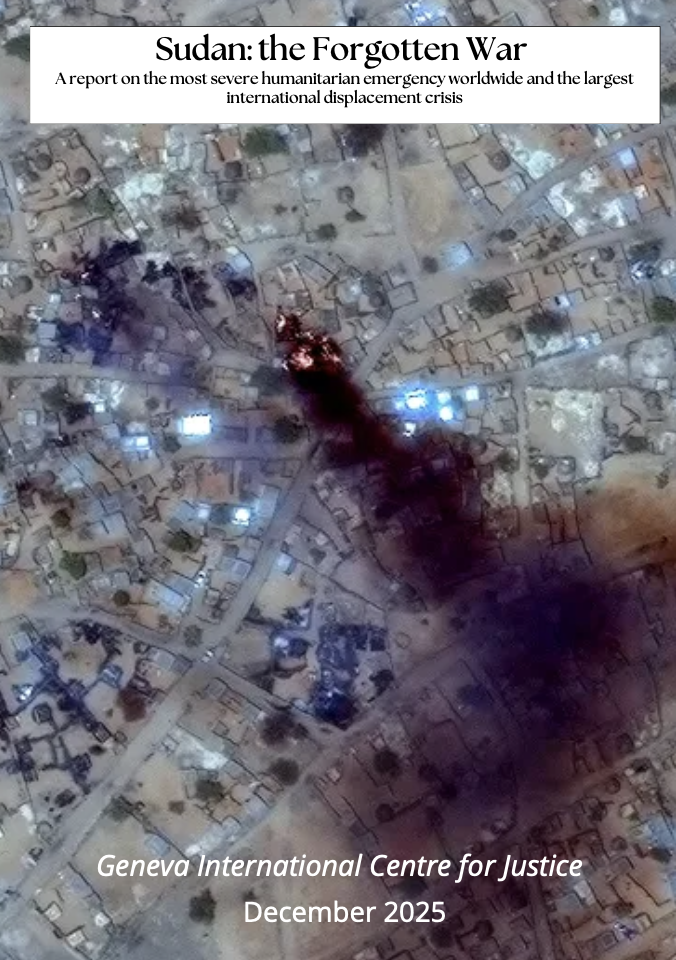
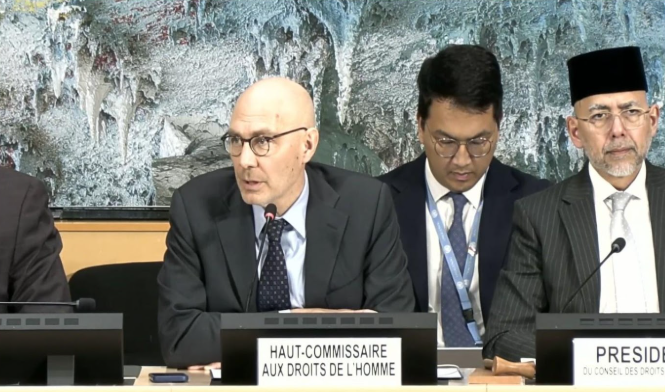
During the 61st Session of the Human Rights Council, in the interactive dialogue on the human rights situation in and around El Fasher, the United Nations High Commissioner for Human Rights presented alarming findings. It was stated that the atrocities committed in El Fasher, Sudan, were preventable. Despite this, the 18-month siege imposed by the Rapid Support Forces has needlessly resulted in thousands of civilian deaths and mass displacement.
More than a hundred victims who provided testimony to the High Commissioner for Human Rights, hoping their voices would reach the international community, reported gang rape, mass killings, other forms of sexual violence, abductions for ransom, and arbitrary detention. ‘’Sexual violence used as a weapon of war’’.
In a period of just over two weeks up to 6 February, 90 civilians were killed and 142 injured in drone strikes carried out by both the RSF and the Sudanese Armed Forces (SAF). These attacks struck a World Food Programme convoy, markets, health facilities, and residential neighborhoods in South and North Kordofan. Evidence indicates that civilians were deliberately targeted, including through ethnically motivated attacks.
The United Nations High Commissioner for Human Rights, together with the international community, condemned these atrocities as war crimes and crimes against humanity, and called upon all actors fueling the violence to halt such actions and curb the flow of arms sustaining the conflict, described by Sudan as a proxy war.
The Geneva International Centre for Justice (GICJ) reiterates that the situation reflects a clear risk of recurring atrocity crimes and stresses the urgent need for preventive action, accountability, and protection of civilians.
Background
In April 2023, an armed conflict erupted in Sudan between the Sudanese Armed Forces (SAF) and the Rapid Support Forces (RSF). The fighting has since escalated to a large-scale humanitarian and human rights crisis affecting multiple regions of the country, particularly Darfur. El Fasher, the capital of North Darfur, has become a central area of hostilities and has experienced prolonged siege warfare, widespread destruction of civilian infrastructure, and severe restrictions on access to food, water, and essential services.
The conflict has resulted in mass displacement both within Sudan and across international borders. Reports have documented attacks against internally displaced persons’ camps, destruction of healthcare facilities, ethnically motivated violence, and widespread sexual and gender-based violence. The obstruction of humanitarian assistance and the collapse of public services have further exacerbated civilian suffering and increased vulnerability to famine and disease.
United Nations human rights mechanisms have repeatedly warned of a serious risk of atrocity crimes in Darfur. The interactive dialogue held during the Human Rights Council session followed a visit to Sudan by the UN High Commissioner for Human Rights who sought to assess the scope of violations and identify measures necessary for the protection of civilians and the prevention of further abuses.
Summary of the High Commissioner’s Report
The United Nations High Commissioner for Human Rights Mr.Volker Türk presented an update on the situation in and around El Fasher following his visit to Sudan, in which he had interviews with survivors, among others. He stated that the siege and final offensive by the Rapid Support Forces (RSF) resulted in a preventable human rights catastrophe, causing large civilian casualties and mass displacement.
More than 140 victims and witnesses described violations including killings of civilians, summary executions, torture, arbitrary detention, disappearances, and abductions for ransom. Reports also confirmed attacks on hospitals and humanitarian workers and ethnically motivated targeting, particularly against the Zaghawa community. Sexual and gender-based violence was systematically used as a weapon of war, and children were recruited by armed groups.
Mr.Volker Türk noted that these findings are consistent with the International Criminal Court’s assessment that war crimes and crimes against humanity were committed. He further warned that similar violations risk spreading to the Kordofan region, where ongoing fighting and drone strikes continue to harm civilians.
He called on all parties to protect civilians, allow humanitarian access, end attacks on civilian infrastructure, and treat detainees humanely. He also urged the international community to support accountability mechanisms, limit the flow of weapons, and strengthen mediation efforts to prevent further atrocities
Summary of the Interactive Dialogue-Discussion
- Reaction from Sudan
The representative from Sudan rejected the High Commissioner’s report and described the war as a proxy war. He called upon the international community to hold accountable not only the militia involved in the conflict but also all external actors, especially foreign states fuelling the conflict through the supply of weapons to the RSF. He singled out the UAE’s support to his government as a pretentious act, hiding behind funding toward the RSF, stating that Sudan shall not accept assistance from those contributing to the killing of its people.
- Reactions from Delegates
A large number of states condemned the atrocities committed in Sudan as grave violations of international humanitarian law and international human rights law. Such states include France, Belgium, Slovenia, Switzerland, and Japan. They further called for an immediate ceasefire, humanitarian access, and cooperation with international accountability mechanisms. Several states emphasized sovereignty and Sudanese-led solutions, including Egypt, Algeria, Eritrea, Venezuela, and Kuwait. Other delegations, including Malaysia, Rwanda, Peru, Malta, and Canada, stressed civilian protection, mediation, and humanitarian assistance. Multiple delegations raised concerns regarding arms flows and external interference prolonging the conflict. EL FASHER should not happen in KORDOFAN. However, some of the states presented unique direction of the elaboration of the atrocities happening in Sudan
- Statement by Eritrea
In its statement, Eritrea rejected the blame-focused discussion and emphasized Sudan’s sovereignty in a unique way. Eritrea stressed that any sustainable solution to Sudan’s conflict must be Sudan-led and rooted in good faith in addressing the root cause. It stated that any approach by the international community or the Council must be carried out with responsibility and balance. Any effort that is based on misguided or selective interpretations of the underlying drivers of the conflict cannot produce meaningful or lasting results. Therefore, any approaches which choose to single out actors shall risk undermining constructive solutions.
- NGOs
Most of the Non-governmental organizations agreed with the report of the High Commissioner. They reported systematic atrocities including ethnic killings, sexual violence, starvation tactics, and abductions. They urged enforcement of sanctions, strengthening of investigations, expanded jurisdiction of accountability mechanisms, and adequate funding. It was further emphasized that all states and UN officials must take urgent measures to ensure prompt and adequate resources for all interested mandates including the fact-finding mission. Indeed, the fact-finding mission should have adequate resources to match the scale and gravity of violations with a view to conduct thorough investigations, identify perpetrators, preserve evidence, and prepare case files for those responsible for crimes under international law. Some NGOs representatives stressed with regret how fact-finding mission is gravely underfunded blaming that council for not securing adequate resource which consequential resulted into tens of thousands of civilians being killed or some missing, others detained and others lacked resources to flee with Women and girls facing widespread sexual violence
Conclusion
Summary of the High Commissioner’s Concluding Remarks
The High Commissioner underscored that testimonies gathered from survivors reflected severe and long-term trauma and highlighted the expectation that the Council convey their concerns to the international community. He stressed the importance of accountability through national proceedings, the work of the Fact-Finding Mission, and the application of universal jurisdiction.
He further noted the role of external factors, including the continued flow of weapons, in sustaining the conflict and emphasized the need for sustained humanitarian coordination and support. Finally, he reiterated the importance of inclusive peace processes, particularly the participation of women and youth, as essential to achieving a durable resolution.
GICJ Position
Geneva International Centre for Justice (GICJ) considers the situation in Sudan to present an imminent risk of recurring atrocity crimes. Documentation alone is insufficient without preventive action.
GICJ calls for:
- Immediate protection of civilians
- Enforcement of a comprehensive arms embargo
- Accountability for perpetrators and supporters of violations
- Strengthening international justice mechanisms
- Guaranteed humanitarian access
- Inclusive civilian-led peace negotiations
Failure to take decisive action risks perpetuating impunity and allowing further mass atrocities. The Human Rights Council must prioritize prevention, protection, and accountability to uphold international law. As the High Commissioner for Human Rights Mr.Volker Türk said - no perpetrator should be safe anywhere!