




From Climate Justice to Ecocide: The Missing Link at COP30
By Delfina Fiammenghi / GICJ
Introduction
In November 2025, the 30th Conference of the Parties to the UN Framework Convention on Climate Change (COP30) in Belém do Pará, Brazil, brought together State Parties for two weeks of negotiations on remedy mechanisms and a just ecological transition.
During the conference, Parties sought effective responses to the climate catastrophe humanity is facing, acknowledging that their decisions would determine not only the pace of emissions reductions, but also whether justice is delivered to Indigenous peoples, as well as to African and other developing countries, that bear the brunt of climate impacts despite having contributed the least to the crisis.
In alignment with this purpose, on 10 November 2025, at the opening of the UN Climate COP30, UN experts called on States to negotiate in accordance with their international obligations, in order to prevent further harm to the environment and to the human rights of those people who are disproportionately affected by the climate crisis [1].
The One-Directional Framing of Climate and Human Rights
Yet, the above-mentioned declaration appears to frame the relationship between human rights and climate in a one-directional way. While it underscores the extent of the harmful effects on the most vulnerable populations and the potential violations of human rights caused by climate change, it fails to acknowledge the reverse causal relationship: the impact of human rights violations on the climate crisis, and in particular the intersection between armed conflict and the environment. In other words, climate change is still largely treated as a driver of rights violations, rather than as a phenomenon that is itself fuelled and worsened by patterns of dispossession, discrimination, displacement of indigenous communities, natural resource exploitation and structural violence.
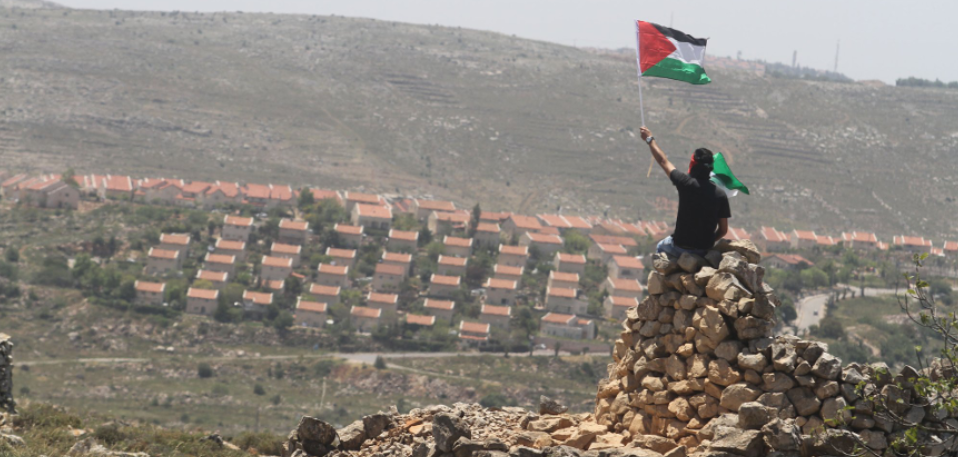
This gap is particularly troubling if we consider that, as States gather in Brazil to discuss climate action and the preservation of the Amazon rainforest, Indigenous Peoples defending their lands and ecosystems continue to face deadly violence. The recent killings and attacks against Guarani and Kaiowá in Mato Grosso do Sul, reportedly perpetrated by armed groups linked to security forces employed by local landowners, are not isolated crimes: they are rooted in long-standing conflicts over ancestral territories, regressing demarcation processes, and economic interests seeking to clear land for agribusiness and extractive activities. In a context where voracious exploitation has already produced severe land erosion and water contamination, the annihilation of indigenous cultures constitutes the first step in this causal chain. It shows that targeted violence against these communities is not only a grave human rights violation, but also a direct attack on forest preservation. [2].
Respect for human rights is an indispensable element of environmental protection, and until States acknowledge this circumstance, every step directed at addressing the climate emergency will fall short. To initiate this recognition, states should first and at least acknowledge the indissoluble link between armed conflicts – traditional settings in which human rights are systematically violated – and ecological crises. Yet in Belém, this connection is explicitly acknowledged only in one side event of COP30: the panel “Enabling Youth Agency in Post-War Green Recoveries”, held on 12 November 2025 at the Ukraine Pavilion, which examines how conflicts simultaneously erode social and ecological systems [3]. Any analysis that sincerely seeks to explain the substantial lack of concrete progress under Coop30 must begin by interrogating this fundamental failure of acknowledgement.
Militarism, Climate Justice and the Silence at COP30
Alongside this shortcoming, global military spending reached a record 2.7 trillion US dollars in 2024 and is projected to rise to 6.6 trillion by 2035. These are resources that have, and will continue to have, a direct impact on environmental pollution, exacerbate the extraction of natural resources, and divert funds away from financing a just transition, mitigation, adaptation, and loss and damage. Given these figures, the silence of the States gathering in Belem on militarism is particularly troubling, also in light of the recent statements of Mr. Guterres, who acknowledged that for a small portion of what was invested in militaries this past year, the world could fund climate change adaptation in the developing world, and bring the international community closer to achieving the Sustainable Development Goals [4].
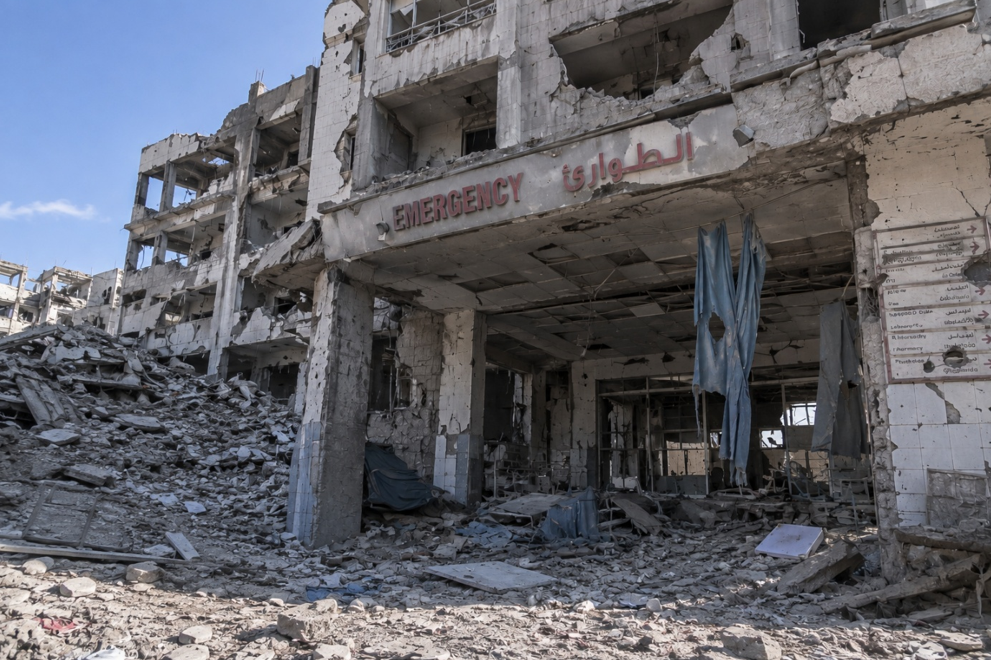
This interconnection between human rights protection and environmental preservation is today dramatically evident in the Gaza Strip, where an immeasurable human tragedy is inseparably intertwined with a severe environmental disaster. This territory, already fragile due to long-standing structural factors such as high population density, has now become the scene of a true “ecocide”.
Geneva International Centre for Justice (GICJ) stresses that acknowledging the interconnection between human rights protection and environmental preservation is the only plausible way to address climate change. Therefore, GICJ underlines that genuine climate justice cannot coexist with war, militarisation, and structural violence. Integrating peace and justice into climate action means recognising that addressing environmental protection begins with stopping aggressors, dismantling systems of oppression, and demanding accountability for grave violations of human rights and international law.
GICJ calls on States to break the silence on militarism, to commit to transparent reporting and reduction of military emissions, and to ensure that climate finance is directed towards just transition, adaptation, and loss and damage rather than armed confrontation.
Without confronting the role of armed conflict, human rights violations, and excessive military spending in fuelling environmental destruction, global climate action will remain incomplete, and the promise of climate justice for affected communities will continue to ring hollow.
References
[1] Office of the United Nations High Commissioner for Human Rights (OHCHR), 10 November 2025, https://www.ohchr.org/en/press-releases/2025/11/cop30-must-advance-human-rights-based-climate-action-accordance
[2] Office of the United Nations High Commissioner for Human Rights (OHCHR), “UN experts condemn deadly attack on Guarani and Kaiowá Indigenous Peoples in Brazil” (20 November 2025), https://www.ohchr.org/en/press-releases/2025/11/un-experts-condemn-deadly-attack-guarani-and-kaiowa-indigenous-peoples
[3] United Nations Development Programme (UNDP), “UNDP side events at the UN Climate Change Conference (COP30)”, https://www.undp.org/events/undp-side-events-un-climate-change-conference-cop30
[4] UN News, “Military spending worldwide hits record $2.7 trillion”, 9 September 2025, https://news.un.org/en/story/2025/09/1165809