



International Day for the Remembrance of the Slave Trade and its Abolition - August 23
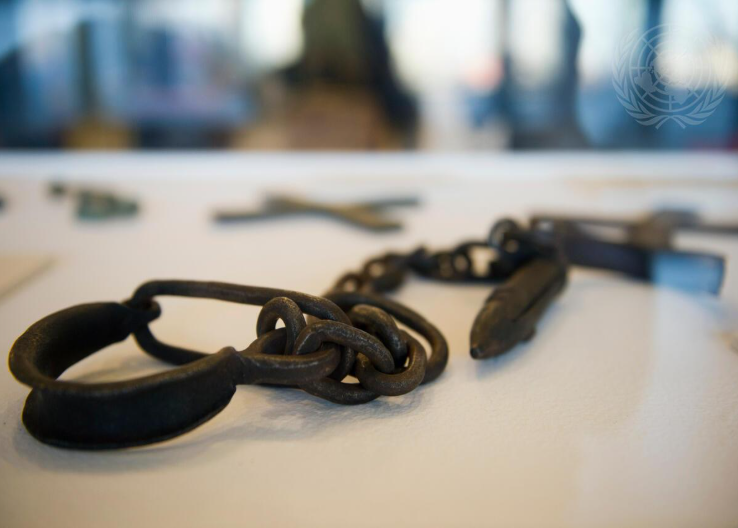
From the Slave Trade to Modern Exploitation: Renewing the Fight Against Contemporary Slavery
By Jamelia Nampijja Sztuchlik /GICJ
Each year on 23 August, the international community observes the International Day for the Remembrance of the Slave Trade and its Abolition, a day established by the United Nations Educational, Scientific and Cultural Organisation (UNESCO). This day serves as an opportunity to remember the millions of people who suffered under systems of enslavement, to honour those who resisted oppression, and to reflect on the ongoing struggle to eliminate contemporary forms of exploitation that violate human dignity.
Although slavery was formally abolished in many parts of the world during the nineteenth century, its underlying practices such as coercion, exploitation, and dehumanisation have not disappeared. Today, millions of people remain trapped in situations of forced labour, human trafficking, debt bondage, forced marriage, and other forms of exploitation. Thus, the remembrance observed on 23rd August is not only a historical reflection; it is also a reminder of the responsibility of governments, international organisations, businesses, and individuals to protect human rights today.
The International Day for the Remembrance of the Slave Trade and its Abolition serves three essential purposes:
- To honour the memory of the millions of victims of the transatlantic slave trade and systems of slavery, whose lives were marked by displacement, exploitation, and profound suffering.
- To recognise the courage and resistance of enslaved people and the abolition movements that challenged slavery and contributed to the advancement of human rights and freedom.
- To promote education, awareness, and dialogue about the historical and ongoing consequences of slavery, including racism, racial discrimination, and other forms of inequality that persist today.
The observance of this day serves as a reminder that the abolition of slavery was not merely a decision made by governments or institutions but was the result of centuries of resistance by enslaved people, the determination of abolitionists, and the collective struggle of individuals and communities who fought for justice and human dignity. Remembering this history is essential to strengthening efforts to protect human rights and prevent all forms of exploitation today.
Historical Background: The Transatlantic Slave Trade and the Struggle for Freedom
The transatlantic slave trade is one of the largest and most brutal systems of forced migration and exploitation in human history. Beginning in the 15th century and continuing until the 19th century, it involved the forced removal of millions of African men, women, and children from their homes and their transportation across the Atlantic Ocean to work as enslaved labourers in the Americas and the Caribbean.
The trade developed during the era of European exploration and colonial expansion. From the 1440s, Portuguese traders began transporting enslaved Africans to Atlantic islands and later to Brazil and other Portuguese colonies. Over time, other European powers, including Spain, Britain, France, the Netherlands, and Denmark, became deeply involved in the trade. These nations established colonial plantation economies that relied heavily on enslaved African labour to produce commodities such as sugar, cotton, tobacco, coffee, and indigo.
The transatlantic slave trade was sustained by a system often known as the Triangular Trade, linking Europe, Africa, and the Americas. European merchants transported manufactured goods to Africa, where they exchanged them for enslaved Africans. The enslaved people were then transported across the Atlantic, through the Middle Passage and then sold in the Americas. The colonial products produced through enslaved labour were subsequently shipped to Europe, generating enormous wealth for merchants, companies, and colonial powers.
Between approximately 1501 and 1867, an estimated 12.5 million Africans were forcibly transported across the Atlantic through the transatlantic slave trade. Of these, approximately 10.7 million people survived the Middle Passage, the horrific ocean journey in which enslaved Africans were transported in overcrowded ships under inhumane conditions. The remaining estimated 1.8 million people died during the crossing due to disease, starvation, violence, and brutal treatment. Millions more are believed to have died during capture, forced marches to coastal ports, and confinement before embarkation.
Most enslaved Africans were transported to Portuguese Brazil and the Caribbean, where plantation economies relied heavily on forced labour. Brazil received the largest number of enslaved Africans, with estimates of around 5 million people, representing approximately 40 per cent of all Africans transported across the Atlantic. British, French, Spanish, Dutch, and Danish colonies in the Caribbean and the Americas also received millions of enslaved people.
The trade was supported by discriminatory ideologies that sought to justify the enslavement of African people and deny their fundamental humanity. Enslaved Africans were treated as property, deprived of their freedom, separated from their families, subjected to violence, and denied basic rights. However, enslaved people continuously resisted through rebellions, escapes, cultural preservation, and organised movements for freedom.
The Uprising Against Slavery and the Path Towards Abolition
The abolition of the transatlantic slave trade and slavery did not occur through a single act or at a single moment. It unfolded gradually through political struggles, resistance movements, abolitionist campaigns, and evolving international attitudes regarding human rights and human dignity.
One of the most significant acts of resistance began in August 1791 in Saint-Domingue (present-day Haiti), which was then the wealthiest colony of the French Empire. On the night of 22nd–23rd August 1791, enslaved people launched an uprising that marked the beginning of the Haitian Revolution (1791–1804). This revolution not only led to the abolition of slavery in Haiti but also resulted in the establishment of the first independent Black republic in 1804.
The Haitian Revolution became a historic turning point, demonstrating that enslaved individuals were not mere victims of history but powerful actors who shaped their own movement toward liberation. It challenged the global system of colonial slavery and inspired others to fight for their freedom.
Moreover, a significant early step occurred in 1794, when revolutionary France abolished slavery in its colonies. However, Napoleon Bonaparte overturned this decision in 1802. It was not until 1848 that slavery was finally and permanently abolished in the French colonies. Meanwhile, the United Kingdom abolished the transatlantic slave trade in 1807, marking an important turning point in the efforts to suppress the trade. Slavery itself was subsequently abolished throughout most of the British Empire in 1834, with full emancipation completed in 1838.
Across the Atlantic, the struggle continued. In the United States, slavery was abolished in 1865 through the 13th Amendment to the Constitution, which followed the American Civil War. More than two decades later, Brazil became the last country in the Americas to abolish slavery, adopting the Lei Áurea (Golden Law) in 1888.
While these milestones represented significant legal victories, they resulted from long and often challenging struggles rather than simple political decisions. Resistance from enslaved people, abolitionist movements, political campaigns, and changing ideas about freedom and human rights all played crucial roles in bringing about the eventual legal abolition of slavery.
23rd August: Remembering Resistance and Freedom
In recognition of the historic significance of the Haitian Revolution and the broader struggle against slavery, UNESCO established the International Day for the Remembrance of the Slave Trade and its Abolition in 1998. The date of 23 August was deliberately chosen, as it marks the beginning of the uprising of enslaved people in Saint-Domingue (present-day Haiti) on the night of 22–23 August 1791, which became a catalyst for the Haitian Revolution.
This date stands as a powerful symbol of courage, resistance, and the universal pursuit of freedom. It highlights the voices, experiences, and actions of enslaved people to the forefront of historical remembrance, emphasising the essential role they played in challenging an unjust system. Through acts of resistance, rebellion, and collective struggle, enslaved people asserted their humanity and helped drive the broader movement towards abolition.
Why The International Day for the Remembrance of the Slave Trade and its Abolition Remains Relevant Today
The abolition of slavery marked a significant advancement for human dignity; however, it did not eliminate exploitation. Contemporary forms of slavery continue to impact millions of people around the globe.
The 2022 Global Estimates of Modern Slavery, published jointly by the International Labour Organisation (ILO), Walk Free, and the International Organisation for Migration (IOM), revealed that approximately 50 million people were living in modern slavery in 2021. The report identified two major forms of exploitation: forced labour, which affects an estimated 28 million people, and forced marriage, impacting approximately 22 million people. These findings highlight that, despite the worldwide legal abolition of slavery, millions of people continue to endure severe violations of their fundamental rights and freedoms.
The study analysed global data from governments, international organisations, and research partners to identify patterns of exploitation. It found that modern slavery affects people in every region of the world and occurs across multiple sectors, including agriculture, construction, domestic work, manufacturing, mining, and commercial sexual exploitation.
Modern slavery does not always resemble the slavery of previous centuries. Instead, it often operates through coercion, threats, deception, abuse of vulnerability, and restrictions on freedom.
Contemporary Examples of Modern Forms of Slavery
Forced Labour and Exploitation under the Kafala System
One widely discussed example of vulnerability to forced labour is the Kafala sponsorship system, historically used in several Gulf countries to regulate the employment of migrant workers.
Under the Kafala system, the legal status of migrant workers is traditionally tied to their employer or sponsor. Human rights organisations and the ILO have raised concerns that certain aspects of the system create conditions in which workers may become vulnerable to exploitation. This includes excessive working hours, non-payment of wages, recruitment fees, passport confiscation, and difficulties changing employers or leaving abusive employment situations.
In its research on migrant workers in the Gulf, the ILO has documented how reforms in countries such as Qatar have sought to improve labour protections, including reforms concerning minimum wages, labour mobility, and protection from abusive employment practices. However, the ILO has also emphasised that effective enforcement and access to justice remain essential.
The issue highlights an important point: contemporary slavery often arises in situations of extreme dependency where power imbalances allow for exploitation to occur.
Human Trafficking and Slave Markets in Libya
Another alarming example of contemporary exploitation is the trafficking and abuse of migrants in Libya. Following political instability and conflict after 2011, Libya became a major transit route for migrants attempting to reach Europe via the Mediterranean. Reports by the United Nations Support Mission in Libya (UNSMIL) and the Office of the United Nations High Commissioner for Human Rights (OHCHR) have documented widespread abuses against migrants, including arbitrary detention, torture, sexual violence, extortion, forced labour, and trafficking.
In 2017, international attention increased after reports and video footage emerged showing migrants being sold at apparent slave auctions near Tripoli. Investigations by international organisations confirmed that migrants in Libya were being subjected to severe exploitation by criminal networks.
This situation demonstrates how modern slavery can emerge in contexts where people are highly vulnerable, such as displaced persons, refugees, and migrants who lack legal protection and are exposed to trafficking networks.
The UN has repeatedly called for accountability, stronger protection mechanisms, and greater efforts to address the root causes that force people into dangerous migration journeys.
GICJ Position
More than two centuries after the abolition movements challenged the institution of slavery, its legacy continues to remind the international community of the ongoing struggle for human dignity, equality, and freedom. On the International Day for the Remembrance of the Slave Trade and its Abolition, GICJ honours the courage, resilience, and determination of the enslaved women and men who resisted oppression and fought for their freedom. We remember the millions of victims who endured unimaginable suffering under systems of exploitation and recognise the lasting impact of these atrocities on societies around the world.
GICJ unequivocally condemns all forms of slavery, human trafficking, forced labour, and exploitation. The persistence of modern forms of slavery remains a grave human rights concern and a serious violation of human dignity and fundamental freedoms. Despite the legal abolition of slavery, millions of people continue to face conditions of coercion, abuse, and exploitation, demonstrating the urgent need for strengthened international cooperation, accountability, and action.
The fight against slavery involves remembering the past and ensuring that human dignity is protected today, while also working towards a future where everyone can live free from exploitation, discrimination, and oppression.
From Remembrance to Action
GICJ calls upon governments, international organisations, civil society, and private actors to reflect on the history of slavery, honour the courage of those who resisted it, and renew their commitment to eliminating all forms of exploitation that continue to affect millions of people today. The International Day for the Remembrance of the Slave Trade and its Abolition serves as a reminder that human dignity cannot be separated from freedom and equality. The struggles of enslaved people who fought for liberation more than two centuries ago remain connected to today's efforts to protect workers, prevent trafficking, and eliminate exploitation.
Remembering the past requires more than acknowledging historical suffering. It requires action. Governments must strengthen laws against trafficking and forced labour, ensure access to justice for victims, and guarantee that migration and labour systems protect human rights. Businesses must examine their supply chains, prevent exploitation, and respect international labour standards. International organisations and civil society must continue documenting abuses, supporting survivors, and promoting accountability.
Individuals also have a role to play by learning about the history of slavery, challenging discrimination, supporting ethical practices, and standing with communities vulnerable to exploitation.
The legacy of slavery is not only a story of suffering. It is also a story of resistance, courage, and the pursuit of freedom. On 23 August, the world remembers those who endured slavery and honours those who fought against it. The most meaningful tribute is to continue that struggle today until every person can live free from exploitation, coercion, and fear.