



International Day of Remembrance and Tribute to the Victims of Terrorism - August 21
By Gabriel Hug /GICJ
Introduction
Thousands of people are injured and killed every year in acts of terrorism. Most of them are innocent citizens that happened to be at the wrong place and at the wrong time. Nevertheless, their lives often change irrevocably after experiencing terrorist attacks.
Although the international community condemns these actions, support for survivors and victims after terrorist attacks often remains insufficient, as many Member States lack specific legislative provisions or comprehensive national action plans. Providing adequate support to the victims and survivors of terrorism remains a great challenge because the majority of people who experienced terrorist attacks not only need physical, but also psychological, social and financial support. This form of assistance requires long-term budget commitments, institutional infrastructure, and trained personnel across multiple disciplines which many Member States have not put into place. The vast majority of survivors of terrorist attacks suffer from severe, long-term mental health effects such as post-traumatic stress disorder (PTSD), depression, anxiety, and traumatic bereavement. Addressing these consequences of terrorism is therefore absolutely crucial.
Another pressing issue is addressing cross-border gaps. When citizens become victims or survivors of terrorist attacks outside their home country, they and their families struggle heavily to get adequate support because of language barriers, conflicting legal systems, and a lack of coordination between the two countries.
While the primary responsibility of supporting victims and survivors of terrorism lies with Member States, the United Nations (UN) provides vital assistance through technical assistance and capacity-building to Member States and victim associations under the UN Global Counter-Terrorism Strategy.
To highlight the UN’s commitment to this issue, the UN General Assembly established 21 August as the “International Day of Remembrance and Tribute to the Victims of Terrorism” in 2017 by Resolution 72/165. The resolution specified that this International Day serves to honour and support victims and survivors of terrorism and to ensure the respect of their human rights and fundamental freedoms.
UN Action
Besides the already mentioned resolution establishing this International Day in 2017, the UN has implemented many other actions that advance its goals concerning the topic of remembrance and tribute to the victims of terrorism.
First, the UN Secretary-General published his report ‘Progress of the UN system to support Member States in assisting victims of terrorism’ in April 2020. In this document, the Secretary-General called for better coordination and coherence concerning victim support. Second, the UN Global Counter-Terrorism Strategy is an important instrument in the fight against terrorism. It obligates Member States to prevent and counter terrorism in line with international legal obligations. Third, the establishment of a Group of Friends of Victims of Terrorism in 2019 reflects that Member States have moved from symbolic solidarity to a more substantial effort to advance the rights and needs of survivors and victims of terrorism.
Furthermore, the UN Victims of Terrorism Support Portal, established by a UN General Assembly resolution (73/305), ensures that relevant information reaches victims, their families and communities, including psychological support and access to national criminal justice systems. Finally, the Victims of Terrorism Associations Network (VoTAN) - a global community uniting victims of terrorism associations - provides victims and victims’ associations with a more consistent access to high-level decision-makers.
Unfortunately, the implementation of many of these initiatives remains a big challenge. For instance, as General Assembly resolutions are not legally binding, the UN lacks the power to enforce them, and Member State action is often insufficient. Nevertheless, the UN efforts support survivors and give attention to their struggles in an international context.
Case Study: The French Project of the Museum and Memorial of Terrorism
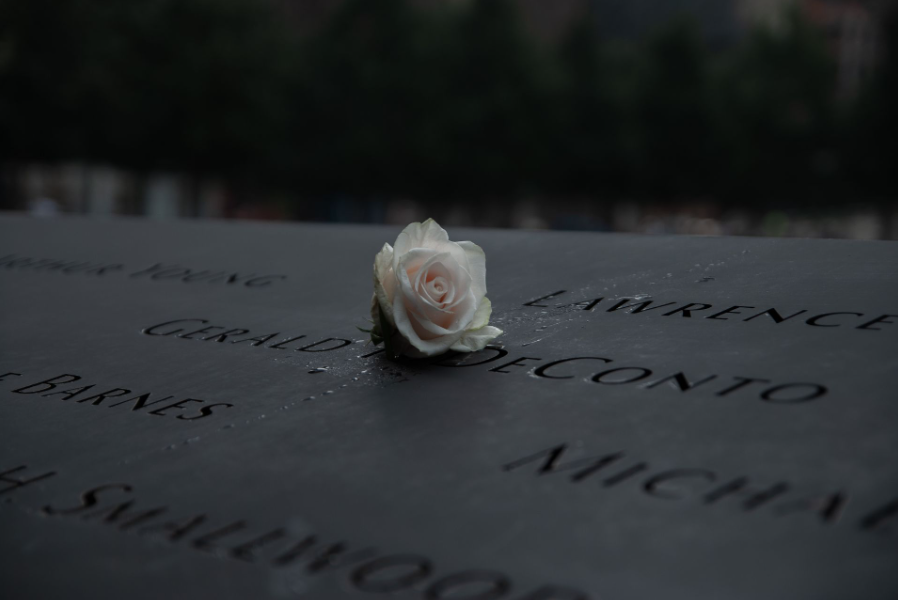
Besides the work of the UN, it is also crucial that Member States pay tribute to the victims and survivors of terrorism, especially because these individuals are often forgotten or neglected. By honouring the victims, societies show their support and ensure that no one needs to face the consequences of terrorism alone.
France, a country with a long history of terrorist attacks, inaugurated 11 March as the French National Day for Victims. From 2030 onwards, this national day will be held at the Museum and Memorial of Terrorism. A primary purpose of this planned institution is to ensure attack victims are identified in order to express the commitment to the dead. This could take the form of inscriptions on a wall, in a work of art, and can even include individual portraits of the deceased if the victims’ families consent. The Museum and Memorial of Terrorism is intended to cover the history and memory of terrorism for over 50 years, will include individual testimonies, and will be aimed at the broad public.
This project shows how societies can express their support to survivors of terrorism, commemorate victims of terrorism, and begin to process terror attacks. The Museum and Memorial of Terrorism project serves as an example of how other nations with less developed institutions in that regard can pay tribute to the victims of terrorism in an adequate way, because it is crucial that the victims are not forgotten and that survivors and their families receive the multidimensional support they need. Unfortunately, only a few Member States manage to achieve both of these important tasks fully. Adopting a project like the French example can be an important first step in helping societies process what happened and could also help to counter terrorism.
GICJ Position
Geneva International Centre for Justice (GICJ) welcomes the existing efforts undertaken by the UN and its Member States to support victims and survivors of terrorism. While these efforts have a true impact, GICJ calls on Member States to engage with this topic more. Particularly, GICJ aligns itself with the UN Secretary-General in urging Member States to ensure better coordination and coherence concerning victim support. Furthermore, GICJ urges all Member States to establish ways to pay tribute to the victims of terrorism and to ensure that the survivors of terrorism, as well as their families, receive the multidimensional support they need to find their way back to normality. Lastly, GICJ calls on Member States to intensify their efforts when working together under the UN Global Counter-Terrorism Strategy and urges Member States to fully implement what they agreed on under this framework.