



International Day for the Abolition of Slavery – December 2
“Acknowledge the past. Repair the present. Build a future of dignity and justice.”
By Jamelia Nampijja Sztuchlik / GICJ
Origins of the Day
The International Day for the Abolition of Slavery is observed every year on December 2. It focuses on eradicating contemporary forms of slavery, including human trafficking, sexual exploitation, child labour, forced marriages, and recruitment of children for armed conflict.
The day was established by the United Nations General Assembly in 1986, marking the adoption of the UN Convention for the Suppression of the Traffic in Persons and of the Prostitution of Others under Resolution 317 (IV) in 1949. This convention represented one of the earliest steps toward establishing a global legal framework to combat exploitation and practices recognised as forms of slavery.
The day serves as a reminder that, despite being legally abolished, slavery still affects millions of people worldwide. This day calls for more decisive global action, increased awareness, and stronger enforcement of human rights to ensure freedom and dignity for all.
Theme: "Acknowledge the past. Repair the present. Build a future of dignity and justice."
The theme for 2025 calls for both remembrance and action, emphasising that the legacy of slavery is not confined to history books but continues to influence economies, institutions, and lives around the world.
Acknowledging the Past
Confronting the past means facing the uncomfortable truth that millions of people were exploited through systems of enslavement that enriched nations and shaped global power dynamics. This acknowledgement goes beyond simply recounting historical events; it requires an understanding of how these historical injustices continue to resonate today, contributing to racial inequities, social exclusion, and economic disparities.
Museums, educational systems, and public commemorations play a vital role in ensuring that these past occurrences are neither diluted nor forgotten. When societies fully confront the weight of past atrocities, they establish a foundation for honest dialogue, collective healing, and meaningful change.
Repairing the Present
Despite international laws that prohibit modern slavery, this issue continues in various forms, including human trafficking, forced labour, debt bondage, child marriage, and sexual exploitation. Global estimates suggest that tens of millions of people are still trapped in exploitative conditions. Addressing these present issues requires the world to confront these realities directly.
To address these issues, the world needs to strengthen protections for vulnerable populations, ensure fair labour standards throughout global supply chains, provide comprehensive support for survivors, and hold perpetrators accountable. Governments, businesses, civil society organisations, and communities all play crucial roles in dismantling the systems that enable exploitation.
Repairing the present also involves recognising the lasting effects of historical slavery. For many communities, inequity and disenfranchisement are not just abstract concepts; they are lived realities. Therefore, policies focused on social justice, economic inclusion, access to education, and rights to land or resources are vital components of contemporary repair efforts.
Building a Future of Dignity and Justice
The call to build a future based on dignity and justice emphasises that abolition is not merely the absence of slavery; it involves establishing systems that uphold human rights, equity, and opportunity. A just future requires proactive investment in education, labour rights, gender equality, digital safety, and ethical economic models that prioritise people over profits.
It is also essential to create environments where survivors of exploitation can rebuild their lives with agency and respect. Survivor-led organisations, youth advocates, and grassroots networks offer valuable perspectives that should shape future policies.
Ultimately, the vision for the future demands global solidarity. Ending modern slavery is not a challenge for one nation or sector; it is a shared responsibility rooted in our collective humanity.
Global Developments on Modern Slavery, Human Trafficking & Forced Labour
In 2025, data released by United Nations agencies highlighted a worsening global crisis concerning modern slavery, human trafficking, and forced labour. The findings indicate that exploitation is increasing in various regions, driven by the combined pressures of poverty, conflict, climate change, and digital criminality.
The UNODC Global Report on Trafficking in Persons, published in December 2024, provides a clear illustration of recent trends in trafficking. The report highlights a significant increase in detected trafficking cases, noting a 25% rise from 2019 to 2022.
According to the report, populations living in conflict zones or areas affected by climate change are particularly vulnerable, as instability, displacement, and economic hardship create favourable conditions for traffickers. Criminal networks take advantage of these circumstances to force individuals into labour, sexual exploitation, forced criminal activities, and emerging forms of cyber-enabled exploitation.
Across all regions, women and girls make up most victims. 61% of all detected trafficking victims are female, a figure that has remained consistent despite global prevention efforts. This gender imbalance reflects deep-rooted inequalities that increase vulnerability, including limited access to education, gender-based violence, and restricted economic opportunities, particularly in low-income or crisis-affected areas.
The report notes that girls are disproportionately trafficked for sexual exploitation, while boys are more often targeted for forced labour, forced criminal activities, or coerced involvement in online scams.
Concerns about child labour intensified in 2025, with the International Labour Organisation (ILO) warning that the world is not on track to meet Sustainable Development Goal 8.7. This goal commits nations towards ending child labour, in all its form, by 2025. Although there has been progress in some regions, global crises have reversed earlier gains. Economic instability, large-scale displacement, and weakened social protection systems continue to push families toward harmful labour practices. The ILO emphasised that without significant investment in education, child protection systems, and poverty reduction measures, the number of children forced into exploitative labour will continue to rise.
The economic aspect of modern slavery became clearer with the release of the ILO's landmark report, "Profits and Poverty: The Economics of Forced Labour," published on March 19, 2024. The report estimates that forced labour now generates $236 billion in illegal profits each year, an increase of $64 billion on the previous estimates.. A corresponding ILO news release explains that sexual exploitation accounts for an extraordinary 73% of these profits, despite affecting a smaller proportion of victims than labour exploitation.
The report stressed that exploiters come from a diverse range of backgrounds, including organised criminal groups, fraudulent labour recruiters, employers, and sometimes even family networks that facilitate forced marriages or domestic servitude. Regionally, Europe and Central Asia generate the highest illegal profits, followed by Asia-Pacific, the Americas, Africa, and the Arab States.
Addressing Economic Drivers and Elevating Global Political Priorities in 2025
Recognising the economic factors that contribute to exploitation, the United Nations began exploring new financial strategies to combat modern slavery. In January 2025, the UNDP Sustainable Finance Hub, in collaboration with the Finance Against Slavery and Trafficking (FAST) Initiative, hosted a high-level roundtable that brought together government representatives, private-sector leaders, investors, and civil society organisations.
Participants emphasised that combating modern slavery requires more than just law enforcement; it demands targeted economic interventions that reduce vulnerability and enhance access to safe and secure livelihood opportunities. Discussions focused on the potential of social finance, which includes impact investments, funding for survivor-led enterprises, and financial inclusion strategies aimed at preventing exploitation at its source.
In early February 2025, the UN released a formal background note titled "Leveraging Social Finance to Combat Modern Slavery & Human Trafficking" for the ECOSOC Partnership Forum. The document outlined promising strategies, such as impact investing, survivor-led enterprises, and financial inclusion initiatives, that can help prevent exploitation before it occurs.
By October 2025, the UN Development Programme (UNDP) expanded on this agenda with the publication of “From Profit to People: How Digital Finance Is Reshaping the Fight Against Labour Exploitation." This report examines how emerging financial technologies, digital identity systems, and ethical investment frameworks can help dismantle exploitative labour chains. This initiative showcases the UN's commitment to integrating modern financial tools into global efforts to combat slavery.
At the highest levels of the UN, modern slavery has become a political priority. Throughout 2025, senior UN officials, including the President of the UN General Assembly, issued repeated calls to action. In an April 2025 UN media briefing, officials emphasised that "an estimated 50 million men, women, and children are trapped in slavery across the globe."
Similarly, in a message delivered by UN Secretary-General António Guterres for the International Day for the Abolition of Slavery in December 2024, he urged nations to strengthen protections for victims and confront the systemic inequalities that drive exploitation.
The statements highlight that modern slavery is closely linked to broader global challenges, including climate change, economic instability, weak labour governance, and migration pressures. They also stress the urgent need for governments to incorporate anti-slavery strategies into national development plans, climate adaptation frameworks, migration management policies, and social protection systems.
Geneva International Centre for Justice (GICJ) commemorates the International Day for the Abolition of Slavery and honours all victims of slavery, both historical and modern. GICJ reaffirms its unwavering commitment to resisting and abolishing this abhorrent practice in all its forms.
The theme for 2025 serves as both a reflection and a roadmap: "Acknowledge the past. Repair the present. Build a future of dignity and justice." This is a call to engage in sustained and courageous work at every level of society. As we mark this year's International Day for the Abolition of Slavery, we are reminded that the movement toward freedom is ongoing. Every action, whether raising awareness or advocating for policy reform, contributes to creating a world where no one is left in bondage.
Ending modern slavery requires sustained political will, robust international cooperation, and a renewed dedication to building systems that protect all people from exploitation.
GICJ stresses that this day is not merely a commemoration of what must end; it is a declaration of what we must build: a global community rooted in dignity, equity, and justice for all.
References
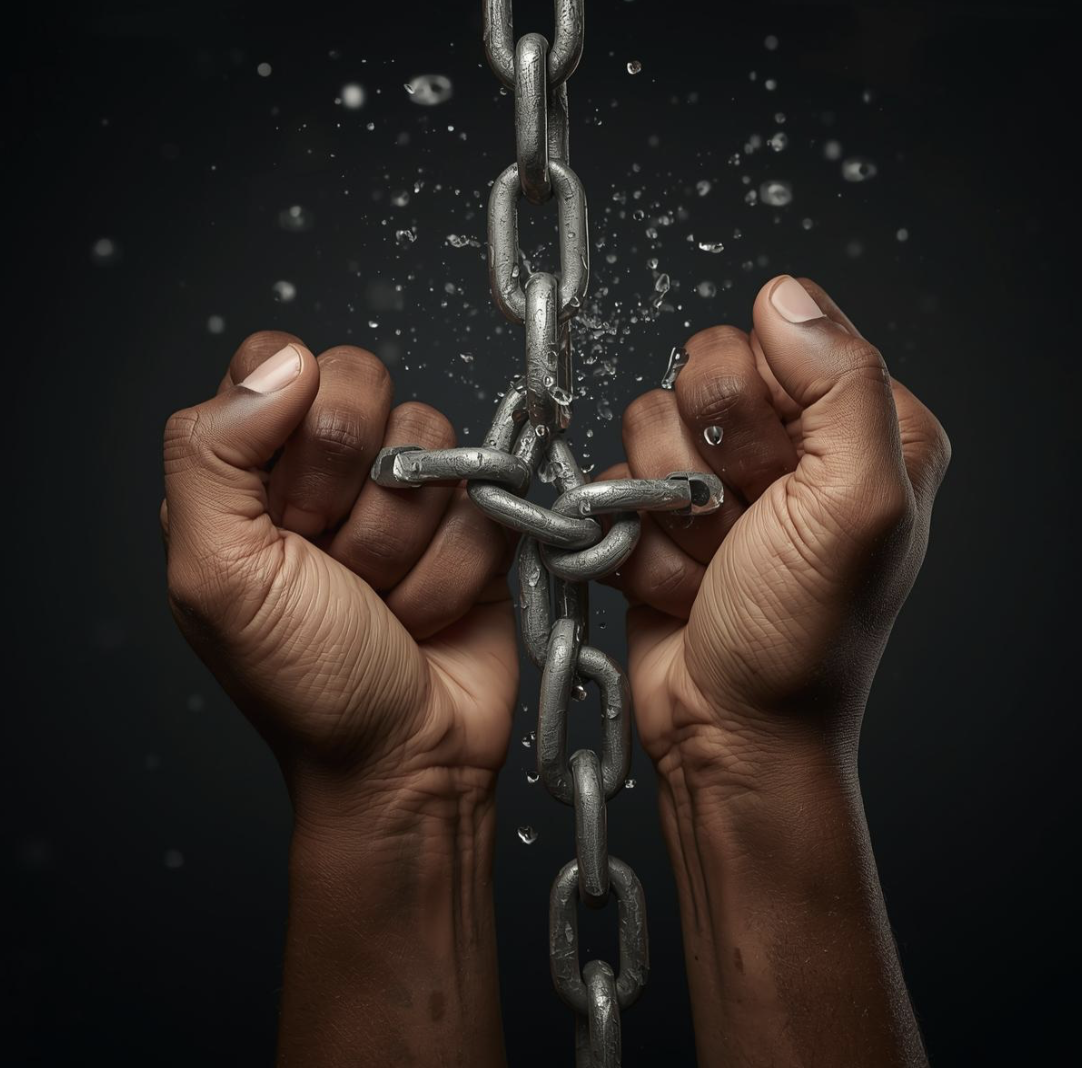
- Image https://www.canva.com/M/MAG6QN66N-A
- United Nations Office on Drugs and Crime (UNODC). Global Report on Trafficking in Persons 2024. Dec. 2024. https://digitallibrary.un.org/record/4069246?v=pdf
- International Labour Organisation, Walk Free, and IOM. Global Estimates of Modern Slavery: Forced Labour and Forced Marriage. 2024. https://www.ilo.org/publications/major-publications/global-estimates-modern-slavery-forced-labour-and-forced-marriage
- ILO. Profits and Poverty: The Economics of Forced Labour. International Labour Organisation, March 19. 2024. https://www.ilo.org/resource/news/annual-profits-forced-labour-amount-us-236-billion-ilo-report-finds.
- UNDP Sustainable Finance Hub. From Profit to People: How Digital Finance Is Reshaping the Fight Against Labour Exploitation. October 14 2025. https://sdgfinance.undp.org/news-events/profit-people-how-digital-finance-reshaping-fight-against-labour-exploitation.
- UNODC. GloTIP 2024 Methodology. United Nations Office on Drugs and Crime. https://www.unodc.org/documents/data-and-analysis/glotip/2024/Tip_2024_Methodology.pdf.
- UN Media. "UN / Modern Slavery Report." April 8 2025. https://media.un.org/unifeed/en/asset/d335/d3359295.
- United Nations Press. "Message of the Secretary-General on the International Day for the Abolition of Slavery 2024." December 2 2024. https://press.un.org/en/2025/sgsm22920.doc.htm.
- UN. Leveraging Social Finance to Combat Modern Slavery & Human Trafficking. ECOSOC Partnership Forum Background Note, February 4 2025. https://sdgs.un.org/sites/default/files/2025-02/Leveraging%20Social%20Finance%20to%20Combat%20Modern%20Slavery%20%26%20Human%20Trafficking.pdf.
#InternationalDayForTheAbolitionOfSlavery #AcknowledgeThePast #RepairThePresent #BuildTheFuture #EndSlavery #ModernSlavery #HumanTrafficking #ForcedLabour #StopExploitation #HumanRights #Justice #GICJ #GenevaInternationalCentreforJustice #Geneva4Justice