



International Day of the Rights of Indigenous Peoples
August 9
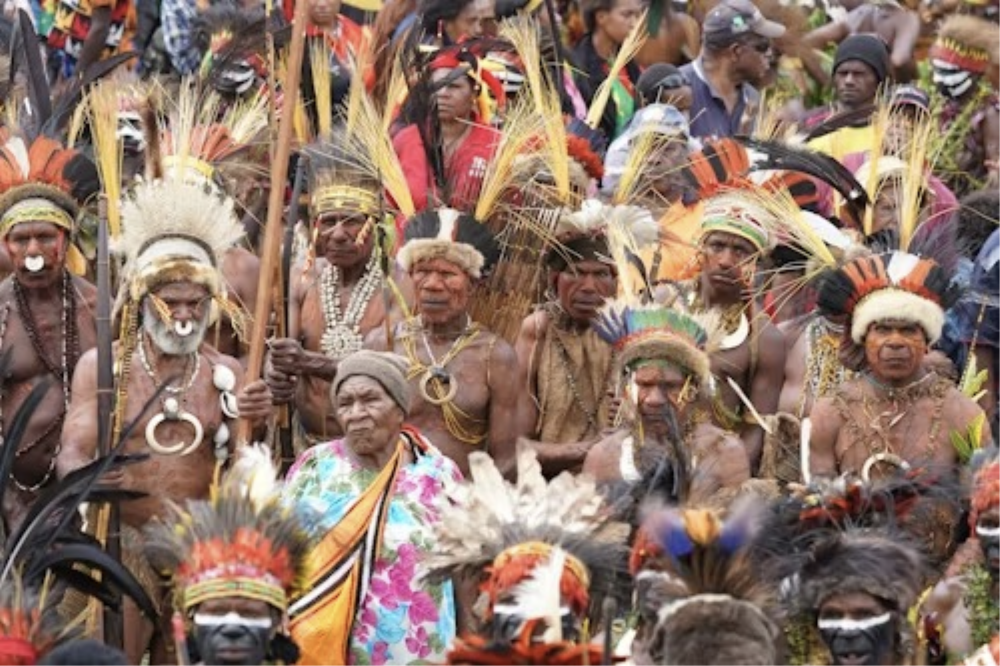
From Colonialism to the Erasure and Denial of Rights to Recognition and Legal Protection
By Mohammed Hindawi / GICJ
Introduction
Every year on August 9, the world observes the International Day of the World’s Indigenous Peoples, proclaimed by the United Nations General Assembly in its resolution 49/214, adopted on December 23, 1994. This date was chosen to commemorate the first meeting of the United Nations Working Group on Indigenous Populations, held in 1982. (Department of Economic and Social Affairs Indigenous Peoples) (UN International Day of the World's Indigenous Peoples 9 August)
The adoption of this day came within the context of growing international attention to the issues and rights of Indigenous Peoples. In 1993, the General Assembly proclaimed the International Year of the World’s Indigenous Peoples, and in the same year, it also decided to proclaim the first International Decade of the World’s Indigenous Peoples, which began on December 10, 1994, with the aim of strengthening the protection of the rights of these peoples, preserving their cultural identities, and supporting their active participation in all aspects of life. (UN International Day of the World's Indigenous Peoples 9 August) (Department of Economic and Social Affairs Indigenous Peoples)
It is worth noting that the 2026 International Day of the World's Indigenous Peoples will be celebrated under the theme "Honoring Indigenous Midwives: Safeguarding Life and Well-being," a theme that highlights the pivotal role of traditional midwives as guardians of indigenous health knowledge related to childbirth and motherhood. This choice underscores the importance of preserving this inherited knowledge as a fundamental dimension of the right to health and the cultural identity of these peoples. (Department of Economic and Social Affairs Social Inclusion)
A historical debate about the rights of Indigenous Peoples
The intellectual origins of the debate surrounding the rights of Indigenous Peoples can be traced back to the 16th century, following the Spanish conquest of the Americas and the widespread abuses committed against the indigenous populations. In April 1550, Emperor Charles V, Holy Roman Emperor and King of Spain, ordered a temporary suspension of Spanish conquests, an unprecedented move intended to re-examine the legitimacy of subjugating indigenous peoples and using war and slavery as means of control and spreading Christianity.
In this context, a historic debate known as the Valladolid Debate was held in Valladolid, Spain (1550–1551), bringing together leading scholars of theology, law, and administration to hear opposing viewpoints. The humanist thinker Juan Ginés de Sepúlveda defended the legitimacy of war and the subjugation of Indigenous Peoples, relying on the Aristotelian idea that some peoples were "slaves by nature," and that it was Spain's duty to subjugate and Christianise them. He stated, "They are inferior to Spaniards, just as children are inferior to adults, and women to men," even going so far as to say they were almost like monkeys, inferior to men". In contrast, the Dominican friar Bartolomé de las Casas rejected this view, asserting that Indigenous Peoples possessed full human dignity, had their own social and political systems, and should not be subjugated by force or deprived of their rights.
Although the debate did not lead to an immediate resolution or a halt to colonialism and the violations suffered by Indigenous Peoples, it marked a pivotal moment in the history of legal and humanist thought. It was among the first organised discussions to address the legitimacy of colonialism, the rights of Indigenous Peoples, and the limits of using force against them. This debate contributed to establishing the idea that Indigenous Peoples have inherent rights that must be respected, which, in the long run, paved the way for the development of international law rules relating to human rights and the rights of Indigenous Peoples. Some of the effects of this debate were later reflected in the decree issued by King Philip II in 1573, which prohibited the use of the term "conquest" to describe Spanish campaigns and instead called for a policy of "pacification," implicitly acknowledging the need to reconsider the methods of dealing with Indigenous Peoples. (History Today)
The evolution of international efforts to protect the rights of Indigenous Peoples
The issue of protecting the rights of indigenous peoples then entered a long period of dormancy that lasted for centuries. During this time, policies of subjugation and the erasure of indigenous cultures prevailed without any significant legal framework for protection. The issue began to resurface internationally in the 20th century with the establishment of the International Labour Organization (ILO), the first UN body to address the issue of Indigenous Peoples as a category deserving of special legal regulation. However, this focus was primarily on labour and forced labour, rather than on identity and collective rights.
ILO Convention No. 107 of 1957 constituted the first legally binding international instrument addressing the status of Indigenous Peoples. Nevertheless, it was based on a clear assimilationist philosophy, viewing these peoples as "primitive" societies that should be gradually integrated into the dominant national societies. This approach was later widely criticised as a disguised continuation of the logic of colonial assimilation. (International Labour Organisation)
With heightened global human rights awareness in the 1970s and 1980s, and the emergence of indigenous resistance movements in the Americas, Australia, and Northern Europe, a shift began toward a different approach based on recognising cultural distinctiveness rather than forced assimilation. This shift culminated in the adoption of ILO Convention No. 169 of 1989, which overturned previous logic by explicitly recognising the right of Indigenous Peoples to preserve their cultural identity and institutions, and by enshrining, for the first time, the principle of prior consultation on decisions affecting their lands and resources. (The General Conference of the International Labour Organisation)
In parallel, in 1982, the United Nations established the Working Group on Indigenous Populations of the Sub-Commission on Prevention of Discrimination and Protection of Minorities, tasked with drafting a comprehensive international declaration on the rights of these peoples. This process involved more than two decades of arduous negotiations between states and Indigenous Peoples, represented by their organisations, due to the sensitivity of issues such as the right to self-determination and sovereignty over land and resources. (Department of Economic and Social Affairs Indigenous Peoples)
This long journey culminated in the adoption by the United Nations General Assembly of the United Nations Declaration on the Rights of Indigenous Peoples in September 2007. Initially opposed by four countries—the United States, Canada, Australia, and New Zealand—they later reversed their positions and joined its supporters. Although this declaration does not have the force of a legally binding treaty, it is now considered the fundamental normative framework upon which subsequent UN protection mechanisms are built. These include the Expert Mechanism on the Rights of Indigenous Peoples, established in 2007 to advise the Human Rights Council, and the mandate of the Special Rapporteur on the Rights of Indigenous Peoples, established earlier in 2001.
Thus, the idea of legal protection for Indigenous Peoples emerged from a colonial debate about their "capitalisation." It then underwent an assimilationist phase that sought to erase their distinctiveness in the name of modernisation, before finally evolving in recent decades into an approach based on recognition and self-empowerment. This shift is driven more by sustained struggle from Indigenous Peoples themselves than by any international or UN favour.
Elements related to the rights of Indigenous Peoples
Effective legal protection of the rights of Indigenous Peoples requires addressing several interconnected and fundamental elements. Foremost among these is the right to internal self-determination, which guarantees these peoples the freedom to determine their political status and maintain their autonomy in their cultural, educational, and administrative affairs without compromising the unity of the state. This is followed by the right to land, territory, and natural resources, a right that transcends the economic dimension to encompass identity and spirituality. This necessitates the recognition of collective ownership, the demarcation of traditional boundaries, and the protection of land from unlawful exploitation. The principle of free, prior, and informed consent is a crucial procedural safeguard, requiring consultation with these peoples and obtaining their consent before any project affecting their land or resources, as enshrined in ILO Convention No. 169. The cultural and linguistic dimension is also essential, through the protection of traditional languages and practices and the guarantee of education in the mother tongue, free from policies of forced assimilation.
Furthermore, the need for transitional justice and redress for the violations of colonial settlement, displacement, and land confiscation is paramount, through mechanisms of compensation and official recognition. Added to this is the right to meaningful participation in decision-making, whether through institutional representation or binding consultative mechanisms. Protecting human rights defenders is of paramount importance, given the escalating targeting they face, particularly in Latin America and Southeast Asia. Finally, the link between environmental rights and the rights of Indigenous Peoples is evident, as these peoples are guardians of biodiversity, and any environmental degradation affecting their lands constitutes a direct violation of their rights. All these elements are linked to specialised UN mechanisms, most notably the Expert Mechanism on the Rights of Indigenous Peoples and the Special Rapporteur on the Rights of Indigenous Peoples, in addition to the possibility of raising them within the Universal Periodic Review.
GICJ position
𝐆𝐞𝐧𝐞𝐯𝐚 𝐈𝐧𝐭𝐞𝐫𝐧𝐚𝐭𝐢𝐨𝐧𝐚𝐥 𝐂𝐞𝐧𝐭𝐫𝐞 𝐟𝐨𝐫 𝐉𝐮𝐬𝐭𝐢𝐜𝐞 (𝐆𝐈𝐂𝐉) affirms that the gap between international commitments and the actual reality of these peoples remains wide and calls for urgent action. It calls on States to ratify ILO Convention No. 169 without reservations, activate the principle of free, prior and informed consent before any project affecting the lands of these peoples, recognise their collective ownership of their lands and stop policies of forced displacement, as well as protect land rights defenders from targeting and intimidation, ensure their effective participation in decision-making, support transitional justice processes for colonial settlement violations, and preserve their languages and cultural practices from extinction, considering this as an ongoing international responsibility that requires genuine political will and effective accountability.