



World Day Against Child Labor
By Theresa Mose / GICJ
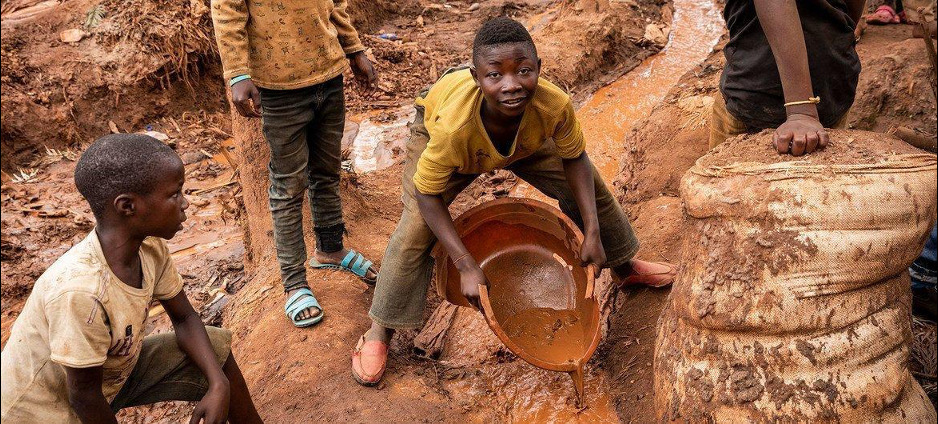 © UNICEF/Patrick Brown_ Children working at a mine in South Kivu in the Democratic Republic of the Congo.
The 12th of June marks a global observance established by the International Labour Organization (ILO) in 2002 to draw sustained attention to the continued exploitation of children through labour. Over time, it has evolved beyond a symbolic date into a moment of reflection on the gap between international commitments and lived realities, where children across the world remain engaged in work that undermines their development, dignity, and access to education. International legal standards, particularly Article 32 of the Convention on the Rights of the Child and key ILO instruments, define child labour as work that is harmful and deprives children of their childhood and potential. Global data reflects both meaningful progress and persistent limitations, but significant disparities in enforcement continue across regions, shaped by insufficient commitment and entrenched structural challenges within economic and governance systems. According to the 2025 joint report by the ILO and UNICEF, the number of children in child labour declined from 246 million in 2000 to 138 million in 2024, a reduction largely driven by sustained international efforts, including the adoption of ILO Convention No. 182 on the Worst Forms of Child Labour in 1999, which achieved universal ratification in 2020. The 2022 Durban Call to Action further marked a shift in global engagement by recognising children as active participants in shaping their rights rather than passive recipients of protection.
In 2015, the international community committed to ending child labour by 2025 under Sustainable Development Goal Target 8.7, a target that has now been reached in time but not in substance, as millions of children remain in exploitative work. This reality shows that while there has been significant progress, it has not been sufficient and that the elimination of child labour requires sustained political will, effective enforcement, and a deeper engagement with the structural conditions that continue to sustain it.
Child labour remains one of the most persistent violations of international human rights and labour standards, sustained by a combination of poverty, weak governance, conflict, climate change, and structural inequality. Despite progress in legal frameworks and policy commitments, millions of children continue to be engaged in work that deprives them of their education, development, and dignity. In many contexts, enforcement gaps, limited social protection systems, and fragmented global supply chains have allowed exploitation to persist, particularly in informal and high-risk sectors. Child labour causes immediate harm and has long-lasting negative impacts on children’s physical, psychological, and social development. It exposes children to hazardous conditions that can result in injuries, chronic illness, and developmental harm, while also undermining their access to education by reducing school attendance and increasing dropout rates. UNICEF further highlights that children engaged in the worst forms of labour are particularly vulnerable to exploitation, violence, and abuse, which can have lasting effects on mental health and overall well-being.
The growing impact of climate change and ongoing armed conflicts has further intensified children’s vulnerability, creating new cycles of poverty and exploitation that are difficult to break without coordinated global intervention. This global reality is particularly visible in conflict-affected contexts. The situation in the Democratic Republic of the Congo (DRC), particularly in the eastern province of South Kivu, illustrates how conflict, poverty, and weak governance combine to expose children to exploitative labour. Reports have documented children as young as ten working in gold mining areas such as Kamituga in South Kivu, where they wash ore using basic tools such as buckets and shovels without protective equipment, placing their health and safety at serious risk. Investigations by media outlets and non-governmental organizations indicate that child labour is widespread across mineral-rich regions of the DRC, including areas producing cobalt, gold, and diamonds, where children form a visible part of the artisanal mining workforce. Amnesty International has estimated that approximately 40,000 children are engaged in artisanal cobalt mining in the DRC alone, highlighting the scale and persistence of the problem.
Regional Disparities and Progress in the Fight Against Child Labour
Looking more closely at regional trends reveals some important differences in how progress has unfolded. Asia and the Pacific stand out for having made the most significant progress in curbing child labour. Between 2000 and 2024, the prevalence of child labour in the region was nearly cut in half, while the total number of affected children dropped by 43 percent. Much of this progress can be linked to rapid economic growth, wider access to education, and stronger systems for monitoring and enforcing labour standards, particularly in East and Southeast Asia. However, these gains mask important structural challenges that persist within specific sectors and countries. In Asia, Bangladesh illustrates how poverty and global supply chains intersect to sustain child labour. The country’s ready-made garment sector, one of the largest in the world, has long faced scrutiny for the persistence of child labour, particularly within informal and subcontracted production networks that operate beyond effective regulatory oversight. Investigations have documented children as young as eight engaged in tasks such as sewing, thread cutting, and operating basic machinery in poorly ventilated workshops, often under unsafe and exploitative conditions. According to the 2022 national labour survey, approximately 1.07 million children in Bangladesh are engaged in hazardous work. The sector’s central role in the national economy creates structural pressures that complicate reform efforts. For many households, children’s participation in garment work is driven by economic necessity, while the fragmented and informal nature of subcontracting chains continues to undermine enforcement of labour standards and accountability mechanisms.
Latin America and the Caribbean have also seen steady, though more modest improvements over the years. Between 2020 and 2024, the percentage of children in child labour fell by 8 percent, while the overall number declined by 11 percent.
Sub-Saharan Africa, which continues to bear the greatest burden in the struggle to curb child labour, has also recorded some progress, even if it has been slower than that of other regions. The proportion of children aged 5 to 17 engaged in child labour decreased from 24 percent to 22 percent between 2020 and 2024. Across the region, governments have taken steps such as passing relevant laws, expanding social protection programmes, and investing in free primary education. These efforts have contributed to the gradual reductions seen, even if the scale of the challenge remains significant. Sub-Saharan Africa now accounts for nearly two-thirds of all children in child labour globally, an estimated 87 million children. The region’s prevalence rate of 22 percent among children aged 5 to 17 is almost three times the global average of 7.8 percent, which remains worrisome. While there have been modest reductions in prevalence over time, these gains are being offset by rapid population growth. As a result, the absolute number of children in child labour has remained largely unchanged.
Agriculture accounts for roughly 85 percent of all child labour in Africa, making it the dominant sector in which exploitation occurs. In cocoa-producing regions of Côte d’Ivoire and Ghana, children as young as 10 are engaged in hazardous work such as using heavy machetes to open cocoa pods, spraying toxic pesticides without protective equipment, and carrying heavy loads of harvested beans over long distances. These conditions expose them to serious physical harm while also limiting school attendance and reinforcing cycles of intergenerational poverty. Beyond cocoa production, child labour persists across other commercial agricultural systems, including tea, coffee, sugarcane, and tobacco farming in various parts of the region. In tobacco cultivation, children are particularly vulnerable to severe health risks, including Green Tobacco Sickness, caused by the absorption of nicotine through the skin during prolonged exposure to wet tobacco leaves. These forms of labour are typically carried out under long working hours and harsh environmental conditions, often without protective equipment or regulatory oversight. In pastoral and rural communities across the Sahel and other livestock-reliant regions, child labour also takes the form of livestock herding. Young children, disproportionately boys, are frequently withdrawn from school to tend cattle for extended periods under extreme weather conditions. This exposes them to risks such as dehydration, fatigue, and animal attacks, while significantly reducing their access to education and long-term opportunities.
Across these contexts, child labour is deeply embedded in informal and fragmented agricultural systems, making it difficult to regulate and largely invisible within global supply chains. This invisibility does not reduce the harm but rather normalises exploitation and weakens accountability across the production networks that ultimately benefit from children’s labour.
Policy Directions and Pathways Forward
Ending child labour requires more than formal commitments and timelines. It depends on sustained enforcement of international labour standards, particularly through the ratification and effective implementation of ILO Convention No. 138 and related instruments, as well as effective monitoring systems and accountability mechanisms that ensure violations are detected and addressed. States must strengthen labour inspection systems so they can reach the sectors where child labour is most entrenched, especially agriculture, domestic work, and informal economy. Without credible enforcement and meaningful sanctions, legal frameworks risk remaining symbolic rather than transformative.
A second essential pillar towards progress is the expansion of social protection and access to education. Child labour is closely tied to economic insecurity, and for many families, children work because survival leaves them little choice. Universal child benefits, cash transfer programmes, and broader social protection systems can reduce this pressure by stabilising household incomes. At the same time, education must be genuinely accessible in practice, not only in law. This requires removing hidden costs, improving the quality of education, and ensuring that children can remain in school rather than being pushed into early work.
Finally, child labour must be addressed as part of broader global challenges, including climate change and corporate supply chains. Environmental shocks increasingly push vulnerable households into poverty, making children more likely to work, which means climate adaptation policies must integrate child protection measures. Corporations must also be held accountable for labour conditions within their supply chains through mandatory due diligence and enforceable standards. This includes scrutiny of global technology and electric vehicle supply chains linked to cobalt sourcing in the Democratic Republic of the Congo, where reports by human rights organisations have documented child labour in artisanal mining sites supplying minerals used in batteries for major global tech and automotive companies. Despite repeated allegations and advocacy campaigns, gaps in traceability and weak enforcement continue to raise concerns about the indirect reliance of global markets on exploitative labour practices.
Geneva International Centre for Justice (GICJ) maintains a firm position against all forms of child labour that amount to exploitation and violations of international human rights law. It condemns practices that expose children to hazardous work, economic exploitation, trafficking, forced labour, and recruitment in armed conflicts. GICJ calls on States to move beyond formal commitments and ensure the effective enforcement of international labour standards through strong legal frameworks, functioning labour inspection systems, and accountability mechanisms that deter violations. It further urges States, international organizations, and corporate actors to adopt coordinated and transparent measures to eliminate child labour from global supply chains and to address its root causes, including poverty, lack of education, and structural inequality.
GICJ also emphasizes the importance of protecting victims' rights, including the rights to education, dignity, rehabilitation, and access to justice. In line with its broader mandate, GICJ reaffirms that the fight against child labour is fundamentally a fight against impunity and systemic inequality, and that only sustained international cooperation grounded in human rights can ensure the full realization of children’s rights and the protection of their future.
References
- International Labour Organization (ILO). (1999). ILO Convention No. 182 on the Worst Forms of Child Labour. https://www.ilo.org/dyn/normlex/en/f?p=NORMLEXPUB:12100:0::NO::P12100_ILO_CODE:C182
- United Nations. (1989). Convention on the Rights of the Child. https://www.ohchr.org/en/instruments-mechanisms/instruments/convention-rights-child
- United Nations. Sustainable Development Goal 8: Target 8.7. https://sdgs.un.org/goals/goal8
- International Labour Organization (ILO). World Day Against Child Labour. https://www.ilo.org/topics-and-sectors/child-labour/world-day-against-child-labour
- Fifth Global Conference on the Elimination of Child Labour (2022). Durban Call to Action. https://www.ilo.org/global/topics/child-labour/lang--en/index.htm
- International Labour Organization (ILO). (2025). Child Labour: Global Estimates 2024, Trends and the Road Forward. https://www.ilo.org/publications/major-publications/child-labour-global-estimates-2024-trends-and-road-forward
- International Labour Organization (ILO). (2021). Child Labour Global Estimates 2020, Trends and the Road Forward. https://www.ilo.org/global/publications/books/WCMS_797515/lang--en/index.htm
- International Labour Organization (ILO). (2024). Global Estimates of Child Labour: Frequently Asked Questions. https://www.ilo.org/resource/other/2024-global-estimates-child-labour-frequently-asked-questions
- UNICEF. (2024). Child Labour: Global Estimates 2024. https://data.unicef.org/resources/child-labour-global-estimates-2024/
- UNICEF & ILO. (2025). Despite progress, child labour still affects 138 million children globally. https://www.unicef.org/press-releases/despite-progress-child-labour-still-affects-138-million-children-globally-ilo-unicef
- Basu, K., & Tzannatos, Z. (2003). The global child labor problem: what do we know and what can we do? The World Bank Economic Review, 17(2), 147–173.
- Islam, M. M., et al. (2023). Hazardous child labour, psychosocial functioning, and school dropouts among children in Bangladesh: A cross-sectional analysis of UNICEF's Multiple Indicator Cluster Surveys (MICS). PLOS ONE. https://pmc.ncbi.nlm.nih.gov/articles/PMC10297137/
- Bangladesh Bureau of Statistics. (2022). National Children's Labour Survey 2022.
- France 24 Observers. (2021, March 18). Children still working in gold mines in the DR Congo, human rights groups say. https://observers.france24.com/en/africa/20210318-dr-congo-child-labor-gold-mines-kamituga-south-kivu
- Amnesty International & Afrewatch. (2016). This is what we die for: Human rights abuses in the Democratic Republic of the Congo power the global trade in cobalt. https://www.amnesty.org/en/documents/afr62/3183/2016/en/
- International Labour Organization (ILO). (2023). Issue paper on child labour and climate change. https://www.ilo.org/publications/issue-paper-child-labour-and-climate-change
- Robert F. Kennedy Human Rights. (2024). Climate change is a driving force of child labor. https://rfkhumanrights.org/our-voices/climate-change-is-a-driving-force-of-child-labor/
- Geneva International Centre for Justice. (2024). Major tech companies accused of child labour in Congolese cobalt mines. https://www.gicj.org/topics/thematic-issues/business-human-rights/3710-major-tech-companies-accused-of-child-labour-in-congolese-cobalt-mines
- Save the Children UK. What is child labour? https://www.savethechildren.org.uk/what-we-do/global-issues-hub/child-labour
- World Vision. (n.d.). Child labor facts. https://www.worldvision.org/child-protection-news-stories/child-labor-facts