




Singapore’s Fourth Universal Periodic Review: Balancing Economic Growth and Social Stability
Tanushree Ghosh/GICJ
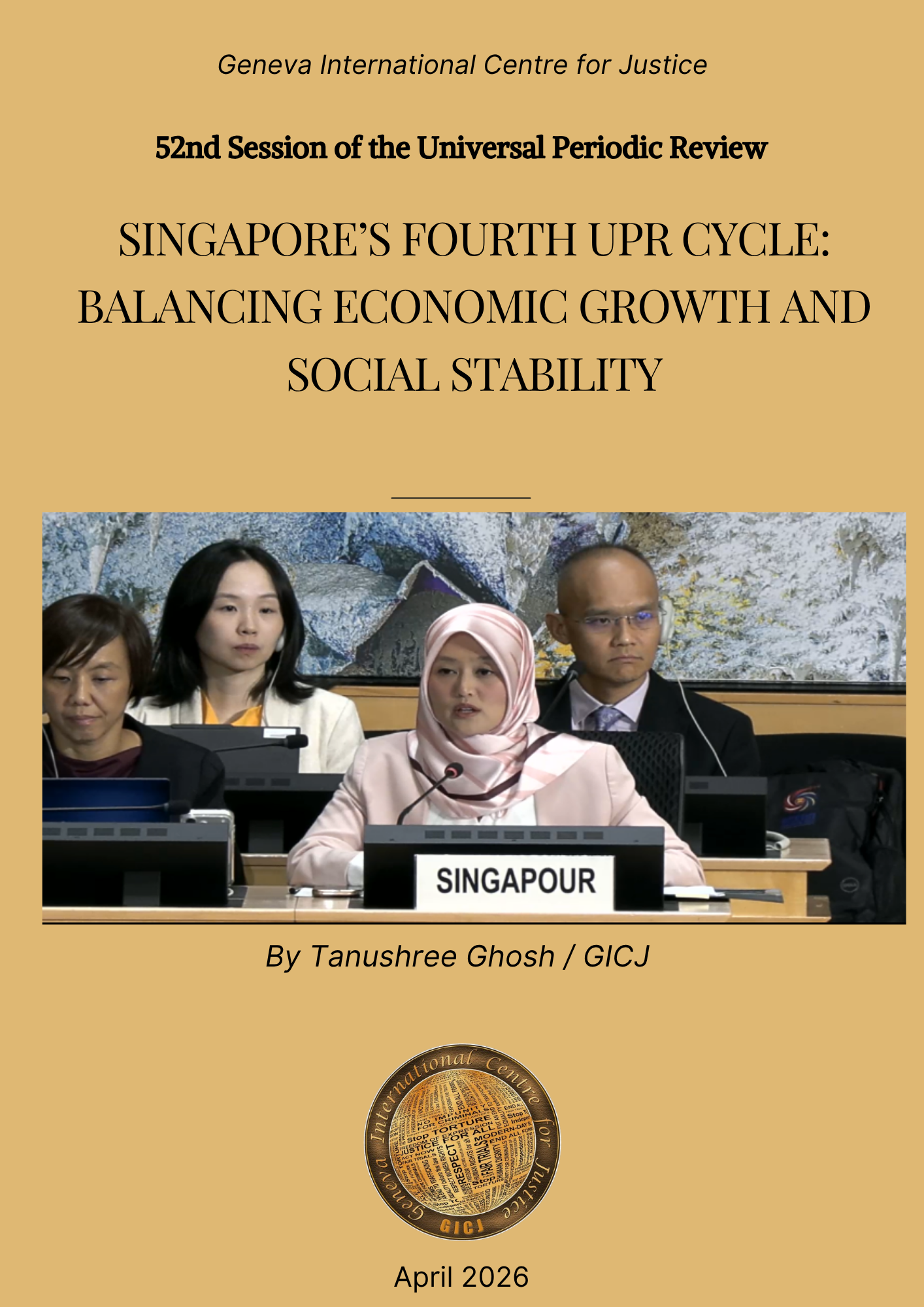
On 12 May 2026, at the 52nd session of the Working Group on the Universal Periodic Review (UPR), Singapore presented its assessment of the country's human rights situation. The delegation provided an overview of the National Report submitted pursuant to Human Rights Council resolutions 5/1 and 16/21. During the review, it reaffirmed its commitment to protecting and promoting human rights in accordance with the recommendations given during the previous cycles. Singapore’s delegation apprised the Working Group of the measures undertaken to advance human rights in the country. The social protection programmes implemented to safeguard the rights of women, children and persons with disabilities were underscored during the review session. The Government of Singapore further reiterated its commitment to fostering an inclusive, cohesive and resilient society.
Following the presentation of the National Report, recommendations were issued by Member States as part of the UPR process. Although Singapore’s efforts to ensure the full and effective realisation of human rights were acknowledged, Member States in attendance issued recommendations urging Singapore to align its domestic legal protections with universally recognised human rights standards. In this regard, Singapore was called upon to consider acceding to core international human rights treaty instruments. Member States, through their oral statements, recognised that rights without remedies are ineffective. Taking note of the absence of an independent body to monitor and investigate violations of human rights, Singapore was recommended to establish a National Human Rights Institution (NHRI) in accordance with the Paris Principles. In response to the recommendations issued, Singapore stated that it would take its socio-economic realities into account in determining whether the recommendations would be “accepted” or “noted”. Accordingly, Singapore’s progress in implementing the “accepted” recommendations would be subject to scrutiny in the next UPR cycle.
For more information, click the document below: