



Sierra Leone's Fourth UPR Cycle: Human Rights Reforms Amid Institutional Battles
By Rawan Al-Aqel / GICJ
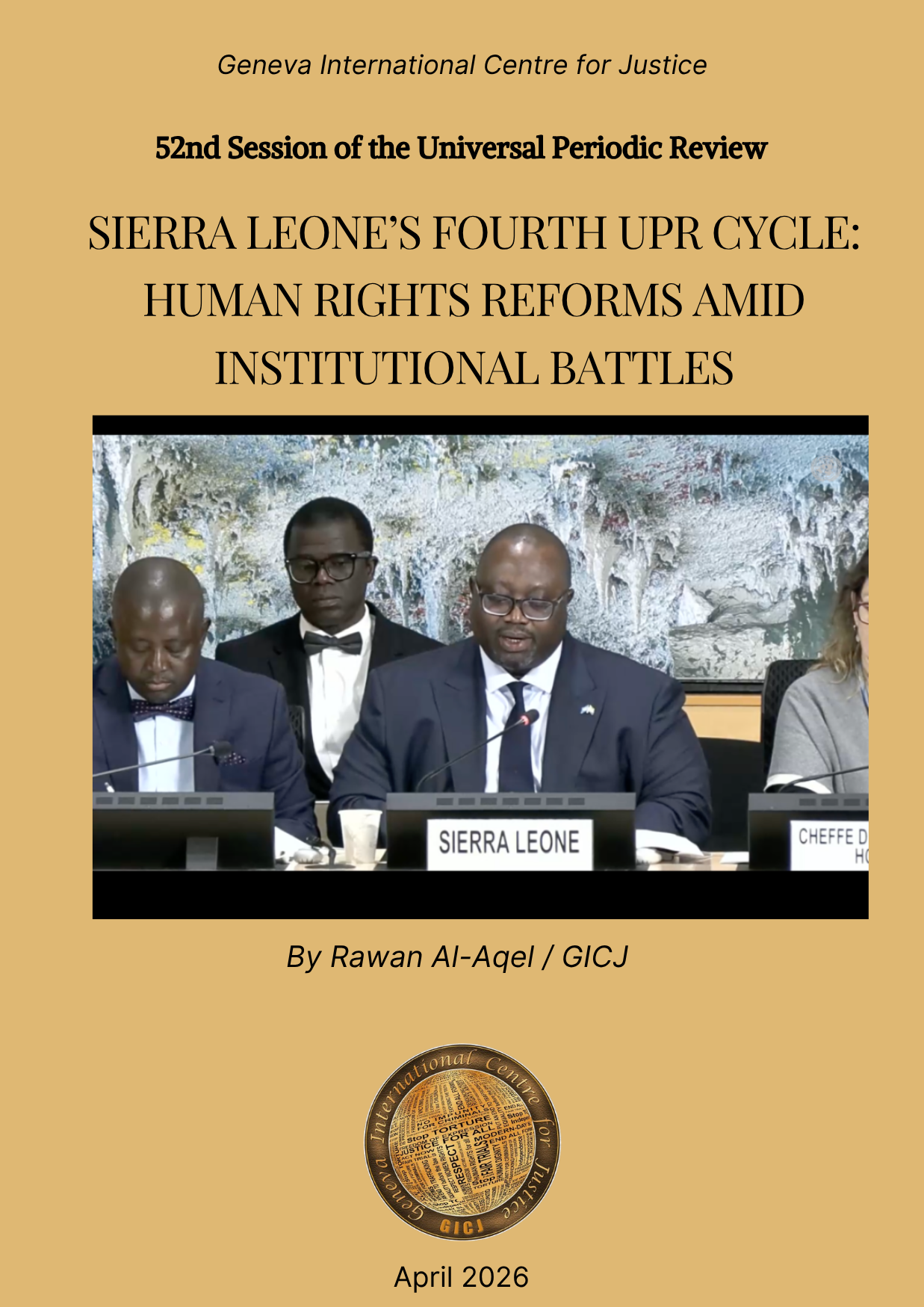
During the 52nd session of the Universal Periodic Review held on 12 May 2026 in Geneva, Sierra Leone presented its fourth-cycle national human rights report before the United Nations Human Rights Council. The delegation was led by government officials, including Ms. Francess P. Alghali, Deputy Minister of Foreign Affairs and International Cooperation, alongside the Attorney General and Minister of Justice, Alpha Sesay. The review consisted of an extensive interactive dialogue between Sierra Leone and several Member States before the Human Rights Council. The review focused on Sierra Leone’s progress in democratic governance, constitutional reform, criminal justice reform, gender equality, healthcare, education, child protection, and environmental sustainability. The government emphasized achievements such as the abolition of the death penalty, the enactment of the Child Rights Act (2025), the Prohibition of Child Marriage Act (2024), and reforms introduced through the Criminal Procedure Act (2024).
Throughout the review, Sierra Leone portrayed itself as a State committed to the “rule of law,” “human rights protection,” “victim-centered justice,” “gender equality,” and “inclusive governance.” The delegation actively responded to recommendations and criticisms, presenting the review as evidence of the government’s willingness to engage transparently with the international community. Several Member States, including the United Kingdom, Mexico, Australia, Mongolia, Morocco, Namibia, Uganda, Tunisia, and Togo, raised critical concerns and recommendations. Major issues discussed included prison overcrowding, female genital mutilation (FGM), child marriage, freedom of expression, access to healthcare, electoral transparency, discrimination against women, and climate resilience.
States also urged Sierra Leone to ratify additional international instruments, including the International Convention for the Protection of Workers, the International Convention on the Protection of the Rights of All Migrant Workers and Members of Their Families, the Optional Protocol to the Convention against Torture, and the Second Optional Protocol to the International Covenant on Civil and Political Rights (ICCPR), which aims at the abolition of the death penalty. The review highlighted the contrast between Sierra Leone’s significant legal reforms and the persistent implementation gaps that continue to affect vulnerable populations. Despite visible institutional progress, serious concerns remain regarding corruption, prison conditions, gender-based violence, maternal mortality, harmful traditional practices, weak healthcare infrastructure, and political tensions following the 2023 elections.
For more information, click on the document below: