



62nd Session of the Human Rights Council
15th June -7th July 2026
Item 3: ID with SR on Trafficking in persons, especially women and children
22nd June 2026
Human Rights at the Heart: Confronting Human Trafficking in a Changing World
By Patricia Jjuuko / GICJ
Executive Summary
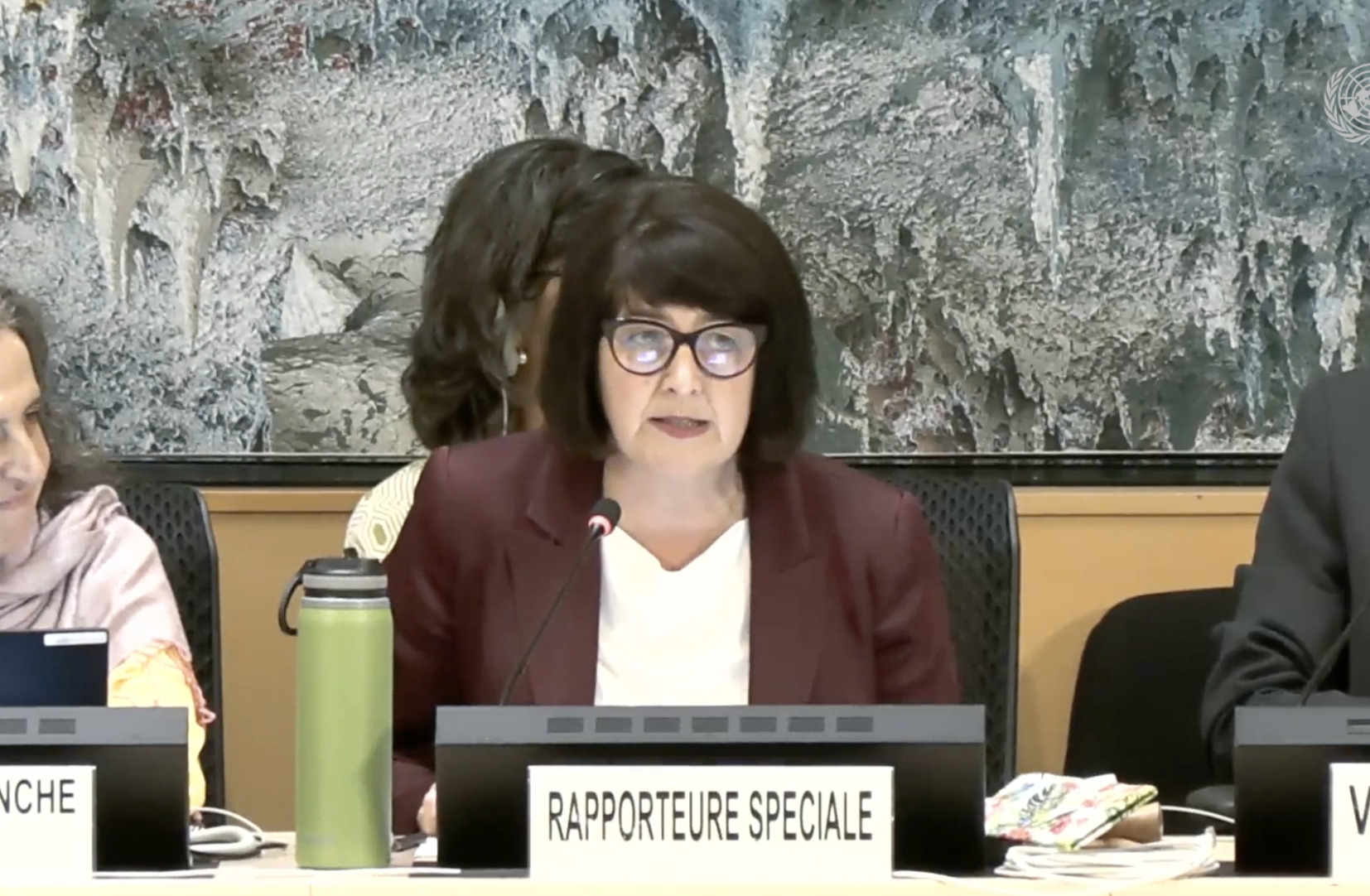
On 22 June 2026, during its 62nd session, the Human Rights Council held an Interactive Dialogue with Ms. Siobhán Mullally, Special Rapporteur on trafficking in persons, especially women and children. The dialogue focused on the reports of the country visits to the Republic of Chad (A/HRC/62/41 Add.2) and the Democratic Republic of Congo (DRC) (A/HRC/62/41 Add.1) conducted in February and July 2026 respectively.
The Special Rapporteur highlighted persistent gaps in prevention, protection, and access to justice, particularly in conflict settings, humanitarian crises, migration contexts, and informal labour sectors. She emphasised that they are driven by structural and policy failures, including inadequate access to asylum, limited safe and regular migration pathways, weak child protection systems, discrimination, and insufficient implementation of international commitments. Unaccompanied and separated children are particularly vulnerable to sexual exploitation, forced labour, forced criminality, recruitment by armed groups, and other forms of exploitation. The Rapporteur further warned that reductions in humanitarian funding have significantly weakened protection systems, increasing children's exposure to trafficking.
With respect to the DRC, the Rapporteur found that conflict-related trafficking has intensified amid persistent insecurity, weak rule of law, corruption, illicit mining, gender inequality, and widespread impunity. Women and children face heightened risks of sexual exploitation, sexual slavery, hazardous child labour, and trafficking linked to conflict and exploitation of natural resources. She called for stronger accountability, victim-centred justice, and concerted efforts to address the root causes of conflict and illicit resource exploitation.
Regarding Chad, the Rapporteur acknowledged the country's long-standing commitment to hosting refugees while highlighting the immense pressure created by conflict in neighbouring Sudan, climate change, environmental degradation, and chronic underfunding. The report identifies trafficking for forced labour, sexual exploitation, domestic servitude, child labour, and child marriage as major concerns. Weak access to justice, limited law enforcement capacity, corruption, and inadequate child protection systems continue to undermine prevention and accountability. The report urges stronger implementation of anti-trafficking laws, improved birth registration to reduce statelessness, greater protection for refugees and migrants, sustained humanitarian funding, and enhanced international cooperation.
Overall, Ms. Mullally called on States, international organisations, and donors to strengthen safe and regular migration pathways, uphold international human rights and humanitarian law, combat impunity, invest in survivor-centred protection and rehabilitation, and ensure that anti-trafficking efforts are integrated into peacebuilding, humanitarian response, and development strategies. The Rapporteur concluded that trafficking cannot be effectively addressed without tackling its structural drivers and ensuring accountability for perpetrators.
In its statement as the country of concern, Chad welcomed the report and reaffirmed its commitment to cooperating with United Nations (UN) human rights mechanisms. The delegation highlighted the significant challenges posed by large scale refugee inflows, particularly following the conflict in Sudan, and acknowledged the heightened risks of trafficking faced by displaced and undocumented children. It outlined measures taken to strengthen the national response, including legal and institutional reforms, implementation of the National Action Plan to Combat Trafficking (2024-2027), and initiatives to improve birth registration and prevent statelessness. The DRC did not participate in the dialogue.
During the ensuing discussion, delegations broadly agreed that trafficked children are among the most vulnerable populations and that trafficking in persons constitutes a serious violation of human rights requiring strengthened international cooperation, accountability and victim centered protection. Several delegations drew particular attention to the situation of Palestine children in Gaza, especially unaccompanied and separated children, highlighting their heightened vulnerability to trafficking and exploitation. The Republic of Belarus stood out by questioning the human rights implications of the European Union’s Pact on Migration and Asylum and its migration externalisation policies, raising concerns over the compatibility of current migration governance frameworks with international human rights standards.
Geneva International Centre for Justice (GICJ) welcomes the Special Rapporteur's emphasis on the structural drivers of trafficking in persons and reiterates that effective responses must go beyond criminal justice measures to address the underlying conditions that enable exploitation. GICJ calls on States to strengthen prevention, victim protection, and access to justice, particularly in conflict-affected settings, humanitarian crises, migration contexts, and informal labour sectors. It further urges States and donors to ensure sustained humanitarian funding, expand safe and regular migration pathways, combat impunity, and reinforce child protection systems to safeguard those most vulnerable to trafficking.
To read the full report, click on the image below: