



The 62nd Session of the Human Rights Council
15 June-7 July 2026
Item 10: Interactive Dialogue on Oral Presentation of the High Commissioner on Ukraine and Interim Report of the Secretary-General on Human Rights in Crimea
July 3, 2026
Assessing the Impact of Forced Passportisation, Cultural Eradication, and Systemic Rights Violations in Occupied Ukraine and Crimea while Navigating Global Frameworks for Accountability and International Justice
By Marina Timbalari /GICJ
Executive Summary
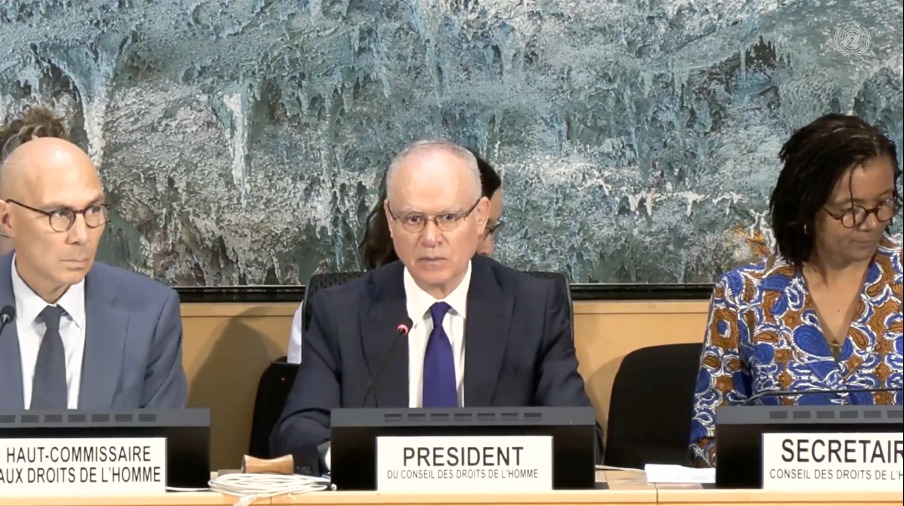
At the 30th meeting of the 62nd session of the UN Human Rights Council (HRC), UN High Commissioner for Human Rights Volker Türk presented an oral update on the human rights situation in Ukraine, alongside the Secretary-General’s interim report on the situation in the temporarily occupied territories of Ukraine. Mandated by HRC resolution 59/22 and General Assembly Resolution 80/223, these reports identify and assess the escalating human cost of the ongoing war, documenting a 40% increase in civilian casualties and the systematic targeting of critical energy infrastructure. By verifying patterns of torture, conflict-related sexual violence, and the forcible transfer of protected persons, including children, the reports draw urgent attention to the compounding harms arising from the Russian Federation’s disregard for international humanitarian law and its obligations as an occupying power.
The presentation of these findings was followed by an interactive dialogue with the High Commissioner. Representatives of Member States and Non-Governmental Organisations participating in the dialogue acknowledged that the systematic nature of these violations poses unprecedented threats to the international human rights framework. However, the dialogue also highlighted a significant divide in the international community; while the majority of delegations urged for the implementation of robust accountability mechanisms, such as the Special Tribunal for the crime of aggression and International Criminal Court investigations, others criticised the session as politically motivated, advocating instead for technical assistance and capacity building.
To address the tension between documenting these severe violations and the need for diplomatic progress, Member States were urged to ensure that human rights remain a guiding framework for any future peace negotiations. Recommendations issued by the High Commissioner and supported by various delegations include the immediate restoration of unhindered access for independent monitors to all temporarily occupied territories, the cessation of indoctrination and forced conscription practices, and the prioritisation of victim-centered justice. The 62nd session of the HRC puts the international community’s commitments to the test yet again. Accordingly, States must take urgent action to ensure that documentation of these horrific violations translates into concrete accountability, upholding their obligations under international law to prevent the normalisation of such crises.
Geneva International Center for Justice (GICJ) condemns Russia’s war of aggression against Ukraine as a violation of international law and the UN Charter, highlighting its devastating humanitarian impact and widespread human rights abuses, including the deportation of children, torture, enforced disappearances, and conflict-related sexual violence. Supporting the UN High Commissioner’s findings, GICJ calls for a human rights-based peace and stronger international accountability through continued monitoring and support for international justice mechanisms.
To read the full report, click on the image below: