



HRC 61: The DDPA at 25; Addressing Racism, Religious Intolerance, and All Forms of Discrimination
The 61st Session of the Human Rights Council
23 February - 31 March 2026
Item 9: Presentation of reports of the High Commissioner and IGWG reports on the Durban Declaration Programme of Action
24 - 25 March 2026
By Jamelia Nampijja Sztuchlik / GICJ
Executive Summary
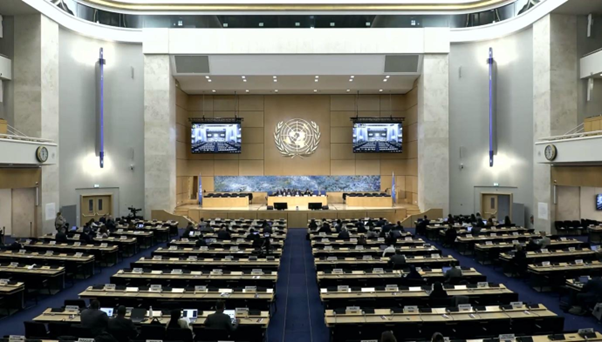
During the 43rd Meeting of the 61st Session of the Human Rights Council on March 24 -25, 2026, the High Commissioner and the Intergovernmental Working Group on the Effective Implementation of the Durban Declaration and Programme of Action (IGWG-DDPA) presented reports on progress and ongoing challenges. Mr Dimiter Shalev, Chief of the Equality and Non-Discrimination Branch at the UN Human Rights Office presented the report A/HRC/61/72 – combatting intolerance, negative stereotyping and stigmatisation of, and discrimination, incitement to violence and violence against, persons based on religion and belief. The report emphasised the continuing need to combat racism, racial discrimination, xenophobia, and related intolerance, including negative stereotyping, stigmatisation, incitement to violence, and discrimination based on religion or belief.
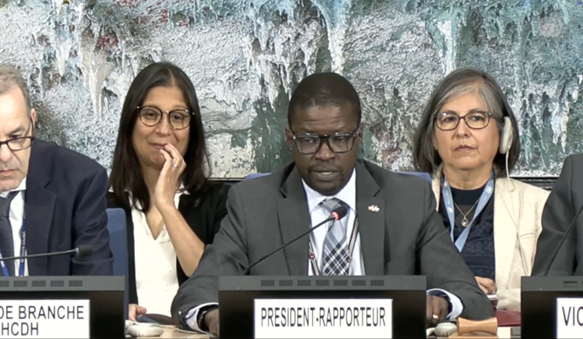
Mr James Ndirangu Waweru, Chair-Rapporteur of the IGWG-DDPA, presented the report A/HRC/61/73 which summarised the Group’s 23rd and 24th sessions. The 23rd session reviewed the draft UN Declaration on the Human Rights of People of African Descent and produced recommendations in preparation for the 25th anniversary of the DDPA. Meanwhile, the 24th session highlighted that racism remains a persistent global challenge, manifesting in systemic inequalities across social, political, economic, and cultural spheres, and increasingly embedded in technological systems such as algorithms and artificial intelligence.
During the General debate, delegates emphasised the persistence of racism, racial discrimination, xenophobia, and related intolerance, noting that structural inequalities continue to affect vulnerable groups, particularly people of African descent. They called for the full implementation of the DDPA, as well as stronger political will, international cooperation, and inclusive national policies. Interventions stressed the need to combat hate speech and incitement to violence, addressing discrimination based on religion, and tackling emerging forms of racism, including those associated with digital spaces, while ensuring access to justice and accountability. Delegates also stressed the importance of addressing historical injustices, such as slavery and colonialism, advancing reparatory justice, and supporting ongoing UN initiatives focused on the rights of people of African descent, with inclusive dialogue involving civil society.
National human rights institutions and non-governmental organisations reported widespread violations around the world, including extrajudicial killings, displacement, discrimination, and restricted civic freedoms, particularly affecting refugees, migrants, indigenous peoples, and minorities. Rising hate speech, Islamophobia, anti-Semitism, and xenophobia further exacerbate social divisions. Many submissions emphasised the need for independent investigations, accountability, protection of human rights defenders, and full implementation of the DDPA to uphold equality, justice, and human rights globally.
Geneva International Centre for Justice (GICJ) welcomes the reports of the High Commissioner and the IGWG-DDPA. While some progress has been made, serious and widespread violations persist. GICJ supports the emphasis on education, inclusive dialogue, and the crucial role of religious and community leaders in addressing these issues. Additionally, GICJ urges all stakeholders to leverage the upcoming 25th anniversary of the DDPA and the Second International Decade for People of African Descent as opportunities to reaffirm political commitments, enhance institutional mechanisms, and coordinate efforts to combat racism.
Background and Mandate
The IGWG-DDPA was established following the 2001 World Conference against Racism, Racial Discrimination, Xenophobia, and Related Intolerance in Durban, South Africa. The conference adopted the DDPA, which serves as a comprehensive framework for combating racism, racial discrimination, xenophobia, and related intolerance, while promoting equality and human dignity at the national, regional, and international levels.
To monitor and facilitate implementation of the DDPA, the United Nations Commission on Human Rights established the IGWG-DDPA through resolution 2002/68. This resolution was subsequently endorsed by the United Nations Economic and Social Council (ECOSOC) in decision 2002/270. The operative paragraph 7 of resolution 2002/68 defines the Group's core mandate: to review progress, identify gaps, and make recommendations for effective implementation of the DDPA.
The IGWG-DDPA is an open-ended working group that welcomes all UN Member and Observer States, intergovernmental organisations, and NGOs accredited by ECOSOC. It provides a platform for dialogue, the exchange of best practices, and collaboration among governments, civil society, and other stakeholders to address persistent forms of racial discrimination.
The Human Rights Council oversees the work of the IGWG-DDPA to ensure its alignment with international human rights frameworks, including the Universal Declaration of Human Rights and the International Convention on the Elimination of All Forms of Racial Discrimination. The Human Rights Council renewed the Group's mandate in Resolution 52/37 and requested annual reporting on sessions to maintain accountability.
In 2022, the General Assembly (resolution A/RES/76/226) tasked the IGWG-DDPA with dedicating at least half of its sessions to developing a draft UN Declaration on the promotion and protection of the human rights of people of African descent.
Summary of the Reports
High Commissioner’s Report - A/HRC/61/72
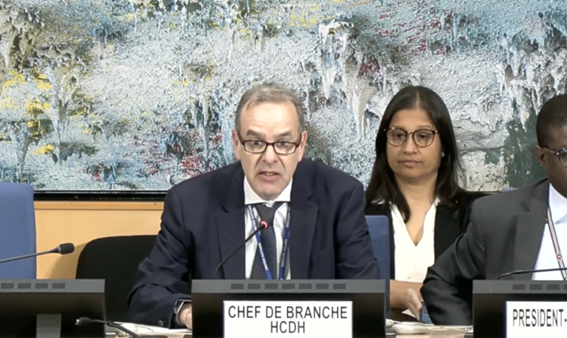
Mr Dimiter Shalev, Chief of the Equality and Non-Discrimination Branch at the UN Human Rights Office, presented report A/HRC/61/72 a follow-up report on combating intolerance, negative stereotyping and stigmatisation of and discrimination, incitement to violence and violence against persons based on religion or belief. It was submitted in accordance with Human Rights Council resolution 58/29. The report highlighted steps taken in that regard during the period from 1 January to 31 December 2025.
Key highlights of the report:
Persistent violations: Individuals from various religious groups, including Muslims, Jews, Christians, and other minorities, faced harassment, violence, and killings, both offline and online. The desecration of places of worship and targeted attacks threaten social cohesion and human dignity. Unchecked hate speech and impunity exacerbate these risks.
State responsibilities: Governments are urged to adopt and enforce comprehensive anti-discrimination legislation, invest in inclusive human rights education, and collect disaggregated data on religious discrimination in compliance with human rights standards.
Leadership and social cohesion: Political, religious, and community leaders are encouraged to reject divisive rhetoric and to promote dialogue, reconciliation, and interfaith cooperation grounded in shared ethical and spiritual principles.
Inclusive faith literacy: The report advocates for fostering understanding and respect for diverse beliefs as a societal norm. The report referenced the "Faith for Rights" framework for good practice exchange.
Digital platforms: Technology companies are identified as key actors responsible for integrating human rights safeguards in their algorithms, content moderation, and operations, in alignment with the Global Digital Compact and the UN Strategy and Plan of Action on Hate Speech.
Finally, the report emphasised that effective implementation of the action plan requires a multi-stakeholder approach. Progress depends on sustained collaboration among States, national institutions, United Nations bodies, independent experts, technocrats and civil society, including faith-based organisations. The overarching message is clear: combating religious intolerance is a shared responsibility that requires coordinated, consistent, and comprehensive action across all levels of governance and society.
Report of the IGWG-DDPA
Mr James Ndirangu Waweru, Chair-Rapporteur of the IGWG-DDPA, presented report A/HRC/61/73. The report of the IGWG-DDPA, in accordance with Human Rights Council resolution 52/37, provided information on the 23rd and 24th sessions of the Intergovernmental Working Group, held in Geneva from 13 to 17 January 2025 and from 15 to 17 October 2025, respectively.
23rd session (13–17 January 2025)
Focus: Draft United Nations Declaration on the Human Rights of People of African Descent; commemoration of the 25th anniversary of the DDPA.
Discussions:
- Delegates reviewed the draft declaration in detail, addressing provisions to strengthen national anti-discrimination legislation, promote equality, and protect the rights of people of African descent.
- Emphasis was placed on reparatory justice, highlighting measures to redress historical discrimination linked to slavery and colonialism.
- Delegates also discussed systemic and structural forms of racial discrimination, highlighting their persistence in multiple countries and institutions.
- The commemoration of the DDPA's 25th anniversary was addressed, with recommendations for education programs, awareness-raising initiatives, and national plans to advance equality and human rights for marginalised groups, including migrants and ethnic minorities.
- The session served both as a review of progress in DDPA implementation and as a planning platform to enhance its global impact.
Findings:
- Progress was achieved in some areas, including marginalisation of anti-discrimination laws and the development of national action plans, but systemic inequalities persist.
- Efforts to implement the DDPA are inconsistent across countries, with differing levels of political commitment and resource allocation.
24th session (15–17 October 2025)
Focus: Contemporary challenges to racism; completion of the first reading of the draft declaration on the human rights of people of African descent.
Discussions:
- The session emphasised the evolving nature of racism, noting its persistence in modern contexts, including digital technologies, online hate speech, algorithmic bias, and artificial intelligence applications.
- The first reading of the draft declaration provided guidance for States on measures such as adopting affirmative action policies, combating hate speech, addressing contemporary forms of racism, and ensuring reparations for discrimination rooted in slavery and colonialism.
- Mr James Ndirangu Waweru from Kenya was elected Chair-Rapporteur during the session. Mr Waweru highlighted the global resurgence of racism, including religious intolerance, supremacist ideologies, and discriminatory migration policies, emphasising disproportionate structural disadvantages faced by marginalised racial and ethnic groups.
- Complex issues were identified for further deliberation, including:
- The definition and scope of Afrophobia. particularly how the term should be understood in international human rights law, and how it can be consistently applied to address discrimination, prejudice, and systemic inequalities specifically affecting people of African descent.
- Recognition and application of collective responsibilities. This involves acknowledging the shared obligations of states and the international community to confront systemic racism. It also entails recognizing and addressing historical injustices, such as slavery and colonialism, through coordinated measures. These measures may include legal reforms, educational initiatives, and reparations aimed at promoting equality and preventing discrimination.
- Intersectional forms of discrimination, including those based on marginalised socioeconomic status and migration background.Individuals often face multiple and overlapping forms of discrimination, which necessitate targeted and inclusive policy responses
- Environmental and climate-related rights with particular attention to the disproportionate impact of environmental degradation and climate change on racial and ethnic minorities, and the need to integrate equality and non-discrimination principles into environmental policies and climate action.
- Mechanisms for reparations and remedies for racial discrimination, especially those rooted in historical injustices such as slavery and colonialism, including the development of effective legal, institutional, and policy frameworks to ensure accountability, justice, and meaningful redress for affected communities
- The session highlighted the upcoming 25th anniversary of the DDPA (2026) and the Second International Decade for People of African Descent as opportunities to renew political commitment and strengthen global action against racism.
Findings:
- Racism remains structural and systemic, affecting access to education, employment, healthcare, and justice, particularly for people of African descent, migrants, and ethnic minorities.
- Emerging forms of discrimination, such as algorithmic bias and online hate speech, require updated regulatory and policy approaches.
- Global crises, including health emergencies, economic instability, and conflicts, exacerbate racial discrimination and xenophobia.
- Obstacles to effective DDPA implementation include limited political will, insufficient resources, weak accountability mechanisms, and inadequate disaggregated data.
Recommendations:
- Strengthen national legal frameworks and policy measures to combat racism.
- Enhance data collection and monitoring of racial inequalities.
- Ensure accountability and access to justice for victims.
- Invest in education, awareness-raising, and public outreach programs.
- Promote international cooperation and inclusive engagement with civil society and other stakeholders.
The report emphasised that full implementation of the DDPA requires coordinated, multi-level action involving States, civil society, intergovernmental organisations, and other stakeholders to combat racism and advance equality globally.
Summary of the General Debate
Statements on behalf of Group of States
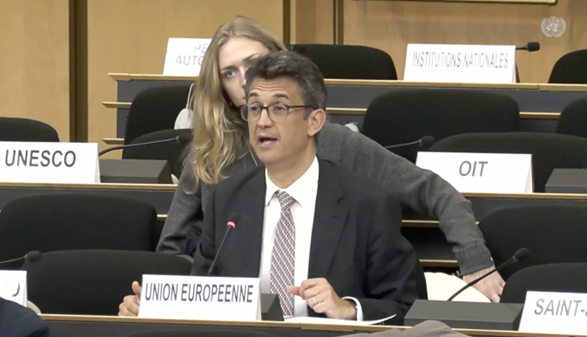
The representative of the European Union, speaking on behalf of Albania, Armenia, Georgia, Moldova, Montenegro, North Macedonia, and Ukraine, expressed concern about the rising discrimination against individuals on grounds of religion or belief. The representative noted that such restrictions often coincide with limitations on other fundamental rights, including freedom of thought and expression. The representative called on the international community to take stronger action to address religious discrimination and to implement existing normative frameworks more effectively.
The representative stated that the EU promotes education, social inclusion, interreligious dialogue, and counters disinformation and hate speech. He also highlighted the EU's active engagement in negotiations on the UN Declaration on the Human Rights of People of African Descent, affirming their commitment to achieving a positive outcome, and emphasising the importance of using limited negotiation time and resources efficiently. Finally, he welcomed the shared stakeholder interest in working constructively to improve the organisation of this work.
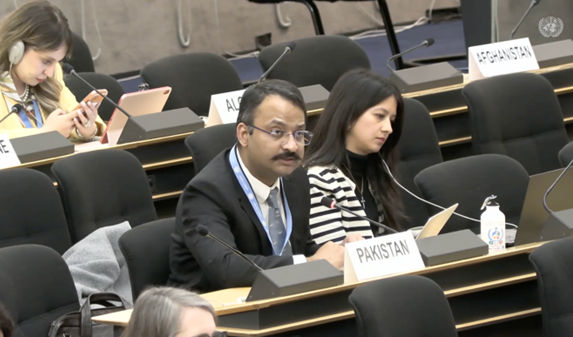
The representative of Pakistan, speaking on behalf of the Organisation of Islamic Cooperation, addressed the Council on the intersection of religion, racial supremacy, exclusion, and discrimination. The representative framed these issues as drivers of conflict, violence, and violations of international human rights law, including the DDPA. He highlighted the unchecked promotion of racial and religious hatred as a driver of discrimination, hostility, and violence, stressing that full implementation of states' obligations to prohibit propaganda for war and advocacy of hatred is essential to prevent atrocities.
The representative underscored the surge in religious intolerance, particularly Islamophobia, noting that religious identity is being weaponised to justify violence and demonise populations. The representative specifically referenced the occupied Palestinian territory, asserting that the Palestinian people face systemic oppression, apartheid, and acts amounting to genocide. He stated that addressing these issues is necessary to advance human rights, promote equality, and safeguard international law.
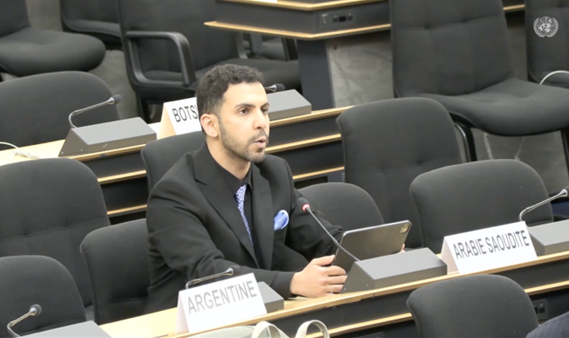
The representative of Saudi Arabia, speaking on behalf of a group of Arab states, noted that Arab nations have focused on developing institutional and legal frameworks to address these issues, including adopting laws that criminalise incitement to hate and violence and aligning national policies to uphold the principles of coexistence and tolerance. The representative highlighted educational policies promoting diversity, as well as regional and national initiatives for interfaith dialogue and efforts to combat Islamophobia, which has been increasing in certain societies and undermining mutual understanding and respect.
Additionally, he drew attention to the ongoing occupation and the gross human rights violations faced by the Palestinian people, describing this as one of the ultimate forms of injustice. He called for urgent international action to ensure that the Palestinian people enjoy their rights, including the right to self-determination. He also emphasised the need for collective action to address the root causes of hate speech and to build more peaceful, cohesive societies.
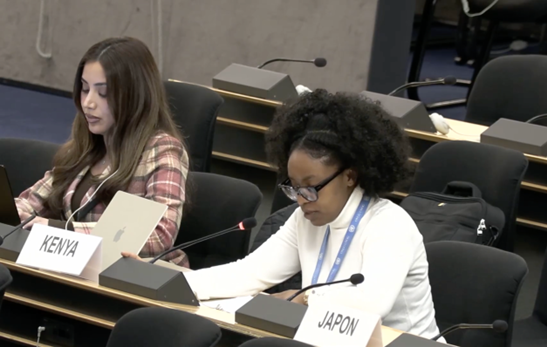
The representative of Kenya, speaking on behalf of a group of African States, affirmed full support for advancing the work on the draft declaration concerning the respect, protection, and fulfilment of the human rights of people of African descent. She called on the Human Rights Council members to support the renewal of the mandate of the IGWG-DDPA for an additional three years to enable the IGWG-DDPA complete its work on finalising the draft declaration and advancing measures to protect and promote the rights of people of African descent. This extension would allow the group to finalize its draft declaration and progress initiatives aimed at protecting and promoting the rights of people of African descent.
She emphasised that the DDPA represents a comprehensive United Nations response and serves as a solid foundation for combating racism, racial discrimination, xenophobia, and related intolerance. Noting the 25th anniversary of the DDPA, the representative expressed deep concern over the continuing scourge of racism and racial discrimination, which perpetuates social and economic inequalities in many parts of the world.
The representative renewed the Group's call for states to ensure the full and effective implementation of the DDPA through national actions and programmes as part of broader efforts to accelerate the fight against racism.
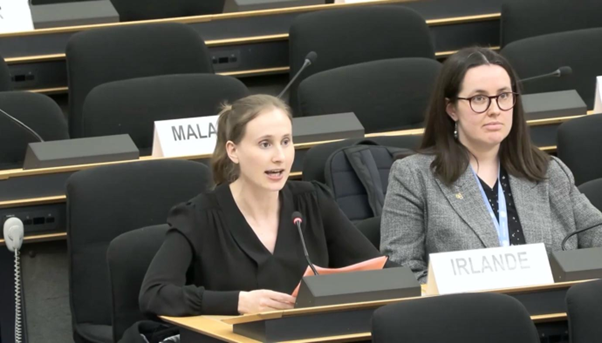
The representative of Ireland delivered a joint statement on behalf of a group of states responding to remarks made by a representative of the so-called administration in the territory of Ukraine temporarily controlled by Russia.
The representative recalled relevant United Nations General Assembly resolutions that recognise this territory as an integral part of Ukraine. She reaffirmed the Group's unwavering commitment to the sovereignty, independence, unity, and territorial integrity of Ukraine within its internationally recognised borders, including its territorial waters.
She reiterated the strongest condemnation of Russia's aggression and its attempts to acquire Ukrainian territory by force, in flagrant violation of international law, including the UN Charter. The representative stated that the Group firmly and unequivocally rejects and will never recognise the attempted illegal annexation by Russia of Ukraine's regions of Crimea, Donetsk, Luhansk, and other areas. She urged Russia to refrain from allowing any representative of the so-called administration in the territories of Ukraine, currently controlled by Russia, to intervene on its behalf within the Human Rights Council or any other international forum.
Statements on behalf of States
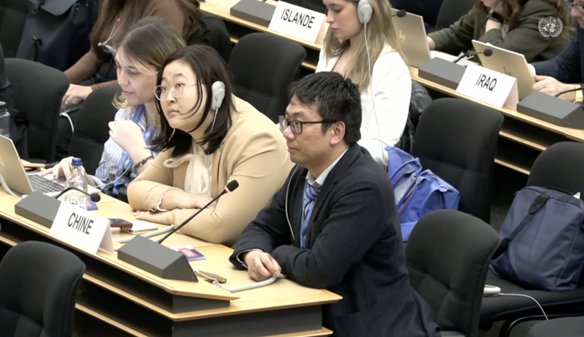
The representative of China stated that eliminating all forms of racism and ensuring dignity and equal rights for all is essential, in alignment with the spirit of the UN Charter, reflecting international fairness and justice. He noted that, as the international community celebrates the 25th anniversary of the DDPA, racial discrimination, xenophobia, and related intolerance are still prevalent. He highlighted that the historical legacies of colonialism and the transatlantic slave trade have yet to be fully addressed, and that in some countries, people of Asian and African descent continue to face structural discrimination in education, employment, housing, healthcare, and access to justice.
The representative affirmed that China is both a staunch supporter and a committed practitioner of the DDPA. He expressed support for extending the mandate of the IGWG and advancing the drafting of the UN Declaration on the promotion and full respect of the rights of people of African descent. He expressed hope that these efforts will provide an opportunity for all parties to revitalise their collective commitment to eliminating racism and to promote the effective implementation of the DDPA together.
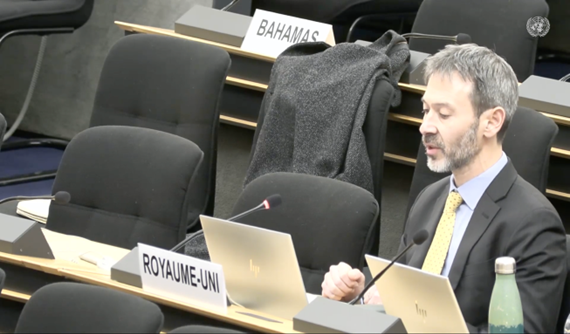
The representative of the United Kingdom stated that anti-Semitism has been rising in recent years, both domestically and internationally. He recalled the terrorist attack in Manchester in October 2025, where two people tragically lost their lives. He noted that on 23 March 2026, the Jewish community in London was targeted when ambulances operated by the Hatzolah emergency service were deliberately set on fire.
He emphasised that events in the Middle East are often used as a pretext to incite hatred against Jewish communities worldwide. The representative highlighted the rapid spread of anti-Semitism both online and on the streets, citing the Prime Minister's description of the attacks on the Jewish community as attacks on the soul. He stated that anti-Semitism is abhorrent and has no place in society.
The representative affirmed the United Kingdom's commitment to addressing anti-Semitism both domestically and in cooperation with international partners. He welcomed the efforts of the High Commissioner and other stakeholders to uphold principles against anti-Semitism. He urged all partners to work together to confront and defeat this pervasive hatred.
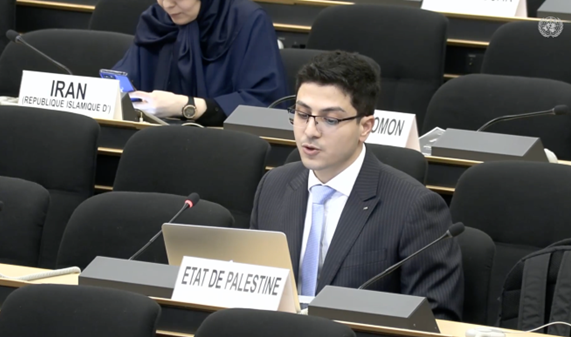
The representative of the State of Palestine stated that 25 years ago, the DDPA affirmed that racism, racial discrimination, xenophobia, and related intolerance, including severe human rights violations, require concrete action. He noted that DDPA was intended not just as a principle but as a framework for implementation and accountability, and that it remains the central framework guiding international efforts to combat racism and its root causes.
The representative emphasised that the DDPA remains relevant for the Palestinian people. He described the realities faced by Palestinians as reflecting a pattern of systematic racial discrimination and domination, including discriminatory practices, segregation, restrictions on movement, and the denial of basic rights. He stated that these are not isolated acts but an institutionalised system of racial domination that perpetuates structural injustice and inequality.
He further noted that the DDPA underscores the obligation of states to refrain from supporting apartheid and racial discrimination to ensure accountability, remedies, and justice for victims. He stressed that these obligations remain unfulfilled where such systems are sustained, accountability is absent, and impunity allows discrimination to persist. The representative concluded that racism is not a relic of the past but a living reality, and that the full implementation of the DDPA for Palestine is long overdue.
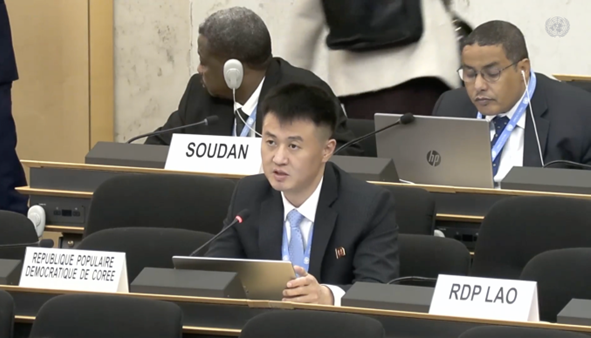
The representative of the Democratic People’s Republic of Korea expressed deep concern about widespread and systemic human rights violations occurring in Western countries, including racism, xenophobia, and discrimination. He noted that in recent months, there have been numerous cases of violence and hate crimes targeting migrants, refugees, and ethnic minorities in countries such as France. He reported that migrants have been subjected to brutal attacks, including stabbings and shootings, and that ethnic and religious minorities across Europe, particularly in the United Kingdom, the Netherlands, and Latvia, continue to experience threats, hate speech, and discrimination in areas such as education, housing, and employment. These groups are often excluded from accessing social services.
The representative stated that despite these violations, the Human Rights Council continues to focus on specific countries while disregarding serious human rights violations in Western countries. He described this approach as politicisation, double standards, and selectivity, all of which undermine the Council's credibility. He emphasised that the Council should address human rights issues objectively and without selectivity, in fulfilment of its mandate to promote human rights worldwide.
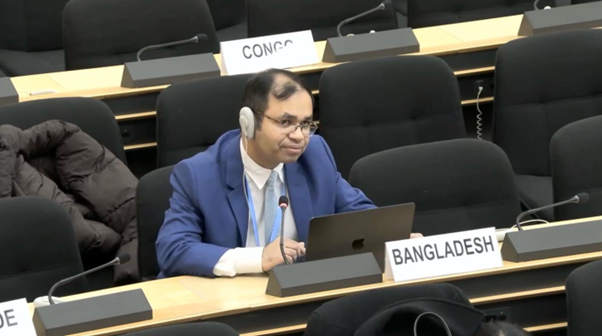
The representative of Bangladesh expressed deep concern over the alarming rise in prejudice, hatred, and religious profiling against Muslims, alongside the growing surge of populism, xenophobia, and Islamophobia. He noted that the political will to address these challenges remains sporadic, one-sided, and insufficient. Around the world, innocent people continue to suffer from violence, oppression, and persecution driven by hatred and intolerance.
The representative cited the devastation of Gaza and the persecution of the Rohingya people as historic reminders. He called for an immediate cessation of all violence and urged the international community to ensure accountability and uphold international law.
He emphasised that the Rohingya crisis is rooted in systematic discrimination and entrenched racism. He highlighted the denial of citizenship under the 1982 law and persistent impunity, which have enabled recurring cycles of violence and forced displacement. The representative called for decisive international action to end discrimination and ensure the safe and sustainable return of the Rohingya.
To combat racism, discrimination, and intolerance, he underscored three priorities: prevention must be central, justice systems must end impunity and ensure accountability, and equal access to opportunities must be guaranteed through strengthened international cooperation.
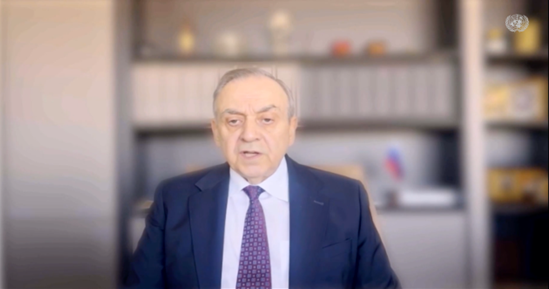
The representative of the Russian Federation expressed concern over increasing discrimination against Russians and Russian speakers in European countries, stating that these actions violate international standards for combating racism.
The representative of Ukraine raised a point of order, and he requested that the video statement be temporarily suspended.
In response, the representative of Ukraine emphasised that the organisation of the Council's work must adhere to the legal framework established by relevant United Nations General Assembly resolutions. He noted that these resolutions reaffirm Ukraine's sovereignty and territorial integrity within internationally recognised borders, including Crimea and other regions temporarily under occupation. He pointed out that any participation or representation originating from temporarily occupied territories of Ukraine, facilitated by or under the authority of the Russian Federation, lacks legal validity. He requested that the statement from the representative of the illegally occupied territory not be continued on behalf of the Russian Federation.
The Chairperson recalled that, in accordance with the Rules of Procedure, each state must appoint its delegation members, and that the Secretariat does not have the authority to accredit or censor representation. He noted that the video statement from the Russian Federation was included in the notification submitted for the session of the Council and therefore proceeded with the video.
Continuing, the representative of the Russian Federation stated that many Russian academics are imprisoned, citing cases including Professor Alexander Gunko, who was sentenced to ten years, Viktor Gushan, who has been detained in Poland, and archaeologist Alexander Butch, who is awaiting transfer to Ukrainian authorities. He also alleged that thousands of Russians are being deported from Latvia and described discrimination against Russians in the Baltic countries as systematic.
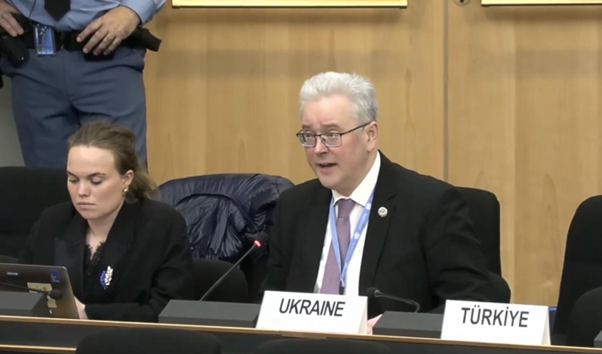
The representative of Ukraine responded that the Human Rights Council is not the appropriate venue for the deputy head of the Russian occupation administration in Crimea to address the Council, even via video. He stated that Russia's policies in Crimea and other temporarily occupied territories are aimed at deliberate demographic changes in violation of international humanitarian and human rights law.
He highlighted the actions taken to erase Ukrainian identity, including enforced Russian citizenship, suppression of Ukrainian statehood and culture, the deportation of children, and efforts to conceal their identity. He called on the international community to strengthen joint efforts to eradicate discrimination, intolerance, and xenophobia, which he characterised as Russia's war crimes and crimes against humanity in Ukraine.
Representatives of National Human Rights Institutions (NHRIs) and Non-Government Organisations (NGOs)
Representatives of national human rights institutions and non-governmental organisations highlighted widespread and systemic human rights violations, racial and religious discrimination, and threats to civic freedoms across multiple regions. They emphasised the urgent need for accountability, protection of vulnerable populations and adherence to international standards.
1. Conflict Zones and Militarised Areas
Multiple statements underscored the severe impact of military operations on civilian populations:
- In Pakistan, Pashtun communities continue to face insecurity, forced disappearances, extrajudicial killings, displacement, and restrictions on peaceful civic engagement. Calls were made for the release of political leaders, lifting bans on civic movements, ending drone strikes, and halting arms transfers until measurable human rights progress is achieved.
- In Sudan and Darfur, ethnically motivated violence, hate speech, and targeted attacks on dark-skinned African communities have escalated, exacerbating displacement and social division.
- In West Papua, Indonesia, intensified military operations linked to resource exploitation have led to the displacement of indigenous populations, land dispossession, and ecological destruction.
- Afghanistan experienced a forced expulsion of Afghan refugees from Pakistan, with families sent back under harsh conditions, violating the principles of non-refoulement.
- Civilian casualties were reported from military strikes in Iran and Pakistan, as well as missile attacks by Iran against the United Arab Emirates, highlighting violations of the right to life and international law, and the urgent need for independent investigation and accountability.
2. Systemic Racism, Xenophobia, and Religious Discrimination
Speakers emphasised the persistence of structural discrimination globally:
- In India and Indian-administered territories, rising Islamophobia, restrictions on religious freedom, surveillance of mosques, and systemic exclusion of minorities were noted.
- Reports from Brazil highlighted racial discrimination against black communities, including slavery, physical abuse, and a culture of impunity for perpetrators.
- France and Italy were criticised for criminalising and harassing individuals expressing solidarity with Palestine or criticising state policies, which adversely impact freedom of expression.
- Concerns were raised about anti-Semitic attacks and hate speech in Australia, Britain, Canada, and France, highlighting issues of discrimination and the normalisation of prejudice against Jewish communities.
- In the United Kingdom, proposals to extend the settlement period for skilled migrants risk reinforcing structural inequalities, particularly affecting racially marginalised and low-income workers. NGOs urged for transitional protections and comprehensive equality impact assessments.
- Discrimination against refugees, displaced persons, and minority groups continues in multiple regions, highlighting the need for inclusive policies, safe return, and equitable access to services.
3. Accountability, Legal Protections, and Civic Space
- Across various contexts, the speakers emphasised the need for independent investigations, transparent judicial processes, and monitoring mechanisms to address extrajudicial killings, enforced disappearances, hate speech, and systemic discrimination.
- Specific cases were cited, including the prosecution of activists and human rights defenders in Iran and the suppression of academic freedom in South Korea.
- Organisations stressed the importance of civic participation, the protection of human rights defenders, and the safeguarding of freedoms of expression, assembly, and religion.
4. Global Commitments and Implementation of the DDPA
Speakers from several organisations
- Called for the implementation and updating of the DDPA to address contemporary forms of racism, discrimination, and intolerance.
- Emphasis was placed on reparative justice, truth, reconciliation, and the creation of inclusive societies that uphold equality, dignity, and protection for all vulnerable groups.
- International monitoring, sanctions, and policy reviews were urged to ensure states comply with their human rights obligations, prevent impunity, and strengthen protection for marginalised populations.
Right of Reply
Pakistan
The representative of Pakistan exercised the right of reply in response to statements made by an NGO. The representative stated that the accusations were politically motivated and baseless, originating from personal capacity and not aligned with UN consultative arrangements with civil society. The representative expressed concern that the speaker had misquoted opinions and special procedure allegations and emphasised that misuse of NGO privileges undermines the credibility of legitimate civil society actors. He reiterated the Council's commitment to maintaining minimum standards of conduct in its work.
Indonesia
The representative of Indonesia stated that the NGO's statements were misleading and lacked context. The representative explained that military operations were conducted in response to escalating attacks by armed groups targeting civilians and public infrastructure, resulting in widespread displacement. The representative affirmed Indonesia's ongoing commitment to upholding human rights, including economic, social, and cultural rights, across its provinces.
Sudan
The representative of Sudan exercised its right of reply following statements made by an NGO. The representative claimed that the information provided by the NGO was politically biased and detrimental to national institutions. The representative highlighted that Sudan promotes coexistence, criminalises racism and discrimination, and maintains security and legal institutions to protect all communities. The representative acknowledged challenges by militias and foreign-supported actors targeting certain groups. The representative affirmed the government's efforts to combat violations, protect displaced persons, and uphold the rights of all religious and cultural groups.
Position of Geneva International Centre for Justice (GICJ)
Geneva International Centre for Justice welcomes the report presented by the High Commissioner that focused on combating intolerance and violence based on religion or belief. GICJ expresses serious concern over the persistence of discrimination and violence based on religion occurring both offline and online. The inconsistent implementation of national legislation and policies reveals significant gaps in accountability and protection of fundamental freedoms.
GICJ emphasises that addressing incitement to violence and hatred requires the consistent application of international human rights law, ensuring that freedom of expression is protected while prohibiting advocacy of hatred. In this regard, the Rabat Plan of Action remains a key framework, although its limited operationalisation underscores the need for clearer legal standards and stronger enforcement mechanisms.
The Rabat Plan of Action, developed by the United Nations, provides guidance to states on addressing incitement to hatred while safeguarding freedom of expression. It establishes a six-part test to assess when speech constitutes incitement to discrimination, hostility, or violence, and emphasises that criminal measures should be a last resort, favouring education, dialogue, and counter-speech in line with human rights standards.
Effective responses must prioritise preventive measures, including education, interfaith dialogue, and community-based initiatives to foster inclusion and mutual understanding. Structural discrimination and entrenched social divisions require sustained policy reforms and resource allocation. GICJ calls on the Human Rights Council and Member States to intensify efforts to implement existing frameworks, strengthen international cooperation, and ensure comprehensive, rights-based measures responsive to emerging challenges.
Additionally, GICJ also welcomes the report of the IGWG-DDPA and expresses concern at persistent gaps in its implementation. Racism, racial discrimination, xenophobia, and related intolerance continue to manifest globally, revealing structural inequalities and a failure to translate normative frameworks into concrete protection. Meaningful implementation requires sustained political will, accountability, and measurable outcomes.
The Working Group's discussions underscore the need for strengthened international cooperation and renewed engagement with the DDPA framework to combat contemporary racism, including digital forms of racial hatred, algorithmic bias, and intersectional discrimination. Effective responses require coordinated action by States and private actors, grounded in human rights principles, with transparency, proactive regulation, and monitoring to counter online incitement while safeguarding fundamental freedoms.
GICJ urges the Human Rights Council and Member States to revitalise the implementation of the DDPA through concrete, time-bound commitments, enhanced reporting, and strengthened support for affected communities. Priority must be given to addressing root causes of discrimination, ensuring access to remedies, and promoting inclusive policies that uphold equality and human dignity.
Finally, GICJ urges all stakeholders to view the 25th anniversary of the DDPA and the Second International Decade for People of African Descent as opportunities to reaffirm commitments, strengthen institutional mechanisms, and advance coordinated action. States, international organisations, civil society, and other actors must translate the draft declaration's principles into concrete, measurable actions to realise equality and dignity for people of African descent.
