



HRC61: Final Plea: The Democratic Republic of The Congo is in Distress
The 61st Session of the Human Rights Council
23 February - 31 March 2026
Item 10: Enhanced interactive dialogue on the oral update by the High Commissioner on the situation of human rights in the Democratic Republic of the Congo
25 March 2026
By Mohammed Hindawi/GICJ
Executive Summary
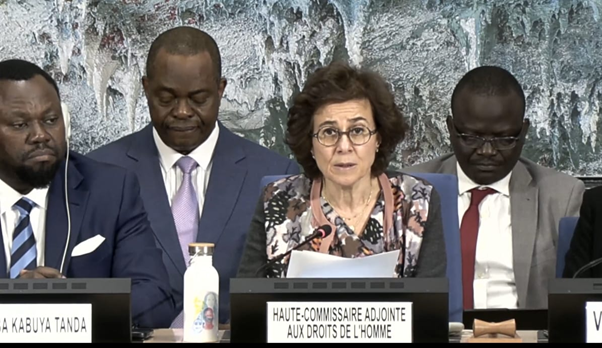
On March 25, 2026, the Human Rights Council, during its 61st session, held an enhanced interactive dialogue. One whose title sounded cold in its wording, yet carried an overwhelming weight. Three key speakers took up the mantle of truth: Ms. Nada Al-Nashif, Deputy High Commissioner for Human Rights, Mr. Bruno Lemarques, Deputy Special Representative of the Secretary-General and Humanitarian Coordinator in the Democratic Republic of Congo, and Mr. Samuel Mbemba Kabuya Tan, Minister of Human Rights of the Democratic Republic of the Congo. What they presented was not merely a report—it was a cry for help from the depths of a country that has been bleeding for decades.
The numbers alone are enough to paint a picture of the catastrophe: 3,100 human rights violations in 2025, resulting in 8,300 victims, a 24% increase over the previous year. In the five eastern provinces alone—North Kivu, South Kivu, Ituri, Tanganyika, and Maniema—between October 2025 and February 2026, 600 extrajudicial killings, 1,300 murders, 1,500 abductions, 450 cases of sexual violence, and 31 drone strikes in densely populated civilian areas were recorded. The scale of sexual violence is staggering: 200,000 survivors received UN support in 2025, a 67.5% increase, while systematic rape has produced a generation of children born into the conflict. Investigations have uncovered mass graves that, though silent, speak volumes of the atrocities committed.
Responsibility is shared, but the heaviest burden falls on the Rwandan-backed Alliance Fleuve Congo/Mouvement du 23 mars, along with Allied Democratic Forces, the Cooperative for the Development of the Congo, the “Wazalendo” self-defence groups, and the Forces démocratiques de libération du Rwanda. Most disturbingly, government forces themselves are implicated in a quarter of the violations. Furthermore, the UN financial crisis has led to a 37% reduction in the number of field staff, effectively crippling investigative mechanisms. One of the most distressing aspects is that only three forensic doctors are responsible for documenting crimes in a country spanning 2.3 million square kilometers. This is to say nothing of the 26 million people suffering from hunger, the 8 million displaced, and the 42 arbitrary arrests of journalists and political adversaries by an entity known as the “National Cyber Defense Council.”
The consensus is clear: the Washington Agreement and the Doha Declaration are welcome steps, but they remain mere words on paper unless they translate into a genuine ceasefire. Rwanda is required to immediately withdraw its forces and cease its support for the Alliance Fleuve Congo/Mouvement du 23 mars. The international community—represented by the guarantors of the Doha and Washington agreements—is called upon to demonstrate that its commitments are not simply diplomatic rhetoric. For there can be no peace without justice, and no justice in the face of impunity.
Geneva International Centre for Justice (GICJ) expresses its grave concern and deep alarm at the accelerating collapse of the human rights system in the Democratic Republic of the Congo. The documented crimes—sexual slavery, mass graves, drone strikes targeting civilians, and the persecution of human rights defenders—do not represent isolated incidents but rather a blatant international failure to uphold the responsibility to protect. GICJ calls for urgent international action before it is too late, including the imposition of targeted sanctions against those obstructing and violating the ceasefire agreement, as well as the issuance of international arrest warrants against individuals suspected of committing war crimes. It further urges the adoption of additional immediate measures capable of curbing the escalating level of human rights violations in the Democratic Republic of the Congo.
Background
The Democratic Republic of the Congo is one of the world's most conflict-ridden countries, plagued by armed conflict for over three decades. This crisis is intertwined with deep-rooted structural factors, making it one of the world's most complex humanitarian crises. The country suffers from chronically weak governance and institutional fragility, fierce competition for its vast natural resources and precious minerals such as coltan, gold, and cobalt, and deep-seated ethnic tensions fueled by blatant foreign interference from neighboring countries. The conflict is most intense in the eastern provinces of Ituri, North Kivu, South Kivu, and Tanganyika, where more than 120-armed groups are active and responsible for the most serious and systematic human rights abuses.
A wide range of armed groups are involved in this conflict, all of which have been documented as having committed grave human rights violations against civilians, UN peacekeepers, and humanitarian actors. In its resolution 60/35, the Human Rights Council condemned the activities of these groups by name: Allied Democratic Forces, the Cooperative for the Development of the Congo, the “Wazalendo” self-defence groups, the Forces démocratiques de libération du Rwanda and the Alliance Fleuve Congo/Mouvement du 23 mars armed group, which launched a large-scale offensive in January 2025 that led to a severe deterioration in the humanitarian situation and unprecedented waves of internal displacement. The Human Rights Council strongly condemned the external support provided to these groups, especially Rwandan support for the Alliance Fleuve Congo/Mouvement du 23 mars, as a clear violation of the principles of sovereignty and non-interference in the internal affairs of states.
The grave violations are multifaceted and interconnected: sexual slavery of women and girls has resulted in forced childbirth, leaving profound social and psychological scars, and systematic sexual violence against children has gone unchecked. Mass graves have been uncovered in various regions, bearing witness to extrajudicial killings perpetrated by different parties to the conflict. At the same time, hate speech is escalating alarmingly, particularly against Tutsi groups of Rwandan origin, fueling ethnic tensions, inciting ethnic targeting, and threatening to plunge the situation into wider communal violence.
Faced with all these violations, the Congolese justice system is burdened by a profound institutional collapse that renders genuine accountability virtually impossible. Despite the scale of the crimes and their geographical spread across an area of approximately 2.3 million square kilometers, the country has only three forensic pathologists to cover its entire territory. This catastrophic shortage of forensic personnel means a virtual inability to document crimes according to required legal standards, to investigate suspicious deaths, and to present sufficient forensic evidence in court. Added to this is the lack of judicial independence and the intimidation of witnesses and human rights defenders, which reinforces an integrated system of impunity that encourages the repetition of violations and renders justice unattainable.
Summary of the Enhanced Interactive Dialogue
The Deputy High Commissioner for Human Rights painted a grim picture of the situation in the Democratic Republic of the Congo, attributing the roots of the crisis to four interconnected factors: the proliferation of armed groups, Rwandan intervention in support of the Alliance Fleuve Congo/Mouvement du 23 mars, ethnic tensions, weak governance, and fierce competition for natural resources. Between October 2025 and February 2026, the Office of the High Commissioner for Human Rights documented a total of 2,560 violations affecting 6,760 victims in the eastern Congolese provinces of North Kivu, South Kivu, Ituri, Tanganyika, and Maniema. These violations included 600 extrajudicial killings, 1,300 murders, 1,500 abductions, and 450 cases of sexual violence, in addition to 31 drone strikes in February 2026 alone targeting densely populated civilian areas.
All active armed groups share responsibility for these violations, the Alliance Fleuve Congo/Mouvement du 23 mars, the Forces démocratiques de libération du Rwanda, the Cooperative for the Development of the Congo, Allied Democratic Forces, and the Wazalindo groups. Most disturbingly, Congolese government forces are implicated in approximately a quarter of these violations. The situation is not confined to the east; sectarian conflicts in the west have displaced 146,000 people.
On the humanitarian front, 26 million people are at risk of famine, half of all children under five suffer from stunting due to malnutrition, and eight million are internally and externally displaced. Civil society, journalists, and opposition figures are not spared; 42 cases of arbitrary detention in undisclosed locations have been documented, with an entity known as the “National Cyber Defense Council” implicated in the persecution of journalists and opposition members. The discovery of mass graves adds to the grim reality, compounded by a glaring lack of forensic expertise, with only three forensic doctors serving the entire vast territory of the Democratic Republic of the Congo, making the pursuit of justice a distant prospect.
The Deputy Commissioner concluded by welcoming the Washington Agreement and the Doha Declaration, while emphasizing that they have yet to translate into a genuine ceasefire on the ground. The Deputy Commissioner explicitly called upon Rwanda to withdraw from Congolese territory and cease its support for the Alliance Fleuve Congo/Mouvement du 23 mars. The Deputy Commissioner underscored that no path to sustainable peace can be complete without genuine accountability that reinforces human rights principles, alongside a resolute international commitment to ending external interference in the affairs of the Democratic Republic of the Congo.
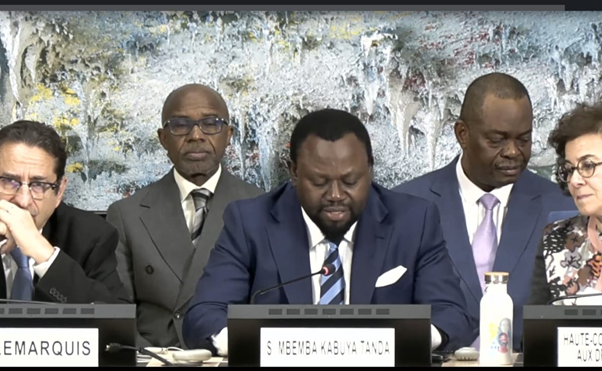
The Congolese Minister of Human Rights thanked the Office of the High Commissioner for Human Rights for its technical assistance in supporting the transitional justice process, emphasising that the Congo, in cooperation with the Ministry of Higher Education, is working to strengthen its national expertise in forensic medicine. He stressed that financial considerations should not hinder the sustainability of this assistance, particularly regarding the extension of the mandate of international experts. He noted that the government had enacted two crucial national laws: the first establishing a Truth and Reconciliation Commission and a special criminal court to combat impunity and ensure non-recurrence of violations; the second, concerning the Court of Cassation (April 11, 2013), establishes an international institutional body to support victims and a national compensation fund. He also explained that the government is working to combat child labour in extractive industries and reduce overcrowding in detention centers through the conditional release of a number of detainees.
The Minister firmly demanded an end to the Rwandan occupation of Congolese territory and a halt to Rwanda's support for armed groups, citing shocking figures: 17,015 violations of the right to life and one rape every four minutes in conflict zones. He highlighted the violations in the Overa region, where 1,500 people were killed, 12,000 children were deprived of education, and mass graves were discovered.
The minister concluded by emphasising that lasting peace will not be achieved without continuing the transitional justice process and firmly addressing any attempt at impunity, calling on the international community for a genuine partnership and sustained support to overcome the structural challenges facing this process.
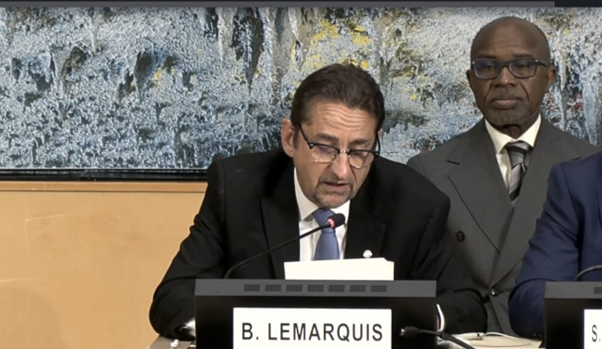
The Deputy Special Representative of the Secretary-General, Resident Coordinator and Humanitarian Coordinator in the Democratic Republic of the Congo opened his remarks by thanking the Congolese authorities for their cooperation with the United Nations system, before painting a grim picture of the rapidly deteriorating human rights situation in 2025. He revealed that the UN Office had documented 3,100 human rights violations, resulting in 8,300 victims, a 24% increase compared to 2024. He placed primary responsibility on the Rwandan-backed Alliance Fleuve Congo/Mouvement du 23 mars, condemning its use of heavy weapons and drones in densely populated civilian areas, which resulted in the deaths of innocent civilians and even targeted UN personnel.
The Deputy Special Representative of the Secretary-General, Resident Coordinator, and Humanitarian Coordinator in the Democratic Republic of the Congo also addressed the issue of sexual violence with grave concern, noting that the United Nations assisted 200,000 survivors of sexual violence in 2025, a shocking 67.5% increase over the previous year. He pointed to the worsening plight of children born as a result of rape as a deep social wound requiring a comprehensive humanitarian and legal response. He also noted the discovery of mass graves and the systematic targeting of journalists, human rights defenders, and opposition leaders, particularly in areas controlled by the Alliance Fleuve Congo/Mouvement du 23 mars.
He warned that the financial crisis plaguing the United Nations system is severely impacting the humanitarian response in the Congo, with the number of UN staff on the ground having decreased by 37%. This has weakened the ability to provide technical assistance to Congolese authorities and hampered the work of international commissions of inquiry tasked with combating impunity. He stressed that genuine peace cannot be achieved without effective transitional justice and fair reparations for victims.
He concluded by calling on all parties to the conflict to fully comply with their international obligations under international humanitarian law and human rights law, and urging the international guarantors in both Doha and Washington to make every effort to translate the agreements into tangible and lasting peace on the ground in the Congo.
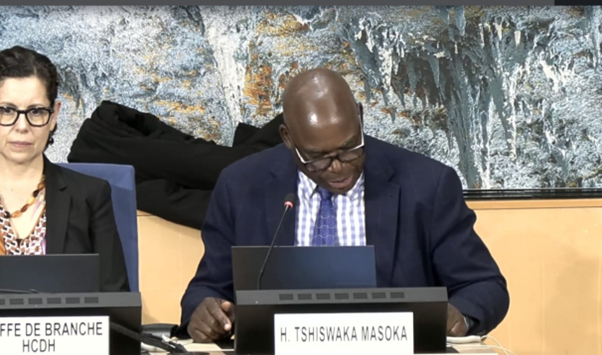
The statement delivered by the Director General of the Human Rights Research Institute highlighted the alarming state of human rights violations in the country, emphasising that these violations are not limited to armed groups such as the Alliance Fleuve Congo/Mouvement du 23 mars, but extend to the practices of the state authorities themselves. He pointed out that innocent civilians are the ones paying the price for these twofold violations.
Among the issues he raised was the state's failure to protect citizens' property rights. Their properties are being confiscated by armed groups without any intervention from the authorities to protect them, representing a failure in one of the state's most important roles: ensuring the security and safety of its citizens' property.
He also addressed the issue of pollution in mines and its disastrous impact on citizens' health. Pollution resulting from these activities has led to a significant increase in the number of people suffering from serious illnesses such as cancer. He criticised the state's failure to provide compensation to those affected, which exacerbates their suffering and constitutes a violation of their right to health and fair compensation.
In addition, he strongly criticised the “National Cyber Defense Council”, accusing it of carrying out arbitrary arrest campaigns against political opponents. He noted that these detainees are being held in illegal detention centers and denied their fundamental right to access legal counsel, constituting a flagrant violation of their right to legal representation.
He emphasised that these practices reflect a profound failure of state governance by the Congolese authorities, who simultaneously deal harshly with political opponents without any legal basis that respects human rights principles. He concluded his remarks with an urgent call for the closure of all illegal detention centers and an end to these violations, which undermine the foundations of transitional justice and are essential to combating impunity.
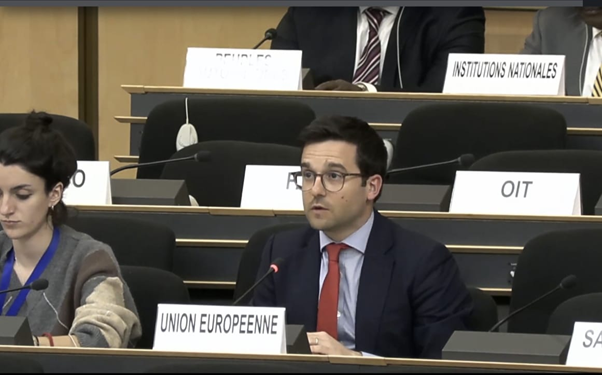
Statement on behalf of the Group of States
The European Union representative expressed grave concern over the rapidly deteriorating human rights situation in the Democratic Republic of the Congo, warning of escalating violations as the armed conflict continues, particularly in the east. He called on all parties to immediately adhere to the ceasefire commitments they have made, condemning the killings, recruitment of child soldiers, and sexual violence. He also stressed the need to activate accountability mechanisms and combat impunity by providing the Independent Commission of Inquiry with the necessary resources, expressing regret over the authorities' decision to lift the moratorium on the death penalty, given its serious repercussions for justice and human rights.
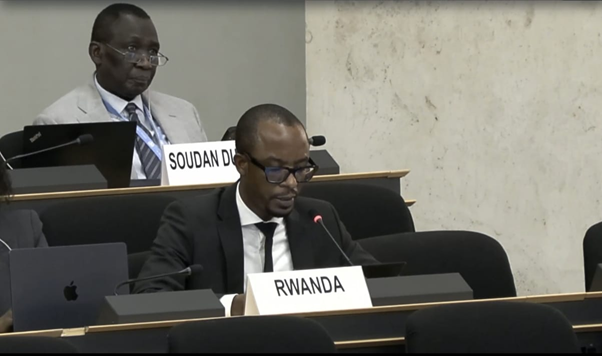
Statements by Member States
The Rwandan representative asserted that the Congolese government itself bears responsibility for approximately 30% of human rights violations in the Congo, accusing it of supporting armed groups involved in the conflict. He cited the killing of a French United Nations International Children's Emergency Fund (UNICEF) worker as a result of military operations carried out by these groups, which he claimed were linked to the Congolese authorities. He strongly rejected the use of this platform to condemn Rwanda, arguing that the core of the crisis lies in the fragility of Congolese state institutions and their inability to enforce the rule of law, not in foreign interventions as is often claimed.
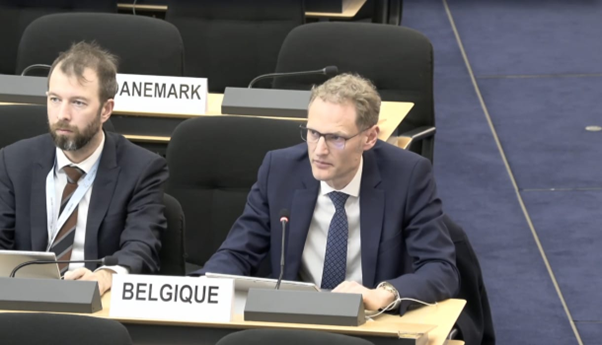
The Belgian representative expressed grave concern over the sharp deterioration of the humanitarian crisis in the Democratic Republic of the Congo, emphasising that the situation had reached a critical level, directly threatening the lives of civilians. He called on both the Democratic Republic of the Congo and Rwanda to strictly adhere to the Washington Declaration of March 18 and the ceasefire, warning that the continuation of the conflict exacerbates the suffering of the population, particularly as clashes are occurring in populated areas. He also condemned sexual violence and the forced recruitment of children and denounced the systematic repression of human rights defenders by armed groups and government authorities, especially through the practices of the “National Cyber Defense Council”.
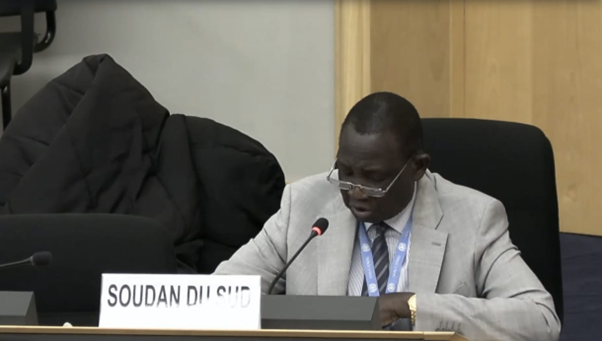
The representative of South Sudan expressed deep concern over the deteriorating security situation in the Democratic Republic of the Congo, given its direct repercussions on the stability of neighbouring countries, particularly South Sudan. He commended the existing cooperation between the Congolese authorities and the Office of the High Commissioner for Human Rights, calling for its strengthened cooperation through continued support and the provision of necessary technical assistance to build institutions capable of achieving peace. He also urged regional organisations, especially the African Union, to intensify their efforts to support security and establish lasting peace in the Democratic Republic of the Congo, thereby contributing to the stability of the entire region.
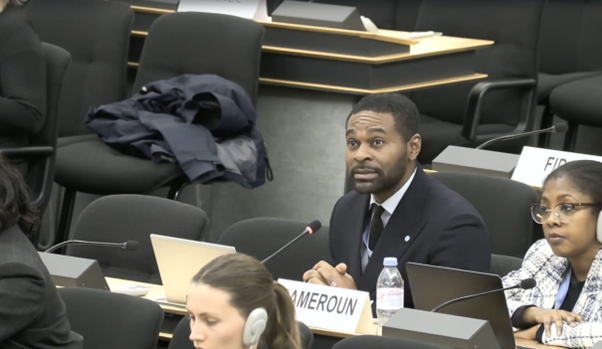
The representative of Cameroon expressed appreciation for the efforts of the Office of the High Commissioner for Human Rights, while also expressing grave concern about the serious violations and escalating armed conflict, particularly in eastern Congo, and the resulting increasing waves of displacement. He affirmed his country's full solidarity with the Congolese people and the government of the Democratic Republic of the Congo, expressing his hope that the state would be able to extend its authority over all its territory. He also noted the importance of international and regional efforts aimed at achieving peace, stressing that combating impunity is a fundamental pillar for achieving lasting stability.
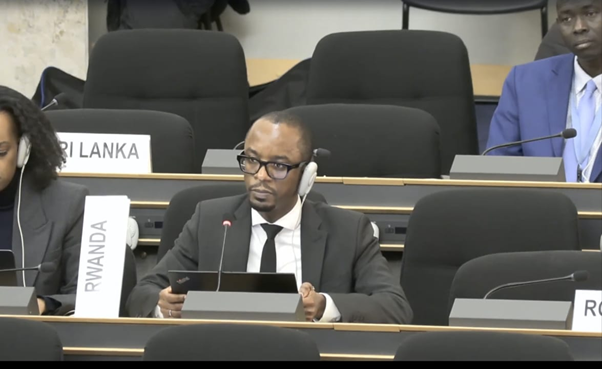
The representative of Rwanda raised a point of order, clearly stating that the item under discussion was limited to technical assistance and capacity building, while some interventions had strayed from this framework and exceeded the scope of the specified topic. He directly questioned the Vice-President about the permissibility of such deviation from the agenda, emphasising the need for strict adherence to the rules of debate and ensuring that discussions remained focused on the core of the item under consideration without undue digression.
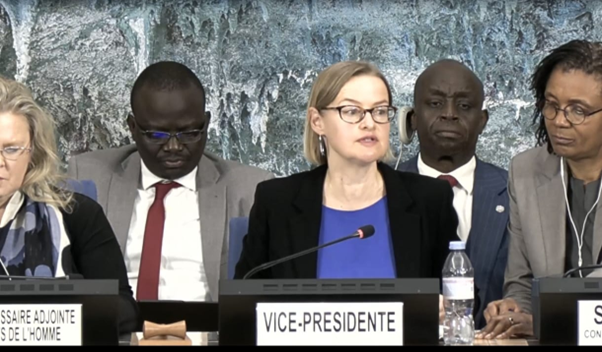
In response to a point of order, the Vice President stressed that all speaking countries must strictly adhere to the context of the item under discussion and not deviate from its defined framework.
Statements by NGOs and NHRIs
Representatives of Non-Governmental Organizations (NGOs) and National Human Rights Institutions (NHRIs) raised their voices with deep sorrow, revealing the dire reality burdening the Congolese people. Foremost among their concerns were the raging armed conflicts in the east of the country, which are tearing apart the social fabric and depriving citizens of their most basic rights. They pointed out that the state's weak control over its entire national territory allows for the proliferation of armed groups operating outside the law, while Rwanda extends its influence over entire regions through its direct support of Mouvement du 23 mars, in blatant violation of Congolese sovereignty.
They expressed grave concern about the escalating gender-based violence that systematically targets women and children. They noted that extreme poverty, forced displacement, and the lack of basic services are driving children into unsafe and polluted mines, or into the arms of armed groups, depriving them of their right to education and leaving them crippled by malnutrition. They also documented the phenomenon of enforced disappearances and systematic torture to which human rights defenders are subjected as punishment for their courage in documenting violations.
They highlighted the extent of the suffering endured by religious and ethnic minorities and indigenous populations, some of whom are killed for their beliefs. They called for the abolition of the death penalty and its replacement with life imprisonment. They stressed that the Congo needs sustained technical assistance from the Office of the High Commissioner for Human Rights to monitor violations, hold perpetrators accountable, and provide reparations, warning that funding shortages are hindering the work of truth commissions and allowing impunity to persist indefinitely.
Concluding Remarks
The dialogue concluded with three coherent closing remarks. Mr. Bruno Lemarques, Deputy Special Representative of the Secretary-General and Humanitarian Coordinator in the Democratic Republic of Congo, called for the protection of humanitarian workers following the documentation of 140 attacks in 2025, urging the rule of law, an end to impunity, and a genuine commitment to the ceasefire to protect civilians. Mr. Samuel Mbemba Kabuya Tan, Minister of Human Rights of the Democratic Republic of the Congo reiterated the demand for the activation of the Independent Commission of Inquiry, which is scheduled to present its report in June 2026, emphasizing that peace is contingent upon ending the Rwandan occupation and ceasing support for armed groups, and that judicial independence and the rejection of hate speech are inseparable pillars of this process. Ms. Maarit Kohonen Sheriff, Director of the Global Operations Division at the High Commissioner for Human Rights, affirmed that accountability is not a peripheral issue but rather the core of any genuine peace negotiations, and that achieving peace necessitates judicial and security sector reform, as well as support for survivors of gender-based violence. She warned that the UN's financial liquidity crisis is paralyzing the Independent Commission of Inquiry's work, as appointments have become temporary due to the recruitment freeze imposed by the Secretariat. She concluded by stating that addressing the economic roots of the conflict is an indispensable condition for any sustainable peace.
Geneva International Centre for Justice (GICJ) position
Geneva International Centre for Justice (GICJ) calls on the Human Rights Council and the international community to immediately move from condemnation to genuine accountability. The Democratic Republic of the Congo is not suffering from a passing crisis, but rather from a systematic system of human rights violations that thrives on impunity and is entrenched in the absence of firm international will.
GICJ calls for immediate and binding measures, most notably:
1-Compelling Rwanda to withdraw its forces and cease its support for the Alliance Fleuve Congo/Mouvement du 23 mars.
2-Providing the UN Joint Human Rights Office with sufficient financial and human resources to address the shortfall caused by the withdrawal of 37% of its staff.
3-Strengthen and build national criminal capacity, particularly in the field of forensics, to address the current dire situation (there are only three forensic doctors in the country).
4-Translate the Washington and Doha agreements into an effective ceasefire on the ground.
5-Establish an independent mechanism to monitor the implementation of commitments and ensure compliance.
GICJ appeals for genuine transitional justice that delivers redress for the 8,300 victims documented in 2025 alone, the 200,000 survivors of sexual violence, and the millions of displaced people who seek to return home with dignity. International silence today is complicity—and history will not forgive those who chose neutrality over justice.
