



HRC61: Persistent Human Rights Violations in Libya
40th Session of the Human Rights Council
23 February – 31 March 2026
Item 6: UPR outcomes
18 – 23 March 2026
Pia Mullen / GICJ
Executive Summary
Human trafficking, arbitrary detention, gender discrimination and freedom of expression were all issues raised during the 40th Session of HRC61. Held on Monday 23 March 2026, the Libyan delegation opened its Universal Periodic Review (UPR) Outcome session with its presentation of additional information on the Report of the Working Group of the Universal Periodic Review. It raised how human rights are an ongoing process for Libya as it navigates a challenging political transition, and how it has made progress in the field of migration, gender representation and social protection. The issue of migration was a central topic of both the opening statement and the interactive dialogue, as member states noted Libya’s progress in the field of human rights while stressing the continued need to tackle human trafficking and enforce migrant protection measures. On the issue of gender inequality, Libya outlined its increased participation of women in public life, but issues of honour killings and impunity for acts of rape remained at the forefront of NGO contributions to the session. It was also frequently raised both by member states and NGOs that Libya has not ratified the Optional Protocol to the Convention against Torture and Other Cruel, Inhuman or Degrading Treatment or Punishment. The session closed with the Libyan delegation restating their cooperation with international human rights mechanisms and the adoption of the outcome report.
Geneva International Centre for Justice (GICJ) notes Libya’s continued collaboration with the Universal Periodic Review, and acknowledges the challenging circumstances Libya faces. However, we remain concerned with the ongoing human rights violations in Libya, specifically that of human trafficking, gender discrimination and torture. We call for the strengthened legislative protection of vulnerable groups and harsher penal codes for violence against women and children. GICJ calls on Libya to cooperate with an independent international mechanism to monitor legal migrant detention facilities where sexual and gender based violence remains rampant. We urge Libya to ratify the Optional Protocol to the Convention against Torture and Other Cruel, Inhuman or Degrading Treatment or Punishment.
Background
After Libya’s leader, Muammar Gaddafi was captured and killed on the 20th October 2011, the National Transitional Council, a temporary government backed by the United Nations Security Council (UNSC), NATO and the Arab League, took over as the country’s interim authority. It was a reopening of old wounds in the struggle for power and legitimacy in Libya.
In 2014, the country’s government split against the constitutional process, into the western Government of National Unity (GNU), and the east, unrecognised House of Representatives. As stated by Libya’s National Report submitted to the Universal Periodic Review (UPR) on 11th November 2025, this split ‘did not reflect popular will.’ Today, Libya continues to grapple with this institutional and political division, leaving it in a challenging transitional period.
Libya remains a priority focus of human rights organisations. In June of 2020 the UN Fact Finding Mission on Libya (FFM) was established to assess human rights violations in Libya since 2016. After two extensions, the FFM concluded in 2022 that ‘the rapid, deep and ongoing absorption of armed groups and their leadership into state affiliated structures and institutions including the Libyan Arab Armed Forces, and the spread of Salafist-leaning conservative ideologies are of significant concern.’ It also raised similar concerns to the Report of the Working Group on the Universal Periodic Review which highlighted ongoing ‘enforced disappearances, arbitrary detention [and] torture.’
Additionally, Libya is gripped by the issue of systemic human trafficking. Migrants endure deplorable conditions and extreme violence at the hands of traffickers promising a better life. According to a report by the UN Support Mission in Libya (UNSMIL) smugglers operate through the torture and sexual exploitation of migrants. The report found mass graves of this suffering in south, west and east Libya. The Report of the Working Group on the Universal Periodic Review acknowledged Libya’s efforts to investigate these cases of trafficked persons, with hundreds of suspects having been arrested. However, the issue remains pertinent. Many of the recommendations made by delegations in the outcome report, by countries such as Turkey, Nigeria, Norway and Indonesia, concerned either the protection of migrants, the ceasing of arbitrary detentions, or the implementation of a legal framework of migration. Migration remains one of Libya's most pertinent human rights issues.
Libya has made progress in areas such as impunity, allowing the International Criminal Court (ICC) to investigate violations up until 2027. Other positives include the government’s ‘Return of Life’ initiative which aims to bolster sectors such as health and education, expanding social protection which now makes up 15% of government spending.
The member state recommendations included in the UPR outcome report focused on issues of torture, forced disappearances, and the need for increased protection of women, children and migrants. For example, Libya was urged to ratify the Optional Protocol to the Convention against Torture and other Cruel, Inhuman or Degrading Treatment or Punishment (OPCAT) as well as the International Convention for the Protection of All Persons from Enforced Disappearance.
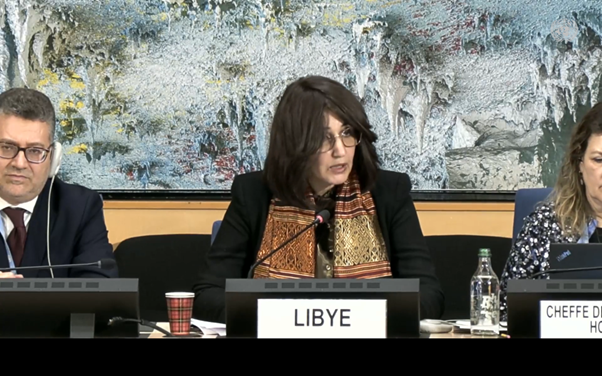
Opening Statement by Lamia Fathi Abusedra, Ambassador Extraordinary, Plenipotentiary, and Permanent Representative of Libya to the United Nations in Geneva.
The UPR outcome session’s opening statement was delivered by Lamia Fathi Abusedra, Ambassador Extraordinary, Plenipotentiary, and Permanent Representative of Libya to the United Nations in Geneva. Presenting additional information on the Report of the Working Group on the Universal Periodic Review, she started by reiterating Libya's commitment to the UPR calling it an ‘opportunity for constructive dialogue’ and affirmed the country’s cooperation with international human rights mechanisms.
Libya received 280 recommendations during its fourth UPR cycle, of which it accepted 206, noted 42 and rejected 32 for not aligning with Sharia Law, the basis of Libya’s culture and values. The delegation rejected many recommendations relating both to inheritance inequality and the abolition of the death penalty, rejecting the ratification of the Second Optional Protocol to the International Covenant on Civil and Political Rights. The noted recommendations are to be revisited after Libya’s ongoing political transitional period, as currently ‘there are legal and constitutional hurdles’ which are inhibiting the consideration of these specific recommendations. Lastly, the accepted recommendations were stated to have been implemented or are currently being implemented.
The Libyan delegation outlined the numerous institutional changes undergone to uphold human rights in the country; the formation of the National Human Rights Committee, the National Commission for Follow Up Reporting and Implementing and the Human Rights State Minister, which forms part of the cabinet of the Government of National Unity. Libya additionally highlighted how they have lifted the restriction on the formation of political parties and right to political protest, and established a quota for these groups ensuring their political participation.
It was also iterated that Libya has taken measures to ensure social protection for low income groups by lifting the minimum wage, and the state is providing monthly financial grants to families in need. In regards to women, an area of concern that was raised during Libya’s UPR, the Libyan delegation stated they have attributed ‘special importance’ to the rights of women, opening centres to empower women as well as centres to investigate crimes against them.
The closing of Lamia Fathi Abusedra’s statement focused significantly on the issue of migration and human trafficking in Libya. Due to Libya’s geographical location, it has become a popular route for migrants seeking better opportunities in Europe. The Libyan delegation stated how international reports on Libyan migration over the years have not been neutral, ignoring the millions of migrants currently settled in Libya. The delegation called the United Nations Refugee Agency’s (UNHCR) assessment of Libya’s migration issue ‘a total disregard of responsibilities by the origin and destination countries, and in total disregard to the challenges facing us in this transitional period.’ The Libyan delegation concluded this section of their statement by affirming the policing of state migration is a sovereign decision.
The delegation concluded its statement by iterating Libya’s intention to implement all 206 of the accepted recommendations.
Interactive Dialogue
Statements made by Member States
Comments made by member states were overwhelmingly complementary of Libya’s cooperation with the UPR mechanism, and acknowledged that 206 out of 280 of the recommendations made in November 2025 were accepted. All delegations iterated their support for the adoption of the Report of the Working Group on the Universal Periodic Review.
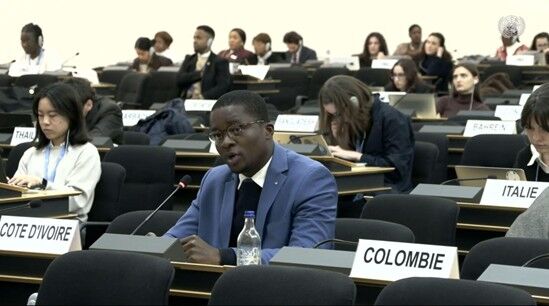
The call for Libyan authorities to continue to combat human trafficking and implement protective measures for migrants was a frequent intervention during the session. Côte d’Ivoire opened the dialogue by acknowledging Libya’s ratification of the Convention Against Torture and Other Cruel, Inhuman or Degrading Treatment or Punishment and the signing of the Elimination of all Forms of Discrimination Against Women, however it also urged Libya to bolster efforts to combat human trafficking and ensure better support for victims of these networks.
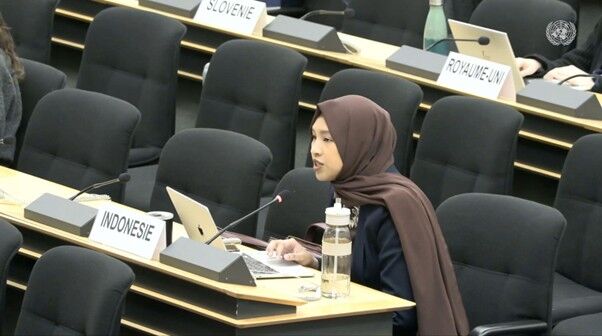
Mauritania and Indonesia acknowledged Libya acceptance of the recommendation to adopt a national legislative framework to respond to violence against women and girls. Egypt's broad statement of support also noted Libya’s efforts to empower women. Statements of general support for Libya’s efforts to engage with human rights mechanisms and acknowledgement of progress in the field were also given by the delegations of Djibouti, Equatorial Guinea, Ethiopia, India, Jordan, Kuwait, Maldives, Nepal and Pakistan.
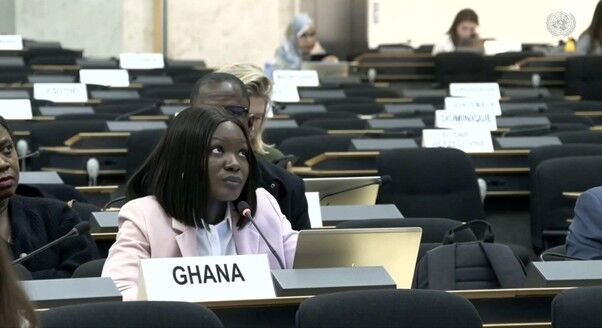
Ghana welcomed Libya’s acceptance of the recommendation to implement a comprehensive Transitional Justice framework, intended to ensure the accountability for serious crimes and victims rights to truth and reparations. The Indonesian delegation echoed this statement and noted that Libya has accepted its recommendation to strengthen rule of law and accountability for human rights violations.
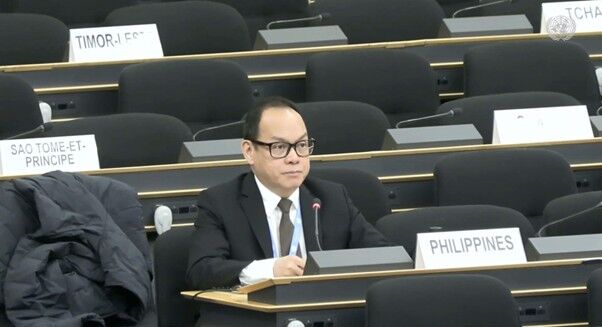
The Philippines' statement commended Libya for the adoption of all four of its recommendations. These called for improved efforts to tackle human trafficking, including improving victim identification, support services and accountability. Additionally, to align gender equality laws with international standards. Libya also accepted the Philippines delegation’s recommendation to fully resource its youth empowerment strategy and broaden opportunities for young people.
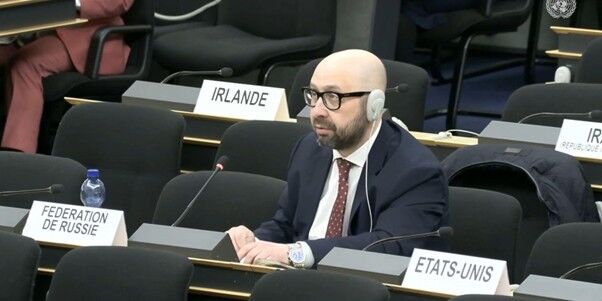
The Russian Federation was the final speaker for the country delegations. They praised the acceptance of both Russia’s recommendations, and acknowledged the complex political situation in Libya. It iterated how efforts of the Libyan government to tackle the human rights situation should be supported; however, stated ‘for now such efforts are still insufficient.’ The Russian delegation highlighted ‘the shortcomings in the field of human rights in the country.’ Although, despite its concerns, Russia recommended the adoption of the UPR report.
Statements made by NGOs
The statements from NGOs highlighted a greater level of concern for the situation of human rights in Libya. Raised concerns focused on arbitrary detention and how Libya has yet to sign the Optional Protocol to the Convention against Torture and Other Cruel, Inhuman or Degrading Treatment or Punishment. The absence of independent oversight and investigations into allegations of torture was also noted. The condemnation of acts of torture was also specifically raised in regards to migrant sexual exploitation and forced labour, for which it was highlighted there is similarly no independent oversight on the conditions inside migrant detention centres.
Multiple NGOs brought up Libya’s failure to criminalise marital rape, the reduced sentences for honour killings and the exemption of rape perpetrators if they marry their victim. Furthermore, it was highlighted that the Male Guardianship system restricts women’s mobility, thereby hindering Libya’s progress toward gender equality. The delegation was also urged to implement a reformed penal code addressing all forms of sexual and gender-based violence.
A lack of freedom of expression was also raised as a concern, referencing the numerous people imprisoned in Libya for what was iterated as peaceful faith-based reasons, and multiple NGOs advocated for the release of those arbitrarily detained. This concern was coupled with the assertion that Libya is withholding those wanted by the International Criminal Court, and calls for justice and accountability for those guilty of violations were frequent throughout the discussion. Thematic of NGO concerns, was the suggestion that there is a gap in Libyan government pledges and the reality on the ground.
Concluding Remarks
The delegation of Libya concluded the session by thanking the participants in the interactive dialogue and underlined Libya’s commitment to the UPR mechanism.
It highlighted how Libya is committed to the field of human rights, and has made efforts to demonstrate this. The dismantling of human trafficking organisations and the prosecution of perpetrators was given as an example of these initiatives. Libya stated that there are no restrictions on the rights of women to travel, and how Libyan law bans and criminalises violence against women. The Libyan delegation repeated how the adoption of the report will be the ‘beginning of a long national path that will focus on developing national strategies to implement the accepted recommendations.’ It concluded its closing statement by underlining its dedication to the UN Sustainable Development Goals, and to achieve the ‘national strategy of economic and social welfare for all citizens.’ The council moved to adopt the decision as the session closed.
Geneva International Centre for Justice (GICJ) acknowledges Libya’s challenging political situation, as well as the country’s geographical location exacerbating the issue of human trafficking. GICJ acknowledges Libya’s cooperation with human rights mechanisms such as the Universal Periodic Review and the International Criminal Court (ICC), but remains concerned with the ongoing human rights abuses, specifically regarding migrants, women, children and those with disabilities. GICJ urges the Libyan authorities to enact protective measures in line with international standards, starting with the ratification of the Optional Protocol to the Convention against Torture and Other Cruel, Inhuman or Degrading Treatment or Punishment. This also includes cooperating with an independent international mechanism to monitor conduct and conditions in official migrant detention facilities. Furthermore, the GICJ recommends stronger penal codes for honour killings, rape and calls for the marriage age to be raised to 18 years old. Lastly, the GICJ urges Libya to continue to cooperate with international human rights mechanisms to the fullest extent.
