



A Ceasefire in Name Only: One Year of Israeli Violations Against Lebanon
By Wassim Atrissi / GICJ
On the 27 November 2024, a ceasefire agreement was entered into force between Lebanon and Israel. This ceasefire intended to end escalation and halt hostilities between Israel and Hezbollah along the Blue Line.
One year on from the ceasefire, Lebanon continues to face constant Israeli aggression that clearly contravenes the ceasefire and flagrantly violates international law, including United Nations Security Council Resolution 1701. This article exposes the sustained nature of these attacks and their human cost, while underscoring the failure of the international community to enforce accountability.
Ceasefire Agreement and Context
The November 2024 ceasefire was intended to end the escalation along the Blue Line between Israel and Hezbollah. Brokered through backchannel diplomacy and regional pressure, it sought to restore calm on the frontier. However, Israeli violations began almost immediately after the ceasefire entered into effect.
Just hours after the truce became active, Israeli forces opened fire on a group of journalists (clearly identifiable in press gear) in the town of Khiam, injuring many of them.. That same day, Israeli soldiers shot at Lebanese civilians who were attempting to return to their homes in border villages, such as Kafr Kila and Mais al‑Jabal. Several of these civilians were killed and injured as they tried to re-enter their towns for the first time since displacement. According to Lebanese officials, thousands of civilians had begun making their way back following the announcement of the ceasefire, only to be met with gunfire directed at their vehicles and homes.
Simultaneously, drone flights and aerial incursions resumed immediately, with Israeli surveillance aircraft entering Lebanese airspace in direct violation of the agreement. Artillery fire and tank shelling were also reported on 27 and 28 November, targeting Khiam, al‑Taybeh, and other border communities. These early actions signaled a clear pattern: the ceasefire, while formally in effect, was not being respected by Israel from its early hours.
Major Violations recently
Violations continued unilaterally and escalated in intensity throughout the year, turning what was intended to be a cessation of hostilities into an extended campaign of aggression.
What began as routine overflights, artillery and assassinations evolved into a series of deliberate attacks targeting civilian infrastructure. In recent weeks, this escalation has reached a disturbing peak.
UNIFIL reported that Israel began constructing new concrete T-walls extending into Lebanese territory near Yaroun and Maroun al-Ras, effectively blocking more than 4,000 square meters of farmland and violating both Lebanese sovereignty and United Nations Security Council Resolution 1701.
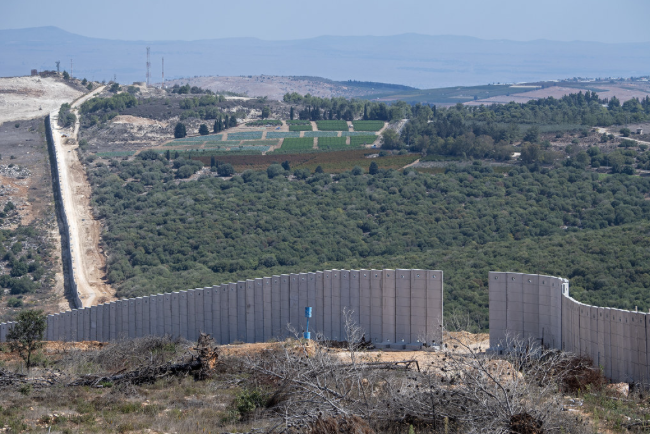
Concrete T-walls erected by the Israel Defense Forces (IDF) near Yaroun, south Lebanon. Photo by Pasqual Gorriz (UN)
On 18 November 2025, Israeli warplanes bombed the Ein El-Hilweh Palestinian refugee camp, killing 13 civilians; 11 of whom were children, and injuring at least six others. The United Nations confirmed that all casualties were civilians, directly contradicting Israeli claims that the strike targeted militants.
Most recently, on Sunday, 23 November, Israeli airstrikes hit Haret Hreik, a densely populated residential area in Beirut’s southern suburbs. Five people were killed and 28 others wounded, according to Lebanon’s Ministry of Health. This strike marked a serious escalation as Beirut had already endured several Israeli attacks since the ceasefire agreement of 27 November 2024.
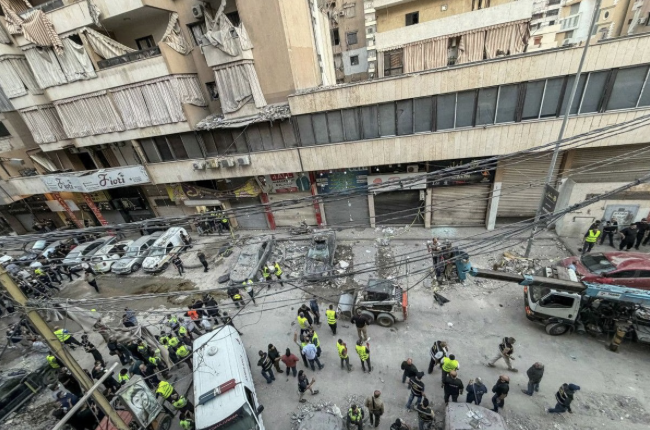
People pass a damaged car at the site where an Israeli strike hit an apartment building in Dahiyeh in the southern suburb of Beirut, Sunday, November 23, 2025 [Bilal Hussein/AP Photo]
These attacks form part of a broader pattern of escalating Israeli aggression, expanding geographically from the southern border into urban civilian centers.
According to the Lebanese ministry of health, Israel’s post-ceasefire operations have now killed at least 331 people and injured 945, while destroying vital infrastructure and displacing tens of thousands across southern Lebanon.
Impact on Lebanese Civilians
More than 64,000 Lebanese remain displaced, primarily from villages in the south. Although many had evacuated during the earlier escalation, their prolonged displacement is now driven by Israel’s continued military occupation along the border and the persistent threat of continued escalation. Attempts to return have been met with violence. making it clear that a safe return is not possible under current conditions.
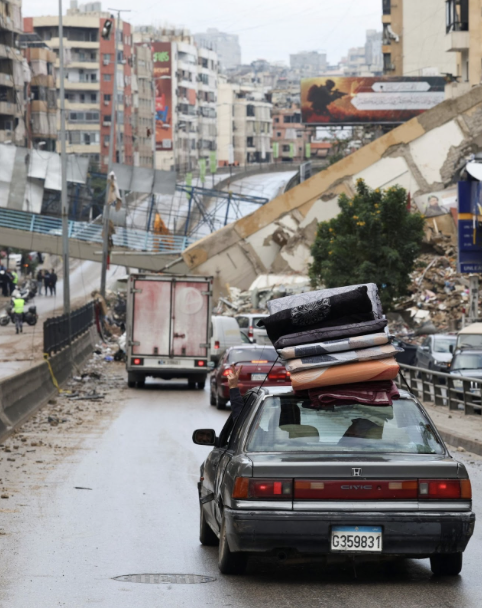
A car drives through Beirut's southern suburbs after the ceasefire deal between Israel and Hezbollah, November 27, 2024 [Mohamed Azakir/Reuters]
In addition to the loss of life, the destruction of homes, schools, roads, and farmland has left communities without the foundations to rebuild. Strikes on cement factories and construction equipment have further pressured recovery efforts, deepening the escalation.
Legal and Political Analysis
These attacks represent serious violations of international humanitarian law, particularly the principles of distinction, proportionality, and necessity under the Geneva Conventions. The deliberate targeting of civilian infrastructure and repeated incursions into sovereign territory also breach UNSC Resolution 1701.
Despite detailed documentation of these abuses, including by UNIFIL, Israel continues its operations with impunity, shielded diplomatically and materially by its Western allies.
Failure of International Accountability
The United Nations, while vocal in expressing concern, has failed to act decisively. UNIFIL lacks enforcement authority and the UN Security Council remains paralysed, unable to issue meaningful consequences or enforce compliance.
Statements from the UN spokesperson and the OHCHR have urged restraint and respect for international law, yet no international mechanism has held Israel accountable for its persistent violations both in Lebanon and Gaza and elsewhere.
Conclusion and GICJ Position
Geneva International Centre for Justice (GICJ) strongly condemns Israel’s systematic violations of Lebanon’s sovereignty and international humanitarian law. The one-year anniversary of the ceasefire underscores the urgent need for international action.
GICJ calls for:
- Independent investigations into attacks and breaches of Resolution 1701;
- Sanctions against Israel for violations of Lebanese sovereignty and international law;
- International support for displaced communities and reconstruction efforts;
- A renewed commitment to upholding international humanitarian law and protecting civilian lives.
A ceasefire must not exist only on paper. For Lebanon, justice must replace silence, and an end of aggression must be more than a fleeting promise made by the international community.
Bibliography
https://news.un.org/ar/story/2025/11/1143794 مفوضية حقوق الإنسان: إسرائيل قتلت 127 مدنيا في لبنان منذ وقف إطلاق النار
https://news.un.org/ar/story/2025/11/1143792 الأمم المتحدة تبدي القلق بشأن القصف الإسرائيلي لجنوب بيروت
https://news.un.org/ar/story/2025/11/1143794 127 civilian deaths
https://www.ohchr.org/en/press-briefing-notes/2025/11/increasing-israeli-attacks-killing-civilians-lebanon Increasing Israeli attacks killing civilians in Lebanon
https://www.arabnews.com/node/2623886/middle-east UN seeks ‘impartial’ probe into Israeli strikes in Lebanon
https://x.com/UNIFIL_/status/1991515033457815985 Thursday 20 November
https://unifil.unmissions.org/unifil-statement-14-november-2025 building wall
