

By Lawrencia Sierra Palmer / GICJ
Introduction
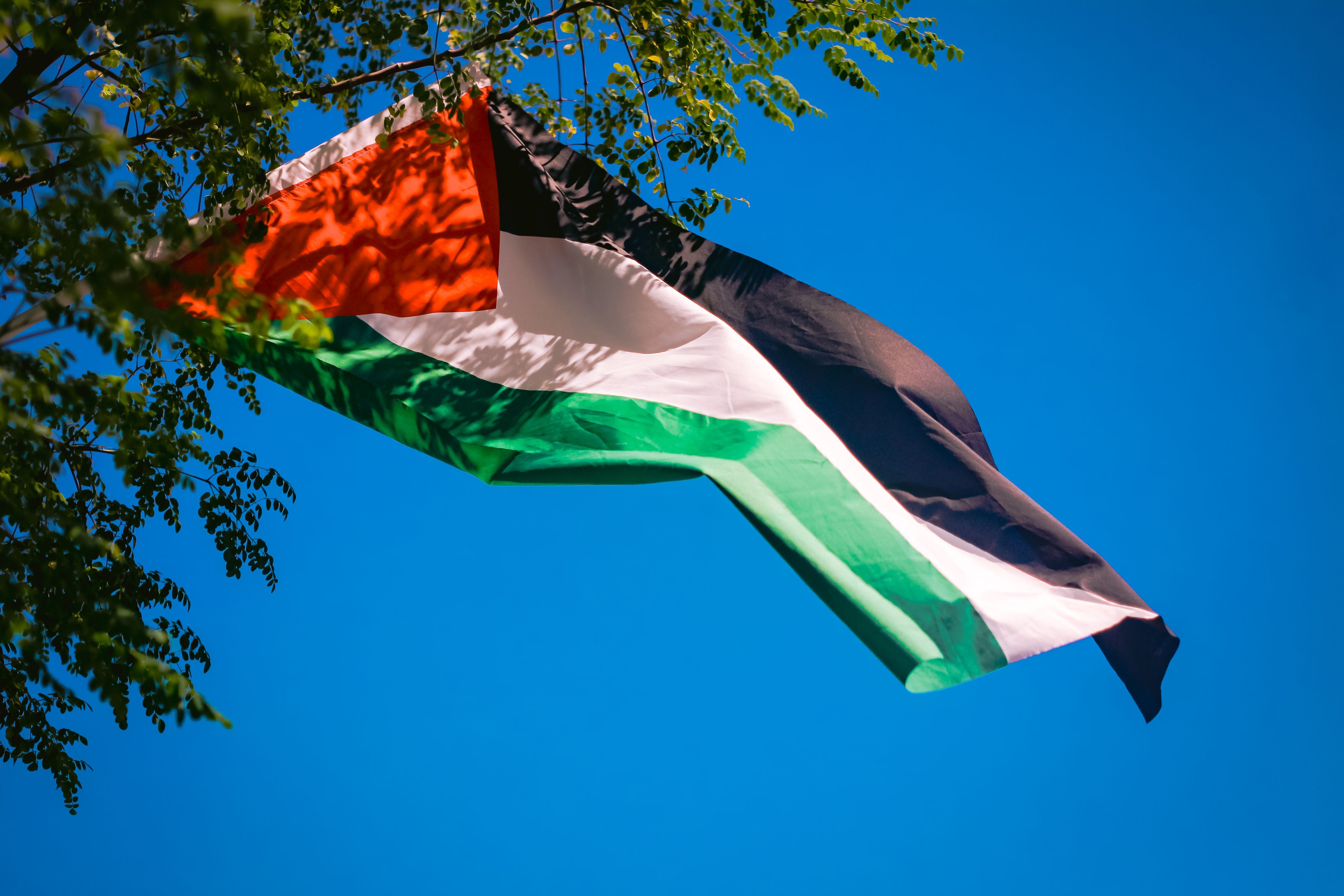
Solidarity with the Palestinian people goes beyond an expression of sympathy, it is a recognition of their longstanding struggle for self-determination, dignity and the protection of their fundamental human rights. Each year, on 29 November, the international community observes the International Day of Solidarity with the Palestinian People, an occasion to reflect on the unresolved question of Palestine and reaffirm international commitments to the rights of the Palestinian people.1
The United Nations General Assembly established the observance through Resolution 32/40 B, adopted on 2 December 1977.2 The date commemorates the adoption of General Assembly Resolution 181 (II) on 29 November 1947, which proposed the partition of Palestine into an Arab State and a Jewish State, with Jerusalem placed under a special international regime.3 While the State of Israel was subsequently established, the Palestinian people's aspirations for an independent and sovereign state remain unfulfilled.
Nearly eight decades after the partition resolution, Palestinians continue to face occupation, displacement and restrictions on their fundamental freedoms. The humanitarian crisis in the Gaza Strip and continued settlement expansion and violence in the occupied West Bank, including East Jerusalem, underscore the importance of moving beyond symbolic solidarity toward meaningful international action and impact.
The Humanitarian Crisis in Gaza and the Occupied West Bank
The ongoing humanitarian situation in the Occupied Palestinian Territory illustrates the devastating consequences of prolonged conflict, occupation and the failure to secure lasting protections for civilians.
In the Gaza Strip, years of hostilities have severely damaged essential infrastructure, disrupted healthcare and education, and displaced large portions of the civilian population. According to the United Nations Office for the Coordination of Humanitarian Affairs (OCHA), heavy rainfall in November 2026 further intensified the crisis, affecting approximately 46,000 households and damaging more than 40,000 family shelters. Flooding also disrupted educational facilities, healthcare services and humanitarian operations, leaving already vulnerable communities exposed to additional risks.
The destruction of civilian infrastructure has consequences extending beyond immediate physical harm. The loss of homes, schools and hospitals undermines the ability of Palestinian communities to rebuild their lives, maintain their livelihoods and access essential services. Children, in particular, face prolonged interruptions to education, displacement and psychological distress.4
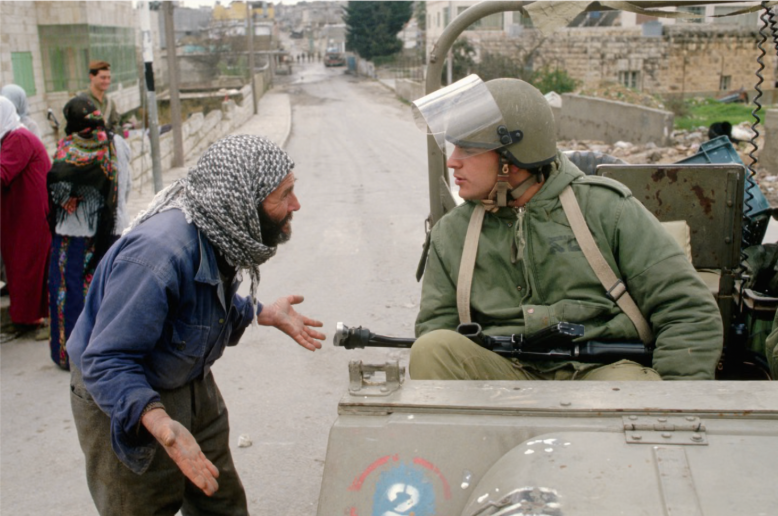
Meanwhile, Palestinians in the occupied West Bank, including East Jerusalem, continue to experience settlement-related violence, demolitions, forced displacement and restrictions on movement. OCHA reported that more than 5,150 Palestinians have been displaced across the West Bank since the beginning of 2026 as a result of demolitions, settler violence, related access restrictions and evictions.5
These developments highlight the interconnected nature of humanitarian protection and self-determination. Ensuring access to food, shelter and healthcare is essential, but humanitarian assistance alone cannot resolve the structural conditions contributing to repeated displacement and insecurity.
The Role of the United Nations and the International Community
Since its establishment, the United Nations has played a central role in addressing the question of Palestine through diplomatic initiatives, humanitarian assistance, human rights monitoring and international legal mechanisms.
The Committee on the Exercise of the Inalienable Rights of the Palestinian People, established by the General Assembly in 1975, continues to advocate for the realisation of Palestinian rights and promote international awareness of the question of Palestine.6 As part of the annual observance, the Committee and the UN Division for Palestinian Rights organise commemorative meetings, exhibitions and cultural activities that provide opportunities for Member States, international organisations and civil society to reaffirm their commitments.7
United Nations agencies also provide essential humanitarian support. OCHA coordinates humanitarian responses and monitors developments affecting civilians, while the United Nations Relief and Works Agency for Palestine Refugees in the Near East (UNRWA) provides services to eligible Palestine refugees, including education, healthcare and emergency assistance.8
Beyond humanitarian assistance, international judicial mechanisms have contributed to efforts to clarify legal obligations and promote accountability. The ICJ's advisory opinion represents a significant development in defining the legal consequences of the occupation and the responsibilities of Israel and other states.9
Nevertheless, the persistence of human rights violations raises serious questions about the international community's willingness to translate legal findings and diplomatic commitments into effective action. While United Nations resolutions and judicial opinions establish important legal and political frameworks, their effectiveness depends on meaningful implementation and sustained cooperation among states.
The International Day of Solidarity with the Palestinian People consequently provides an opportunity to assess not only the progress made by international institutions but also promotes closing the gaps between international commitments and the lived experience of Palestinians.
Beyond Symbolic Solidarity: The Need for Accountability and Lasting Peace
International solidarity must extend beyond annual commemorations and expressions of concern. Meaningful solidarity requires the international community to address the underlying conditions preventing Palestinians from exercising their fundamental rights.
The continuing humanitarian emergency in Gaza and developments across the occupied West Bank demonstrate the limitations of responses focused exclusively on immediate relief. Although humanitarian assistance remains indispensable, sustainable peace requires addressing unlawful occupation, displacement, settlement activity and the denial of self-determination.
Accountability is equally essential. Alleged violations of international humanitarian and human rights law must be subject to independent and impartial investigation, and those responsible for international crimes must be held accountable through appropriate legal mechanisms. The protection of civilians, the prohibition of collective punishment and the obligation to facilitate humanitarian relief must be upheld without exception.
A durable resolution must also recognise the rights, dignity and security of all civilians while ensuring that Palestinians are not excluded from decisions determining their political future. The realisation of Palestinian self-determination remains indispensable to achieving a just and sustainable peace consistent with international law.10
GICJ Position
Geneva International Centre for Justice (GICJ) reaffirms its unwavering commitment to the protection and realisation of the inalienable human rights of the Palestinians, including the right to self-determination, freedom, dignity and national independence.
GICJ strongly condemns the continued unlawful occupation of Palestinian territory, the expansion of illegal settlements, the forced displacement of Palestinian communities and violations of international humanitarian and human rights law. GICJ emphasizes that the protection of civilians must remain an absolute priority and calls for an immediate end to attacks against civilians and civilian infrastructure, as well as the removal of obstacles preventing the safe and sustained delivery of humanitarian assistance.
GICJ further calls upon the international community, particularly United Nations member states, to fulfill their obligations under international law and take concrete measures to implement relevant United Nations resolutions and the findings of the International Court of Justice. International legal standards must be applied consistently, without political selectivity, to ensure that accountability and the protection of human rights are not contingent upon geopolitical interests.
On this International Day of Solidarity with the Palestinian People, GICJ reiterates that solidarity cannot be limited to statements of support. It must be demonstrated through meaningful action to end unlawful occupation, prevent further violations, ensure accountability and secure a future in which the Palestinian people can fully exercise their fundamental rights in peace, freedom and dignity.
[2]https://unispal.un.org/pdfs/2DA3D547118BFD25852560DD006BF4BB.pdf
[4] https://www.ochaopt.org/content/humanitarian-situation-report-13-november-2026
[5] https://www.ochaopt.org/content/humanitarian-situation-report-18-november-2026
[6] https://www.un.org/unispal/committee
[7] https://www.un.org/unispal/frequently-asked-questions
[8] https://www.ochaopt.org ; https://www.unrwa.org/what-we-do
[9] https://www.un.org/unispal/document/advisory-opinion-icj-19jul24
[10] https://www.un.org/unispal/document/advisory-opinion-icj-19jul24