


By Beatrice Rattazzi / GICJ
Introduction
The environment has always been the “silent victim” of wars. Not only is it exploited before the outbreak of war for research, but also during and after the war due to the harm that the actual conflict methods and weapons provoke. Furthermore, the environment and the control of environmental resources are one of the main geopolitical and strategic motives leading to conflict, both international and non-international.1 According to the United Nations Environment Programme (UNEP), at least 40% of all internal conflicts in the last 60 years have been linked to the exploitation of natural resources, and they have also been found to be twice as likely to relapse.2 This creates a vicious circle where the environment is the purpose, resource, and the most affected in conflict.
Given the importance of the environment and natural resources in ensuring international peace and security, and as a reminder of the devastating impact that war and conflict can have on our environment, on 5 November 2001, the UN General Assembly declared 6 November of each year as the International Day for Preventing the Exploitation of the Environment in War and Armed Conflict.3 Furthermore, on 27 May 2016, the United Nations Environment Assembly adopted resolution 2/15 on the “Protection of the environment in areas affected by armed conflict”, recognizing the role of healthy ecosystems and sustainably managed resources in reducing the risk of armed conflict.4
The Geopolitical Roots of Conflict and Natural Resource Exploitation
To understand why environmental security is inseparable from global peace, one must examine the root causes of modern warfare. Natural resources such as oil, timber, minerals, freshwater, and fertile land frequently lie at the centre of both international and non-international disputes.5 In regions with weak governance or high vulnerability to climate shocks, the scramble for scarce resources exacerbates socio-economic grievances and accelerates instability.6 Armed groups and corrupt regimes often finance military operations through illicit trafficking of high-value resources, transforming diamonds, gold, and timber into currency for violence.7
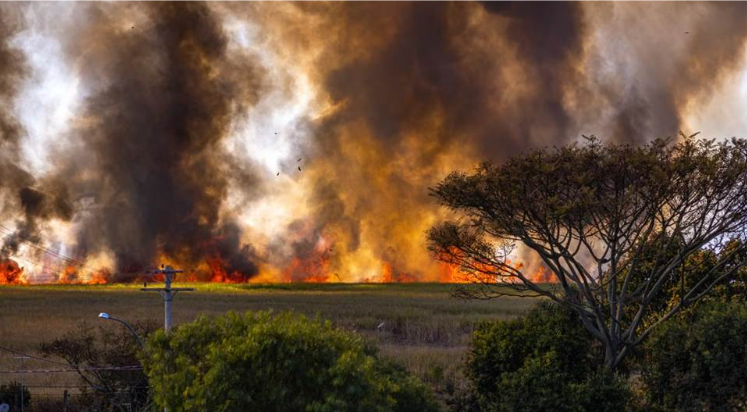
This phenomenon illustrates that environmental degradation is rarely an accidental byproduct of war. Instead, it is frequently a calculated mechanism of economic sustenance for belligerents. When water systems are deliberately poisoned, agricultural lands burned, and oil reserves ignited, civilian populations are stripped of their basic means of survival.8 Furthermore, the systematic depletion of ecosystems forces mass displacement, turning environmental refugees into regional security crises.9 Addressing the environmental dimensions of conflict therefore requires tackling the illicit economies and governance failures that make natural wealth a curse rather than a blessing for local populations.
Activities During the International Day
The UN Secretary-General has called climate change the defining issue of our time.10 Even if Resolution 56/4, established by the General Assembly in 2001 and reinforced by UNEA Resolution 2/15 in 2016, does not explicitly call for specific celebrations during the day, it invites Member States, UN entities, and regional organizations to observe the day, while asking the Secretary-General to promote it internationally. Therefore, the exact activity varies each year and may be a message, conference, report, exhibition, training initiative, or country-level environmental programme. In practice, the day has evolved into an observance with an annual thematic forum. The 2025 edition was entitled "Climate and security: environmental impact of armed conflict and climate-driven security risks". It reflected the growing recognition that armed conflict generates severe and lasting environmental harm with direct implications for international peace and security, and that environmental degradation is both a casualty and a driver of insecurity.11 The stated objectives of such meetings are to elevate recognition of conflict-driven environmental harm as a security risk, draw lessons from diverse conflict contexts, identify practical tools to prevent, monitor and remediate environmental damage, and promote UN system coherence and partnerships with regional organisations and international financial institutions.12
Conclusion
The International Day for Preventing the Exploitation of the Environment in War and Armed Conflict is far more than a date on the UN calendar: it is the annual focal point of a normative and institutional architecture that the international community has built, piece by piece, around the recognition that war destroys the very foundations of peace. The environment occupies a uniquely paradoxical position in conflict. It is simultaneously a cause, as the struggle over oil, timber, minerals, water and fertile land continues to drive and finance warfare; a weapon, as the deliberate poisoning of wells, burning of croplands and ignition of oil fields strips civilian populations of their means of survival; and a victim, with damage that extends territorially and across generations far beyond the end of hostilities.
The importance of the day lies precisely in keeping this tripartite reality visible. Established by General Assembly resolution 56/4 in 2001 and reinforced by UNEA resolution 2/15 in 2016, this international day highlights that there can be no durable peace if the natural resources that sustain livelihoods and ecosystems are destroyed.
Yet, commemoration is not implementation. Enforcement of wartime environmental obligations remains weak, resource-dependent economies continue to fund belligerents, and environmental mainstreaming in peacekeeping is uneven at best. The day's preventive purpose therefore remains as urgent as it was in 2001.
GICJ Position
Geneva International Centre for Justice believes that protecting the environment in war is inseparable from protecting human rights and expresses concern about the increasing negligence by States in conducting military operations without taking environmental damage into consideration. The deliberate targeting of water systems and agricultural lands has become a recurring tactic of modern warfare, stripping civilian populations of their most basic means of survival and inflicting harm that persists long after hostilities cease. GICJ calls for accountability for those responsible for indiscriminately attacking the environment and deploying it as a weapon of war and urges States to strengthen the enforcement of international humanitarian law. GICJ further recognises the devastating effect that these unlawful war tactics have on marginalised communities, who bear the heaviest burden of environmental destruction. The systematic degradation of ecosystems forces mass displacement, converting environmental refugees into drivers of regional instability and entrenching cycles of poverty, competition and renewed violence.
[2] https://www.uncclearn.org/wp-content/uploads/library/unep91.pdf
[3] http://undocs.org/A/RES/56/4
[4] https://documents-dds-ny.un.org/doc/UNDOC/GEN/K16/072/52/pdf/K1607252.pdf
[5] https://doi.org/10.1093/acprof:oso/9780199333462.001.0001
[6] https://doi.org/10.32422/cjir-mv.116
[7] Elikem Kofi Tsamenyi, "The Role & Influence of Natural Resources in Civil Wars in Africa: Examples from the Liberian and Sierra Leonean Civil Wars" (master's thesis, University of Manitoba, 2014), 55
[8] Karen Hulme, "Human Rights and Transitional Justice," in Environmental Protection and Transitions from Conflict to Peace: Clarifying Norms, Principles, and Practices, ed. Carsten Stahn, Jens Iverson, and Jennifer S. Easterday (New York: Oxford University Press, 2017), 126
[9] https://doi.org/10.24252/aldev.v7i1.54352
[10] United Nations, "What is the link between climate change and conflict", YouTube, 15 April 2020
[12] Ibid