

𝐵𝑦 𝐶𝑎𝑚𝑖𝑙𝑙𝑒 𝑇𝑖𝑥𝑖𝑒𝑟 / 𝐺𝐼𝐶𝐽
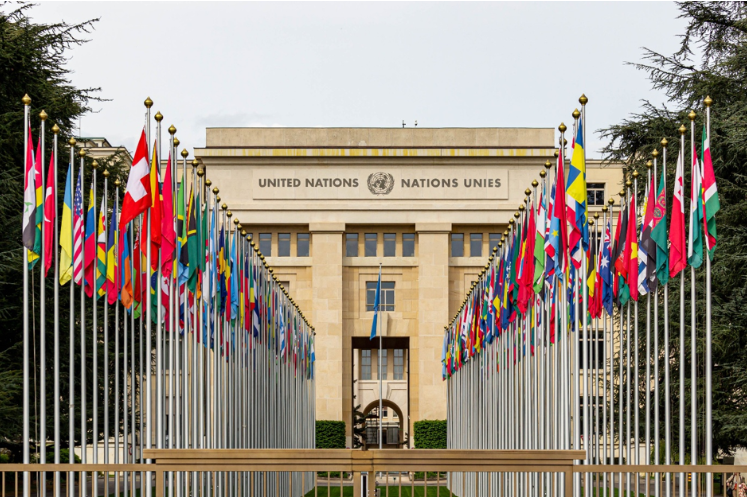
The United Nations Day (UN Day) marks the anniversary of the entry into force of the United Nations Charter in 1945. Every year, this important international day reminds people about the role of the United Nations (UN) in promoting peace, human rights, sustainable development, and international cooperation.
UN Day commemorates the establishment of the United Nations after World War II. It was created on 24 October 1945 when the UN Charter was ratified by the required number of member nations. The idea of creating the UN emerged after the devastating impact of World War II. Leaders around the world wanted to establish an international organisation that could prevent future conflicts and encourage peaceful cooperation among nations.
United Nations Day is celebrated to honour the organisation’s contributions toward building a safer and more peaceful world.
The History of the United Nations
The United Nations was created in the aftermath of the two world wars to promote peace, prevent conflicts, and strengthen international cooperation.1 Following discussions among the Allied powers (including France, the UK, etc), the UN Charter was signed in San Francisco in 1945 and entered into force on 24 October 1945, officially establishing the organisation.2 Guided by the principles of dialogue, diplomacy, and collective action, the UN seeks to maintain international peace and security and support post-war recovery.
A major milestone in its history was the adoption of the Universal Declaration of Human Rights (UDHR) in 1948, which established a universal standard for human dignity, equality, freedom, and justice, and inspired numerous international human rights treaties.3 Over time, the UN expanded its role beyond peace and security to include decolonisation, humanitarian assistance, development, human rights protection, and public health. Key initiatives such as the Millennium Development Goals and the 2030 Agenda for Sustainable Development have reinforced its commitment to addressing global challenges, including poverty, inequality, climate change, and sustainable development.
Understanding the UN system
Today, the organisation brings together 193 member states that work collectively to solve global challenges such as poverty, climate change, health crises, education, humanitarian aid, and to promote international peace.
The United Nations can take action on a wide variety of issues due to its unique international character and the powers vested in its charter, which is considered an international treaty. As such, the UN Charter is an instrument of international law, and UN Member States are bound by it. The UN Charter codifies the major principles of international relations, from sovereign equality of States to the prohibition of the use of force in international relations.
Who can join the United Nations?
Membership in the United Nations is governed by Article 4(1) of the UN Charter, which states that membership is open to all peace-loving States that accept the obligations of the Charter and are able and willing to carry them out. States are admitted by a decision of the General Assembly upon the recommendation of the Security Council.4
The United Nations does not have the authority to recognize states or governments, as recognition remains the prerogative of individual states. It may, however, admit new states to membership and accept the credentials of representatives of governments.
The admission process involves four main steps: the applicant state submits a formal application to the Secretary-General; the Security Council considers the application and must recommend admission with at least nine affirmative votes and no veto from any permanent member; the General Assembly then votes on the recommendation, requiring a two-thirds majority; and membership becomes effective upon the adoption of the admission resolution.5
In addition, the General Assembly examines the credentials of representatives of all Member States at each session. Questions concerning the legitimacy of a government's representation may arise and are ultimately decided by a majority vote of the Assembly (Art. 4(1) UN Charter).
Financing the UN System
The United Nations is financed through contributions from its Member States and relies on these funds to carry out its mandates in peace, security, development, and humanitarian assistance. Its budget is divided into two main components: the regular budget, which finances the UN’s core activities and institutions, and the peacekeeping budget, which supports peacekeeping missions around the world.6
Funding comes from two sources. Assessed contributions are mandatory payments calculated according to each country's economic capacity and finance the regular budget and peacekeeping operations. Voluntary contributions are optional funds provided to specific UN agencies, programmes, and humanitarian initiatives, such as refugee protection, food assistance, healthcare, education, and development projects.
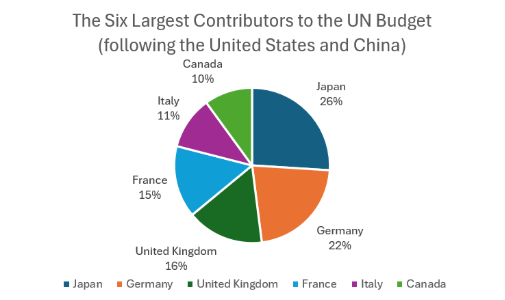
The United States has traditionally been the largest financial contributor to the UN, financing around 22% of the regular budget and a significant share of peacekeeping costs. However, delays in US payments have often created cash-flow difficulties, affecting the UN’s ability to plan and implement programmes efficiently. Such delays can hinder long-term initiatives in areas such as humanitarian assistance, peacebuilding, sustainable development, and human rights. China is also one of the largest contributors to the UN budget and peacekeeping operations, although it has also faced delays in paying its assessed contributions.7
The Sustainable Development Goals
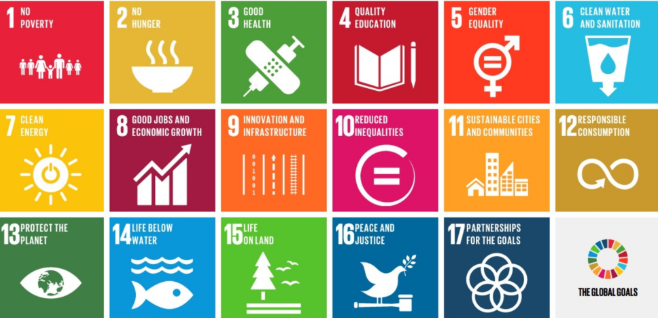
The Sustainable Development Goals (SDGs) were instituted in 2015, to succeed the Millennium Development Goals (MDGs). They are a call for action by all countries to promote prosperity while protecting the planet. They recognise that ending poverty must go hand-in-hand with strategies that build economic growth and address a range of social needs including education, health, social protection, and job opportunities, while tackling climate change and ensuring environmental protection.8
Celebrating International Days Around The World
UN Day provides an opportunity to reflect on the history, achievements, and ongoing challenges of the United Nations, while highlighting the importance of international cooperation in addressing global issues.9
Around the world, UN Day is marked through meetings, discussions, exhibitions, educational activities, cultural programmes, and awareness campaigns organised by governments, schools, organisations, and local communities to promote the UN's mission and values.
The occasion is also linked to the wider system of UN international observances, including international days, weeks, years, and decades dedicated to specific themes. These observances serve as important advocacy tools, encouraging stakeholders worldwide to organise activities and raise awareness about issues of global concern. The UN also commemorates key anniversaries in its history through such initiatives.
Geneva International Centre for Justice (GICJ)
Geneva International Centre for Justice (GICJ) reaffirms the vital role of the United Nations system in promoting international peace, security, sustainable development, and human rights. GICJ calls on all states to uphold international law and fully comply with their obligations under international human rights and humanitarian law, particularly in situations of armed conflict and political instability.
GICJ welcomes recent UN initiatives, including the Global Alliance for Human Rights and efforts to strengthen international cooperation on climate action. It encourages the United Nations to continue promoting peace, protecting human rights, and advancing the implementation of the Sustainable Development Goals.
Furthermore, GICJ calls on all Member States to fulfil their financial obligations to the United Nations in a timely and predictable manner, recognising that adequate and sustainable funding is essential for the organisation to effectively carry out its mandates and respond to global challenges.
[1] https://www.un.org/en/about-us/history-of-the-un
[2] https://www.un.org/en/about-us/un-charter
[3] https://www.un.org/en/about-us/universal-declaration-of-human-rights
[4] https://www.un.org/en/about-us/un-charter/full-text
[5] https://www.un.org/en/about-us/about-un-membership
[6] https://www.financingun.report/
[7] https://cic.nyu.edu/wp-content/uploads/2026/09/Financing-the-United-Nations_September-2026.pdf