




𝐵𝑦 𝑆ℎ𝑦𝑙𝑎 𝐺ℎ𝑒𝑒𝑘 / 𝐺𝐼𝐶𝐽
The annual celebrations of the International Day of Non-Violence1 have taken place on the 2nd of October since 2007. The day disseminates the message of non-violence through public awareness and education. It is marked around the principles of non-violence that reject the use of physical violence to achieve social and political change within countries and worldwide. This day of non-violence has been established in accordance with the General Assembly resolution A/RES/61/2712. The resolution reaffirms "the universal relevance of the principle of non-violence" and the desire "to secure a culture of peace, tolerance, understanding and non-violence." In celebration, UNESCO3 Category 1 institutes with a mission on education for peace and sustainable development to reflect on the Gandhian legacy for education and human flourishing in different regions.
The Birthday of Mahatma Gandhi
2nd of October is the birthday of Mahatma Gandhi who was the face of the Indian Independence Movement and pioneered the philosophy of non-violence. Gandhi became an inspiration for the non-violent civil rights and social change movements across the world. The reason for the International Day of Non-Violence to be on his birthday is a reflection of the universal respect for Mahatma Gandhi and the enduring relevance of his philosophy.
The core principles of his philosophy are:
- Truth: Being honest in thought, words and actions.
- Non-Violence: Seeking peaceful approaches to conflict and social change.
- Simplicity: Living with restraint and avoiding unnecessary materialism.
- Self-Discipline: Taking responsibility for one's actions and choices.
- Equality: Supporting dignity and respect for every individual.
- Service: Contributing to the welfare of society.
Throughout his life, Gandhi remained committed to his belief in ahimsa which means choosing non-violence. It represents the idea that social disagreements and conflicts should not lead to physical violence or hatred. By promoting love for all and peaceful forms of communication, Gandhi believed in non-violent actions such as:
- Protest and persuasion
- Non-violent interventions
Celebrations around the World
Celebrations of the International Day of Non-Violence happen in different ways across the world.
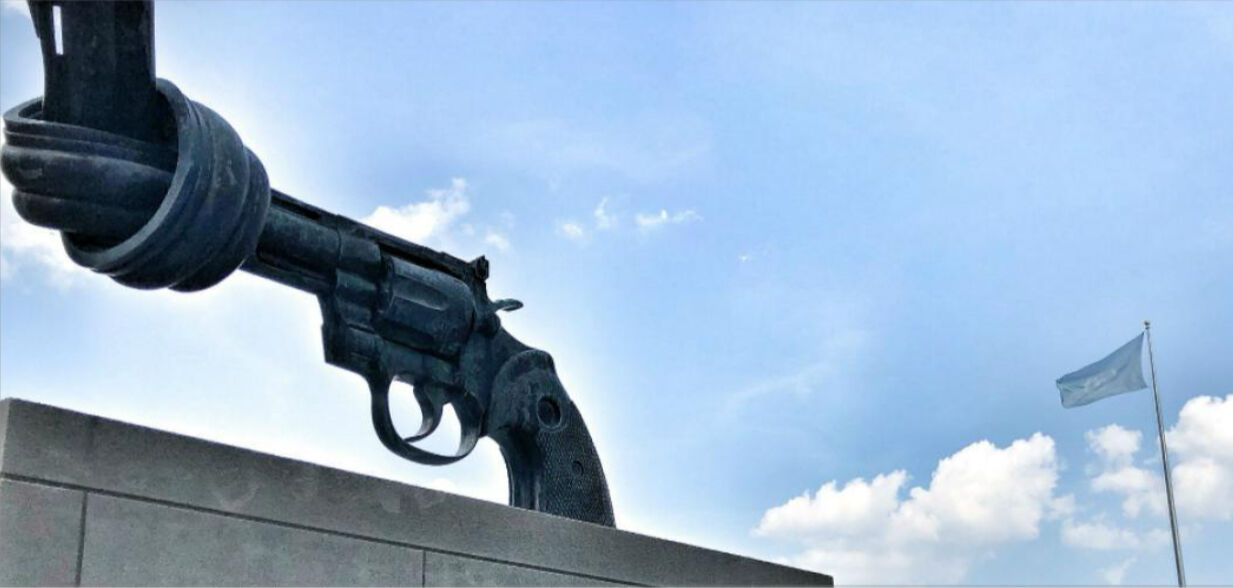
- At the UN Headquarters in New York, the Knotted Gun sculpture4 was created by The Non-Violence Project Foundation at the Visitors’ Plaza. It stands as an emblem of the resolve to reject violence and build a just, sustainable and peaceful future.
- In India, 2nd October is a national holiday and is celebrated as Gandhi Jayanti. The nation celebrates the promise of non-violence and efforts of Gandhi in their Independence. Celebrations worldwide take place in schools, community centers, and public institutions, particularly across India and diplomatic missions globally.
- Mahatma Gandhi Memoral5 is built in Utrecht, Netherlands, where local cultural groups host community gatherings and commemorative events.
A Moment of Reflection
There is a growing and uneasy amount of unrest across the world. The celebration and importance of highlighting this day of reflection is more important than ever. Global education systems and community awareness need to acknowledge non-violence and promote communication and peaceful alignment worldwide.There are many ways to mark International Day of Non-Violence at an individual level:
- Support or volunteer with local education initiatives that explore the harms of violence and benefits of non-violent strategies from daily life to a global scale.
- Advocate for ending violence in conflict related zones around the world.
- Amplify the voices of communities and community champions to discuss non-violent strategies of communication.
Position of Geneva International Centre for Justice (GICJ)
As the world commemorates International Day for Non-Violence, GICJ welcomes all efforts undertaken by the international community to advocate non-violent solutions to conflict and overall peace. GICJ expresses deep concern for people in areas of conflict, particularly in the Middle East where violence and unrest has taken over the entire region. While reflecting on non-violent strategies of the past is important, it remains incomplete without addressing solutions to the current states of conflict around the world. GICJ calls on all States to exercise restraint and find peaceful and non-violent solutions to civil and global conflicts.
(1) United Nations, "International Day of Non-Violence, 2 October", https://www.un.org/en/observances/non-violence-day
(2) General Assembly of the United Nations, "Resolution adopted by the General Assembly on 15 June 2007", A/RES/61/271, https://docs.un.org/A/RES/61/271
(3) UNESCO, "Is Gandhi's Sarvodaya a pathway for the future of education?, https://mgiep.unesco.org/article/statement-on-the-international-day-of-non-violence-02-october-2025
(4) Non-Violence, "Our Art", https://nonviolence.com/about/the-knotted-gun/
(5) The Indian Foundation, "Mahatma Gandhin Memorial Utrecht International Day of Non-Violence", https://www.theindiafoundation.nl/kopie-van-2023-india-s-74th-republic-7