





By Annaëlle Dollé / GICJ
Executive summary
The deterioration of Gaza’s healthcare system did not begin with the recent escalation of hostilities. For years, the blockade and chronic shortages of medicines, equipment and essential resources had already placed significant pressure on the health system. The events since October 2023 have, however, profoundly intensified these existing vulnerabilities and brought the system to the brink of collapse.
Gaza’s healthcare system has been severely weakened by the destruction of medical infrastructure, the loss of healthcare personnel, shortages of essential medicines and equipment, and the disruption of access to specialised treatment. The simultaneous erosion of these different components has significantly reduced the system’s capacity to respond to both emergency needs and the population’s ongoing healthcare requirements.
Humanitarian organisations and healthcare workers continue to provide essential services despite extremely difficult conditions. However, emergency assistance cannot indefinitely replace a functioning healthcare system, particularly when the delivery of humanitarian and medical supplies remains subject to significant constraints.
Restoring healthcare in Gaza therefore requires more than rebuilding damaged facilities. It requires the restoration of medical personnel, essential infrastructure, equipment, supply chains and specialised services, as well as conditions that allow healthcare workers to provide care safely and humanitarian assistance to reach those in need.
GICJ condemns the continued destruction and disruption of healthcare in Gaza and calls for the protection of healthcare facilities and personnel, the immediate and unhindered delivery of humanitarian and medical assistance, and sustained efforts to restore a functioning and comprehensive healthcare system.
Introduction
A healthcare system does not collapse only when its hospitals are destroyed. It collapses when the conditions that allow those hospitals to function disappear, when medical staff can no longer work safely, when medicines and equipment cannot reach patients, when electricity and water can no longer be guaranteed, and when specialised treatment becomes unavailable. The situation on Gaza illustrates this broader form of healthcare collapse, in which the different components of the health system have been progressively weakened at the same time.
This deterioration must also be understood against the conditions that existed before the current escalation of hostilities. Before the current conflict, the health system was already operating under severe structural constraints resulting from the prolonged blockade, chronic shortages of medicines and medical supplies, unreliable electricity and insufficient human resources. Approximately 80% of Gaza’s population was already dependent on humanitarian assistance. Nevertheless, the health system had maintained important public-health achievements, including vaccination coverage among registered refugee children close to 100% for more than a decade1.
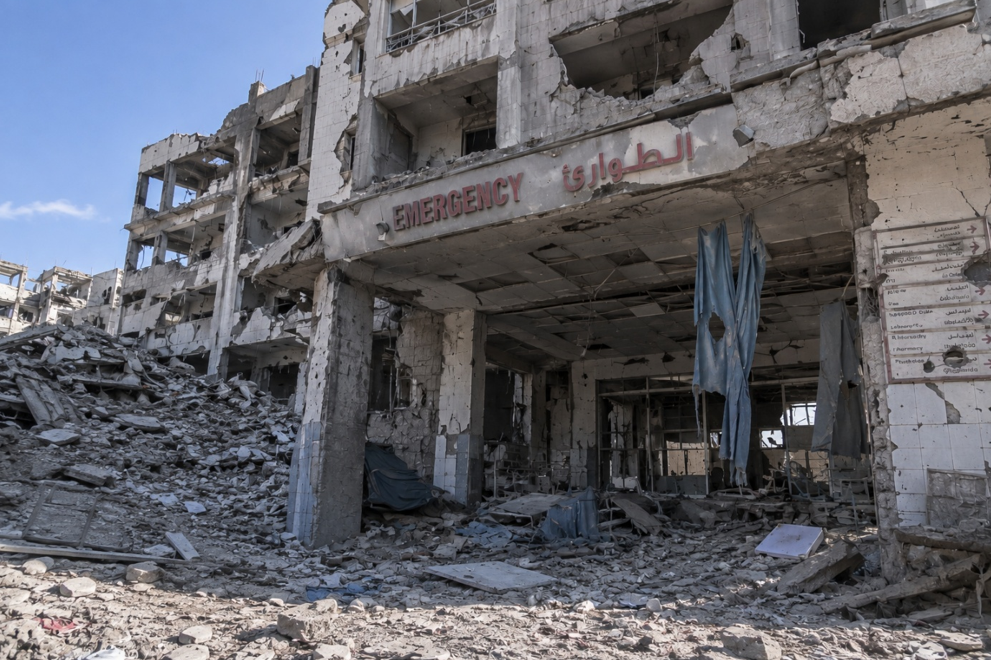
Since October 2023, the escalation of hostilities has fundamentally altered this situation. By 30 June 2024, 22 of Gaza’s 36 hospitals were reported to be non-functional, and by January 2025 only 18 remained partially functional2. At the same time, the World Health Organization (WHO) had verified 668 attacks on healthcare by 20 January 2025, resulting in 886 deaths and 1,355 injuries.
The deterioration has continued beyond the initial phase of the conflict. In March 2026, only 284 of 677 health service points were operational and only 20 were fully functioning3. In May 2026, the WHO reported that no hospital in Gaza was fully functional and that no hospitals were functioning in northern Gaza. More than half of essential medicines were out of stock, while thousands of patients continued to require urgent medical evacuation.
The destruction of Gaza’s healthcare system therefore extends far beyond the physical destruction of hospitals. It affects every component necessary for healthcare to function (infrastructure, personnel, medicines, electricity, water, sanitation, emergency transport, specialised treatment and access to care). The result is a system that remains technically present in parts of the Strip, but which is increasingly unable to provide comprehensive and timely healthcare.
The destruction of Gaza’s healthcare infrastructure
The destruction of Gaza’s healthcare infrastructure has severely undermined the capacity of the health system to provide care.
According to the WHO, 84% of health facilities in Gaza had reportedly been damaged or destroyed by early 2025, corresponding to approximately US$554 million in damage to the health sector4. The damage has affected hospitals as well as primary healthcare facilities, ambulances and other health infrastructure. This widespread destruction has been accompanied by repeated attacks affecting healthcare. By May 2025, the WHO had recorded 697 attacks on healthcare since October 2023, including attacks affecting hospitals, other health facilities and medical transport5.
The significance of this damage lies not only in the loss of individual facilities, but in the disruption of the healthcare network as a whole. Hospitals rely on functioning electricity and water systems, medical equipment, laboratories, pharmacies and supply chains to provide care. When these services are damaged or interrupted, facilities that remain standing may nevertheless be unable to operate normally. The destruction of one component of the health system can therefore affect the functioning of others, reducing healthcare capacity well beyond the facilities that have been directly damaged.
The extent of this disruption is reflected in the limited capacity of the facilities that remain operational. In February 2026, only 260 of 619 health service points in Gaza were functioning, and 90% of these were operating only partially. All hospitals were dependent on backup generators, while delays in the entry of spare parts and electrical components were affecting essential services, including intensive care, dialysis, operating theatres and laboratories6. The issue is therefore not simply whether a facility remains standing, but whether it has the infrastructure and resources required to provide healthcare effectively.
This reduced capacity is further compounded by the unequal geographical distribution of the remaining services. The destruction of facilities in northern Gaza has left the remaining centres under particularly intense pressure, while displacement has concentrated large numbers of people in areas where health services are already limited. The result is not simply a reduction in the number of healthcare facilities, but a profound geographical inequality in access to care.
The destruction of infrastructure has consequently produced a structural deficit that cannot be addressed simply by reopening individual hospitals. Restoring healthcare in Gaza requires the reconstruction of the interconnected infrastructure that allows medical services to function, from hospitals and primary care facilities to electricity, water, transport and medical supply systems.
The growing gap between health needs and available care
The consequences of the deterioration of Gaza’s healthcare system are felt directly by patients, whose medical needs have continued to grow while the capacity to respond to them has progressively diminished. The impact is particularly visible in emergency care but extends far beyond those injured during hostilities to patients requiring continuous or specialised treatment.
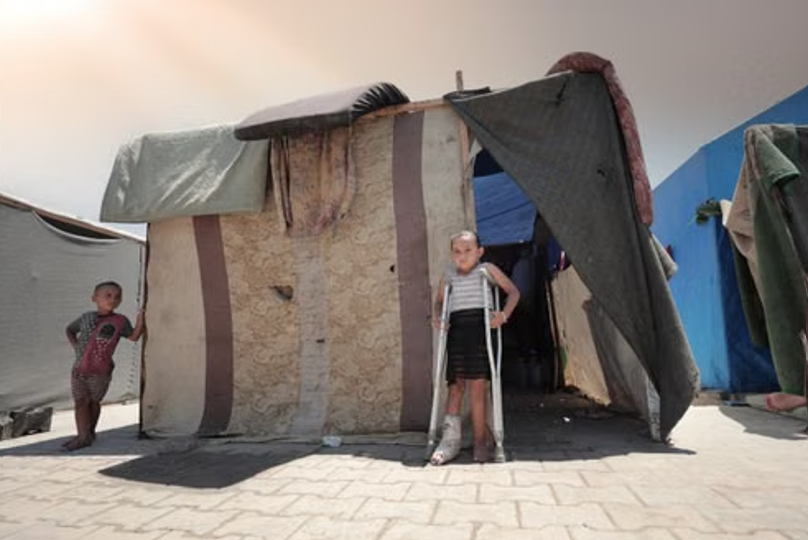
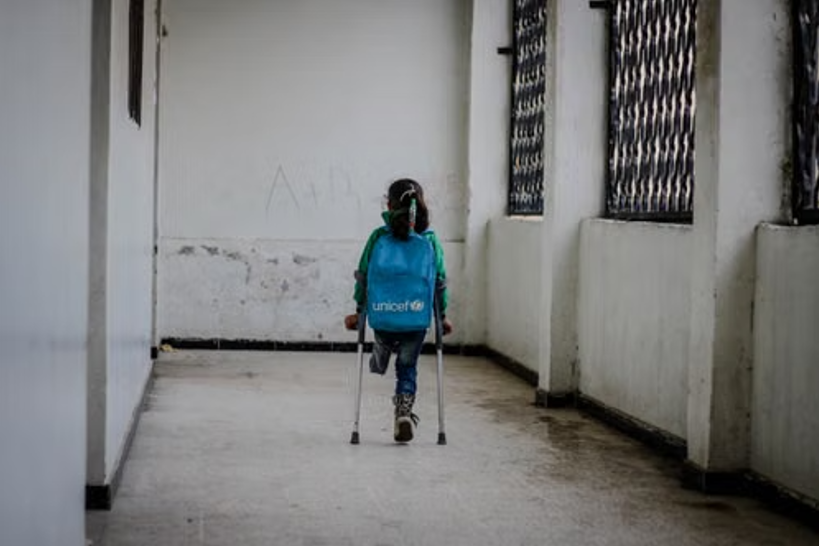
Emergency and trauma care has been particularly affected. The WHO reported that the lack of resources for surgical care has resulted in increased disability and mortality, with life-saving amputations sometimes prioritised over attempts to preserve limbs, premature discharge of patients because of bed shortages and widespread wound infections. By September 2024, more than 24,000 people were estimated to have sustained major life-changing injuries7. These injuries frequently require not only emergency surgery, but also prolonged treatment, rehabilitation and follow-up care, placing further pressure on an already severely weakened health system.
Yet the health crisis extends beyond those injured during attacks. Approximately 350,000 people in Gaza are living with chronic diseases, many of whom depend on regular medication, monitoring and specialised treatment8. The disruption of these services can cause otherwise manageable conditions to deteriorate, particularly for patients requiring dialysis, cancer treatment or other forms of continuous care. The problem is therefore not simply that fewer people can access emergency treatment, but that the continuity of care necessary to prevent illness from becoming more severe has also been disrupted.
Maternal and child healthcare has also been severely disrupted. The WHO reported that the number of high-risk pregnancies had doubled as access to emergency obstetric services became increasingly limited. Pregnancy and childbirth require regular monitoring and access to skilled medical care, particularly when complications arise. The disruption of these services can therefore place both mothers and newborns at greater risk. Children are similarly affected by interruptions to paediatric care, vaccination and nutritional services, with increasing levels of acute malnutrition further compounding existing health risks.
The psychological consequences of prolonged exposure to violence, bereavement and displacement have also placed significant pressure on mental-health services. Yet these services have themselves been disrupted, leaving growing mental-health needs insufficiently addressed.
Finally, the deterioration of the health system and of living conditions creates favourable conditions for the spread of infectious diseases. Damage to water, sanitation and hygiene infrastructure, combined with overcrowding and displacement, increases the risk of outbreaks, while the reduced capacity of health services makes their prevention, surveillance and treatment more difficult. The consequences of the crisis therefore extend beyond the treatment of existing patients, affecting the broader health of the population.
The consequences of the deterioration of Gaza’s healthcare system extend beyond the denial of individual medical treatment. By progressively reducing the population’s access to essential healthcare, medicines, treatment and medical infrastructure, the destruction of the health system contributes to conditions that threaten the survival and well-being of the Palestinian population in Gaza. In this context, the systematic destruction of healthcare cannot be considered separately from the broader pattern of conduct that has been raised in relation to the commission of genocide against the Palestinian population.
The erosion of Gaza’s medical workforce
The capacity of Gaza’s healthcare system has also been profoundly affected by the loss and detention of medical personnel. Healthcare workers have continued to provide care in extremely difficult conditions while themselves being exposed to hostilities. The case of Dr Hussam Abu Safiya, former director of Kamal Adwan Hospital, illustrates the extent of these pressures. Following the raid on the hospital on 27 December 2024, Israeli forces took Dr Abu Safiya into custody after he had reportedly remained at the facility to continue treating patients who required care. As of July 2026, the Office of the United Nations High Commissioner for Human Rights had called for his immediate release or for him to be promptly charged and tried, while expressing serious concern over reports of torture, ill-treatment and denial of medical care during his detention.
His case is part of a broader pattern affecting Gaza’s medical workforce. According to the WHO, hundreds of healthcare workers have been killed or injured since the beginning of the conflict. These losses, alongside the detention and displacement of medical personnel, have reduced the number of professionals available to care for patients at a time when the demand for medical services has increased considerably.
The impact of these losses is particularly significant because medical expertise cannot be replaced immediately. Doctors, nurses, surgeons, midwives, pharmacists, laboratory technicians and other healthcare professionals require years of training and experience. The loss of an experienced specialist therefore affects more than the number of staff available at a given moment. It can also deprive the health system of expertise that is essential to providing specialised care, supervising less experienced staff and training future professionals.
At the same time, those who remain have been required to work under conditions that make it increasingly difficult to sustain this workforce. Prolonged periods of intense pressure, overcrowded facilities, repeated mass-casualty incidents and exposure to violence have placed a considerable burden on healthcare workers. The erosion of the workforce therefore affects not only the number of professionals available, but also the system’s ability to retain and sustain those who continue to provide care.
The consequences may extend well beyond the current hostilities. The reconstruction of Gaza’s healthcare system will require not only the rehabilitation of medical facilities, but also the return or training of a sufficient number of qualified professionals. Replacing a destroyed building may be possible within a defined period of time, whereas rebuilding a medical workforce requires years. The loss of healthcare workers therefore represents one of the most difficult aspects of restoring a functioning health system.
The limits of medical evacuation
As specialised services inside Gaza have become unavailable or severely constrained, medical evacuation has become essential for patients whose treatment cannot be provided within the Strip. For some patients, leaving Gaza is the only possibility of receiving the specialised care they require.
WHO and its partners had supported the evacuation of more than 11,200 patients to over 30 countries since October 2023 by March 20269. Yet the scale of unmet need remained considerably higher. WHO reported in January 2026 that approximately 18,000 priority patients were still awaiting medical evacuation10.
Medical evacuation is also fundamentally different from ordinary access to healthcare. It depends on a complex chain of approvals and logistical conditions. Patients must first be referred, their evacuation must be authorised, a receiving facility must be identified and safe transportation must be arranged. WHO reported that security and movement constraints had repeatedly impeded medical evacuations11.
The dependence on evacuation therefore illustrates rather than resolves the underlying problem. When patients must leave Gaza because specialised treatment is unavailable, the absence of that treatment inside the Strip becomes itself an indicator of the degradation of the health system. Medical evacuation consequently provides an essential but highly limited form of assistance. It can save the lives of individual patients who would otherwise be unable to receive the treatment they need, but it cannot function as a general mechanism for delivering healthcare to an entire population. Its increasing importance therefore reflects not only the availability of international medical assistance, but also the extent to which access to specialised treatment has become dependent on leaving Gaza.
Rebuilding healthcare beyond emergency assistance
Humanitarian assistance remains essential to addressing immediate healthcare needs, but its ability to do so in Gaza is itself severely constrained. The delivery of medicines, medical equipment and other essential supplies depends on access to the territory and on the ability of humanitarian organisations to move them safely and continuously. Restrictions on the entry and movement of humanitarian supplies have repeatedly disrupted this process, leaving medical facilities unable to rely on a stable flow of essential resources.
These constraints reveal a fundamental limitation of an approach centred on immediate crisis management. Emergency assistance is designed to respond to urgent needs as they arise, through temporary medical teams, emergency supplies and short-term interventions. It cannot, however, compensate for the absence of the stable conditions required for healthcare to function on a permanent basis. Where even emergency supplies cannot reliably enter the territory, humanitarian assistance cannot provide a sufficient or predictable basis for meeting the population’s healthcare needs.
Moving beyond emergency assistance therefore requires addressing the conditions that make the delivery and continuity of healthcare possible. This includes restoring medical infrastructure, ensuring reliable access to essential utilities and supplies, and rebuilding a healthcare workforce capable of providing care over the long term. It also requires restoring primary and preventive healthcare rather than concentrating resources almost exclusively on emergency treatment.
The need for such a transition is particularly important because prolonged emergency management risks leaving healthcare focused on treating the consequences of the crisis rather than addressing the underlying health needs of the population. A sustainable health system must be able to provide continuous care, anticipate health needs and maintain services even when there is no immediate emergency.
Gaza therefore urgently requires sustained humanitarian assistance, and the delivery of medical supplies, equipment and other essential aid must be allowed to reach the population without obstruction. Yet increasing humanitarian assistance cannot, on its own, provide a sufficient response to the scale and duration of the crisis. As long as healthcare remains addressed primarily through emergency interventions, the population remains dependent on a system designed to manage immediate needs rather than provide continuous and comprehensive care. Humanitarian assistance must therefore be urgently facilitated while efforts are simultaneously directed towards preserving and rebuilding the foundations of a functioning healthcare system.
Conclusion
The deterioration of Gaza’s healthcare system cannot be reduced to the destruction of hospitals. It is the result of the simultaneous erosion of infrastructure, medical capacity, supply chains and access to specialised treatment, while the population’s health needs have continued to grow.
The continued provision of emergency medical services has prevented the healthcare system from ceasing to function entirely. However, maintaining emergency services is not equivalent to restoring a health system. Nor can humanitarian assistance provide a sustainable response when the delivery of such assistance is itself repeatedly obstructed.
The reconstruction of healthcare in Gaza will therefore require more than rebuilding damaged buildings. It will require the restoration of the personnel, equipment, supply chains and infrastructure necessary to provide comprehensive and continuous care. Above all, it requires conditions in which healthcare facilities, medical personnel and patients can be protected and humanitarian assistance can reach those who need it.
The future of Gaza’s healthcare system will ultimately depend not only on the resources devoted to reconstruction, but on whether the conditions necessary for that reconstruction are allowed to exist.
Therefore, Geneva International Centre for Justice (GICJ) condemns the continued destruction and disruption of Gaza’s healthcare system and the attacks affecting healthcare facilities, medical personnel and patients. GICJ calls on the international community to ensure the immediate and unhindered delivery of humanitarian and medical assistance to the population of Gaza and to ensure the effective protection of healthcare facilities and personnel in accordance with international humanitarian law.
At the same time, GICJ stresses that humanitarian assistance cannot be regarded as a substitute for a functioning healthcare system. Emergency aid is urgently needed to address the current crisis, but the prolonged reliance on emergency medical responses risks leaving the underlying destruction of Gaza’s healthcare system unaddressed. GICJ therefore calls for sustained efforts to restore the infrastructure, medical workforce and essential services required for the provision of comprehensive and continuous healthcare.
GICJ stands with the healthcare workers, patients and families who continue to face the consequences of the destruction of Gaza’s health system. Their ability to receive and provide medical care must not depend on the temporary availability of emergency assistance, but on the protection and restoration of a healthcare system capable of serving the population. Ultimately, GICJ calls for an end to the Israeli occupation of the Palestinian territory, which remains a fundamental obstacle to the Palestinian people’s ability to enjoy their rights, including the right to health.
[1] Izzeldin Abuelaish and Altaf Musani, “Reviving and rebuilding the health system in Gaza”, Eastern Mediterranean Health Journal, vol. 31, no. 2, 2025, p.56–58
[2] Ibid
[3] OCHA, “Humanitarian Situation Report | 19 March 2026”, 19 March 2026
[4] Izzeldin Abuelaish and Altaf Musani, “Reviving and rebuilding the health system in Gaza”, Eastern Mediterranean Health Journal, vol. 31, no. 2, 2025, p. 57
[5] WHO, “Health system at breaking point as hostilities further intensify – WHO warns”, 22 May 2025
[6] OCHA, “Gaza Humanitarian Response | Situation Report No. 69”, 27 February 2026
[7] Izzeldin Abuelaish and Altaf Musani, “Reviving and rebuilding the health system in Gaza”, Eastern Mediterranean Health Journal, vol. 31, no. 2, 2025, p.56
[8] Ibid
[9] WHO, “Flash Update”, March 2026
[10] WHO, “Patient Evacuation During Conflict”, 5 January 2026
[11] WHO, “Health conditions in the occupied Palestinian territory”, Executive Board document, January 2026
