


HRC63: Fighting for Equal Rights of African Descendants
63rd session of the Human Rights Council
7 September 2026 – 9 October 2026
Item 9: Racism, Racial Discrimination, Xenophobia, and Related Forms of Intolerance, Follow-Up to and Implementation of the Durban Declaration and Programme of Action
30 September 2026
Working Group of Experts on People of African Descent Warns that Racialised Migration Governance and Unimplemented Recognition in Suriname and Mexico Continue to Deny People of African Descent Their Fundamental Rights
By Pascale Portmann / GICJ
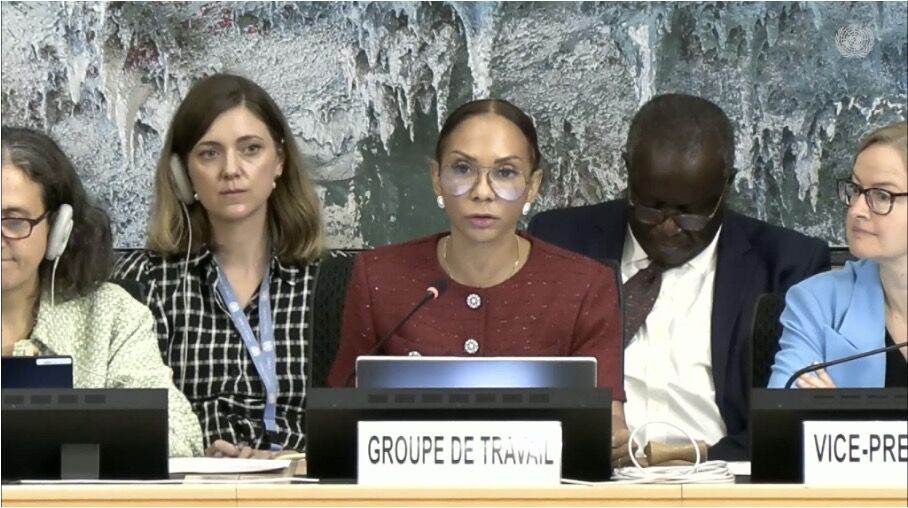
"To humanise migration is to confront the violence that shapes perceptions of mobility and determines whose suffering counts and whose does not", stated Ms Isabelle Mamadou, Chair of the Working Group of Experts on People of African Descent, during the Interactive Dialogue at the 33rd and 34th meetings of the 63rd session of the Human Rights Council held on 30 September 2026.
Presenting the report "Crossings and journeys: people of African descent in global migration and the enduring architecture of racialization" (A/HRC/63/74), she stressed that the precarity faced by migrants of African descent, exposure to trafficking, racial profiling and sexual violence on dangerous routes, resulted from policy choices. She warned that deportation caused lasting trauma, while artificial intelligence at borders risked reinforcing racial discrimination.
Turning to the country visits, she regretted that in Suriname (A/HRC/63/74/Add.1) Maroon land rights lacked legal recognition. Following her visit to Mexico (A/HRC/63/74/Add.2), she welcomed the constitutional recognition of Afro-Mexican peoples but denounced racial profiling rooted in the association of Blackness with foreignness.
The representative of Mexico took note of the recommendations but regretted that logistical errors had prevented some agreed meetings. The representative of Suriname acknowledged non-compliance with the judgments of the Inter-American Court of Human Rights.
In her concluding remarks, Ms Mamadou stressed that migrants must be treated as rights holders, not as data, and that equality must be more than a promise.