




HRC63: Green, Digital Development: But for Whom?
The 63rd session of the Human Rights Council
7 September- 9 October 2026
Item 3: Interactive Dialogue with the Expert Mechanism on Right to Development
14 September 2026
Advancing the Right to Development through Equitable Climate Finance and Human Rights-based Artificial Intelligence Governance
By Georgie Falize/ GICJ
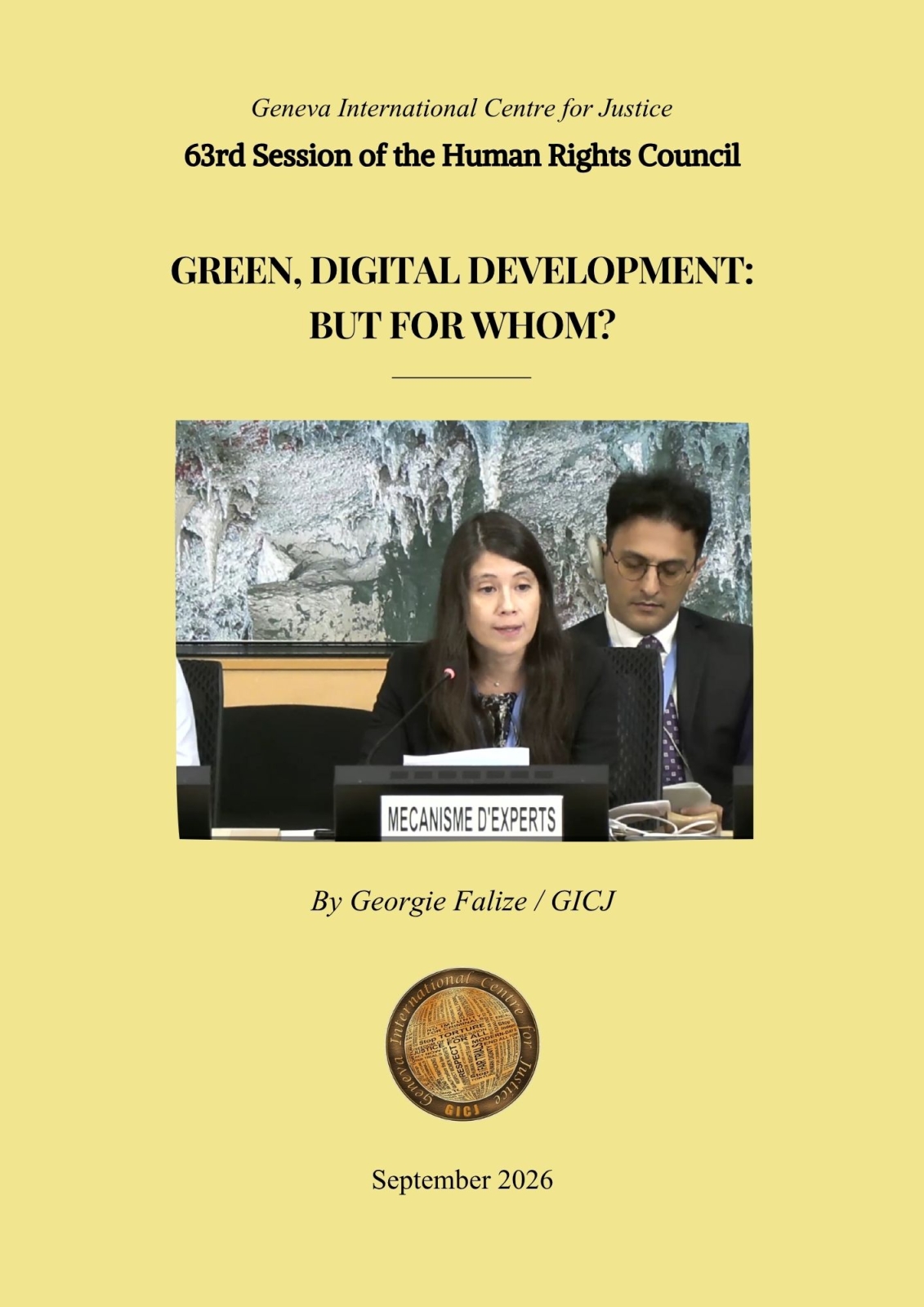
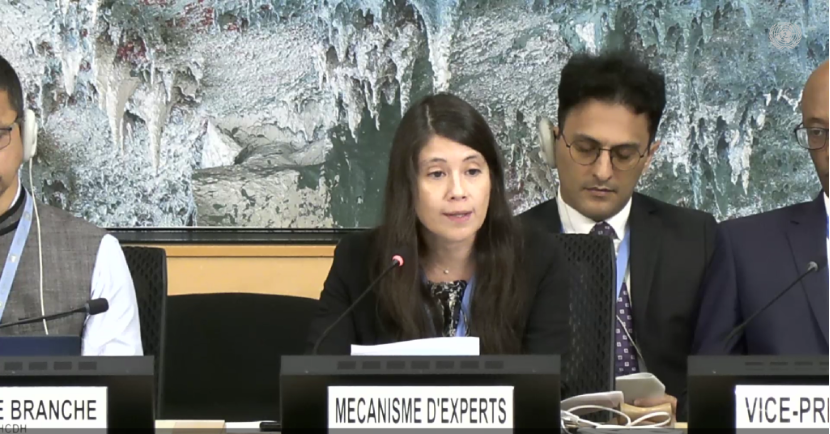
During the Interactive Dialogue with the Expert Mechanism on the Right to Development at the 63rd session of the Human rights council, the Expert Mechanism presented two thematic studies on climate finance and artificial intelligence for the realisation of the right to development.
On climate finance, the Expert Mechanism stressed vulnerability, responsibility, meaningful participation and international cooperation. It highlighted concerns surrounding carbon markets and financial flows, calling for stronger safeguards and equitable benefit-sharing, particularly for developing countries, indigenous peoples and women.
Regarding Artificial Intelligence, the Expert Mechanism recognised its potential to support development while warning that unequal access could reinforce existing inequalities. Particular concern was raised over the use of cultural heritage and traditional knowledge to train AI systems without consent or fair benefit-sharing, and called for governance grounded in international human rights law and human rights due diligence.
Several delegations emphasised the unequal impact of climate change on developing countries. Speaking on behalf of the African Group, Kenya stressed that Africa has contributed least to climate change while remaining among the most affected, warning that climate finance must not increase debt or replace development assistance. Zambia similarly stated that developing countries should not be forced to choose between climate resilience and investment in core services.
Delegations also warned that technological advancement must not reproduce global inequalities, with Cuba calling for stronger governance frameworks, while Indonesia emphasised the importance of consent and benefit-sharing in both AI design and governance.