



HRC63: Two Years Later, Where Does Syria Stand?
The 63rd Session of the Human Rights Council
07 September - 07 October 2026
Item 2: Oral updates by COI on Syria and the High Commissioner on El Obeid, and the OHCHR written update on Sri Lanka followed by General debate
8 September 2026
The Independent International Commission of Inquiry (COI) on the Syrian Arab Republic Presents Oral Update, Welcoming Significant Changes While Highlighting Remaining Challenges
By Nayira Himpe / GICJ
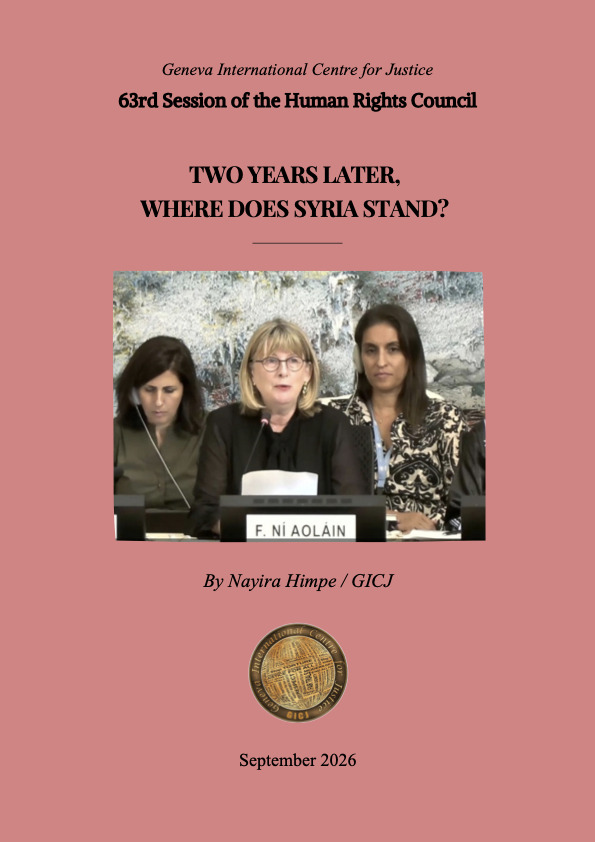
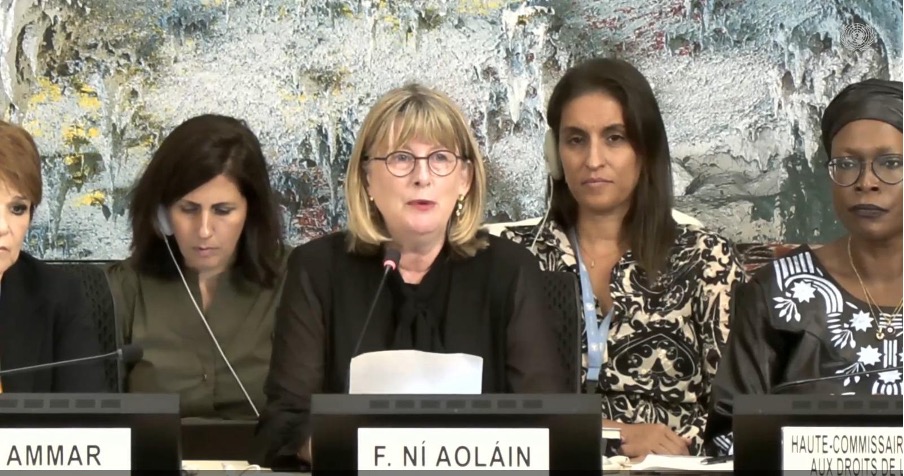
As Syria nears two years since the former government fell, the Independent International Commission of Inquiry on the Syrian Arab Republic’s has highlighted progress alongside continuing challenges. At the 63rd session of the Human Rights Council in Geneva, Commissioner Fionnuala Ní Aoláin noted Syria’s significant transformation. The People’s Assembly has been established, opening prospects for representative government, while millions of Syrians have returned home as reconstruction has accelerated. The Syrian Democratic Forces have also announced dissolution and integration into state forces. The Commission welcomed these achievements and thanked the Syrian Government’s continued access for investigations.
The Syrian delegation also outlined steps towards transitional justice. The Transitional Justice Council has prepared a draft programme centred on victim participation, while investigations continue. According to the delegation, new legislation and a constitutional declaration have led to verdicts against perpetrators, with 1,147 cases under investigation and around 1,333 before the Office of the Prosecutor. The National Missing Persons Commission has also been established. It has launched consultations involving victims, opened counselling centres and developed witness testimony mechanisms. The delegation reported 194 cases concerning missing persons, some with international bodies. Syria has drafted a national strategy to combat torture committed under the former regime and address past cases.
The Commission nevertheless stressed that serious challenges persist, including selective accountability, unresolved violations linked to violence in the coast and Sweida, deaths in detention, arrests of government critics, hate speech and threats against women activists. It also raised concerns about reported violations during operations in Aleppo and the northeast, as well as continued Israeli violations in Syria, which the Commission warned that “such acts may amount to war crimes”.
The Commission concluded that momentum towards greater respect for human rights in Syria remains high and should be supported through concrete action amount to war crimes”.