



HRC63: Five Years of Taliban Rule: Afghanistan's Women Pay the Price
The 63rd session of the Human Rights Council
7 September - 7 October 2026
Item 2: Enhanced Interactive Dialogue with the Special Rapporteur in Afghanistan
7 and 8 September 2026
UN Special Rapporteur Warns That Institutionalised Gender Apartheid in Afghanistan Is Reshaping an Entire Generation's Future
By Nandini Gupta / GICJ
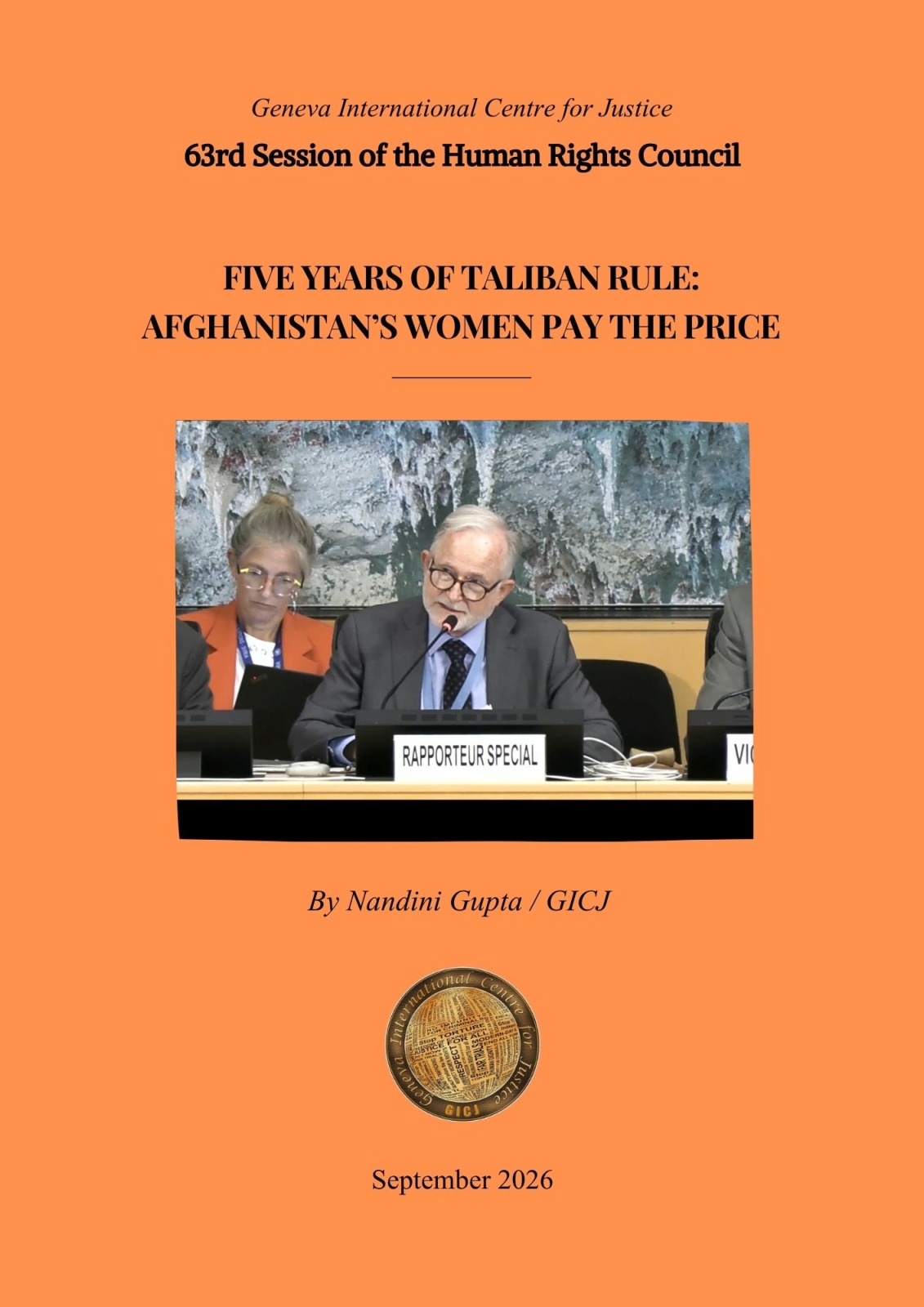
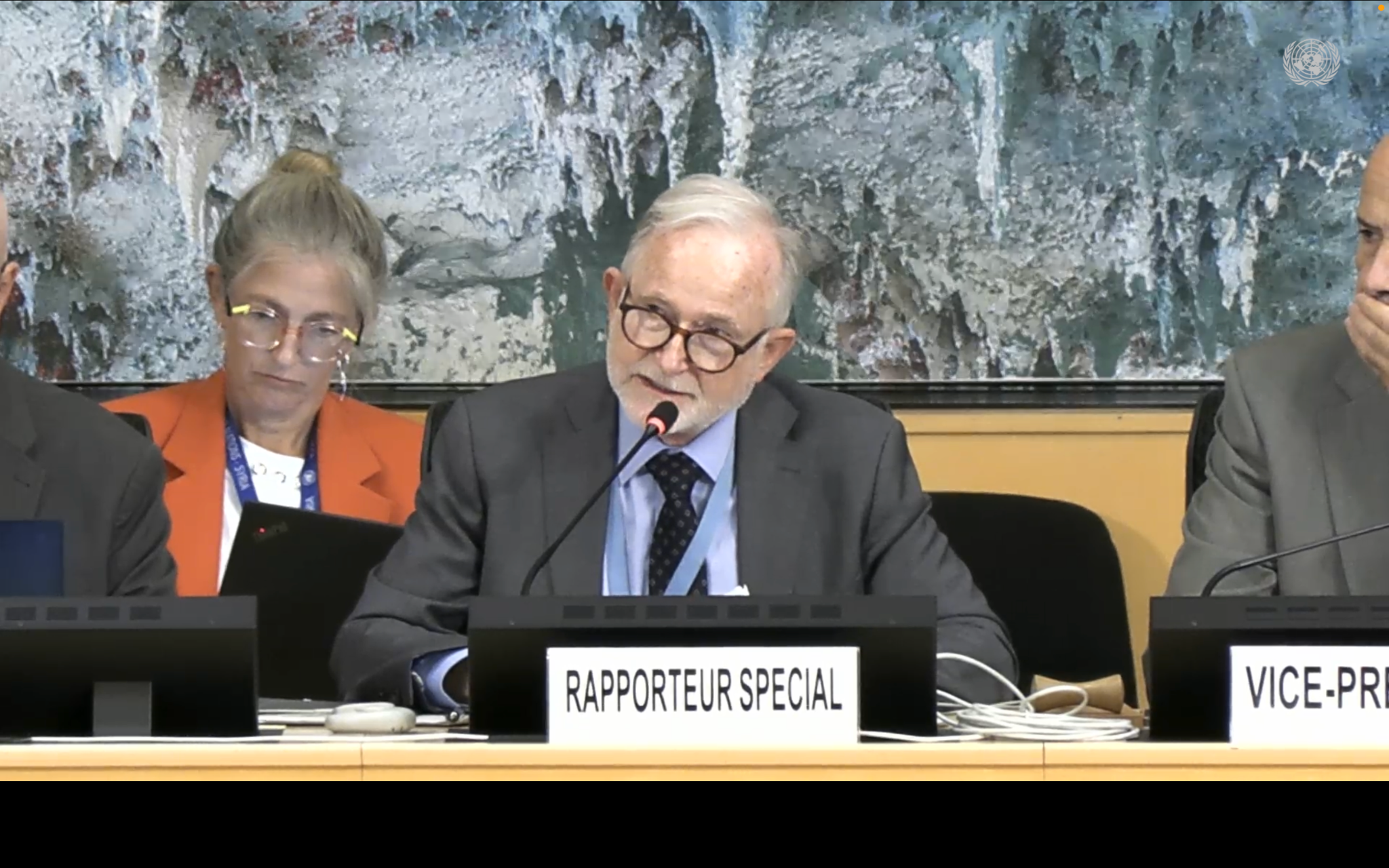
On 7 September 2026, at the 63rd session of the UN Human Rights Council, an Enhanced Interactive Dialogue was held on the report of Mr Richard Bennett, Special Rapporteur on the Situation of Human Rights in Afghanistan (A/HRC/63/22). He was joined by Mr Nasir Ahmad Andisha, Permanent Representative of Afghanistan to the UN in Geneva. One Afghan girl described the lives of Afghans under Taliban rule to a UN expert as a life defined by "fear, tears and despair."
Mr Bennett's report, informed by focus group discussions with 102 participants and 25 written submissions from Afghans, found that Taliban decrees were institutionalising child marriage and inadequately penalising violence against women and girls. He noted that around 9 million Afghan children faced severe hunger, child labour was rising despite being prohibited, and girls remained excluded from secondary education while boys' schooling was increasingly shaped by Taliban ideology. He further raised concerns over the repression of religious and ethnic minorities, a new nationwide ban on demonstrations, and the mass return of Afghans from Iran and Pakistan without adequate protection screening. Mr Andisha, responding on behalf of Afghanistan, acknowledged the report's findings and noted that, in the absence of any legislative process under the Taliban, five years of Council engagement had produced no practical change on the ground.
𝐆𝐞𝐧𝐞𝐯𝐚 𝐈𝐧𝐭𝐞𝐫𝐧𝐚𝐭𝐢𝐨𝐧𝐚𝐥 𝐂𝐞𝐧𝐭𝐞𝐫 𝐟𝐨𝐫 𝐉𝐮𝐬𝐭𝐢𝐜𝐞 (𝐆𝐈𝐂𝐉) echoes the Special Rapporteur's call for accountability and reaffirms that any dialogue or normalisation with the Taliban must never come at the expense of the fundamental rights of Afghan women, girls and children. 𝐆𝐈𝐂𝐉 calls upon member states to take steps to curb the gender apartheid in Afghanistan because words alone will not restore what has been lost; only sustained, concrete action can.