



The 62nd Session of the Human Rights Council
15 June – 07 July 2026
Item 3: Annual Discussion on Women's Rights
24 June 2026
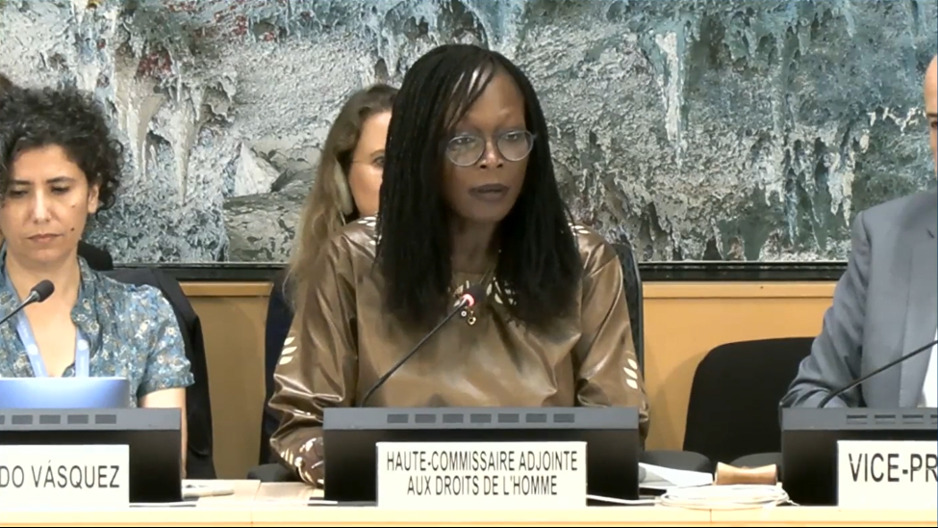
Putting Survivors First: Deputy High Commissioner for Human Rights Awa Dabo Affirms That Survivor-Centred Protection, Accessible Services and Effective Justice Are Essential to Ending Violence Against Women and Girls
By Javaria Qadir / GICJ
Executive Summary
Pursuant to Human Rights Council Resolution 6/30, adopted in 2007, the Human Rights Council convened an annual full-day discussion on the human rights of women. At its sixty-second session, the discussion was organised around two thematic panels. The first panel addressed domestic violence against women and girls. The second panel commemorated the International Day of Women in Diplomacy and examined women's rights to work and their equal participation in leadership and decision-making. The discussions provided an opportunity for Member States, United Nations entities, independent experts and civil society representatives to exchange views on the challenges affecting the enjoyment of women's human rights and to share good practices to strengthen their protection.
The first panel underscored that domestic violence remains one of the most widespread and persistent human rights violations affecting women and girls worldwide. It emphasised that every woman should be able to return home without fear. Domestic violence is not a private matter. It is a serious human rights violation rooted in discrimination, unequal power relations and harmful gender stereotypes. The discussion highlighted the need for stronger legal frameworks, accessible justice, survivor-centred protection and better coordination among national institutions. Speakers also observed that cultural practices, discriminatory family laws and certain interpretations of religious traditions continue to prevent many women from escaping abusive relationships and exercising their rights. Reference was made to the case of a sixteen -year-old girl forced into child marriage in Sri Lanka, illustrating how gender inequality and harmful social norms can expose women and girls to violence and deny them effective protection. Participants further expressed concern over the growing misuse of digital technologies. Artificial intelligence, including the creation of deepfake images and videos, is increasingly being used to harass, intimidate and silence women and girls, particularly those participating in public life. Throughout the discussion, speakers encouraged States, international organisations and civil society to strengthen cooperation and exchange good practices. They emphasised that survivors' experiences should guide the development of laws, policies and support services. The discussion further highlighted the importance of learning from past cases. Such lessons can help identify institutional shortcomings, strengthen and improve future responses to violence against women and girls. The panel also concluded that education, legal awareness and women's economic empowerment are among the most effective means of preventing violence and advancing gender equality.
The second panel commemorated the International Day of Women in Diplomacy and examined the structural and systemic barriers that continue to limit women's equal participation in diplomacy, leadership and decision-making. Speakers observed that women remain significantly underrepresented in decision-making despite their growing contributions across all sectors. The discussion highlighted that persistent gender stereotypes continue to question women's leadership abilities and reinforce the perception that men are better suited for senior decision-making roles. It was also highlighted that women continue to face unequal pay, discrimination in the workplace and limited opportunities for career advancement. The unequal sharing of household and caregiving responsibilities was identified as another significant barrier, with many women facing pressure to balance professional responsibilities with family life. It was further observed that many women are reluctant to seek or accept positions of greater responsibility because of the increased risk of online harassment and technology-facilitated gender-based violence. Speakers emphasised that addressing these structural barriers is essential to creating an enabling environment in which women can participate fully and meaningfully in leadership and decision-making. The discussion further highlighted the importance of sharing good practices, strengthening international cooperation, implementing practical measures to remove discriminatory barriers and ensuring equal opportunities based on merit and capability. Equal participation in leadership was recognised as essential to effective governance, sustainable development and lasting peace.
To read the full report, click on the image below: