




The 62nd Session of the Human Rights Council
15 June – 07 July 2026
Item 3: Interactive Dialogue with the United Nations Special Rapporteur on the Rights to Freedom of Peaceful Assembly and of Association
23 June 2026
On the State’s Radar: Digital Surveillance and Its Chilling Effects on the Freedom of Peaceful Assembly and Association
By Tanushree Ghosh/GICJ
Executive Summary
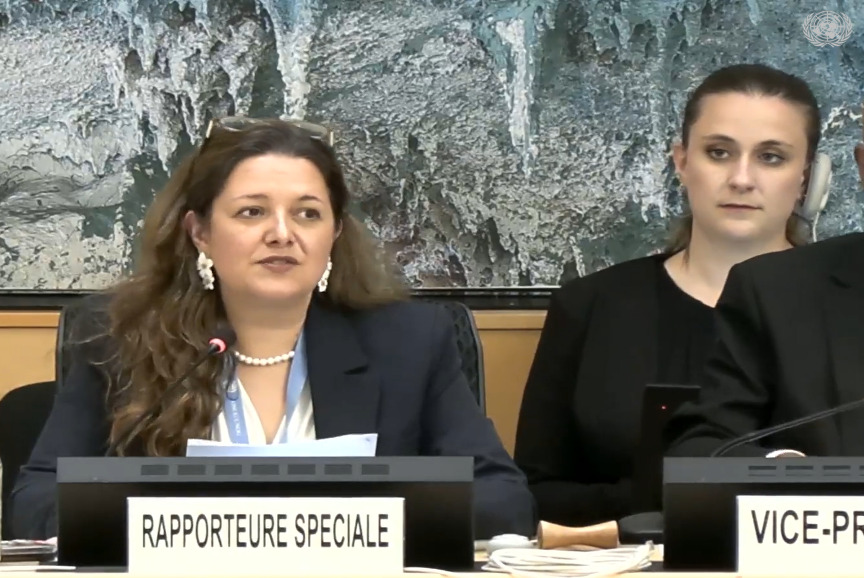
On 23 June 2026, the United Nations (UN) Special Rapporteur on the rights to freedom of peaceful assembly and of association, Ms Gina Romero (hereinafter, the “Special Rapporteur”), presented a report during an interactive dialogue at the 62nd session of the UN Human Rights Council (HRC). The report, titled “Unmasking the Chilling Effects of the Digital Surveillance Ecosystem: The Erosion of Assembly and Association Rights” (A/HRC/62/45) (hereinafter, the “Report”), identifies and assesses the chilling effects of intrusive digital surveillance on the exercise of civil and political rights, particularly the rights to peaceful assembly and association. The findings of the Report are based on a global study that included consultations with human rights defenders, activists, journalists, civil society actors and public defenders across various jurisdictions. By documenting their lived experiences, the Report not only draws attention to the compounded harms arising from indiscriminate digital surveillance but also urges States to take coordinated action to address these human rights concerns.
The presentation of the Report was followed by an interactive dialogue with the Special Rapporteur. Representatives of Member States and Non-Governmental Organisations (NGOs) participating in the interactive dialogue acknowledged that a shrinking civic space poses unprecedented threats to democracies across the globe. However, it was noted that rapid developments in digital technologies often compel Member States to enact and implement domestic regulatory frameworks that are broader in scope and application. As a result, digital technologies may either remain unregulated or be regulated in a manner that risks imposing unreasonable restrictions on the fundamental rights of individuals.
To address the tension between protecting human rights and regulating emerging digital technologies, Member States were urged to consider implementing the recommendations issued by the Special Rapporteur. These recommendations range from examining the intersectional harms arising from surveillance-induced chilling effects to conducting context-specific harm-versus-utility analyses of emerging digital technologies. Member States, through sessions of the HRC, have repeatedly reaffirmed their commitment to protecting the civil and political rights of all individuals. The 62nd session of the HRC puts these commitments to the test yet again. Accordingly, States need to take urgent action to ensure that surveillance practices are consistent with their obligations under international human rights law.
To read the full report, click on the image below: