



HRC61: Afghanistan’s Worsening Human Rights Situation Sparks Concern During Interactive Dialogue
61st Session of the Human Rights Council
23 February – 31 March
Item 2: Enhanced Interactive Dialogue on the report of the Special Rapporteur on Afghanistan and the OHCHR country report
Date of the discussion: 27 February
By Baibare Patience / GICJ
Executive summary
During the enhanced interactive dialogue at the 61st session of the Human Rights Council on the situation of human rights in Afghanistan, the High Commissioner for Human Rights Mr. Volker Türk, and the Special Rapporteur Mr. Richard Bennet reported a grave and continuing deterioration of the human rights situation, particularly affecting women and girls. The discussion highlighted that restrictions imposed by the de facto authorities on education, employment, freedom of movement, and access to healthcare have created a structural human rights crisis, with severe humanitarian consequences for the entire population. Several speakers noted that recent legal developments, including new criminal rules and increased use of corporal punishment, risk further entrenching discrimination and may amount to serious violations of international human rights law.
Member States, United Nations bodies, and civil society organisations broadly agreed on the need to reverse discriminatory policies, restore the fundamental rights of women and girls, and ensure sustained humanitarian assistance to the Afghan population. Many delegations stressed the importance of accountability and welcomed the establishment of the independent investigative mechanism mandated by the Human Rights Council, calling for its rapid operationalisation and adequate funding to document violations and preserve evidence for future judicial processes.
Geneva International Centre for Justice (GICJ) supports these calls and stresses that the independent investigative mechanism is essential to ensure accountability for serious human rights violations in Afghanistan. GICJ underlines that effective documentation, preservation of evidence, and support for international justice processes are necessary to prevent impunity, particularly for violations affecting women and girls, and to uphold the credibility of the Human Rights Council in responding to systematic human rights abuses.
Background
The situation in Afghanistan has been the subject of continued discussion at the Human Rights Council due to the severe deterioration of human rights, particularly since the Taliban takeover in August 2021. The aforementioned takeover led to the dismantling of previous legal and institutional frameworks protecting fundamental rights, especially those of women and girls. During the period between 2001 and 2021, Afghanistan adopted laws, policies, and institutions aimed at promoting gender equality, including the ratification of the Convention on the Elimination of All Forms of Discrimination Against Women (CEDAW), the establishment of the Ministry of Women’s Affairs, and the adoption of national action plans on women, peace and security. However, these gains have been rapidly reversed, with new decrees, policies, and measures systematically restricting women’s freedom of movement, access to education, employment, healthcare, and participation in public life. As noted in the Afghanistan Gender Country Profile 2024, these measures form a tightly interwoven framework of discrimination that has effectively erased women and girls from many areas of society.
Afghanistan is currently facing overlapping humanitarian, economic, political, and human rights crises, which disproportionately affect women and girls. Restrictions on education, including the ban on secondary and higher education for girls, limitations on women working in humanitarian and civil society organizations, and barriers to accessing healthcare have significantly worsened living conditions and undermined social stability. Reports presented to the Human Rights Council have also highlighted concerns over new legal decrees that weaken due process guarantees, expand the use of corporal and capital punishment, and further institutionalize gender-based discrimination. In response, the Council and international actors have emphasized the importance of accountability, including the establishment of an independent investigative mechanism on Afghanistan, and the need for sustained humanitarian support that does not reinforce discriminatory structures but instead prioritizes the rights, dignity, and participation of women, girls, and other vulnerable groups.
Statement from the panelists
Mr. Volker Türk, UN High Commissioner for Human Rights
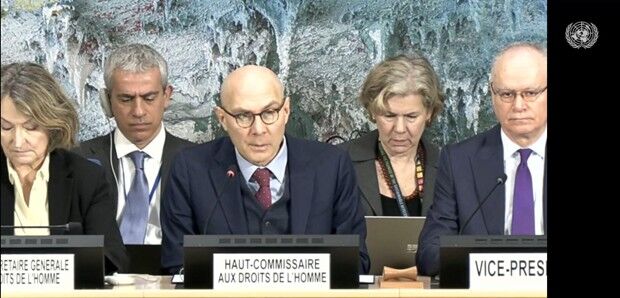
Mr. Volker Türk opened his statement referring to Afghanistan as ‘a graveyard for human rights’. He stated that the de facto authorities are codifying restrictive edicts into a broader legal framework, including a recent decree that expands the death penalty, allows corporal punishment, and criminalises criticism, in violation of Afghanistan’s international obligations. The High Commissioner urged the authorities to withdraw the decree and align all measures with international human rights law.
The High Commissioner continued to express grave concerns over the situation of women and girls in Afghanistan, stating that they are subjected to severe gender-based discrimination that amounts to persecution, with restrictions affecting education, employment, healthcare, freedom of movement, and participation in public life. He noted that the system of segregation imposed by the de facto authorities is reminiscent of apartheid based on gender rather than race. Women’s and girls’ presence in public continues to be criminalised; they are banned from secondary education and above and from most employment. They are also subjected to strict dress and guardianship requirements, and even prevented from accessing United Nations premises, including female UN staff, which he described as unprecedented and deeply disturbing.
He further reported ongoing public executions, widespread censorship of the media, where it is forbidden to broadcast music, drama, or content that is discretionarily deemed not to align with Afghan culture or Sharia law. Restrictions on journalists, particularly women journalists, and a nationwide communications blackout disrupted essential services, including healthcare, emergency services, and banking, worsening the already critical situation.
The High Commissioner also highlighted the deteriorating humanitarian and security conditions, noting that millions of Afghans continue to live in extreme poverty without adequate food, clean water, healthcare, employment, or access to education, economic problems that have been aggravated by natural disasters, such as the two earthquakes of late 2025.
He warned that funding shortages are already forcing humanitarian agencies to reduce assistance, with the World Food Programme reporting that they are forced to turn away three out of four acutely malnourished children. Concern was also expressed over the growing number of Afghan refugees being returned, often involuntarily, from neighboring countries, despite credible reports of killings, arbitrary detention, torture, and ill-treatment of returnees, particularly returnees who were former Government officials and members of the security forces. Mr. Volker thus urged that returns must respect the principle of non-refoulement and be based on individual assessment.
Mr. Volker Türk further raised alarm over the increase in civilian casualties linked to cross-border hostilities, emphasizing that continued violence and the shrinking civic space further undermine stability, trust, and social cohesion in the country. Recalling that his Office continues to document violations, Mr. Volker urged the de facto authorities to reverse discriminatory policies, particularly those excluding women and girls from public life, to halt executions and corporal punishment, guarantee due process, ensure unrestricted humanitarian access, and respect freedom of expression and media independence. He further called on the international community to exert pressure to comply with international human rights obligations, support accountability efforts (including investigative mechanisms established by the Council), and ensure that any engagement with Afghanistan remains firmly grounded in respect for human rights as the only path toward peace, stability, and reintegration into the international community.
Mr. Richard Bennett, Special Rapporteur on the situation of Human rights in Afghanistan
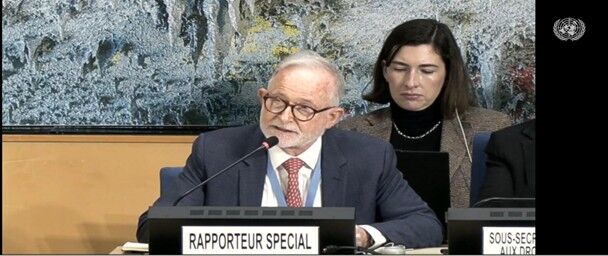
Mr. Richard Bennett, Special Rapporteur on the situation of human rights in Afghanistan, opened his statement by calling the House to the new report focusing on the right to health for women and girls. After his consultation with well over 100 Afghans, almost all in Afghanistan, as well as cooperation with United Nations Assistance Mission in Afghanistan (UNAMA) and the UN country team, his report found that under Taliban rule the health and human rights crisis, especially for girls, is deteriorating. The already fragile state of the health system which is attributed to decades of conflict, poverty and overreliance on donors is already on the downfall due to recent cuts in aid. And with the Taliban gender-oppressive policies harming women by preventing them from accessing essential services, systematically depriving women and girls of their fundamental rights, This situation has amounted to crimes against humanity.
Mr. Richard Bennett, while emphasizing the human rights crisis in Afghanistan, quoted a woman doctor inside Afghanistan who hoped the Council would hear her words, stating that, “Today in Afghanistan, being healthy means much more than not being sick. It rather means much more; it means having access to basic health care, enough nutritious food, clean water, safe shelter, and mental well-being, but for girls it means much more; it means freedoms: freedom to move, freedom to study, freedom to work, freedom to seek care without fear.”
The Special Rapporteur noted that despite the difficult conditions, female health workers continue to deliver essential services, stressing that the realization of the right to health in Afghanistan is inseparable from the restoration of the rights of women and girls. He observed that since 2021 the country has faced multiple crises, including economic decline, reduced international assistance, natural disasters, and large-scale returns of refugees, while the de facto authorities continue to adopt measures that risk further serious human rights violations, including new criminal regulations, increased use of corporal punishment, and reports of retaliatory attacks against former officials, particularly extra judicial killings against former government and security officials, forcibly returned from neighboring countries.
He also expressed concern over the continued exclusion of women, including the ban preventing Afghan women and female UN staff from accessing United Nations premises, warning that prolonged inaction risks normalising these restrictions. While welcoming the establishment of an independent investigative mechanism and echoing the hope that it will soon be operational, he urged States to strengthen accountability efforts and to ensure that they offer more than practical support without benefiting the de facto authorities. “Only when rights are restored can the people of Afghanistan thrive and shape the future they deserve.”
Mr. Nasir Ahmad Andisha, Permanent Representative of Afghanistan to the United Nations Office in Geneva (Country concerned)
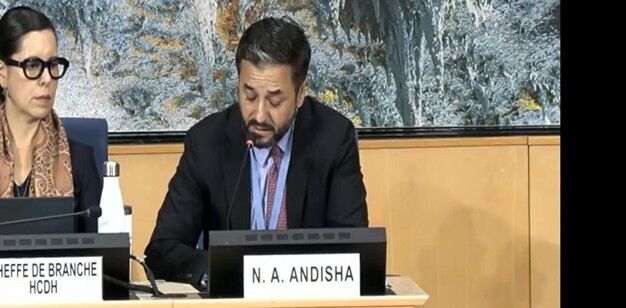
Mr. Nasir Ahmad Andisha, Permanent Representative of Afghanistan to the United Nations Office at Geneva, expressed concern over the continued deterioration of the human rights situation in Afghanistan, recalling reports of more than 70 civilian casualties resulting from recent cross-border attacks in the southern and eastern parts of the country. He thanked the Office of the High Commissioner for Human Rights and the Special Rapporteur for their continued documentation, noting that the report clearly demonstrates that the systematic dismantling of women’s rights has directly contributed to the collapse of access to healthcare and other essential services. He also paid tribute to Afghan women, health workers, survivors, and civil society actors who continue to share testimonies despite serious risks, including former Minister of Health Dr. Soraya Dalil, whose presence he acknowledged.
He stated that Afghanistan is witnessing the consolidation of a system of repression characterized by restrictive decrees, arbitrary arrests, surveillance, censorship, criminalization of dissent, public executions, and corporal punishment, while women are progressively excluded from education, employment, essential services, and public life. He further noted that forced returns of refugees, economic decline, and restrictions on humanitarian assistance are deepening the crisis. He stressed that the report confirms the current health crisis is structural and gender-based, as women are prevented from accessing hospitals without male accompaniment, female health workers face obstacles in performing their duties, and women are excluded from medical education, resulting in systematic barriers to healthcare.
Recalling testimony from an Afghan doctor, he emphasized that for women and girls health depends on freedom, including the freedom to move, study, work, and seek care without fear. He warned that the consequences are already severe and may become irreversible, noting that maternal mortality is rising, millions of women lack reliable access to healthcare, and nearly 4 million children are suffering from acute malnutrition, while preventable diseases and complications are increasing due to lack of access rather than lack of treatment. He added that the collapse of the healthcare system disproportionately affects women, children, persons with disabilities, internally displaced persons, minorities, and those living in poverty.
Mr. Nasir concluded his statement by stressing that the exclusion of women from education, employment, and public life is undermining the very survival of the health system. He stated that the situation reflects a persistent pattern of gender-based discrimination that continues to erode human dignity and violates the fundamental right to health in Afghanistan.
Ms. Suraya D'Souza -Representative of civil society from Afghanistan
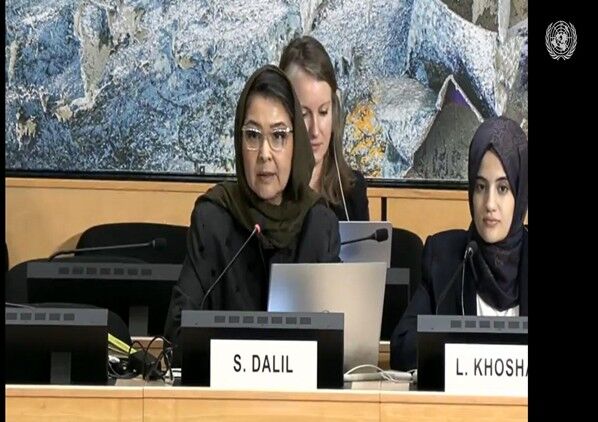
Ms. Suraya D’Souza, Representative of civil society from Afghanistan, expressed concern over the growing barriers faced by women and girls in accessing healthcare, noting that movement restrictions, limitations on female health workers, and the ban on medical education are seriously undermining the right to health. She warned that excluding women from the health sector threatens the sustainability of the system itself and will have long-term consequences for future generations.
She outlined three areas for action: first she called for Afghanistan to remain high on the international agenda and for the voices of Afghan women and girls to be amplified, stressing that the human rights crisis, including what she described as gender apartheid, must remain central in all engagement with the de facto authorities, together with clear demands for the restoration of fundamental rights. Second, she urged people-centered humanitarian assistance that supports civil society, keeps health and education services functioning, and provides alternative learning opportunities, particularly for girls. Third, she called for targeted measures and stronger accountability, welcoming the establishment of the independent investigative mechanism for Afghanistan and supporting efforts to recognize gender apartheid as a crime against humanity, stressing that accountability is essential for justice and for the future of the Afghan people.
Ms. Lima Khoshal, Representative of civil society from Afghanistan
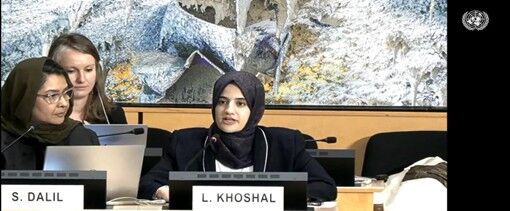
Ms. Lima, Representative of civil society from Afghanistan, shared her personal experience as a student whose medical education was interrupted following the ban on women attending universities, stressing that the denial of education to girls in Afghanistan has created a crisis affecting not only the right to education but also the right to health. She stated that many young women who had hoped to serve their communities as doctors and health workers have been prevented from continuing their studies, not due to lack of ability but because of restrictive policies imposed by the de facto authorities, leading to uncertainty, psychological distress, and loss of future opportunities for an entire generation.
She noted that the exclusion of women from education and the health workforce has serious consequences for society, contributing to rising maternal mortality, reduced access to healthcare for women and girls, declining vaccination coverage, and the reappearance of preventable diseases. She emphasized that when girls are denied education, the foundations of the health system itself are weakened, stressing that education for girls is not only a fundamental human right but also essential for public health, social stability, and the future of Afghanistan. She called on the international community not to let their commitment wither, but to rather continue standing with Afghan women and girls not only with word but with sustained support, funding, and diplomatic engagement. She urged for continued solidarity with Afghan women and girls whose rights and future remain at risk.
Statement from Delegates
Ms. Clare Walsh Australia (on behalf of Canada, Australia and New Zealand)
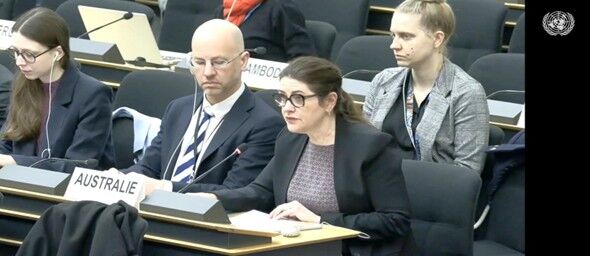
Ms. Clare Walsh expressed grave concern over the human rights and humanitarian crisis in Afghanistan, particularly the Taliban's ongoing systematic campaign of oppression targeting women, girls, and minorities, condemning it for continuously restricting women’s and girls’ rights in order to remove them from public life. Ms. Clare Walsh noted that nearly 22 million Afghans remain in urgent need of humanitarian assistance, with women and girls disproportionately affected. She further expressed concern over the recent criminal procedure regulations, which further entrench discrimination, undermine due process, and normalize violence within the family. She stressed that this criminal procedure system disregards Afghanistan’s obligations under international human rights law
Ms. Clare pointed out that such measures undermine regional peace and stability and do not provide a credible basis for Afghanistan’s reengagement with the international community, reiterating the call for full respect of international legal obligations. Mr. Clare Walsh further asked how humanitarian assistance can be delivered in a way that effectively supports the Afghan population, particularly women and girls, in light of the failure of the de facto authorities to meet their basic needs.
Mr. Jawad Ali-Pakistan (on behalf of Organization of Islamic Cooperation – OIC)
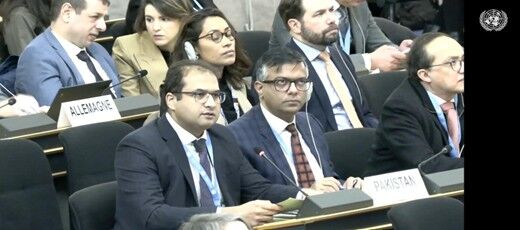
Speaking on behalf of the Organization of Islamic Cooperation (OIC), Mr. Jawad Ali, on behalf of Pakistan, took note of the reports of the Special Rapporteur and the Office of the High Commissioner for Human Rights and expressed deep concern over the deteriorating human rights, humanitarian, and socioeconomic situation in Afghanistan. He highlighted concerns over the oppressive policies imposed by the de facto authorities targeting women and girls, including the continued ban on girls’ education, limitations on women’s employment, restrictions on freedom of movement, participation in decision-making, access to justice, and freedom of expression, noting that such measures not only contradict fundamental human rights but are also contrary to Islamic teachings.
He stated that the OIC urges the de facto authorities to honour their obligations and safeguard the rights of all Afghans, including ethnic and religious minorities, and condemned terrorism in all its forms and manifestations. He further emphasized that the use of Afghan territory for terrorist activities continues to seriously undermine the rights and security of people in Afghanistan and beyond. He called on the international community to strengthen humanitarian engagement and reaffirmed the OIC’s solidarity with the people of Afghanistan.
Statement by the European Union
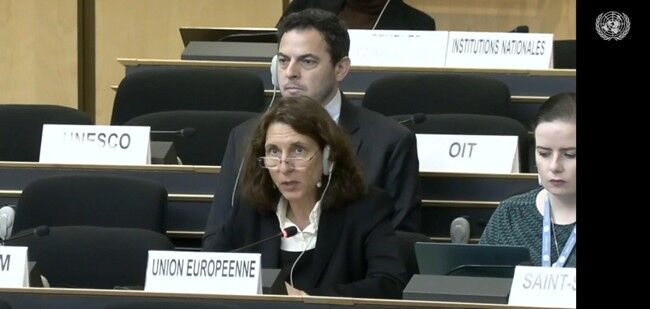
Speaking on behalf of the European Union, the delegate thanked the Special Rapporteur and the High Commissioner for their reports and expressed grave concern over the continued deterioration of the human rights situation in Afghanistan. She strongly condemned the ongoing systematic violations committed by the de facto authorities, stating that the widespread restrictions imposed on women and girls may amount to gender persecution, and noted that the prohibition on education for female medical staff further undermines the right to health and dignity of women and girls.
She called for the immediate reversal of these policies and urged the protection of the rights of all persons, including ethnic and religious minorities, persons in vulnerable situations, and LGBTI persons. She also stressed the need to ensure unhindered humanitarian access, including the ability of women to work and participate in the delivery of assistance, welcomed efforts to operationalize the independent investigative mechanism on Afghanistan, and emphasized that a sustainable future for the country requires an Afghan-led political process with the full, equal, and meaningful participation of women.
Belgium on Behalf of Three Benelux Countries
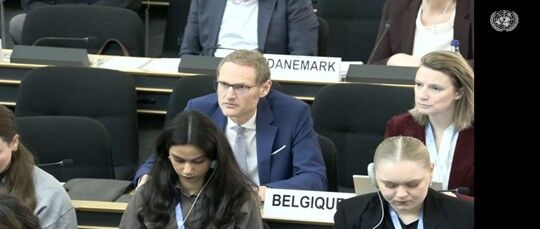
The delegate speaking on behalf of the Benelux countries, aligned himself with the statement of the European Union and expressed serious concern over the continued widespread human rights violations and abuses committed against women and girls in Afghanistan. He stated that the policies imposed by the de facto authorities have created an institutionalized system of extreme gender-based discrimination and persecution, effectively excluding women and girls from public life, and noted that Afghanistan remains the only country in the world where secondary and higher education is forbidden to girls and women.
He strongly condemned the repressive laws and practices depriving women of their fundamental rights and warned that restrictions on access to healthcare are placing the lives of thousands of Afghan women at risk, particularly in the area of sexual and reproductive health and rights, which he said are being systematically denied. “It is not only no longer safe to be a woman in Afghanistan, but it is also increasingly dangerous to become a mother.”
Recalling that the Council established an independent investigative mechanism on Afghanistan, he stressed the importance of making it fully operational with a child and survivor-centered approach. He asked the Special Rapporteur how existing evidence and data collected by civil society could be meaningfully used by the new mechanism.
Denmark on Behalf of Nordic-Baltic States
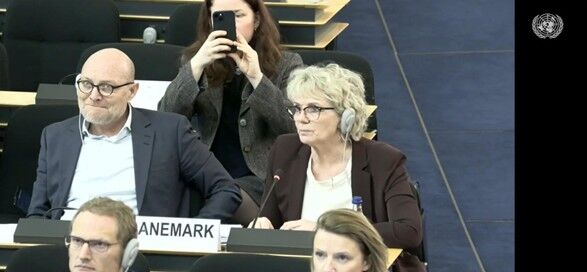
The Delegate speaking on behalf of the Nordic-Baltic States, expressed concern over the deteriorating human rights situation in Afghanistan, particularly the continued restrictions affecting women’s access to healthcare and the institutionalized system of discrimination and oppression against women and girls, children, minorities, media, and members of the opposition. She warned that the situation may be further aggravated by Decree No. 12, which, if implemented, could have serious consequences, including undermining due process and fair trial guarantees, expanding the scope of crimes punishable by death, allowing punishments based on social status or religious belief, permitting corporal punishment by non-judicial actors in private settings, and imposing severe penalties for opposition to the de facto authorities.
She stressed that many of these provisions are inconsistent with Afghanistan’s obligations under international human rights law and called on the de facto authorities to reverse policies, decrees, and practices that violate these obligations and endanger the future of the Afghan people. She asked the panelists how they assess Decree No. 12 and its possible consequences.
UN Women
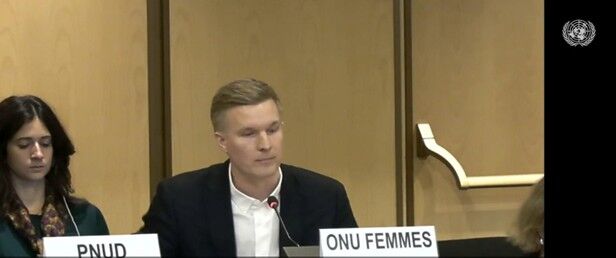
UN Women stated that, as Afghanistan approaches five years under Taliban rule, isolated restrictions have hardened into a system of institutionalized gender inequality, noting that institutions that once provided protection and recourse for women, including the Ministry of Women’s Affairs and the Afghanistan Independent Human Rights Commission, have been dismantled. Referring to a nationwide consultation conducted in December last year by UN Women, International Organization for Migration (IOM), and UNAMA, he noted that Afghan women are nearly four times less likely than men to access formal justice, with 55% reporting that their access has worsened. Only 25% of women reported access to informal mechanisms compared to 71% of men, showing that avenues for redress are increasingly closing to women.
He further noted that in January this year the de facto Supreme Court circulated a new decree on criminal rules of courts, which embeds gender hierarchy in penal principles and includes provisions that may legitimize discipline within the family, warning that writing inequality into law risks normalizing violence and conditioning women’s safety on compliance. He stressed that the international community must act with clarity and principle, emphasizing that protection for Afghan women, sustained support to women-led organizations, and continued monitoring and accountability remain essential for any meaningful path toward justice and redress.
Pakistan
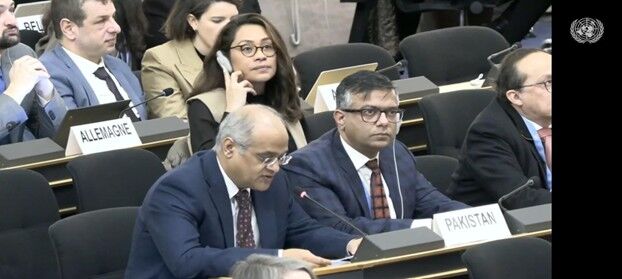
Pakistan took note of the reports of the Special Rapporteur and the Office of the High Commissioner for Human Rights and expressed concern over the deteriorating human rights situation in Afghanistan, particularly regarding women, girls, and minorities. He stated that Pakistan supports the protection and promotion of the human rights of all Afghans and recalled that Pakistan has hosted millions of Afghan nationals for more than four decades and continues to provide essential services to thousands of Afghans, including healthcare and education, as a demonstration of solidarity.
He further expressed concern over attacks carried out by the Afghan-based TTP, stating that such acts pose a direct threat to civilians in Pakistan and undermine the enjoyment of human rights. He urged the de facto authorities to prevent the use of Afghan territory by terrorist groups and to fulfill their commitments under international law, while also calling on the international community to continue providing humanitarian assistance and to ensure fair responsibility-sharing in support of the Afghan people.
Malta
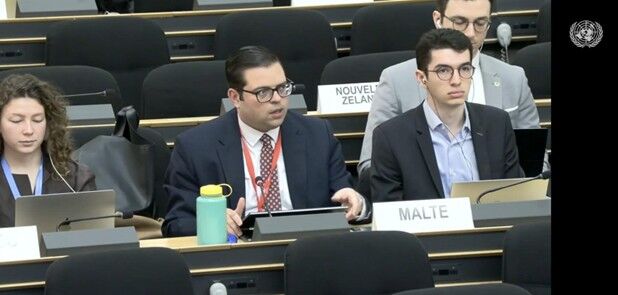
Mr. Bernard Charles Mifsud, speaking on behalf of Malta, aligned himself with the statement of the European Union and expressed concern over the continued systematic deterioration of the human rights situation in Afghanistan, particularly for women and girls. He noted that since the Taliban’s return to power, more than 70 edicts have restricted women’s rights, including bans on education, employment, movement, and access to justice. As a result Afghanistan is only country where girls are prohibited from secondary and higher education. He stressed that these discriminatory measures have serious consequences for women’s health and survival and called on the de facto authorities to immediately reverse such policies and comply with international human rights obligations. He also reaffirmed support for the Special Rapporteur and all human mechanisms assisting the people of Afghanistan.
Russia
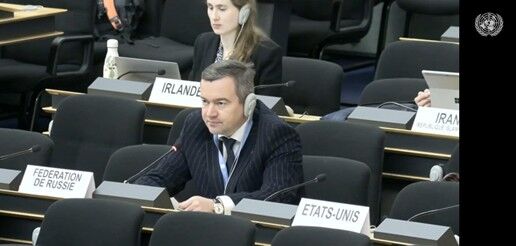
The Russian Federation stated that his delegation is closely following the situation in Afghanistan and remains in contact with the de facto authorities, calling on them to ensure the participation of all ethnic groups in decision-making and to respect basic rights. He noted that current challenges are partly linked to sanctions and past actions by Western countries, and called for constructive dialogue focused on economic development, security, and national reconciliation, as well as for the release of Afghan assets held abroad and the lifting of restrictions affecting the country. He further stressed that human rights issues should not be used to exert pressure or interfere in Afghanistan’s internal affairs and urged the international community to increase humanitarian assistance in a neutral, impartial, and independent manner.
Indonesia
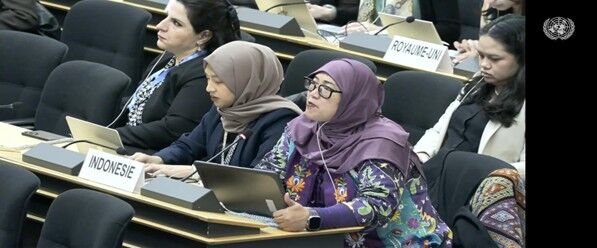
Indonesia took note of the reports and expressed concern over recent legal developments and the stricter enforcement of restrictive policies in Afghanistan, stating that these setbacks further limit the rights of women and girls to education, employment, and participation in public life, and risk undermining social cohesion and long-term stability. She also noted the ongoing humanitarian challenges affecting a large part of the population and reaffirmed that Afghanistan remains bound by its obligations under international human rights law. Indonesia stressed the need for continued engagement and cooperation with all stakeholders and support through an Afghan-led process. She confirmed Indonesia’s commitment to contribute through initiatives in education, health, and economic empowerment, particularly for women and girls.
Cyprus
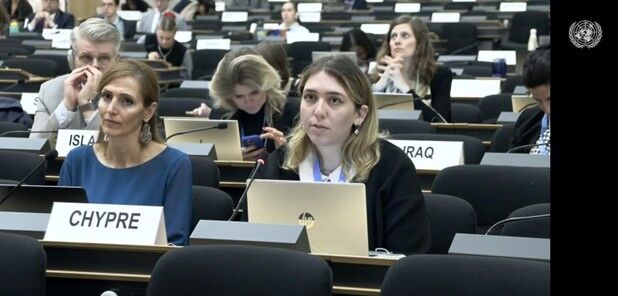
Cyprus also backed the statement of the European Union and expressed concern over the deepening human rights crisis in Afghanistan since August 2021, condemning the institutionalized gender oppression, including the exclusion of women from secondary and tertiary education. She warned that these violations disproportionately affect the most vulnerable, increasing risks of child marriage, child labour, abuse, and trafficking, and noted that 35% of Afghans live in underserved areas, with women often unable to access healthcare due to gender-segregation requirements. She called on the de facto authorities to comply with Afghanistan’s international human rights obligations and asked the Special Rapporteur what viable pathways exist to ensure accountability for violations, particularly those affecting the rights to education, healthcare, and the treatment of women.
Mexico
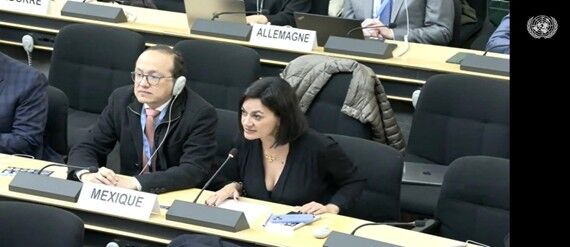
Mexico thanked the Special Rapporteur and the Office of the High Commissioner for their reports and expressed concern over the intensification of institutionalized violence against women, particularly following the entry into force of the new criminal code, and called for its repeal. She also raised concern over the lack of accountability and the obstacles to access justice for persons in vulnerable situations, including ethnic, religious, and linguistic minorities. Furthermore, shecalled for the abolition of the death penalty and corporal punishment, as well as the repeal of legislation contrary to international human rights obligations, including the prohibition of slavery and torture. She emphasized the importance of multilateralism in promoting a stable and human-rights-respecting Afghanistan and asked the Special Rapporteur what elements could define gender apartheid as a crime against humanity in future international mechanisms.
France
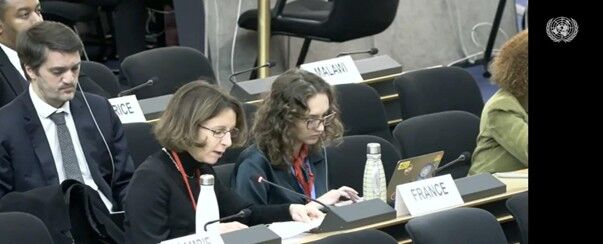
France stated that five years after the Taliban’s takeover, women and girls in Afghanistan continue to face systematic segregation, including restrictions on access to healthcare that limit their ability to make decisions about their bodies and their health. She called on the de facto authorities to lift all restrictions imposed on women and girls and welcomed the establishment of the independent investigative mechanism to help combat impunity, stressing that gender-based persecution may constitute a crime against humanity and recalling that the International Criminal Court has issued arrest warrants . She reaffirmed France’s solidarity with Afghan women and girls, condemned public executions, reiterated opposition to the death penalty in all circumstances, and called for collective mobilisation ahead of the 9th World Congress against the Death Penalty to be held in Paris.
Slovenia
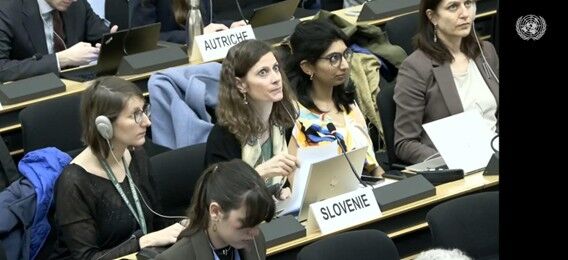
The delegate speaking on behalf of Slovenia, aligned herself with the statement of the European Union and thanked the Special Rapporteur and the High Commissioner for their reports, expressing concern over the continued deterioration of the human rights situation in Afghanistan. She noted that the de facto authorities have not rescinded restrictive measures and warned that the institutionalized repression of women and girls, including bans on education, employment, freedom of movement, and participation in public life, may amount to gender persecution. She also expressed concern over the increase in corporal punishment in 2025, stressing that such practices violate Afghanistan’s international human rights obligations, and emphasized the importance of preserving evidence and supporting international accountability mechanisms to ensure justice for victims.
Dominican Republic
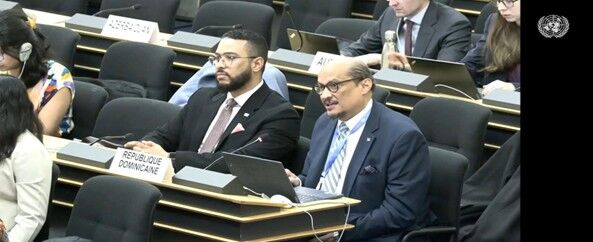
The Dominican Republic welcomed the reports of the High Commissioner and the Special Rapporteur and expressed deep concern over the serious human rights situation in Afghanistan, particularly the deterioration of the rights of women and girls. He stated that the prohibitions on secondary and university education, restrictions on professions, limitations on participation in public and political life, and tolerance of violence against women are unacceptable and undermine fundamental freedoms. He joined the call of the international community for the de facto authorities to ensure full respect for human rights, especially for women, girls, and persons in vulnerable situations, and reaffirmed the importance of international cooperation and solidarity in supporting this objective.
United Kingdom
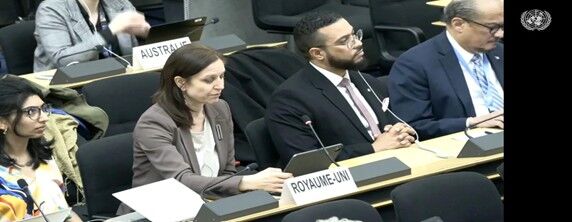
The United Kingdom welcomed the continued work of the Special Rapporteur and expressed concern over the intensifying repression in Afghanistan, including the new criminal procedures directive which she said entrenches discrimination, legitimizes violence against women and children, and further restricts freedom of expression. She called for the reversal of these numerous oppressive measures, including the ban on female medical education being rescinded if the rights of all Afghans are to be protected. The delegate warned about the impact of the Afghanistan–Pakistan border closure on the delivery of essential health and nutrition supplies, stressing that delays are affecting the most vulnerable, affirming it is vital that such goods are allowed to enter Afghanistan without obstruction. She asked what further steps the international community can take to prevent disruptions in humanitarian aid and to promote the right to health for Afghan women.
Statements from UNICEF, NHRIs and NGOS
Non-governmental organizations welcomed the reports of the High Commissioner and the Special Rapporteur and expressed deep alarm at the continued deterioration of the human rights and humanitarian situation in Afghanistan, stating that women, girls, and children remain the most affected by what they described as a systematic and institutionalized system of discrimination and repression. They stressed that Afghanistan remains the only country where girls are banned from secondary and higher education, leaving more than 2.2 million girls without access to learning, while the ban on women’s medical and midwifery education further weakens maternal and child healthcare.
Several organisations warned that new criminal procedures and legal frameworks entrench gender-based discrimination, legitimize violence within the family, restrict freedom of expression, and expose minorities, including ethnic, religious, and LGBTQ persons, to arbitrary detention, abuse, and persecution.
NGOs also highlighted the worsening humanitarian crisis, noting that nearly half of the population depends on international assistance, that restrictions on female aid workers hinder the delivery of services, and that landmines and unexploded ordnance continue to kill or injure children, with over 490 children affected in 2024 alone. They welcomed the establishment of the independent investigative mechanism and called for its full operationalization, urged stronger accountability including through the International Criminal Court, supported recognition of gender persecution and gender apartheid as crimes under international law, and called on the international community to maintain humanitarian support, protect refugees from forced return, and ensure that the rights of women and girls remain central to all engagement with Afghanistan.
Conclusion
In their concluding remarks, the panelists stressed that the situation in Afghanistan represents not only a crisis of health and education, but “a profound crisis of human rights requiring urgent and coordinated international action”, particularly to restore the rights of women and girls to education, work, and participation in public life. They called on the international community to maintain pressure on the de facto authorities to reverse restrictions, especially the bans on girls’ secondary and higher education, including medical training, and to ensure sustained humanitarian and health funding that reaches women, girls, and marginalized communities.
The speakers emphasized the essential role of women, particularly health workers and civil society organizations, and urged increased support for women-led initiatives, alternative education pathways, and psychosocial assistance. Strong concern was expressed over Decree No. 12 which was described as raising serious human rights concerns due to lack of due process, expanded use of corporal and capital punishment, and provisions that may legitimize violence, discrimination, and social hierarchy. It was noted that the rules appear to render punishments according to social class rather than the seriousness of the offence, thereby permitting broad and potentially arbitrary application, which may result in disproportionate impacts on vulnerable groups.
Panelists welcomed the establishment of the independent investigative mechanism for Afghanistan, calling for its rapid operationalization and adequate funding, and stressed the importance of accountability through international mechanisms, including the ICC and universal jurisdiction. They also highlighted the need for continued monitoring, protection of refugees from forced return, sustained humanitarian assistance, and meaningful inclusion of Afghan women and civil society in all discussions on the country’s future, warning that failure to act would risk further deterioration of human rights and long-term collapse of essential systems in Afghanistan.
GICJ Position
Geneva International Centre for Justice (GICJ) supports the work of the Council in strengthening the inclusion of a gender perspective in justice and accountability processes and reaffirms its condemnation of all forms of discrimination against women and girls. We emphasize that the meaningful participation of women in transitional justice is essential to achieving sustainable peace, credible accountability, and long-term social stability. As highlighted during this discussion, the inclusion of women in justice and reconciliation processes has proven to contribute to more effective and lasting outcomes.
GICJ urges States, the international community, and all stakeholders to ensure the full inclusion of women, not only in transitional justice negotiations, but also in social, economic, and political decision-making. We further call for the implementation of international human rights instruments, including the Convention on the Elimination of All Forms of Discrimination Against Women (CEDAW) by the de facto Authorities in Afghanistan, to guarantee that the protection of women’s rights goes beyond formal commitments. Human rights cannot be fully realized without the full recognition of women’s rights, and women must be included in all processes of justice and reform.
