




HRC61: Protection of Human Rights Defenders in a Time of Global Challenges
The 61st session of the Human Rights Council
23 February - 31 March 2026
Interactive Dialogue with the UN Special Rapporteur on Human Rights Defenders
By Ginestra Faeta & Joris Cressent-Bal / GICJ
Executive Summary
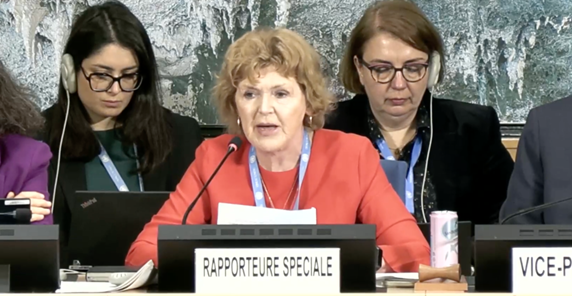
On March 03 2026, during the 61st Session of the Human Rights Council, Special Rapporteur Mary Lawlor presented her report on the situation of human rights defenders, followed by an interactive dialogue. Lawlor’s report is based on the reports of 300 defenders which highlight the lack of effectiveness of the mechanisms enabling human rights defenders mechanisms enabling defenders to carry out their mandate. She concludes the report with recommendations to various international actors based on what defenders themselves see as most necessary in this moment of crisis.The report identifies major concerns, including increasing violence against human rights defenders, shrinking civic space, and the negative impact of funding cuts on civil society organizations. These developments have weakened protection mechanisms and limited the ability of defenders to carry out their work.
Following the presentation, Member State, United Nations Agencies, national human rights institutions, and civil society representatives participated in an interactive dialogue. Delegations reaffirmed the crucial role played by human rights defenders in promoting democratic governance, accountability, and the rule of law while also acknowledging the growing challenges they face globally.
Background
Protecting Human Rights in a peaceful manner is a crucial issue that has been addressed by the United Nations through a plethora of tools, among which the figure of Human Rights Defender (HRD). This figure is described as the ultimate guarantor and promoter of the realisation of human rights through peaceful means. Due to their mission, they are frequently targeted by State governments to limit the threat they represent.
The United Nations Declaration on Human Rights Defenders (1998) constitutes the framework for the regulation. The rights and the protection of these figures in the context of their work, since they continuously face retaliation in the form of arbitrary detention, disappearance, torture and execution, as well as impossibility to exercise their freedom of expression. Also, defamation, disregard for their recommendations, intimidation and judicial persecution.
For these very reasons, in 2000 the Commission on Human Rights established a mandate of the Special Rapporteur on Human Rights Defenders’ situation. This expert is a figure that promotes the implementation of the 1998 Declaration by seeking information about the condition of human rights defenders and by making sure the recommendations made by States are effectively implemented.
Mary Lawlor, the current Special Rapporteur on the situation of Human Rights defenders, was appointed in 2020 and spoke during the 58th session of the Human Rights Council in 2025. She presented a report that particularly focused on gaps in their protection, as well as specific risks they undertake during their missions.
Lawlor highlights how they are frequently faced with killings, physical attacks and other violations, especially when working in isolated or rural contexts.. She also called on all member states for more direct action, since most of the human rights defenders reports about these issues remain unattended and the governments often lack protection mechanisms or fail to implement them.
Summary of the Report of the Special Rapporteur
In her report, titled “Defending dignity and claiming rights: human rights defenders hold firm to universal values as others desert them”, Special Rapporteur on the situation of human rights defenders, Mary Lawlor, presents a stark contrast between the ideal of human rights and its effective application. 2024 registered the highest number of human rights defenders and media workers killed or disappeared, Lawlor highlighted.
This reflects what has always been common practice: states demonstrating double standards in their approach to human rights. Furthermore, fund cuts, especially from major donor countries such as the United States, have exacerbated the inability to deliver on the promise of Human Rights, because they weaken the safety networks that constitute a reliable source in critical situations, increasing the risks undertaken by the defenders. Lawlor pointed out that this brought a shift in the approach of HRD, from prevention to damage management.
Another issue that Human Rights defenders constantly face is allegations of imposing foreign, Western-led agenda and values while trying to guarantee adequate standards of life to the weakest parts of the population. The Special Rapporteur emphasized the high risks that they face in carrying out their work in countries such as the Democratic Republic of Congo (DRC). Human Rights defenders constantly live in fear, while trying to raise awareness on how not upholding human rights represents a failure of humanity.
Lawlor recalls that Human Rights defenders face even more severe challenges now, with the budget cuts that have been introduced in 2024 and 2025. These caused a deterioration of the political environment in which Human Rights should be fostered, together with incapacitating some Non-Governmental Organizations to operate in the field. There are five main areas in which these measures are affecting Human Rights defenders.
Lawlor states that reduced emergency assistance is the first one. Budget cuts caused many NGOs to disappear, hence the request for support has increased without being attended. Reduced provision of psychosocial support is the second main area. Financial limitations resulted in shutting down organisations that provided psychological support on the ground for witnesses of violence that face severe mental pressure.
Capacity to provide legal aid is also an essential area that has been affected by the cuts, reducing efforts towards accountability and justice for the defenders. In her 2025 report to the HRC, the Special Rapporteur also called attention to the reduced capacity for outreach, monitoring and documentation, particularly in isolated, remote and rural contexts as the fourth main area affected by budget cuts. The latter deeply damaged the network that ensures support mechanisms for the defenders, as well as appropriate service providers and local police forces. The last issue at stake is the capacity to promote women’s rights, which has witnessed a reduction in the ability to harness empowerment and to raise awareness on women’s conditions and rights.
As a result, NGOs have had to prioritize and focus on the most critical and urgent work, reducing their operational scope. This has resulted in broader-based alliances, with organisations reuniting based on thematic lines, and in expanding the array of used sources, including creating income-generative projects. Since the States, which are the entities that hold the primary responsibility of protecting the defenders, are abdicating this duty, defenders are appealing to more international mechanisms and local communities to provide rapid response. The Special Rapporteur understands the frustration of the defenders that have been victim of lack of accessibility and speed in these mechanisms, as well as lack of binding power and follow up strategies, lack of linkages with local civil society, intimidation and reprisals for cooperation with the UN.
In these times of severe crisis of the international human rights system, Lawlor recommends that States reiterate their commitment to the Universal Declaration of Human Rights, and to strengthen accountability and monitoring mechanisms, through expanding local protection networks for Human Rights defenders and introducing laws that protect and support them. She finally thanks them for their work and their persistence.
Summary of the Interactive Dialogue
Following the presentation of the report, an interactive dialogue took place between Member States, United Nations agencies, national human rights institutions, and civil society organizations.
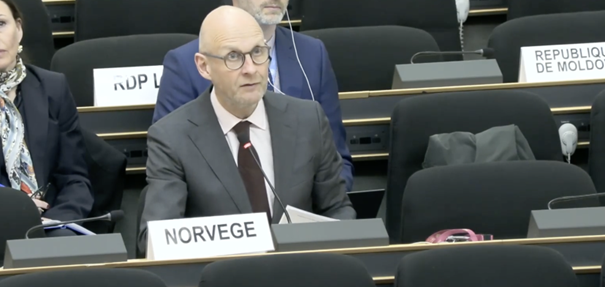
Several delegations reaffirmed the essential role of human rights defenders in promoting democratic governance, accountability, and the protection of fundamental rights. Norway, speaking on behalf of the Nordic-Baltic States, emphasized the importance of ensuring that violations of international human rights law are addressed regardless of political alignment. The delegation also expressed concern that recent funding cuts could significantly undermine the work of human rights defenders and called on States to increase support for their activities.
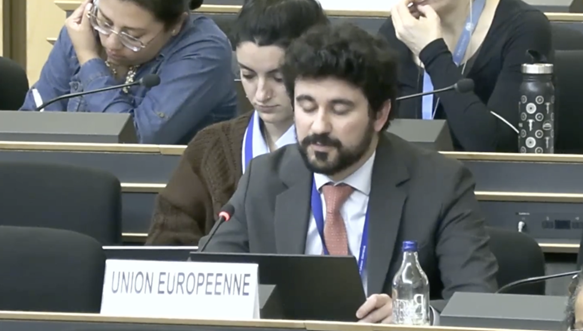
The European Union reaffirmed its strong support for the mandate of the Special Rapporteur and expressed concern over the shrinking civic space worldwide. The EU stressed that engagement with and protection of human rights defenders remains a key priority of its external human rights policy and highlighted existing initiatives aimed at supporting defenders and civil society organizations.
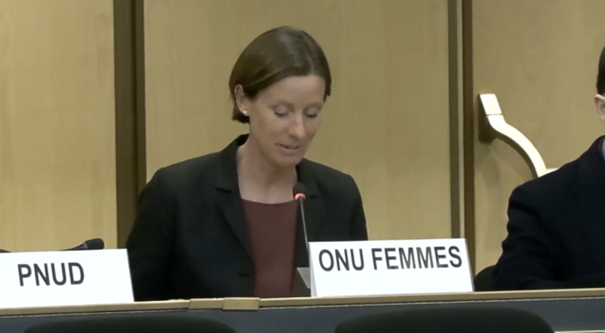
Several UN bodies also raised concerns regarding the safety of women human rights defenders. UN Women, speaking on behalf of a group of United Nations agencies including UNFPA and UNICEF, highlighted that women defenders continue to face gender-specific risks such as harassment, violence, and legal intimidation. The delegation emphasized the need for stronger mechanisms to prevent reprisals against women defenders and to ensure their meaningful participation in human rights processes.
A number of States shared national experiences related to the protection of human rights defenders. Mexico referred to its national protection mechanism established in 2012, acknowledging existing challenges but reaffirming its commitment to strengthening protection measures. Ecuador also highlighted its efforts to strengthen institutional mechanisms designed to monitor violations against human rights defenders and improve coordination between government institutions.
Other delegations stressed that the activities of human rights defenders should be carried out in accordance with national laws. China argued that human rights defenders should not be treated as a special category and emphasized that all individuals must respect domestic legislation. Similarly, Cuba warned against what it described as the misuse of the term “human rights defender” by individuals pursuing political interests.
Several delegations also highlighted specific national or regional concerns. The Democratic Republic of the Congo emphasized the importance of protecting civic space in the context of ongoing security challenges, while Guatemala stressed the need to protect Indigenous leaders and women human rights defenders who face heightened risks in their communities.
Civil society organizations and national human rights institutions also intervened during the dialogue, raising concerns about attacks against environmental defenders, journalists, and minority rights activists, and calling for stronger protection mechanisms and accountability for violations.
In her concluding remarks, the Special Rapporteur noted that while many States expressed support for human rights defenders, significant challenges remain in translating these commitments into concrete protection measures. She stressed that stronger political will and more effective protection mechanisms are needed to ensure that human rights defenders can carry out their work safely.
To conclude
The discussion during the 61st Session of the Human Rights Council highlighted the essential role of human rights defenders in promoting and protecting fundamental rights worldwide.At the same time, the dialogue revealed persistent challenges, including increasing attacks against defenders, shrinking civic space, financial constraints affecting civil society organizations, and insufficient protection mechanisms in many countries.
While international mechanisms provide important platforms for advocacy and accountability, the responsibility to protect human rights defenders ultimately rests with States.
Strengthening protection frameworks, ensuring accountability for violations, and restoring adequate support for civil society organizations remain essential steps in safeguarding the work of human rights defenders.
Position of the Geneva International Centre for Justice
Geneva International Centre for Justice (GICJ) expresses deep concern regarding the increasing threats, reprisals, and structural obstacles faced by human rights defenders worldwide.
Human rights defenders play a fundamental role in promoting justice, accountability, and the protection of vulnerable communities. However, many defenders continue to operate in hostile environments characterized by intimidation, violence, and legal restrictions.
GICJ stresses that States bear the primary responsibility to ensure a safe and enabling environment for human rights defenders, in accordance with the United Nations Declaration on Human Rights Defenders and their obligations under international human rights law.
GICJ calls upon States to:
- Establish and effectively implement national protection mechanisms for human rights defenders
- Ensure prompt, impartial, and independent investigations into attacks against defenders
- End reprisals against individuals cooperating with United Nations human rights mechanisms
- Refrain from misusing national security or counter-terrorism legislation to silence civil society
- Restore and strengthen financial support for civil society organizations and protection networks
Protecting human rights defenders is essential to safeguarding human dignity, promoting equality, and ensuring the effective realization of human rights for all.
