




HRC61: The concerning expansion of illegal Israeli settlements
The 61st Session of the Human Rights Council
23 February - 31 March 2026
Item 7: Presentation of reports of the Secretary General and the High Commissioner followed by General Debate
24 March 2026
By Alicja Lanocha / GICJ
Executive Summary
The Human Rights Council general debate on Israeli settlements in the Occupied Palestinian Territory and the Golan Heights highlighted deepening international concern over accelerating settlement expansion, escalating violence, and their severe humanitarian consequences. The reports documented a systematic pattern of land appropriation, forced displacement, and discriminatory governance aimed at consolidating control and facilitating de facto annexation, in violation of international law. These developments undermine the right to self-determination, fragment territorial continuity, and contribute to a coercive environment that may amount to forcible transfer and ethnic cleansing.
The Deputy High Commissioner for Human Rights, Ms. Nada Al-Nashif, emphasized that Israel’s actions constitute “an institutionalised regime of systematic discrimination, oppression, and violence”. She highlighted a sharp escalation in settlement expansion and settlers’ violence during the reporting period, leading to mass displacements. She further warned that Israel’s policies, alongside official statements rejecting Palestinian statehood, demonstrate a clear trajectory toward annexation and denial of the right to self-determination. Ms. Nada Al-Nashif urged compliance with the International Court of Justice's advisory opinion, which called for the end of the unlawful occupation.
Concerned countries, including Palestine and Syria, strongly condemned settlement expansion, land confiscation, and military escalation, describing them as violations of international humanitarian law and international human rights law. Groups of States restated these concerns, denouncing annexation, collective punishment, and the erosion of Palestinian identity. They called for accountability, humanitarian access, and the realisation of a Two-State solution based on the 1967 borders. Member States reiterated these positions, condemning forced displacement, attacks on civilians, and restrictions on humanitarian aid. They also emphasized regional instability and the urgent need for a ceasefire, accountability, and respect for international law. NHRIs and NGOs further underscored systemic discrimination, settler violence, and a dual legal system, describing a broader regime of control involving torture, displacement, and deprivation of basic resources. In the end, they called for an end to impunity and settlement expansion.
Geneva International Centre for Justice (GICJ) expresses grave concern over the unlawful expansion of settlements and escalating violence against Palestinian and Syrian communities. In light of widespread displacement, attacks on civilians and infrastructure, and humanitarian deprivation, GICJ stresses that the actions of Israel amount to ethnic cleansing, showing genocidal intent. GICJ calls for urgent international action to end settlement activities and the occupation, ensure the safe return of displaced populations, and establish effective accountability mechanisms to hold perpetrators responsible.
Background
The background of Israeli settlements in the occupied Palestinian territory (OPT), particularly the West Bank, and in the occupied Syrian Golan, is rooted in the territorial transformations that followed the 1967 Six-Day War. During this conflict, Israel occupied the West Bank, including East Jerusalem, previously administered by Jordan, as well as the Golan Heights, which had been under Syrian control. Settlement activity began almost immediately after the war. The first Israeli communities were established in both the West Bank and the Golan Heights in 1967, often with strategic motivations, such as maintaining control over elevated terrain in the Golan or securing key corridors in the West Bank. Over time, these early initiatives evolved into a broader state-supported project.
In the West Bank, settlement expansion accelerated in the decades following 1967, particularly from the late 1970s onward, as successive Israeli governments promoted the establishment of civilian communities across the territory. These settlements were often supported by state policies, infrastructure development, and incentives for Israeli citizens to relocate. As Israel gradually transferred its citizens into occupied territory, it imposed measures that integrated settlements into Israel’s administrative and economic systems, aiming at reshaping the demographic and geographic landscape. East Jerusalem occupies a unique position in this context. Israel annexed it shortly after 1967 and considers it part of its sovereign territory.
A parallel trajectory can be observed in the occupied Syrian Golan. In 1981, Israel extended its laws and administration to the Golan Heights, effectively annexing the territory. The annexation is “null and void” under international law, as asserted by the United Nations Security Council. Despite the significantly smaller settler population in the Golan than in the West Bank, the underlying dynamics are similar, involving long-term settlement expansion and consolidation of control.
Under international law, Israeli settlements in the occupied Palestinian territory, including the West Bank and East Jerusalem, as well as in the Golan Heights, are unequivocally illegal. They are sustained and expanded by systemic settler violence, intimidation, coercion, and harassment. Physical assaults, destruction of homes, and movement restrictions, which are often carried out with the active support of Israeli security forces, drive the forced displacement of entire communities. It shows broader patterns of human rights violations, domination, racial segregation, territorial fragmentation, and denial of the Palestinian people’s right to self-determination, entrenching unlawful control over occupied territory and facilitating annexation. Since 1967, Israel’s occupation has progressively taken the form of a settler-colonial and apartheid regime. This situation has dramatically worsened since October 2023, when violence increased to unprecedented levels, and it still continues to worsen, with growing international complicity.
Summary of the report of the United Nations High Commissioner for Human Rights (A/HRC/61/70)
This report, pursuant to Human Rights Council resolution 58/28, examines Israeli settlement activity in the Occupied Palestinian Territory (OPT), including East Jerusalem, and the occupied Syrian Golan, between October 2024 and November 2025, highlighting the impact on human rights.
During the reporting period, Israel intensified legal, administrative, and political measures to consolidate its power over the West Bank. New laws and proposals are aimed at extending Israeli domestic law to settlements, facilitating land acquisition by settlers, creating the West Bank continuity with Israel, and formalising annexation. The transfer of governance powers from military to civilian authorities accelerates the expansion of settlements, and the resumption of the land title process in Area C is used as a primary tool to unlawfully seize Palestinian land. After all, senior Israeli officials framed settlement expansion as a strategy to prevent Palestinian statehood, resulting in the denial of Palestinian self-determination. Settlement expansion accelerated significantly, with new settlements authorised, outposts legalised, orchestrated Israeli population inflow, and major infrastructure investments approved. These developments deepen the West Bank's integration into Israel, while fragmenting Palestinian territory. Such expansion constitutes de facto annexation in violation of the prohibition on the acquisition of territory by force, and obstructs Palestinian self-determination.
There was a sharp increase in settlement planning approvals, with tens of thousands of housing units advanced and a major focus on the E1 settlement plan near Jerusalem, which would geographically divide the West Bank and isolate East Jerusalem. Communities within the E1 block receive demolition orders and risk displacement. Such displacement constitutes a forcible and unlawful transfer of protected persons, being a war crime and a grave breach of the Fourth Geneva Convention.
An unprecedented number of outposts were established, including Area B, which the Government of Israel often retrospectively legalises and provides with infrastructure. Their creation follows a pattern. First settlers establish their presence and develop housing and other infrastructure. They are often backed by security forces and engage in harassment of Palestinians, imposing movement restrictions on them, ultimately leading to their displacement. Some settlers are involved in multiple areas, reflecting coordinated expansion rather than spontaneous activity. Land appropriation is intensified through multiple mechanisms: declarations of “State land” facilitating de facto confiscation, military orders establishing “closed military zones” or “military buffer zones”, land registration processes, and the designation of “firing zones” or “agreed-upon” natural reserves. These measures disproportionately target Palestinian land and alter both geography and demography of the occupied territory, isolating communities, depriving them of free movement and access to resources. They effectively confiscate land and alter territorial control without formal annexation, enabling settlement growth.
Demolitions of Palestinian homes and structures increased significantly during the reporting period, often justified by a lack of permits, which are rarely granted to Palestinians. Entire communities, particularly in Area C, face eviction. These actions contribute directly to forcible displacement and create a coercive environment that pressures Palestinians to leave. In East Jerusalem, settlement expansion facilitated the unlawful implementation of Israeli law in a discriminatory manner. All measures are aimed at fragmenting and displacing Palestinian communities, entrenching unlawful settlements, and consolidating the annexation of the OPT. Discriminatory Israeli planning regulations, including large-scale housing plans and infrastructure projects, strengthen Israeli control while restricting Palestinian development, forcing them to vacate and demolish their residential structures.
Settler violence increased in frequency and intensity during the reporting period, including attacks, harassment, and property destruction, some leading to the death or injury of Palestinians. Gender-based violence triggers displacement or leads to family separation. The scale of the attacks amounts to collective punishment, prohibited under international law. Violence continues in a coordinated, strategic, and largely unchallenged manner. Israeli security forces sometimes facilitate or fail to prevent these acts. Israeli authorities play a central role, but it becomes increasingly difficult to distinguish between settler and State violence due to the rising role of “settler-soldiers”. Accountability remains extremely limited. Investigations into settler violence are scarce and rarely lead to prosecution. The lack of enforcement creates a climate of impunity, enabling continued violence and reinforcing the coercive environment facing Palestinians. Sanctions of Member States were rendered ineffective.
Settlement expansion, land appropriation, violence, and demolitions collectively produce a coercive environment that forces Palestinians to leave their homes. The report characterizes many cases as forcible transfer, which may constitute a war crime. Displacement increased in both the intensity and geographical scope and is especially acute in Area C and among Bedouin Communities. The Jordan Valley is presented as a key example of these dynamics. Israeli policies there combine land seizure, settlement expansion, movement restrictions, and denial of resources. Palestinian communities face severe pressure, making continued residence increasingly unviable, while settlements expand strategically. The report also highlights that settlements in the Syrian Golan are illegal under international law. Expansion and integration of these settlements into Israel continue, alongside policies that alter the demographic and geographic character of the territory, mirroring the patterns seen in the West Bank.
Summary of the report of the Secretary General (A/HRC/61/69)
This report, pursuant to Human Rights Council resolution 58/26, focuses on the human rights situation in the occupied Syrian Golan. It reiterates that Israeli imposition of its laws, jurisdiction, and administration over the occupied Syrian Golan is considered null and void under international law, particularly under UN Security Council Resolution 497 (1981). Israel is repeatedly called upon to cease settlement activity and refrain from altering the territory’s legal status, demographic composition, and physical character. The report compiles responses from Member States, most notably the Syrian Arab Republic and Iraq. Syria emphasizes that Israel continues to violate international law through ongoing settlement expansion, land confiscation, and exploitation of natural resources. It highlights restrictions to Syrian residents’ rights, including limitations on housing, movement, access to land, and economic activity, as well as pressures to accept Israeli citizenship and legal systems. Syria also highlights that following the fall of the former government in December 2024, Israel deepened the occupation, including military expansion into the demilitarised separation zone. These actions are described as a violation of the 1974 Disengagement Agreement and as having direct humanitarian consequences, including restricting farmers’ access to land and increasing insecurity for civilians. Both Syria and Iraq stress that Israeli settlement policies in the Golan are illegal and constitute demographic engineering, aimed at consolidating control over the territory. They argue that these measures violate fundamental human rights, including the right to self-determination, housing, work, and an adequate standard of living. Iraq further situates the issue within broader international legal principles, emphasizing the prohibition on the acquisition of territory by force and the invalidity of the unilateral legal changes imposed by the occupying power. The report concludes that the occupation of the Syrian Golan remains a persistent violation of international humanitarian law and continues to pose risks to regional peace and stability. It underscores repeated calls by States for Israel to comply with international resolutions, cease settlement activities, and restore Syrian sovereignty over the territory.
Summary of the General Debate
Presentation of the report by the Deputy High Commissioner
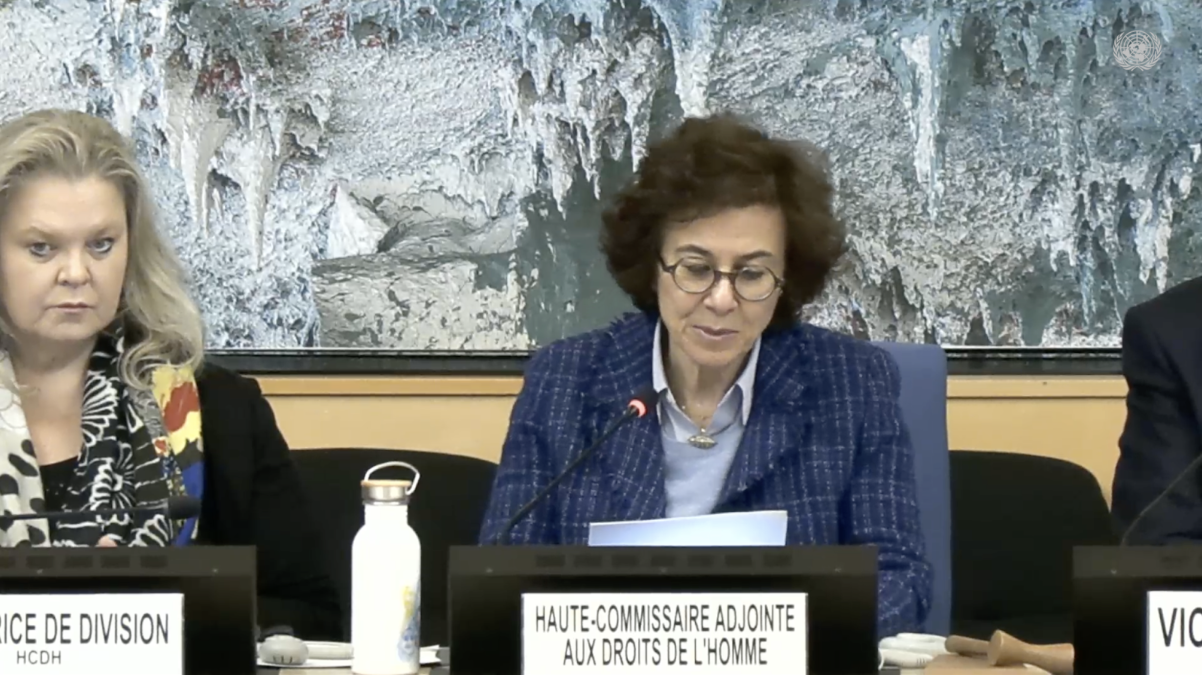
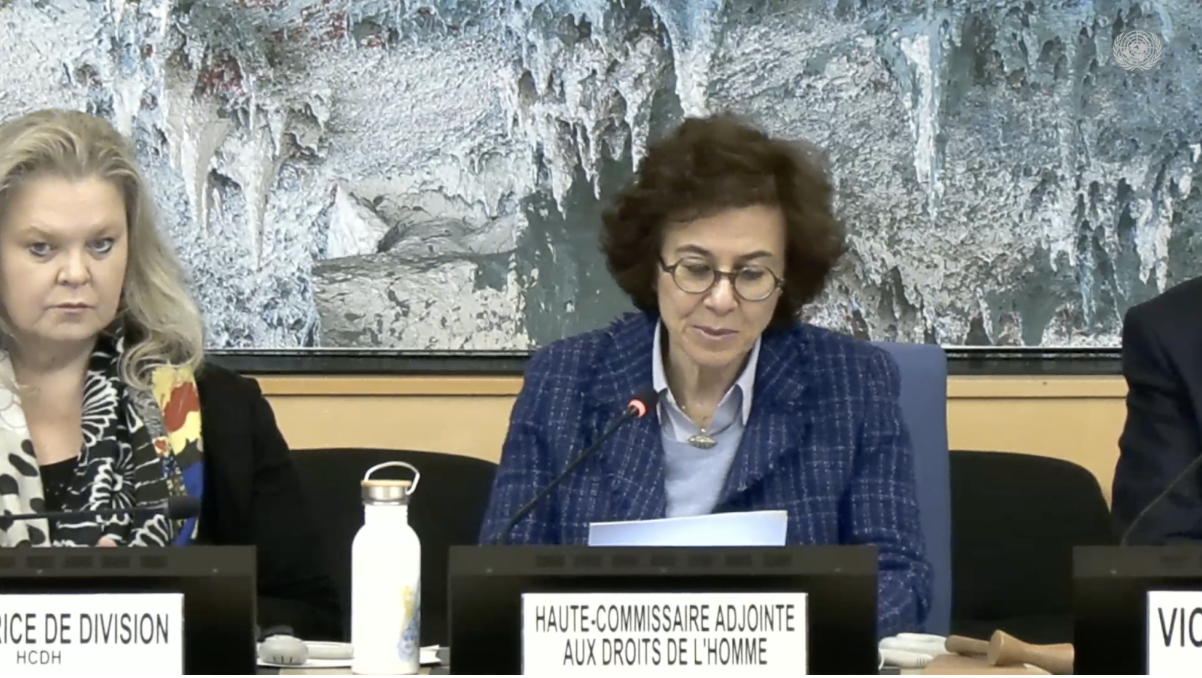
United Nations Deputy High Commissioner for Human Rights, Ms. Nada Al-Nashif, in her opening remarks, stated that “Israel’s actions in the West Bank amount to an institutionalised regime of systematic discrimination, oppression, and violence against Palestinians, largely aimed at their subjugation and permanent dispossession in violation of the prohibition against racial segregation and apartheid.” She stressed that the acceleration of settlement activity and settlers’ violence has deepened a coercive environment, leading to mass displacement and raising serious concerns of ethnic cleansing. Covering the period from November 2024 to October 2025, her findings indicate a sharp escalation. Over 1,700 violent incidents by settlers were recorded across the West Bank, resulting in more than 180 Palestinians killed or injured, alongside widespread beatings, intimidation, and destruction of property. More than 26,000 Palestinian-owned trees were cut down. It included at least 120 attacks targeting the olive harvest, with only one resulting in an indictment, highlighting entrenched impunity.
Ms. Nada Al-Nashif highlighted that settlement expansion has intensified dramatically, with approximately 27,000 housing units approved or advanced and over 80 new illegal outposts established during the reporting period. She stressed that legislative and administrative measures have further facilitated annexation. They include land registration processes that risk declaring unregistered Palestinian land as state property for settlement use, while making it nearly impossible for Palestinians to prove ownership. The Deputy High Commissioner for Human Rights illustrated that these policies have contributed to the demolition of over 1,700 Palestinian-owned structures in the West Bank and the displacement of more than 36,000 Palestinians. These developments and official statements of Israeli authorities claiming that their plan will “finally bury the idea of a Palestinian state,” depict a clear path toward annexation and the systematic denial of the Palestinians’ right to self-determination.
She also mentioned that an acceleration in Israeli settlement activity also occurred in the Occupied Syrian Golan, particularly after the fall of the former Government of the Syrian Arab Republic in December 2024. As Israeli forces moved deeper into a demilitarised zone, they established multiple military posts and intensified air strikes on military infrastructure. They imposed restrictions on civilian movement, reinforcing control over strategic areas and limiting access to land and resources, further facilitating the expansion of settlement. In the end, Ms. Nada Al-Nashif called on Israel, in line with the International Court of Justice advisory opinion of July 2024, to immediately end an unlawful presence in occupied territories, cease settlement activity, and evacuate all settlers. She also reminded about states’ obligation not to recognize Israel’s unlawful presence in the occupied territories, nor assist to maintain the situation.
Statements of the Countries Concerned
The Representative of Israel was absent.
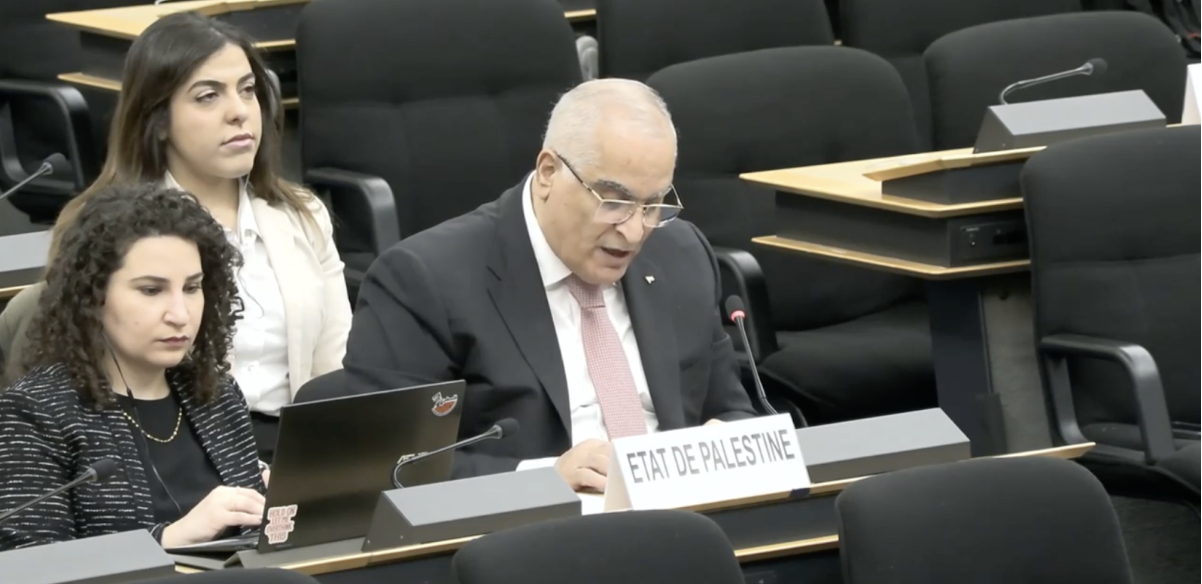
The Representative of Palestine reaffirmed the contents of the report of the United Nations Deputy High Commissioner for Human Rights. He highlighted concerns about the accelerated settlement expansion and the growing number of settlers. Palestine stressed that the escalation in the seizure of lands and the building of new housing units is aimed at redrawing the spatial system and demography to control Palestinian territories in full. They bring to attention that cancelling Palestinians’ land titles, the Judaization of occupied territories, attacks in the Jordan Valley, the uprooting of trees, and the stealing of cattle are unlawful practices of Israel. Above all, they are concerned with a change in the legal status of occupied territories by imposing Israeli civil law there.
The Representative highlighted that such practices are war crimes and violate international humanitarian law, international human rights law, the International Court of Justice’s advisory opinion from 2024, and resolutions of the Security Council, the General Assembly, and the Human Rights Council. The delegation also said that settlement policies and forced displacement create a system of dominance and oppression, amounting to ethnic cleansing. Therefore, Palestine called for ceasing trade and other relations with the occupying government, enforcing international law, demanding accountability, and supporting a Two-State solution. It is not enough to call settlements illegal. There is a need for practical measures.
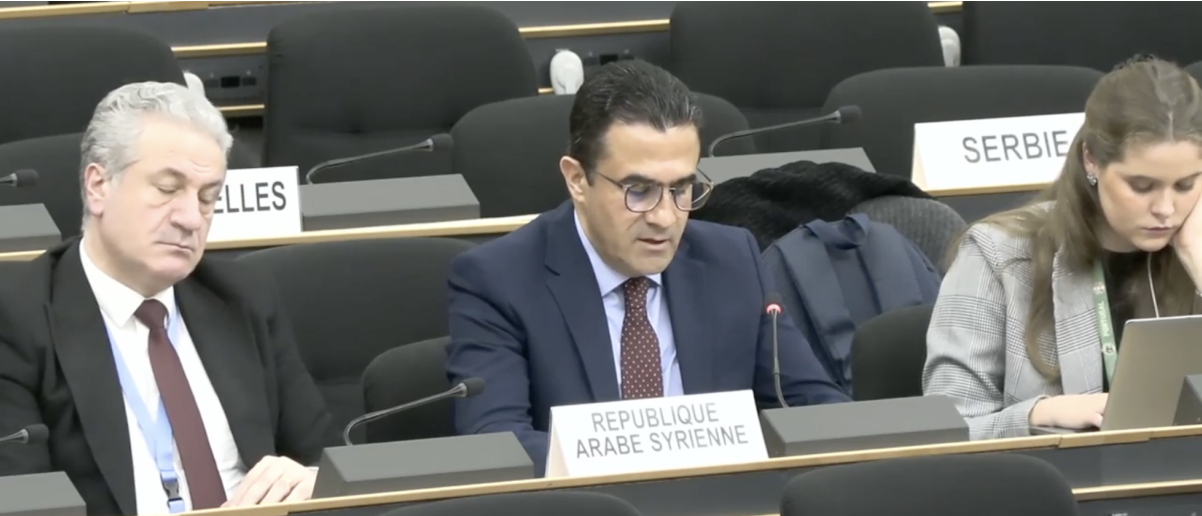
The Delegation of Syria acknowledged the contents of the report of the United Nations Deputy High Commissioner for Human Rights. He highlighted that the occupied Syrian Golan violates international humanitarian paw and international human rights law. The Delegation is concerned with collective punishment policies, attacks on civilians and the Arab population, denial of basic rights, discrimination, and racial segregation. He highlights that the demolition of infrastructure might amount to war crimes. The Syrian Delegation notes the grave escalation of military action, such as further incursion into buffer zones and violation of the Disengagement Agreement of 1974, since the fall of the previous Government in December 2024. Syria calls for the immediate and unconditional Israeli withdrawal from the Syrian Golan and the reinstatement of the border along the ceasefire line. The Representative stresses the need to document Israeli aggression, taking into account the damages incurred. He highlights that the international community must refuse direct and indirect support of the occupying power's activities as they constitute a violation of international law.
Statements on behalf of Group of States
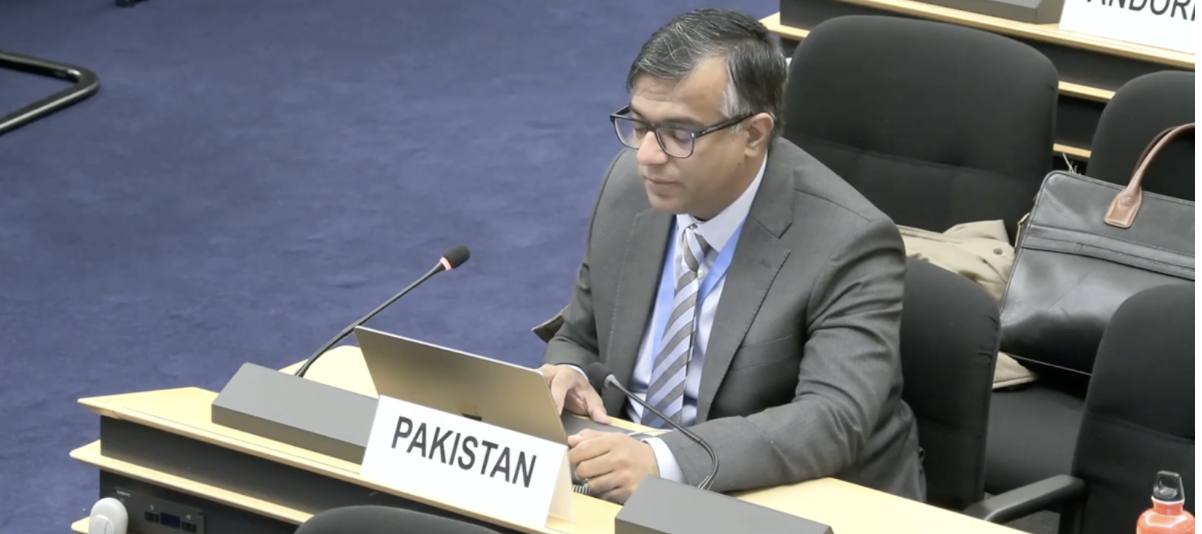
Pakistan, on behalf of the Organization of Islamic Cooperation (OIC), condemned Israel’s genocide in the Gaza Strip and the expansion of illegal occupation, calling it an attempt to ethnically cleanse the Palestinian people from their native land. It raised concerns of criminalising the native society and erasing the Palestinian Arab identity. The OIC also condemns the encroachment on Lebanese territories, recognizing it as an assault on regional peace. It puts an emphasis on the Palestinian right to self-determination, reaffirming the need for a single Palestine as an indivisible political unit according to the 1967 borders.
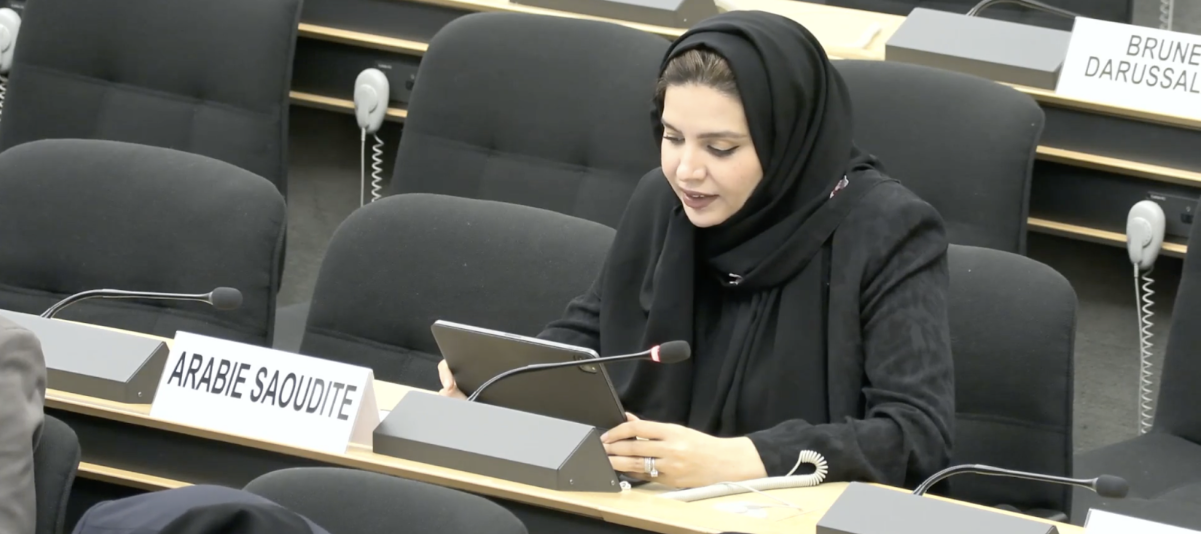
Saudi Arabia, on behalf of the Group of Arab States (Arab Group), condemns ethnic cleansing in Gaza, illegal settlement policies in the Occupied Palestinian Territories and the occupied Syrian Golan, and annexation of the Palestinian territory, highlighting violations of international law. It raises concern that Israeli authorities' practices, such as land confiscation, intimidation of Palestinians, demolition of houses leading to mass displacement, entrench apartheid, remove prospects of a Two-States Solution, and deprive Palestinians of their right to self-determination, amounting altogether to ethnic cleansing. Saudi Arabia calls for taking tangible measures to stop the Israeli occupation of Arab territories and stresses that Israel violates the ceasefire in Gaza, calling for the immediate access of humanitarian aid into the Strip.
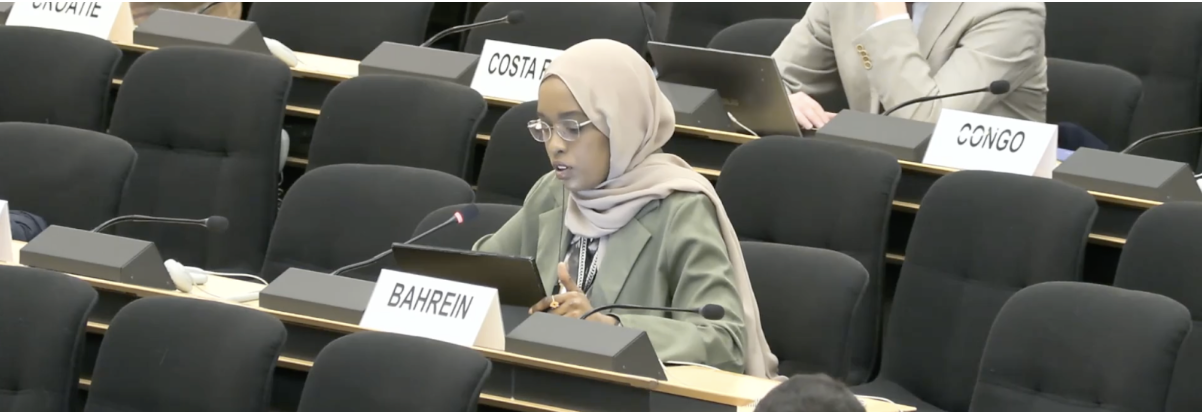
Bahrain on behalf of the Cooperation Council for the Arab States of the Gulf (GCC) stands in solidarity with the Palestinian people, especially in the Gaza Strip. Bahrain condemns the Knesset’s approval of imposing sovereignty over Occupied Palestinian Territory. It reaffirms that enforcing 1967 borders is central to Palestinian cause. GCC recognizes the humanitarian crisis in Gaza, and calls for immediate aid access, protection of civilians and that Israel be held responsible for its aggressions.
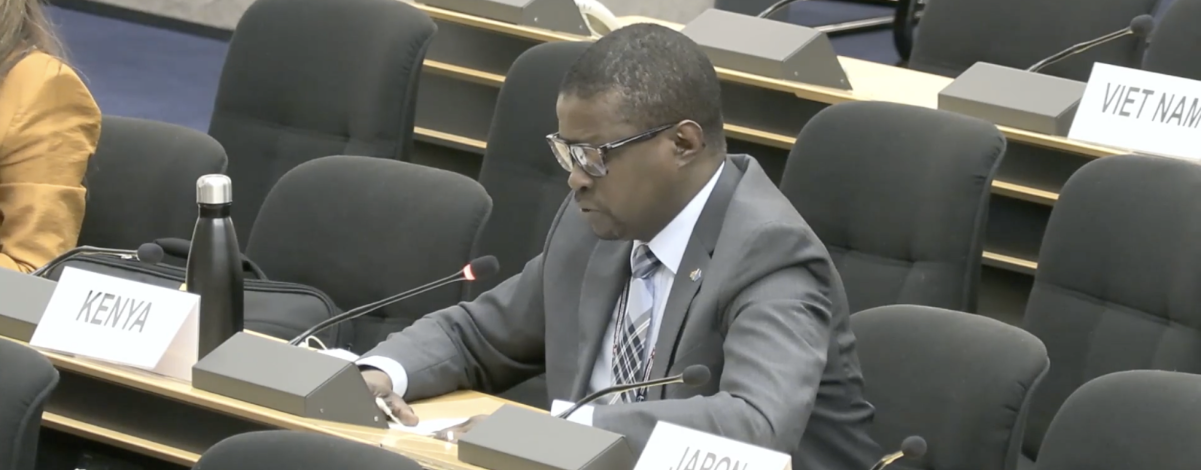
Kenya, on behalf of the Group of African States (African Group), condemns Israel's settlement expansion, military occupation, forced displacement of civilians, imposition ofapartheid, and collective punishment. It highlights that Israeli practices violate fundamental rights of people, aiming at altering the legal and demographic character of the occupied territories. The African Group is concerned about the continued violations of international humanitarian law and international human rights law, particularly the continuous violations of the ceasefire. It supports the Palestinian struggle for self-determination. It calls for the root causes to be addressed and for the Two-State Solution to be enforced for there to be lasting peace in the Middle East.
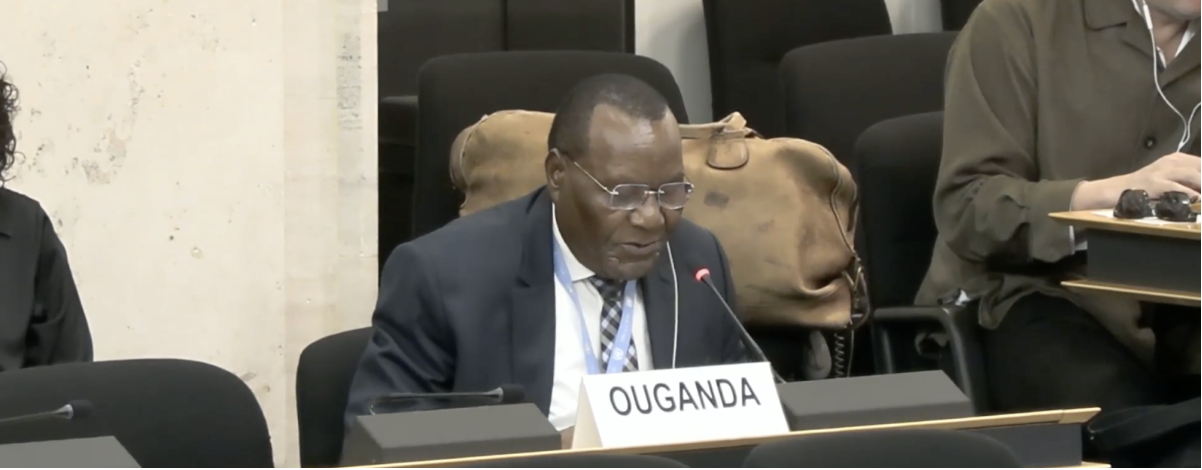
Uganda, on behalf of the Movement of Non-Aligned Countries (NAM), expresses solidarity with the Palestinian people and their fight for self-determination. It condemns Israel's legislative measures facilitating land acquisition and direct purchase by settlers in the occupied territories. It is alarmed by the acts of terror against civilians conducted by militias supported by Israeli Occupying Forces and the ongoing genocide in Gaza. The movement calls for ending the illegal occupation and immediate access to humanitarian aid in Gaza.
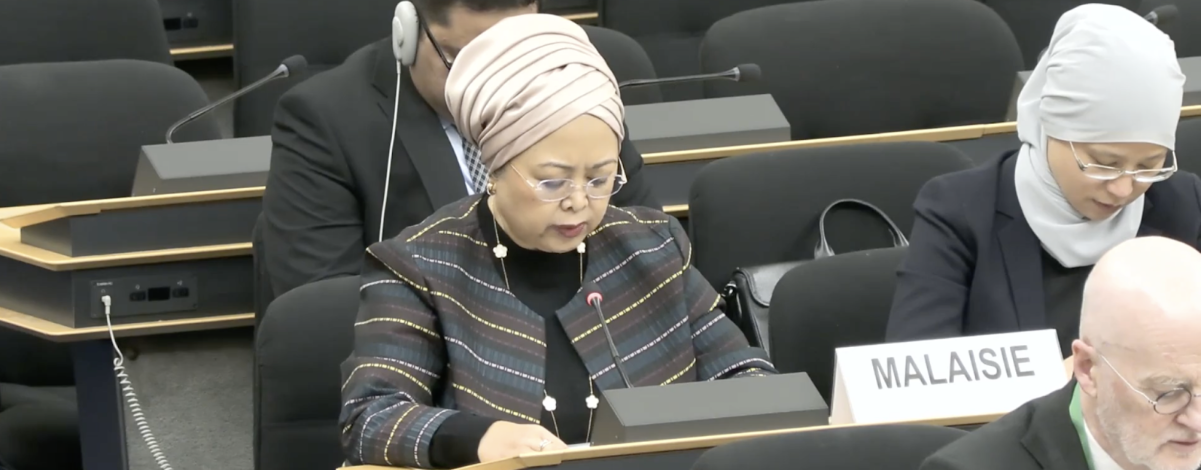
Malaysia, on behalf of a cross regional group of 37 countries, is concerned with the lack of humanitarian assistance, food, clean water, medical supplies, and shelter in the Gaza Strip, emphasizing the devastating humanitarian toll of the ongoing conflict. Malaysia is appalled by the constrained access to humanitarian aid, highlighting that its provision is a legal obligation. The group calls for the protection of civilians and civilian objects and accountability for perpetrators. They stress that violations of international humanitarian law cannot be normalised.
Statements by Member States
Statements by Member States reflected broad international concern over the deteriorating situation in the Occupied Palestinian Territory, including East Jerusalem, and the occupied Syrian Golan. Many condemned ongoing violations of international humanitarian law and international human rights law. Countries including Qatar, Egypt, and Indonesia denounced settlement expansion, housing and infrastructure demolitions, apartheid-like policies, as well as restrictions on humanitarian aid and freedom of worship. Several states, such as Spain and Brazil, emphasized the illegality of forced displacement, arbitrary detention, and attacks on civilians and civilian infrastructure, calling for compliance with the Fourth Geneva Convention and accountability for violations. Many delegations, including China, Pakistan, and Chile, highlighted the worsening humanitarian crisis, urging a respect for the ceasefire agreement, immediate humanitarian aid access, and an end to settler violence. Concerns were also raised about regional instability, with references to impacts on all Middle Eastern countries, especially Lebanon. Numerous states stressed that settlement expansion and annexation efforts undermine the right to self-determination and prospects for peace. Across statements, there was strong support for a Two-State solution based on 1967 borders, recognition of Palestinian sovereignty, and the need to end impunity through effective international accountability mechanisms.
Statements by NHRIs and NGOs
Statements by National Human Rights Institutions and Non-Governmental Institutions (NGOs) highlighted widespread concern over the situation in the Occupied Palestinian Territory and the Golan Heights. They emphasized systemic discrimination and escalating human rights violations. Reports of settler violence, forced displacement, detention, torture, and attacks on vulnerable groups, including women and journalists, were highlighted as part of a broader system of control. Concerns were also raised about restrictions on freedom of worship and allegations that such measures constitute collective punishment. Multiple NGOs accused Israel of grave breaches of international law, including claims of genocide, deliberate targeting of civilians, destruction of infrastructure, and policies that create conditions incompatible with life, such as restrictions on access to water, food, and healthcare. Several organisations pointed to a dual legal system in which Israeli settlers are subject to civil law while Palestinians fall under military jurisdiction. They described this practice as institutionalized discrimination on legal and political grounds. Many speakers stressed that the accelerating expansion of settlements and infrastructure, together with reforms of land registration and civil administration, are tools of de facto annexation. They fragment Palestinian territory and undermine the right to self-determination. NGOs repeatedly called for an end to impunity, urging accountability for violations, adherence to international law, and the implementation of immediate measures to protect civilians and stop annexation and settlement expansion.
GICJ position
Geneva International Centre for Justice (GICJ) expresses grave concern over the ongoing expansion of unlawful Israeli settlements in the West Bank, including East Jerusalem, and in the Golan Heights. These settlements, established and expanded in violation of international law, continue to alter the demographic and geographic character of occupied territories. They undermine the fundamental rights of the protected population. GICJ is particularly alarmed by the sharp increase in settler violence, harassment, intimidation, and torture directed against Palestinian and Syrian communities, which has intensified in recent years. It contributes to a coercive environment that forces mass displacement. GICJ is disturbed by the situation in Gaza. Especially, planned starvation, deliberate targeting of schools, hospitals, and refugee camps, persecution of doctors and journalists, and a persistent blockade of humanitarian aid. Altogether, actions of Israel deepen humanitarian and human rights crises on the ground, amounting to ethnic cleansing and showing genocidal intent. In light of these developments, GICJ calls upon the international community to take urgent and concrete measures to bring an immediate end to all settlement activities and the occupational blockade. It further urges facilitating the safe return of displaced communities and establishing effective accountability mechanisms to stop impunity and ensure that perpetrators of those violations are held accountable.
