




HRC61: Evidence of Genocide Mounting in Darfur
61st Session of the Human Rights Council
23 February - 31 March
Item 2/4: EID on FFM report and HC report on the Sudan (with participation of designated Expert), HRC res. 57/2 and S-38/1
By Evan Dolgoff / GICJ
Executive Summary
During the 61st session of the Human Rights Council, the Independent International Fact-Finding Mission for Sudan (FFM, established by resolution S-38/1) and the High Commissioner for Human Rights presented oral updates on the ongoing conflict. The FFM highlighted systematic war crimes and crimes against humanity, including ethnic mass killings, widespread sexual violence used as a weapon of war, torture, enforced disappearances, and deliberate obstruction of humanitarian aid by both the Sudanese Armed Forces (SAF) and Rapid Support Forces (RSF). The Mission expressed reasonable grounds to believe genocide is occurring in Darfur (particularly against Masalit and other non-Arab groups), with famine-like conditions deliberately engineered in North Darfur camps. The High Commissioner emphasized the catastrophic humanitarian crisis, mass displacement of over 11 million people , and the urgent need for a ceasefire and unrestricted aid access.
The interactive dialogue featured strong condemnation from Western states (EU, US, UK, Canada), who called for ICC referral, targeted sanctions, and FFM mandate renewal. African and aligned states (Egypt, Ethiopia, Sudan) stressed sovereignty and African-led solutions, while Russia and China opposed external interference. Civil society urged a commission of inquiry with prosecutorial powers and survivor-centered justice.
GICJ strongly condemns the ongoing atrocities amounting to war crimes, crimes against humanity, and indicators of genocide. The Council must renew and strengthen the FFM mandate, establish a commission of inquiry with prosecutorial powers, impose targeted sanctions on perpetrators, and ensure immediate, unrestricted humanitarian access. Continued silence and delay risk further loss of life and regional destabilization—decisive international action is imperative to protect civilians and uphold accountability.
Background
The conflict in Sudan, which erupted in April 2023 between the Sudanese Armed Forces (SAF) and the Rapid Support Forces (RSF), has escalated into one of the world’s most severe humanitarian and human rights crises. Fighting has spread across Khartoum, Darfur, Kordofan, and Gezira, resulting in widespread atrocities, mass displacement, and deliberate attacks on civilians and humanitarian infrastructure.
In Darfur, particularly El Fasher (North Darfur), the RSF offensive in late 2025 led to documented mass killings, systematic sexual violence used as a weapon of war, and targeted attacks on non-Arab communities (especially Masalit and Fur), with reasonable grounds to believe these acts constitute indicators of genocide. Both parties have committed war crimes and crimes against humanity, including ethnic massacres, torture, enforced disappearances, child recruitment, and obstruction of humanitarian aid, creating famine-like conditions in displacement camps (Zamzam, Abu Shouk, Al Fasher). Over 11 million people have been displaced—roughly 20% of Sudan’s population—with restricted access to food, medical care, and safe shelter.
The Human Rights Council has addressed the situation through multiple resolutions, including resolution 57/2 (October 2024), which extended the mandate of the Special Rapporteur on Sudan (currently Mohamed Chande Othman), and resolution S-38/1 (May 2025), which established the Independent International Fact-Finding Mission (FFM) for Sudan. The FFM has consistently documented patterns of serious violations, calling for accountability, ceasefire, and unrestricted humanitarian access. The High Commissioner for Human Rights has repeatedly warned of the risk of further genocidal violence and the need for urgent international action.
The 61st session’s Item 4 dialogue (February 26, 2026) focused on the FFM oral update and High Commissioner’s report, highlighting the catastrophic scale of the crisis and the urgent need for protection and justice.
Summary of Expert’s Report (A/HRC/61/77)
On 26 February 2026, during the 61st session of the Human Rights Council, the Independent International Fact-Finding Mission for Sudan (FFM), established by resolution S-38/1 (May 2025), presented its oral update under Item 4. The update, based on the advance unedited report A/HRC/61/77 (17 February 2026), was delivered by the Mission’s Chair, Mohamed Chande Othman, speaking in his capacity as chair. Othman serves as the Special Rapporteur on Sudan, as well (appointed under resolution 57/2 of October 2024). The High Commissioner for Human Rights, Volker Türk, also contributed remarks in the combined dialogue.
The FFM reported a significant escalation in violations since April 2023 between the Sudanese Armed Forces (SAF) and Rapid Support Forces (RSF). Both parties have committed systematic war crimes and crimes against humanity, including ethnic mass killings, widespread and systematic rape and other forms of sexual violence used as a weapon of war, torture, enforced disappearances, child recruitment, and deliberate attacks on civilians, humanitarian workers, and medical facilities. The Mission expressed reasonable grounds to believe that genocide is occurring in Darfur, particularly against non-Arab communities (especially Masalit and Fur), through mass killings, sexual violence, and destruction of livelihoods. Deliberate obstruction of humanitarian aid has led to famine-like conditions in North Darfur displacement camps (Zamzam, Abu Shouk, Al Fasher), with looting of food supplies, attacks on aid convoys, and severe restrictions on humanitarian access. The report noted mass displacement of over 10 million people, with limited safe access to food, medical care, and shelter. The conflict’s epicenter has shifted toward Kordofan, raising concerns of further atrocities.
The FFM stressed that perpetrators at all levels must be held accountable, with a heightened international obligation to prevent further genocidal violence and ensure justice, including through . The Mission urged the Council to renew and strengthen its mandate, ensure unrestricted humanitarian access, impose targeted sanctions on perpetrators, and support international justice mechanisms.
This oral update formed the foundation of the interactive dialogue, with delegates frequently referencing its findings on genocide indicators, sexual violence, famine engineering, and the urgent need for protection and accountability.
Summary of the Interactive Dialogue
Interesting to mention that Only the Security Council can refer a non-State Party situation under Chapter VII of the UN Charter

Volker Türk, the UN High Commissioner for Human Rights, opened the dialogue with a stark assessment of the Sudan crisis, emphasizing the catastrophic humanitarian impact and the deliberate use of sexual violence as a weapon of war. He warned that the conflict's shift to Kordofan risks repeating the atrocities seen in El Fasher and called for an immediate ceasefire, unrestricted humanitarian access, and international support for accountability mechanisms. Türk aligned his remarks with the FFM's findings, urging the Council to act decisively to prevent further genocidal violenceVolker Türk, the UN High Commissioner for Human Rights, opened the dialogue with a stark assessment of the Sudan crisis, emphasizing the catastrophic humanitarian impact and the deliberate use of sexual violence as a weapon of war. He warned that the conflict's shift to Kordofan risks repeating the atrocities seen in El Fasher and called for an immediate ceasefire, unrestricted humanitarian access, and international support for accountability mechanisms. Türk aligned his remarks with the FFM's findings, urging the Council to act decisively to prevent further genocidal violence.

Mohamed Chande Othman, Chair of the FFM and Special Rapporteur on Sudan, presented the Mission's oral update, detailing systematic war crimes, crimes against humanity, and indicators of genocide in Darfur. He highlighted ethnic mass killings, widespread rape, and deliberate aid obstruction leading to famine-like conditions, with reasonable grounds to believe the RSF targeted non-Arab communities. Othman stressed perpetrator accountability at all levels, calling for ICC referral, targeted sanctions, and the Council's renewal of the FFM mandate to ensure justice and civilian protection.
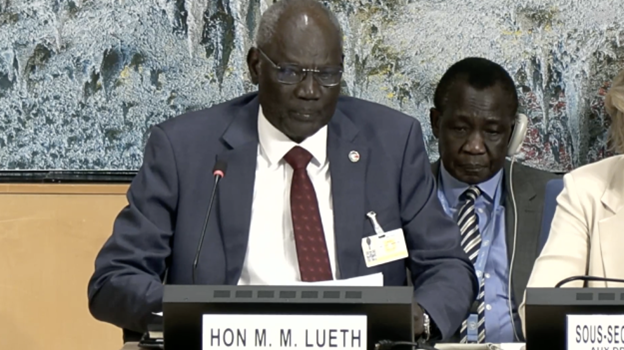
The Sudanese government representative rejected the FFM's report as biased and politically motivated, asserting that the government is committed to protecting civilians and facilitating aid. It emphasized sovereignty and African-led solutions, criticizing external interference. Sudan reaffirmed the need to respect national processes and opposed any extension of the FFM mandate.

The European Union, speaking on behalf of its member states, strongly condemned the atrocities in Sudan, including credible reports of ethnic mass killings and systematic sexual violence in El Fasher. It called for an immediate ceasefire, unrestricted humanitarian access, and full cooperation with the FFM, urging the Council to renew and strengthen its mandate. The EU emphasized the need for targeted sanctions and ICC referral to hold perpetrators accountable.
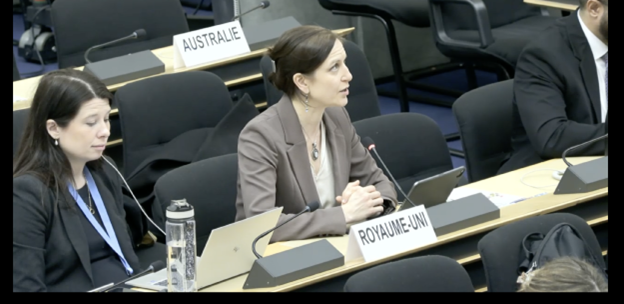
The United Kingdom expressed grave concern over the FFM's findings of genocide indicators in Darfur, condemning attacks on civilians, sexual violence, and aid obstruction. It urged all parties to cease hostilities, allow humanitarian access, and cooperate with the FFM. The UK supported mandate renewal, ICC referral, and international justice mechanisms to ensure accountability.
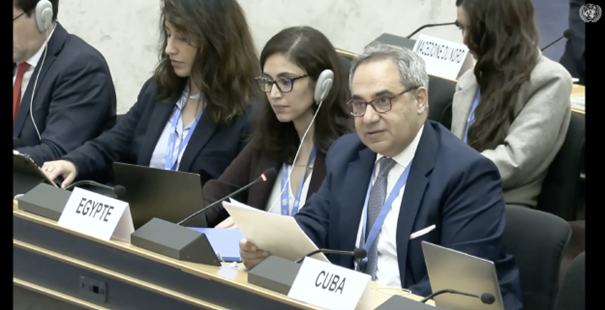
Egypt, speaking on behalf of some African Group members, shared concerns over the humanitarian crisis but stressed the need for African-led solutions and dialogue. It urged caution against politicized mandates and emphasized sovereignty. The delegation supported humanitarian access but opposed external imposition or confrontational approaches.
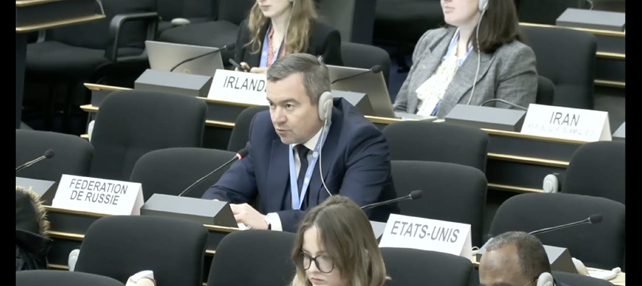
Russia focused on non-interference and sovereignty, criticizing external pressure on Sudan and opposing the politicization of the human rights situation. It opposed any confrontational approaches, including ICC referral, and called for respect of Sudanese sovereignty. Russia urged the Council to support dialogue and African-led initiatives rather than extending or strengthening the FFM mandate in a manner perceived as biased or interventionist.

China reiterated its position of respect for Sudan’s sovereignty and territorial integrity, opposing external interference in the country’s internal affairs. The delegation expressed concern over the humanitarian crisis but urged caution against biased or politically motivated reports. China supported humanitarian access and civilian protection while rejecting confrontational measures such as ICC referral or strengthened mandates that could undermine national processes, advocating instead for dialogue and cooperation with Sudanese authorities.
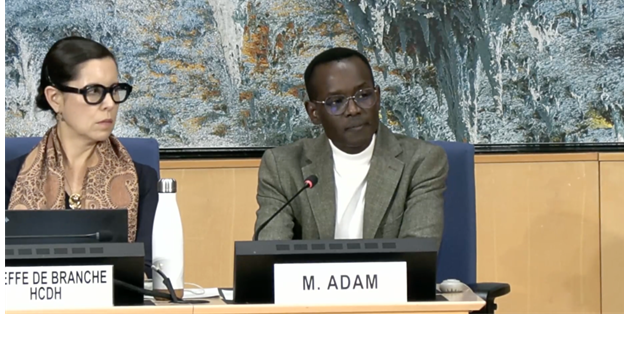 Mr. Moneim Adam, speaking on behalf of the Sudan Human Rights Hub, highlighted the devastating impact of the conflict on civilians in and around El Fasher, emphasizing the systematic nature of atrocities committed by the Rapid Support Forces, including mass killings, sexual violence, and deliberate obstruction of humanitarian aid, leading to famine-like conditions. He urged the Council to renew and strengthen the Fact-Finding Mission's mandate, ensure unrestricted access for humanitarian actors, and prioritize survivor-centered justice and accountability mechanisms, including ICC referral, to prevent further escalation and protect vulnerable communities in Darfur and beyond.
Deputy High Commissioner Nada Al-Nashif in her closing remarks, underscored the urgency

of the situation in Sudan, reiterating the High Commissioner’s grave concern over the scale of atrocities and the deliberate engineering of famine-like conditions in North Darfur. She highlighted the systematic use of sexual violence and ethnic targeting as war tactics, stressing that the international community must act decisively to prevent further genocidal violence. Ms. Al-Nashif called for an immediate ceasefire, unrestricted humanitarian access, full cooperation with the Fact-Finding Mission, and strengthened accountability mechanisms, including support for ICC investigations. She urged Council members to renew and expand the FFM mandate to ensure ongoing monitoring and protection of civilians, emphasizing that continued inaction risks further loss of life and regional destabilization.
Conclusion
In the concluding remarks of the interactive dialogue on Sudan, Mohamed Chande Othman, Chair of the Independent International Fact-Finding Mission (FFM), reiterated the Mission's grave concern over the systematic nature of atrocities, including ethnic mass killings, widespread sexual violence, and deliberate obstruction of humanitarian aid, which have created famine-like conditions in North Darfur. He stressed that perpetrators at all levels must be held accountable and urged the Council to renew and strengthen the FFM mandate, ensure unrestricted humanitarian access, impose targeted sanctions, and support ICC referral to prevent further genocidal violence. Othman highlighted the shifting conflict dynamics toward Kordofan and the heightened international obligation to act decisively to protect civilians and ensure justice.
The concluding remarks underscored the urgency of the crisis and the need for sustained international attention and concrete measures to halt the violence, safeguard humanitarian access, and advance accountability.
GICJ Position
Geneva International Centre for Justice (GICJ) expresses profound alarm at the findings presented by the Independent International Fact-Finding Mission for Sudan and the High Commissioner for Human Rights during the 61st session. The documented patterns of ethnic mass killings, systematic sexual violence used as a weapon of war, enforced disappearances, torture, child recruitment, and deliberate obstruction of humanitarian aid in Darfur and beyond constitute grave breaches of international humanitarian law and human rights law. The FFM’s conclusion that there are reasonable grounds to believe genocide is occurring against non-Arab communities in Darfur, particularly the Masalit and Fur, must be treated with utmost seriousness.
The engineered famine-like conditions in North Darfur displacement camps, the mass displacement of over 11 million people, and the continued attacks on civilians and humanitarian infrastructure reveal a deliberate strategy of terror and destruction that threatens the very survival of entire communities.
The international community cannot continue to stand by while these atrocities unfold. The repeated failure to prevent or halt the violence in El Fasher, despite prior warnings, demonstrates the inadequacy of the current response. Silence and inaction in the face of genocide indicators risk not only further loss of life but also the normalization of such crimes and the erosion of international legal norms. The Council bears a particular responsibility to act decisively, as its mandate includes addressing situations that require its attention.
GICJ therefore strongly calls on the Human Rights Council to renew and significantly strengthen the mandate of the Independent International Fact-Finding Mission for Sudan, ensuring full resources, access, and protection for its work. The Council should also establish an international commission of inquiry with prosecutorial powers to investigate all atrocity crimes, including genocide, war crimes, and crimes against humanity, and to identify perpetrators for future accountability. GICJ urges all member states to refer the situation in Sudan to the International Criminal Court (in cooperation with the UN Security Council) without delay and to support ICC investigations and arrest warrants for those most responsible. Targeted sanctions, including travel bans and asset freezes, must be imposed on individuals and entities responsible for serious violations. GICJ further demands an immediate and unconditional ceasefire by all parties, along with the immediate lifting of all restrictions on humanitarian access to allow safe and unhindered delivery of aid to affected populations. The Council should also support the creation of safe humanitarian corridors and the protection of civilians, particularly in Darfur and Kordofan, through international monitoring and peacekeeping mechanisms where necessary.
GICJ reiterates that the protection of civilians and the pursuit of justice are not optional in the face of genocide. The Council and the international community must move beyond statements and resolutions to concrete, enforceable measures. Continued delay will only deepen the suffering of the Sudanese people and further undermine the credibility of the human rights system.
