




HRC 61: Land and the Right to Food - Sowing the Seeds of Equity and Sustainability
The 61st session of the Human Rights Council
23 February – 31 March 2026
Interactive Dialogue with the Special Rapporteur on the right to food
05 March 2026
Tanushree Ghosh/GICJ
Executive Summary
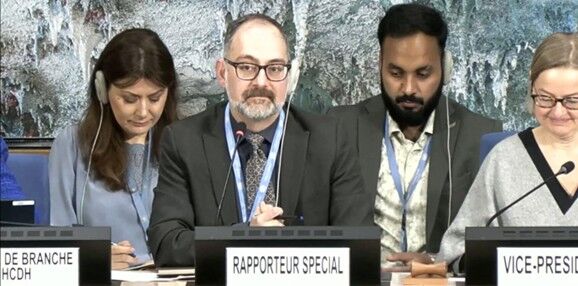
On 5 March 2026, at the 61st session of the Human Rights Council, an interactive dialogue was held with Michael Fakhri, the United Nations Special Rapporteur on the right to food (the “Special Rapporteur”). The report, “Land and the Right to Food” (A/HRC/61/51) (the “Report”), addressed issues of food security and sovereignty. During the interactive dialogue, the Special Rapporteur asserted that land embodies a distinctive political, social and cultural ethos. It serves as an expression of self-determination, with communities exercising their discretion to use land to produce, share and market food. However, collective interests have now given way to commercial imperatives. The Special Rapporteur further cautioned against attaching strictly commercial values to land and other natural resources. He noted that profiteering from natural resources inevitably imposes prohibitive costs on the environment.
Stakeholders, including Member States and non-governmental organisations (NGOs), also participated in the interactive dialogue. Delegates acknowledged the issues raised in the Report and renewed their commitment to the 2030 Agenda for Sustainable Development. Member States identified specific challenges, including institutional constraints, capacity gaps and competing domestic priorities that affect the integrity of agrifood systems. While the domestic realities of Member States are distinct, representatives engaged in contextualising best practices to facilitate agrarian reform and rural development.
Geneva International Centre for Justice (GICJ) welcomes the Report presented by the Special Rapporteur. GICJ asserts that the interactive dialogue reflects a strong commitment to international cooperation and capacity-building. It acknowledges the constructive engagement of the United Nations, Member States and NGOs in effectively realising the universal right to food. Taking note of the country-specific challenges, GICJ further urges Member States to consider integrating proposed measures within their national frameworks.
Background
The International Covenant on Economic, Social and Cultural Rights (1966), recognises the right to food as a universal right and imposes obligations upon States Parties to take adequate measures to ensure its effective realisation. In this context, the 2030 Agenda for Sustainable Development, adopted by all United Nations Member States, seeks to end hunger, achieve food security, improve nutrition and promote sustainable agriculture. The right to land and territory is widely recognised as a necessary corollary to the right to food. Inequitable access to, use of and control over land and other natural resources exacerbates global issues of poverty and hunger.
The Statistical Yearbook 2025, published by the Food and Agriculture Organization of the United Nations (FAO), reports alarming statistics regarding the decline in agricultural and forest land. Between 2000 and 2023, agricultural land declined by 74 million hectares, while forest area declined by 114 million hectares. The Yearbook 2025 also synthesises statistical data on water stress levels across the globe. It is unsettling to note that nearly all countries in the Near East and North Africa have water stress levels close to or above 100 per cent. As natural resources remain under unprecedented strain, the threat of food insecurity looms large.
The decline in agricultural land is imputed to extractive practices that prioritise short-term economic gain over long-term ecological stability. Complicit in impairing the right to food, large corporations and businesses are increasingly acquiring land to expand their commercial operations. Land grabbing, more often than not, assumes the legal trappings of commercial agricultural investment, thereby depriving peasants and pastoralists of their right to land and livelihood. Green grabbing, a subset of land grabbing, involves appropriating land or other natural resources, purportedly for the protection of the environment. Land and other natural resources that have been stewarded by indigenous communities for generations are appropriated under the pretext of conserving biodiversity. Moreover, agriculture and fishing are restricted in these delineated land and maritime zones. Green grabbing renders the customary tenure rights of indigenous communities largely vacuous as it forces displacement and threatens their distinct identity.
Dispossession, compounded by degradation, adversely affects agricultural productivity. Human-induced land degradation, if unchecked, is likely to disrupt agrifood systems. Rapid deforestation, agricultural industrialisation and urbanisation have been accelerating land degradation. Land that loses its fertility due to such extractive practices is unsuitable for agriculture. “The State of Food and Agriculture 2025-Addressing Land Degradation across Landholding Scales”, a report released by the FAO, warns of a “silent crisis”, as land degradation threatens billions worldwide. So long as land or other natural resources are deemed expendable, the right to food cannot be effectively guaranteed.
Summary of the Special Rapporteur’s Report (A/HRC/61/51)
The detailed Report drawn up by the Special Rapporteur raises concerns over the commodification of land and other natural resources. Land, a shared commons that supports sustenance, is increasingly usurped for power and influence. Governments and commercial entities have arrogated to themselves unrestrained control over land and natural commons. The Report enlists ten transnational corporations that collectively control approximately 404,457 sq. km of land. It underscores that land grabbing is widespread, as legislative and executive interventions at the domestic level are often skewed in favour of corporate interests. Coercive acquisition of land is not limited to commercial entities. Motivated by vested interests, governments have been appropriating land ostensibly for ecological conservation. Ecological buffer zones are demarcated to impose restrictions on the use of such land. The Report calls into question oppressive legislative actions that disregard the interests of local communities. In the absence of a consultative process, local agrarian communities that rely on the land for their sustenance and livelihood continue to remain excluded from decision-making processes. Land grabbing, thus, entrenches inequalities by alienating local communities from the access to, use of and control over land.
The Report further states that public or private financing of land for such extractive uses results in its degradation. Urban expansion, pollution and forest clearing have a causal association with reduced agricultural productivity. The decline in crop yields most certainly heightens fears of food insecurity. As the loss of fertile topsoil is practically irrecoverable, claims of restoring or regenerating land are, at best, a cursory exercise in data offsetting and, at worst, a misrepresentation of ecological realities. To ensure the full and effective realisation of the right to food, the Report lays emphasis on the sustainable use of land and other natural resources.
Having identified persistent issues, the Report proposes legal measures to secure the universal right to food. Accordingly, the Special Rapporteur stresses the need to recognise and protect land tenure rights. Land tenure is defined as a set of relationships with respect to land, established through statutory or customary law, or informal or hybrid arrangements, that enable one to access, use and control one’s land and territory in security, peace and dignity. Effective land tenure systems safeguard the interests of legitimate landowners and titleholders against acquisition and dispossession. The Voluntary Guidelines on the Responsible Governance of Tenure of Land, Fisheries and Forests (2012) read together with the Voluntary Guidelines for Securing Sustainable Small-Scale Fisheries (2015) seek to reorient States towards sustainable resource management. These soft-law instruments recommend that States formally recognise the customary tenure rights of marginalised communities including, peasants, pastoralists, Indigenous Peoples and artisanal fishers.
To address land degradation, it is pertinent to re-examine the United Nations Convention to Combat Desertification (1994) (the “Convention”). Interpreted in conjunction with relevant human rights treaty instruments, the Convention serves as an effective framework to restructure land and food systems. A purposive construction of the Convention makes it clear that land degradation, which foreseeably compromises access to adequate food, is not merely an environmental failure but constitutes a violation of the right to food. The Report reiterates that rights derived from a conjoint reading of international instruments enable affected communities to seek accountability for exploitative practices.
The Special Rapporteur concludes the Report by inviting Member States to discuss best practices and follow-up plans regarding sustainable use of land and other natural commons. The Report enumerates recommendations that remain available for deliberation by Member States and NGOs. It further notes that the Human Rights Council session serves as an exceptional forum to facilitate constructive engagement on issues of land and human rights.
Summary of the Interactive Dialogue
Opening Statement by the Special Rapporteur
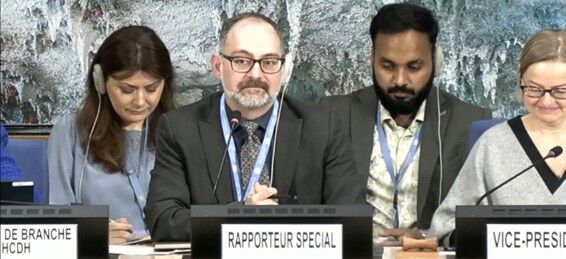
The Special Rapporteur, in his opening remarks, raised concerns over the worsening global crises of hunger and starvation. Referring to the intensifying armed conflicts across the globe, he stressed that starvation is used as a weapon of warfare against civilians not only to occupy and annex territories but also to displace local populations. He warned that a downward spiral of violence and humanitarian suffering is unavoidable unless Member States take urgent action to protect the right to land.
Statements by Member States
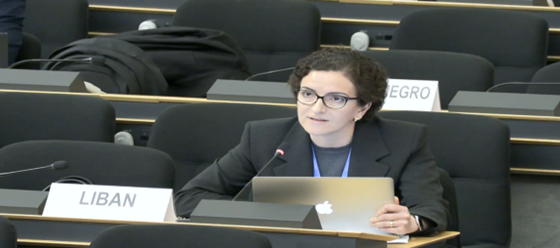
The representative of Lebanon concurred with the views of the Special Rapporteur, asserting that land is not merely a commodity but a living resource intrinsically tied to human rights. She stated that Lebanon regulates land ownership through legal frameworks complemented by long-standing oral traditions. Efforts have been undertaken to govern land in a manner that ensures fairness and protects against forcible displacement. The representative, through her statement, recalled that land continues to be central to Lebanon’s identity and reflects the aspirations of its people.
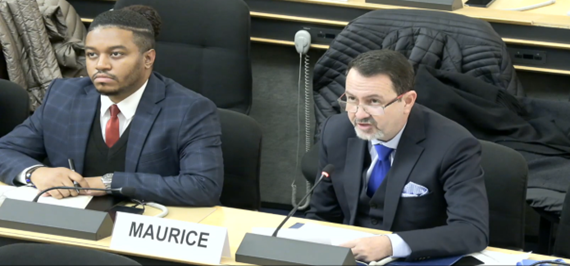
Mauritius, through its representative, apprised the Special Rapporteur that urban development and agricultural production often compete for the island’s limited land resources. As a Small Island Developing State, Mauritius has been particularly affected by the impacts of rising sea levels and soil erosion. To mitigate the risks posed by climate change, Mauritius has been compelled to allocate agricultural land to afforestation initiatives. The representative sought recommendations from the Special Rapporteur to balance the competing priorities of ensuring food security and addressing climate change.
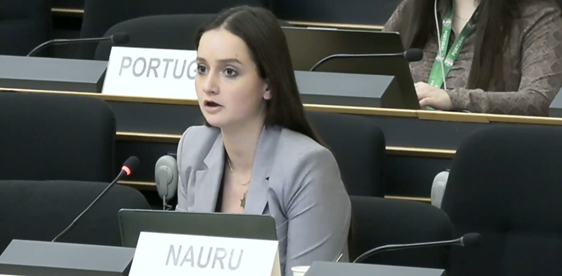
The delegate from Nauru expressed concern over the consequences of resource extraction disproportionately borne by Small Island Developing States. In Nauru, decades of intensive phosphate mining have depleted land resources and, as a consequence, constrained local food systems. The commodification of land has resulted in a loss of biodiversity and undermined the island’s long-term food production capacity. While rehabilitation efforts have been undertaken, she noted that the challenges facing Nauru far exceed its domestic financial and technical capacities.
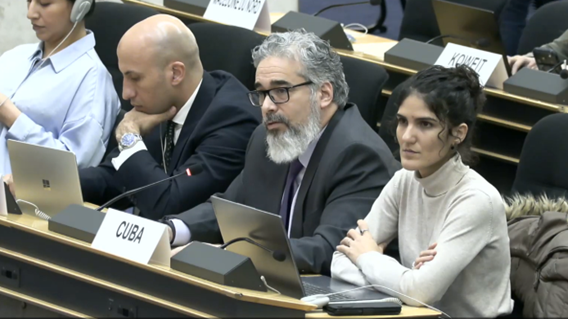
The representative of Cuba highlighted that structural issues, particularly inequalities in food distribution systems, have deepened the global crises of hunger and starvation. He stated that the Constitution of Cuba guarantees the universal right to food. However, Cubans are deprived of this right due to the imposition of “criminal and illegal” economic blockades. Despite these supervening constraints, the representative reaffirmed Cuba’s commitment to sustainable development, grounded in the principle of “Leaving No One Behind”.
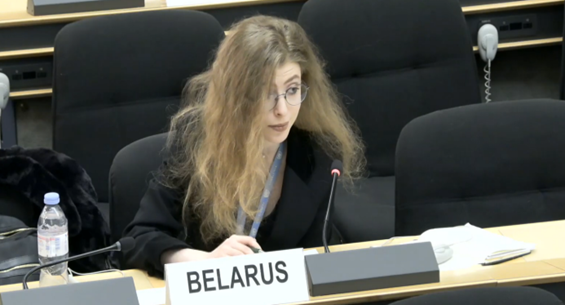
The delegate from Belarus presented vital statistical information pertaining to the domestic agricultural sector. She mentioned that 40 per cent of the country’s total land area is allocated to agricultural use, contributing to the production of food for about 85 per cent of its population. Belarus has introduced effective land tenure systems through state ownership and inheritable land-use rights. She added that specific policies have been implemented to prevent land degradation and promote organic agriculture. As Belarus shares borders with other European States, the delegate requested the Special Rapporteur’s recommendations on the joint management of transboundary natural resources.

The representative of Djibouti reaffirmed the State’s commitment to international law, noting that it has signed and ratified the United Nations Convention to Combat Desertification (1994). The international obligations have also been incorporated into Djibouti’s domestic legal frameworks. He indicated that Djibouti strives to address the persistent issue of desertification through the National Anti-Desertification Plan and the Land Restoration Strategy. Accordingly, the representative sought the Special Rapporteur’s views on land beyond its strictly utilitarian functions.
Statements on behalf of Group of States
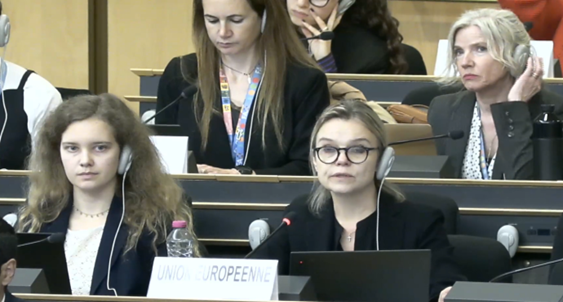
The European Union’s (EU) delegate emphasised that the concentration of land entrenches inequalities and weakens food systems. She reiterated that a secured tenure system for small scale producers, including women, fishers and Indigenous Peoples, is crucial to secure the right to food. Member States are therefore under an obligation to guarantee gender equality in the access to, use of and control over land. Building on this point, she outlined the initiatives undertaken by the EU to strengthen land tenure governance. The EU’s human rights-based approach places human rights and tenure right holders at the centre of sustainable development. Additionally, the Global Programme Responsible Land Policy, co-financed by the EU, aims to improve land tenure security in partner States.
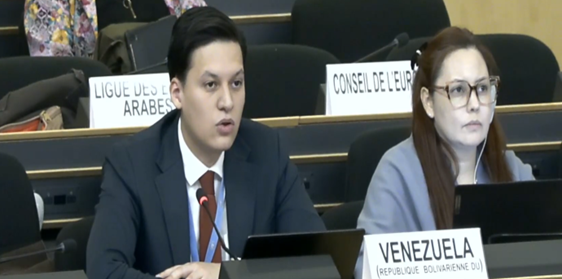
Venezuela, on behalf of a Group of States, drew attention to the high volatility in food prices as a global issue that impairs the human right to food. The representative focused on the need to address market-distorting practices and barriers to economic development in order to guarantee unimpeded access to food. Venezuela also issued a strong call for the immediate elimination of unilateral coercive measures imposed upon certain Member States in contravention of the Charter of the United Nations (1945).
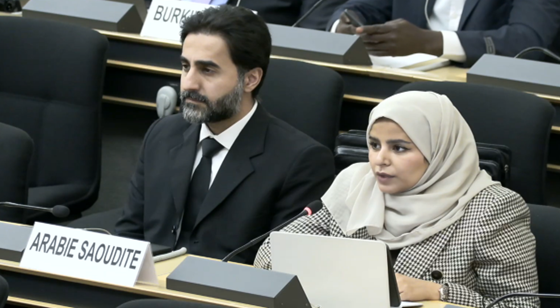
Saudi Arabia, on behalf of the Group of Arab States, commended the Special Rapporteur for adopting a nuanced approach to the right to food. The delegate recognised that environmental degradation is closely intertwined with food insecurity. She observed that organising land ownership and mainstreaming human rights are, therefore, essential to building sustainable food systems.
Statements by the United Nations Specialised Agency and Programme
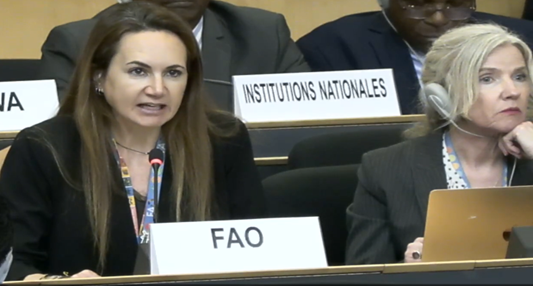
The representative of FAO underlined that small scale farmers, Indigenous Peoples and pastoralists, though central to food systems, continue to be denied access to land resources and remain excluded from land governance. She further conveyed that FAO supports responsible governance of tenure through the implementation of Voluntary Guidelines on the Responsible Governance of Tenure of Land, Fisheries and Forests (2012). While voluntary in nature, this instrument encapsulates guiding principles for inclusive and consultative land governance. Since 2026 marks both the International Year of the Woman Farmer and the International Year for Rangelands and Pastoralists, the representative urged Member States to invest in communities that have been stewarding land and natural resources for generations.
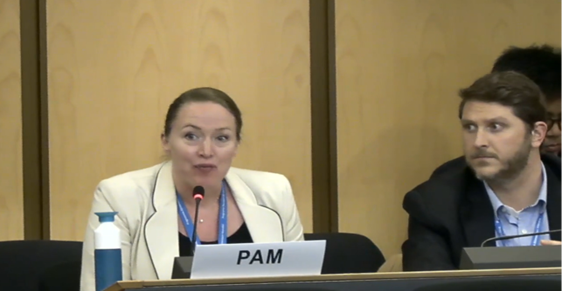
The United Nations World Food Programme (WFP) reported that the year 2025 witnessed acute hunger, with famine conditions confirmed in some States. Despite efforts by humanitarian organisations to scale up relief operations, State responses remained fragmented and underfunded. WFP’s representative warned that the outlook for 2026 continues to be grim. She cautioned that failure to heed to data-backed assessments could worsen the ongoing humanitarian crisis. Identifying protracted conflicts and systemic violence as drivers of global hunger, she called on States to uphold and respect international humanitarian law.
Statements by NGOs
During the interactive dialogue, NGOs brought to the fore the pressing issue of unequal power dynamics that have left peasants, fishers, pastoralists and Indigenous Peoples vulnerable to exploitation. Representatives, through their statements, reported instances of the use of criminal force and intimidation against marginalised communities. In some regions, State apparatuses have resorted to violence to stifle the voices of vulnerable communities and perpetuate power hierarchies. Existing political and social structures are leveraged to systematically undermine the human right to dignity and autonomy.
To address these issues, it was proposed that Member States undertake comprehensive Human Rights Impact Assessments (HRIAs) to protect the interests of landowners and titleholders. Guided by the human rights principle of free, prior and informed consent, HRIAs facilitate meaningful participation in decisions affecting land, resources and livelihoods.
Concluding Remarks
In his closing remarks, the Special Rapporteur elaborated on measures to be implemented at both domestic and international levels. To enact reforms in the domestic agrarian sector, Member States were recommended to engage with the FAO and the United Nations Office of the High Commissioner for Human Rights (OHCHR). Soliciting support from international organisations allows Member States to access institutional resources and technical expertise.
At the international level, the Special Rapporteur urged stakeholders to actively participate in strengthening the United Nations’ organisational framework. To date, definitive resolutions on issues of occupation and annexation remain conspicuously absent. The United Nations requires leadership that places land at the centre of its agenda to address issues of conflict, climate change and sustainable development in a holistic manner. He stressed that the responsibility to realign the United Nations with its core mandates rests with the Member States. The Special Rapporteur concluded the interactive dialogue by referring to the “Uniting for Peace” resolution, reaffirming that stability and order are essential for the full and effective realisation of human rights.
Position of the Geneva International Centre for Justice
Geneva International Centre for Justice (GICJ) commends the Special Rapporteur for the comprehensive Report, identifying critical issues, reasserting international obligations and recommending actionable measures to strengthen global food systems. It acknowledges the representations put forth by stakeholders, including Member States and NGOs, during the interactive dialogue. GICJ expresses deep concern over the unsustainable and inequitable access to, use of and control over land or other natural commons. Recognising the interconnectedness of the right to land and the right to food, it calls on Member States to protect the interests of vulnerable communities, particularly peasants, pastoralists, Indigenous Peoples and artisanal fishers. Furthermore, GICJ urges Member States to consider incorporating the recommendations into domestic frameworks to ensure the full and effective realisation of the right to food.
