



HRC61: Nature Conservation and Its Impact on Cultural Rights
61st Session of the Human Rights Council
23 February - 31 March
Item 3: Interactive dialogue with the Special Rapporteur on cultural rights
Date of the discussion: 3 March
Danila Pulinets / GICJ
Executive Summary
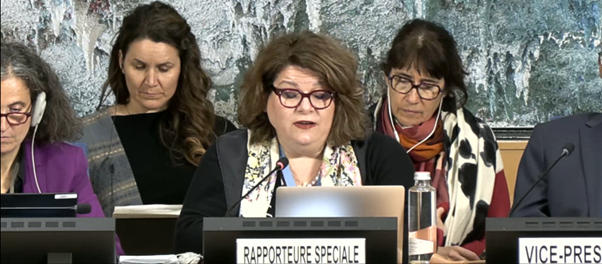
On 3 March 2026, with a continuation on 4 March 2026, the United Nations Human Rights Council held an interactive dialogue with the Special Rapporteur on cultural rights, Alexandra Xanthaki. The discussion focused on the relationship between nature conservation and cultural rights following the presentation of the Special Rapporteur’s latest report.
The report emphasised that protecting biodiversity requires protecting cultural diversity. The Special Rapporteur cautioned against the “fortress conservation” model, in which protected areas are established while excluding the communities that have traditionally lived on and cared for these lands. In several States, conservation policies have prohibited people from living in forests and ancestral territories, significantly limiting their ability to participate in decision-making processes affecting their cultural life.
The report highlighted a number of concerning examples. In the Lao People's Democratic Republic, participation rights have reportedly been severely restricted, affecting more than fifty ethnic groups. Concerns were raised regarding assimilation policies and the marginalisation of minority communities, with the principle of non-discrimination not always being respected in practice. Communications received by the mandate also reflected cases of forced evictions, limited consultation with communities, and disregard for the principle of free, prior and informed consent.
At the same time, the Special Rapporteur acknowledged positive developments. Following her visit to the Federated States of Micronesia in June 2025, she praised efforts to strengthen cultural identity and noted increasing awareness of cultural rights among communities, as well as a strong sense of belonging. However, she also pointed to challenges, particularly the lack of effective communication between communities and authorities, and encouraged the Government to further strengthen its commitment to human rights obligations.
During the dialogue, states discussed the broader implications of conservation policies and their impact on cultural rights. The Special Rapporteur encouraged states, donors, and conservation actors to adopt a cultural rights-based approach to environmental protection. This includes ensuring meaningful participation, conducting human rights impact assessments, and establishing safeguards to protect the cultural rights of affected communities.
Background
The mandate of the Special Rapporteur in the field of cultural rights was established by the United Nations Human Rights Council to examine issues related to the protection and promotion of cultural rights worldwide. Cultural rights are protected under several international human rights instruments, including the International Covenant on Economic, Social and Cultural Rights. These rights include the ability of individuals and communities to access, participate in, and contribute to cultural life, as well as the right to maintain cultural traditions, identities, and heritage.
In recent years, discussions within international human rights bodies have increasingly focused on the relationship between environmental protection and human rights. Biodiversity loss, climate change, and environmental degradation can significantly affect communities whose cultural identities and livelihoods are closely connected to natural environments such as forests, coastal regions, and agricultural landscapes.
Within this context, the mandate of the Special Rapporteur plays an important role in examining how environmental policies may affect cultural rights and in promoting approaches that respect both ecological protection and human rights standards.
Summary of the Expert’s Report
In her report, Special Rapporteur Alexandra Xanthaki examined the relationship between biodiversity conservation and cultural rights. She argued that protecting nature and protecting cultural diversity are closely interconnected goals and should not be treated as separate policy areas. A central concern raised in the report is the persistence of the “fortress conservation” model. Under this approach, governments establish protected areas while restricting or prohibiting the presence of local populations. According to the Special Rapporteur, such policies have often led to forced displacement, loss of livelihoods, and restrictions on communities’ ability to practice cultural traditions linked to their natural environments.
The report notes that in several countries, communities living in forests and ancestral territories have been prevented from accessing lands they have traditionally used for generations. These restrictions can affect cultural practices, traditional knowledge systems, and the transmission of cultural heritage. The Special Rapporteur also highlighted cases in the Lao People's Democratic Republic, where communities' participation rights have reportedly been restricted. The report raised concerns about assimilation policies affecting more than fifty ethnic groups and emphasised that the principle of non-discrimination must be respected when implementing conservation measures.
At the same time, the report recognised examples of positive developments. During her visit to the Federated States of Micronesia in June 2025, the Special Rapporteur observed strong cultural identity and increasing awareness of cultural rights among communities. She noted that environmental protection efforts in the country were often linked to local traditions and community engagement, although she also pointed to the need for improved communication between communities and authorities.
Overall, the Special Rapporteur stressed that conservation policies should adopt a cultural rights-based approach. She encouraged states and international actors to ensure meaningful participation of communities, respect the principle of free, prior and informed consent, and conduct human rights impact assessments when designing conservation initiatives.
Summary of the Statements
Following the presentation of the report, representatives of numerous states and organisations participated in the interactive dialogue. Although perspectives varied, several common themes emerged during the discussion.
One of the main topics raised by many delegations was the importance of including local communities in conservation policies. Several states emphasised that sustainable environmental protection cannot be achieved without the participation of people who live in and depend on natural ecosystems. Traditional knowledge, cultural practices, and community stewardship were frequently highlighted as valuable contributions to biodiversity protection.
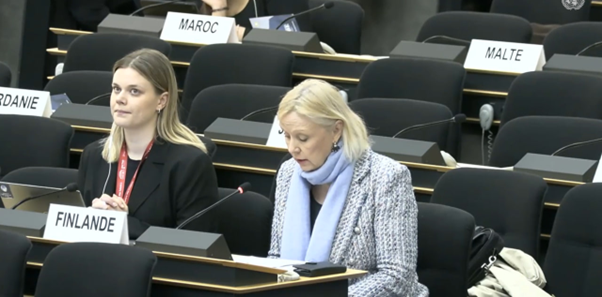
The representative of Finland delivered a statement on behalf of the Nordic-Baltic countries. The delegation emphasised that cultural rights and nature conservation are closely interconnected and should be addressed together in environmental policies. It highlighted that cultural and natural heritage are interdependent and play an important role in strengthening the identity and well-being of communities, including Indigenous peoples. The statement also stressed that conservation initiatives should be human-rights-based, inclusive, and participatory, ensuring that local communities and environmental defenders can contribute to sustainable environmental protection.
The representative of the European Union highlighted the importance of integrating cultural rights into nature conservation, emphasising that biodiversity protection must respect and preserve cultural values. They noted that EU member states actively implement this approach through tools such as the Natura 2000 Network, which incorporates traditional land uses, cultural landscapes, and local heritage into conservation planning.
The representative of Kenya on behalf of the African Group stressed that communities living close to forests, savannahs, and other ecosystems possess deep knowledge about environmental management. According to Kenya, conservation strategies should integrate this traditional knowledge alongside scientific approaches. Similarly, India highlighted national legal frameworks that recognise the rights of forest-dwelling communities and require consultation before biological resources are used for commercial or conservation purposes. These policies aim to ensure that local populations benefit from conservation initiatives rather than being excluded from them.
Other states emphasised the importance of balancing environmental protection with cultural rights. The representative of Thailand described initiatives aimed at supporting the cultural traditions of ethnic communities while protecting biodiversity. Such programs promote cooperation between local communities and government authorities in managing protected areas. Likewise, Mauritius stressed the need for inclusive conservation policies that take into account the cultural diversity of societies. For small island states, environmental protection is closely connected with cultural heritage and traditional ways of life.
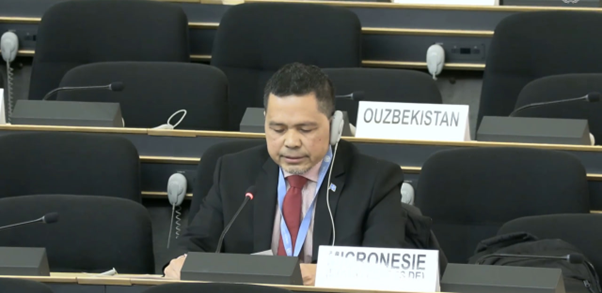
Climate change and environmental degradation were also discussed as threats to cultural identity. The delegation of the Federated States of Micronesia explained that rising sea levels and environmental damage threaten both natural ecosystems and cultural heritage sites. Communities in island states rely heavily on their surrounding environment for cultural traditions, navigation practices, and local livelihoods. Similarly, Samoa emphasised that land and ocean resources play a central role in cultural identity and community life. Protecting biodiversity, therefore, also means protecting cultural heritage.
The representative of the Bolivarian Republic of Venezuela spoke on behalf of the Group of Friends in Defence of the Charter of the United Nations, reaffirming that cultural rights are an integral part of universal human rights and stressing their importance for peace, development, and social cohesion. This group expressed concern about obstacles to the full realisation of cultural rights and urged respect for international cooperation and the rule of law as essential to protecting these rights.
In addition to environmental concerns, some states raised political issues during the discussion. The delegation of Ukraine referred to the destruction of natural landscapes and cultural heritage caused by the ongoing conflict following the Russian invasion of Ukraine. According to Ukraine, environmental destruction can also be used as a tool to undermine cultural identity. The representative of the State of Palestine also highlighted the connection between access to land, environmental protection, and cultural heritage, stressing that restrictions on land use may affect the ability of communities to preserve their cultural traditions. They additionally linked these restrictions to ongoing human rights violations, noting that Israel’s actions in occupied territories, including policies amounting to cultural erasure and displacement, have severely impacted Palestinian communities’ ability to maintain their cultural and environmental heritage.
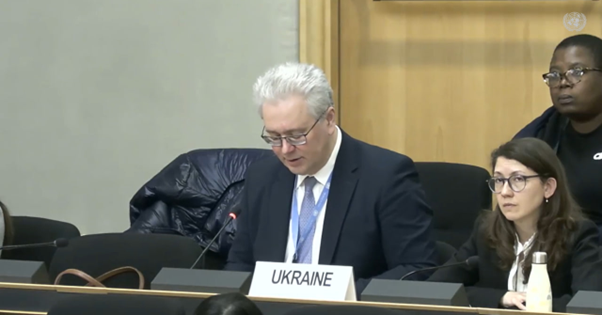
At the same time, some governments responded critically to parts of the Special Rapporteur’s report. The delegation of the United Republic of Tanzania rejected allegations that conservation policies in the country violate the rights of communities living in protected areas. Tanzania stated that relocation initiatives are voluntary and necessary to protect fragile ecosystems.
Similarly, the representative of the Lao People's Democratic Republic emphasised government efforts to promote equality among the country’s many ethnic groups and to preserve cultural traditions. The delegation rejected claims that cultural rights are being restricted. These exchanges illustrated the complexity of balancing conservation policies, state sovereignty, and the protection of cultural rights.
Statements by NHRIs and NGOs
Representatives of national human rights institutions (NHRIs) and civil society organisations also contributed to the discussion, highlighting the human rights implications of conservation policies and the importance of protecting communities affected by environmental measures.
Several NGOs expressed support for the report presented by Special Rapporteur Alexandra Xanthaki and emphasised that conservation initiatives must respect human rights standards. Civil society representatives warned that, in some regions, environmental protection programs have resulted in forced displacement, restricted access to ancestral lands, and the loss of traditional livelihoods.
A number of organisations criticised the so-called “fortress conservation” model, in which protected areas are created without adequate consultation with the communities that have historically lived in and protected those environments. According to these organisations, excluding local populations from conservation policies can damage both cultural rights and long-term environmental sustainability.
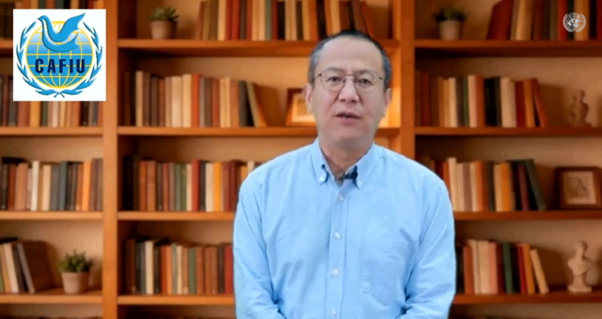
Civil society groups also stressed the importance of recognising traditional ecological knowledge. Many communities possess generations of experience in managing forests, coastal areas, and agricultural landscapes in sustainable ways. NGOs argued that this knowledge should be integrated into conservation strategies rather than ignored.
In addition, several organisations raised concerns about the safety of environmental and cultural rights defenders. They noted that individuals advocating for the protection of land, cultural heritage, and natural resources sometimes face intimidation, legal pressure, or violence. Ensuring protection for these defenders was highlighted as an important part of safeguarding both cultural rights and biodiversity.
Overall, interventions by NHRIs and NGOs reinforced the key message of the Special Rapporteur’s report: conservation policies must place human rights at their centre and ensure the meaningful participation of communities whose cultural identities are closely connected to the natural environment.
Concluding Remarks
In her concluding remarks, Special Rapporteur Alexandra Xanthaki reiterated that environmental protection must not come at the expense of cultural rights. She stressed that communities that have lived in and cared for their environments for generations should not be treated as obstacles to conservation.
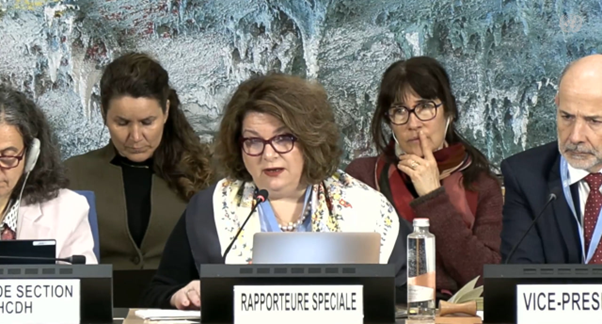
The Special Rapporteur also highlighted that forced evictions and restrictions on traditional land use remain serious concerns in many regions. Conservation policies that exclude communities from decision-making processes risk undermining both human rights and long-term environmental sustainability. She emphasised that meaningful participation must go beyond simple consultation. Communities should be actively involved in designing, implementing, and evaluating conservation policies that affect their lives.
In addition, she noted that responsibility does not lie only with governments. International donors, conservation organisations, and development actors must also ensure that their projects respect human rights standards and support inclusive approaches to environmental protection. The Special Rapporteur concluded by encouraging states to adopt policies that recognise the close relationship between cultural diversity and biodiversity, and to ensure that conservation efforts strengthen rather than weaken the rights of communities.
Many participants emphasised protecting cultural heritage and biodiversity, but few addressed local participation and community cultural rights. Cultural rights were often understood mainly as preserving sites or traditions, rather than as living rights tied to communities’ decision-making. As noted by the Special Rapporteur, Alexandra Xanthaki, cultural rights include the right of communities to participate in decisions affecting their cultural and natural environments - a point still often overlooked in conservation policies.
Position of the Geneva International Centre for Justice (GICJ)
The Geneva International Centre for Justice (GICJ) welcomes the report presented by the Special Rapporteur, Alexandra Xanthaki and supports the call to better integrate cultural rights into environmental policies. GICJ emphasises that biodiversity protection and cultural diversity are closely connected. Communities living in forests, coastal areas, and rural regions often possess valuable traditional knowledge that contributes to sustainable conservation practices. Their perspectives and experiences should therefore be included in environmental decision-making. GICJ also stresses the importance of protecting vulnerable communities, including indigenous peoples and ethnic minorities, from forced displacement and cultural assimilation policies. Conservation strategies must be designed in ways that protect both ecosystems and the rights of the people who depend on them.
The organisation supports approaches to conservation that respect human rights, including meaningful participation of affected communities, transparent consultation, and respect for the principle of free, prior and informed consent. GICJ encourages states and relevant actors to strengthen cooperation with local communities and to ensure that conservation policies protect both ecosystems and the cultural rights of the people who depend on them.
