



The 61st Session of The Human RIghts Council
23 February - 31 March 2026
High-level Panel Discussion on the Commemoration of the twenty-fifth Anniversary
of the Adoption of the DUrban Declaration and Programme of Action
24 February 2026
Maria Francisca Ricardo da Costa / GICJ
Executive Summary
The high-level panel discussion on the commemoration of the twenty-fifth anniversary of the adoption of the Durban Declaration and Programme of Action (DDPA), held on February 24th, highlighted ongoing challenges and renewed commitments to anti-racism efforts.
The Panel underscored the enduring relevance of the DDPA, particularly in the context of current global crises and amidst the resurgence of racist ideologies, hate speech, and systemic discrimination. Participants highlighted both achievements and gaps in the implementation of the DDPA. The meeting highlighted the importance of acknowledging and addressing historical injustices rooted in colonialism and slavery, and the urgent need for structural reforms and reparatory justice.
Speakers emphasized the necessity of coordinated action at individual, societal, institutional, structural levels to address both longstanding and emerging forms of intolerance. The event saw renewed calls for educational initiatives, policy reforms, resource allocation, and multilateral cooperation to address racial discrimination.
The Geneva International Centre for Justice (GICJ) calls for international cooperation for the effective implementation of the DDPA and for the development of new frameworks to confront evolving challenges to combat racism, racial discrimination, xenophobia, and other forms of intolerance.
Background
The DDPA was adopted in Durban, South Africa, in 2001. It is a blueprint for both governments and civil society worldwide for combating racism, xenophobia, and related intolerances. Described by the United Nations as a “victim-centred” document, it recognises racism and the need to address it as a global concern. As the High Level Panel’s concept note emphasises, “the anniversary of the DDPA, coming on the heels of the sixtieth anniversary of (The International Convention on the Elimination of All Forms of Racial Discrimination) and launch of the Second International Decade for People of African Descent, provides a unique temporal window to advance awareness and understanding of the impacts of racism, racial discrimination, xenophobia and related intolerance on affected persons and communities and on social cohesion more broadly, and to renew individual and collective efforts to effectively combat, prevent and respond to these”.
This one-day, high-level meeting to mark the twenty-fifth anniversary of the DDPA was decided to be held on the theme “Mobilizing global public support for the full and effective implementation” of the DDPA. The meeting aims at mobilizing political action at national, regional, and international levels to discuss DDPA’s implementation and progress.
Summary of the Statements
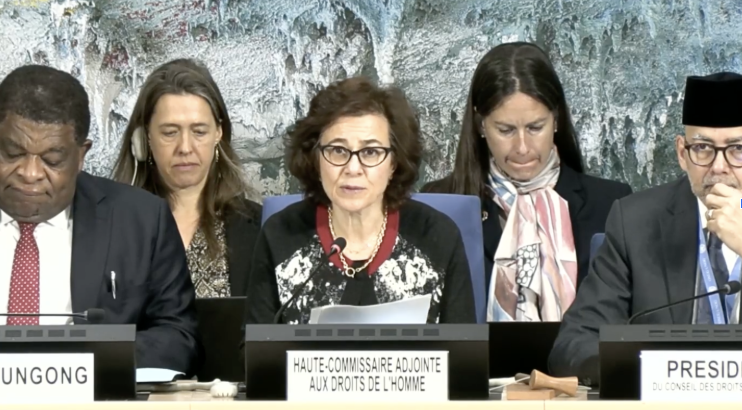
In her opening remarks, Ms. Nada Al-Nashif, Deputy High Commissioner for Human Rights, highlighted the progress toward addressing racism. Yet, she warned us that “racism continues to poison communities, politics, media, sport, and the online world”. Ms. Al-Nashif pointed out the resurgence and normalization of racist speech and tropes rooted in systems of white supremacy, as well as growing antisemitism and islamophobia. She denounced the patterns of “severe forms of racial discrimination” in the ongoing crises in Myanmar, Sudan, and Palestine, taking these examples to note how several conflicts around the world are “fuelled by longstanding discrimination and dehumanization. Ms. Al-Nashif called out a system of global relations shaped by “power imbalances that reflect centuries of colonialism and exploitation”. She maintained that these inequalities “do not reflect market efficiency, but rather policy decisions and frameworks that are in need of reform”. Finally, she reminded us that “racial discrimination, xenophobia, and related intolerances are not inevitable” but that their elimination requires leaders to act on “individual, societal, institutional, and systemic levels”.
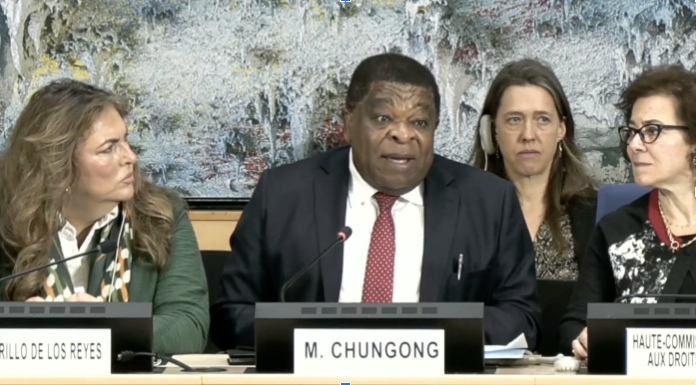
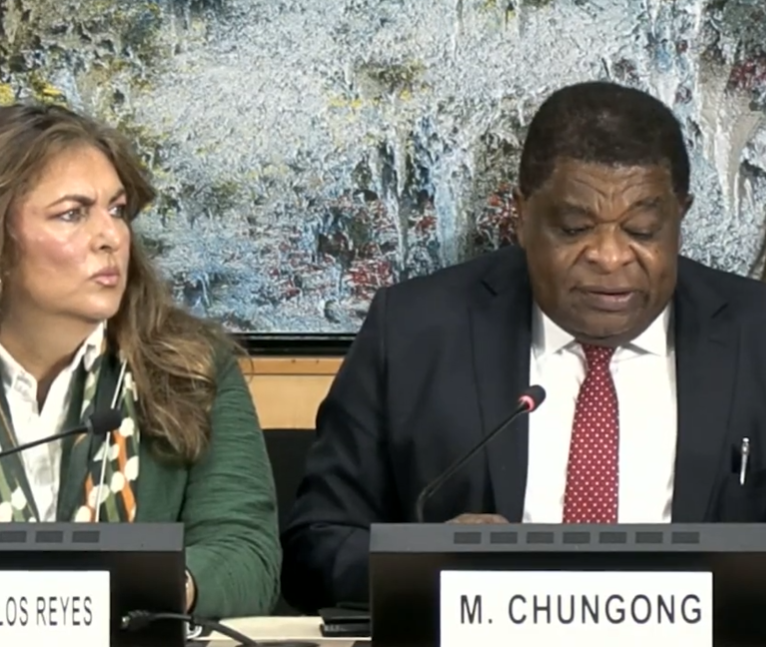
Mr. Martin Chungong, Secretary-General of the Inter-Parliamentary Union, warned against the worldwide “resurgence of nativist rhetoric, persistent racial inequalities, the implication of hate speech online, and growing mistrust between communities”. He highlighted the role of parliaments in fulfilling the DDPA’s goals: through legislation, parliaments translate international commitments into binding domestic law, including anti-discrimination frameworks, the criminalisation of incitement to racial hatred, and addressing structural inequalities in accessing education, employment, and justice. The Secretary-General added the findings of the recent IPU study on violence against politicians. He related the online and offline violence that 71% of MPs and politicians around the world reported having experienced to “the fact that they address issues…such as racism and discrimination, and they are victimised on that account”. Mr. Chungong also called on the international community to “move from rhetoric to political courage”. He urged parliaments to hold governments “accountable for the implementation of international commitments” and to ensure proper support for Human Rights institutions. Mr. Chungong also recalled that when parliaments represent the diversity of the societies they serve, “they are better positioned to craft responsive and legitimate policies”. Further, he highlighted the parliament’s role in shaping public discourse. He added that, amidst the growth of xenophobic and racist narratives online, “elected officials have a particular responsibility to reject incitement”, encourage respectful debate, and “show solidarity with those targeted by intimidation or stigma”.
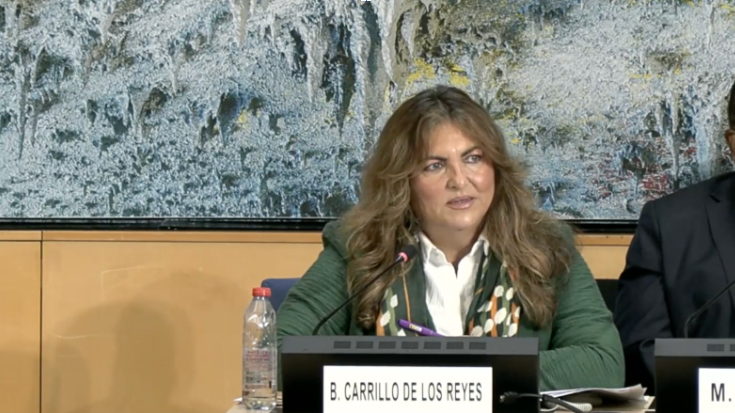
Ms. Beatriz Carrillo de los Reyes, Director General for Equal Treatment and Non-Discrimination and against Racism at the Ministry of Equality of Spain began her speech by noting the moment of “deep tension” at which the meeting happens, marked by growing political polarisation, “exclusive, identify-based speech” in public debate, hate speech online, and “misinformation and bullies” that “erode co-existence”. She highlighted the need to acknowledge new forms of intolerance: discrimination against people of African descent, Roma, Arab, Muslim, and indigenous people. “The question is not whether it is still relevant today” she affirmed, but “whether we are enforcing it and whether we are doing enough”. She warned the international community about potentially relegating the fight against racism amidst the growth of political instability, which would be “a very serious strategic mistake” because racism is “a factor of social destabilization”. She remarked that an improvement in anti-racist policies strengthens societies, making them more resilient. Ms. Carrillo ended her speech by underscoring that “Durban is not a historical document”, but “our current compass”.
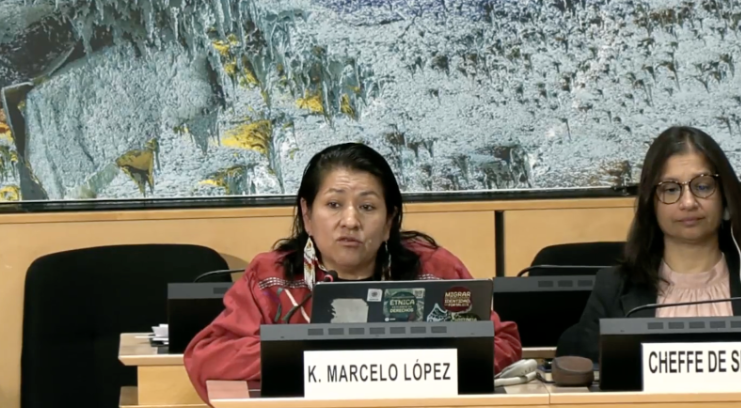
Ms. Ketty Marcelo López, President of the Organisation of Ashaninka Indigenous Women of the central Amazon region of Peru, called out the continuous discrimination of indigenous Latin American women, even twenty-five years after the adoption of the DDPA. She alerted the international community to the fact that, in Latin America, racism remains both “intact” and “unpunished”. She denounced structural forms of social and economic racism and exclusion and the “delegitimisation of (indigenous peoples’) ancestral knowledge”. Further, Ms. López condemned the imposition of “a single development model” as a form of structural racism. She then emphasised that intercultural approaches to state action should focus on adaptation of processes to different contexts and incorporate “the cosmic visions and development concepts” of indigenous peoples. Otherwise, she remarked, there is an attempt to “assimilate” indigenous peoples, whereas “the indigenous peoples and women don’t want to be assimilated”. The international community must then strengthen cultural identities and strengthen mechanisms for the exercise of indigenous rights, in cooperation to end colonial systems. Ms. López recalled that racism “wasn’t overcome by independence because the republican states were created without the indigenous peoples and indeed against them”. She explained that, in Latin American countries, race and class are interlinked, and we can therefore talk about “class racism”. In the case of indigenous women, there is a third layer of discrimination. Ms. López finally remarked that “the only way to protect indigenous women” and respect indigenous rights is to ensure indigenous communities’ right to their lands and “way of life”.
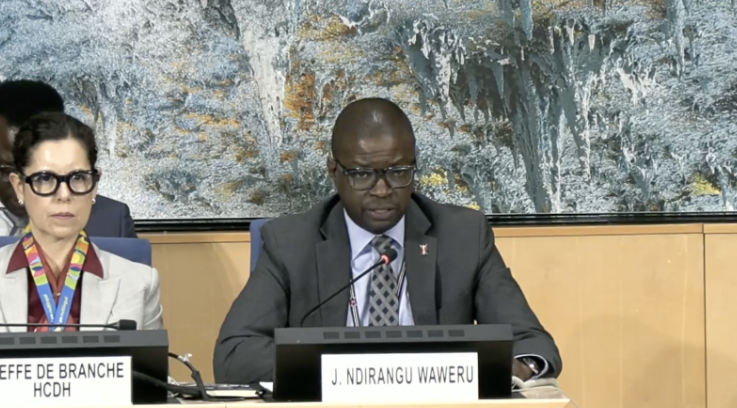
Mr. James Ndirangu Waweru, Chair-Rapporteur of the Intergovernmental Working Group on the Effective Implementation of the DDPA noted that the DDPA’s framework guides “our collective understanding of racism as a structural, historical, and contemporary phenomenon” rooted in the legacy of colonialism, slavery, and systemic exclusion. He also asserted that the manifestations of racism at different levels intersect other forms of discrimination, based on sex, gender, health, socioeconomic and migration status. Mr. Waweru also pointed out that the DDPA was a global pioneer in recognising the People of African Descent as a distinct group and outlining specific measures to realise their rights. Finally, he highlighted the importance of structural reforms and reparatory justice and called for more effective measures and implementation, as well as greater provision of resources and support and the coordination of all societal sectors.
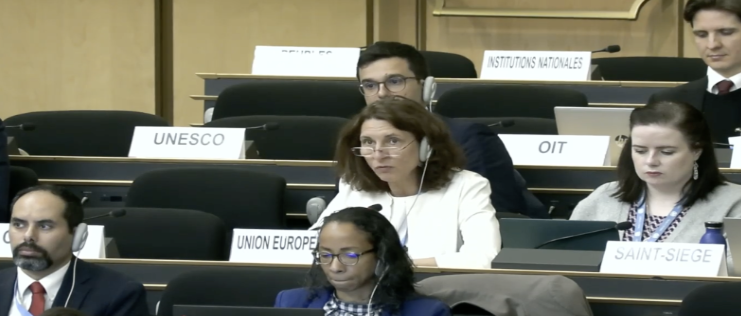
On behalf of the European Union, Ms. Deike Potzel reiterated the Union’s commitment to combating racism, racial discrimination, xenophobia and related intolerances. She reaffirmed the EU’s engagement in the fight against antisemitism, islamophobia, and discrimination against the Roma people. She highlighted that the Union’s recently-adopted anti-racism strategy, in alignment with the DDPA, “considers structural racism as a persistent denial of equal opportunities”. The strategy also recognises the legacy of European colonialism and slavery history, emphasising the importance of “education and historical knowledge to understand and address the roots of racism".
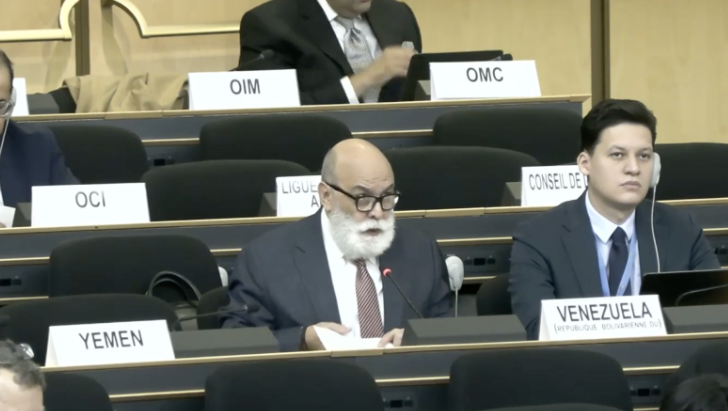
Mr. Rubén Darío Molina, representative of Venezuela (on behalf of a group of countries), highlighted the group’s commitment to “a joint and multilateral approach” to combat racism, racial discrimination, xenophobia, and other forms of intolerance. He also called out the “resurgence of ideology based on the superiority of one group over another, including fascism, nazism, and neo-nazism” and their expressions. Mr. Molina also called for collective action against new challenges, like the “rise in hate speech” and “other types of intolerance, such as the threat or use of force against sovereign countries”.
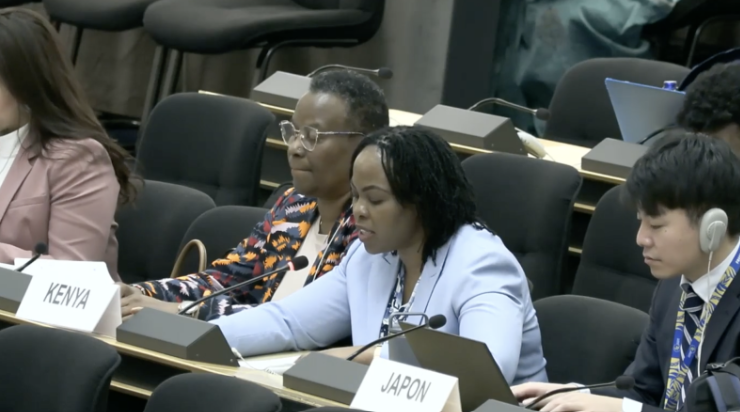
On behalf of the African Group, Kenya’s representative, Ms. Fancy Chepkemoi Too voiced the group’s concerns about the significant gaps in the elimination of racial discrimination. She affirmed that the persistence of discrimination reveals the need to “look for new ways to address this problem with more resolve, with more humanity, and with greater efficiency”. She welcomed the recent adoption of the Algiers Declaration on the Colonial Crimes in Africa, which calls on former colonial powers “to fully assume the historical responsibilities through the public, explicit acknowledgement of the injustices committed”.
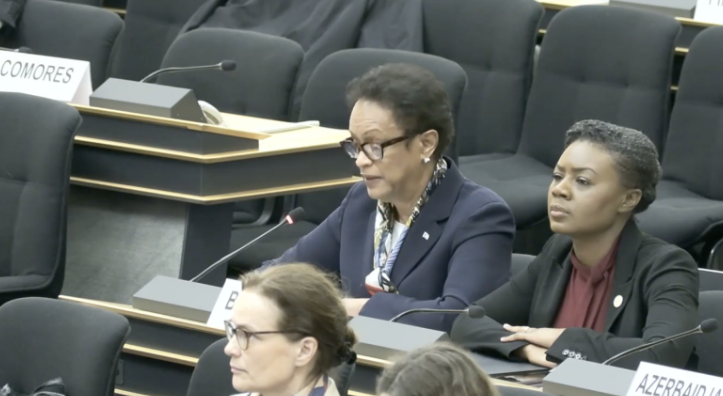
Ms. Patricia Hermanns, representative of the Bahamas, spoke on behalf of the Caribbean Community (CARICOM). She reminded us that racism is “a system that cuts deep”, rooted “in the violent displacement of peoples in slavery, the transatlantic slave trade, and colonialism” as well as their supporting structures. The representative also asserted that the DDPA marked a turning point by “explicitly recognizing slavery and the transatlantic slave trade as crimes against humanity and affirming their lasting consequences”. She noted that, in the Caribbean region, the legacies of these systems remain in economic inequalities, social exclusion, and unequal access to opportunities by people of African descent. Ms. Hermanns also underscored that the Caribbean Community is "actively updating its ten-point plan for reparatory justice” and “advancing practical measures to dismantle systemic racism”. She concluded her speech by calling for the investment “in partnerships that allow affected communities not merely to survive but to thrive”.
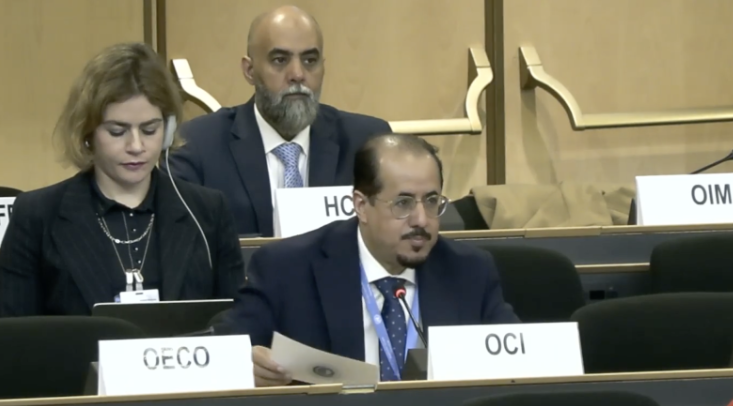
On behalf of the Organization of Islamic Cooperation, Mr. Hadi Bin Ali Al-Yami voiced the OICs commitment to fighting racism, racial discrimination, xenophobia, and other intolerances. He pointed out the emergence of islamophobia “as a contemporary form of racism” which affects Muslim minorities worldwide. He voiced strong concern for Israel’s “racist policies and practices” against Palestinians, especially in Gaza and in the occupied Palestinian territories. He added that such practices “have resulted in grave violations of human rights and humanitarian law”. Mr. Al-Yami stated that these violations and double standards must be confronted to “address racism in a meaningful manner”. He concluded by underscoring the importance of "partnerships among governments, civil society, media, and digital platforms” for the mobilization of public support for anti-racism efforts.
Conclusion
Ms. Ketty Marcelo López, President of the Organization of Ashaninka Indigenous Women of the Central Amazon region of Peru voiced the meeting 's closing remarks. She defended the need to “move from rhetoric to action”, considering aspects “beyond cultural diversity and public policies”. She called for the decolonization of policy and lifestyles. She added that all should benefit from intercultural education, and that all should “be familiar” with the contributions and knowledge of indigenous communities and people of African descent.
Geneva International Centre for Justice (GICJ) welcomes the celebration of the twenty-fifth anniversary of the adoption of the DDPA. Nonetheless, GICJ expresses its concern about the persistence of racism, racial discrimination, xenophobia and related intolerances worldwide. Furthermore, GICJ strongly condemns the resurgence of antisemitism and islamophobia. We therefore urge governments, civil society, media and other relevant stakeholders to cooperate for the effective implementation of the DDPA framework. Lastly, we stress the importance of creating new frameworks to address new manifestations of intolerance and the emerging challenges in addressing them.
