




The 62nd Session of the Human Rights Council
15 June - 7 July 2026
Item 6: UPR Adoptions (Mauritania)
2 July 2026
Joint Oral Statement of the International Organisation for the Elimination of All Forms of Racial Discrimination (EAFORD) and GICJ
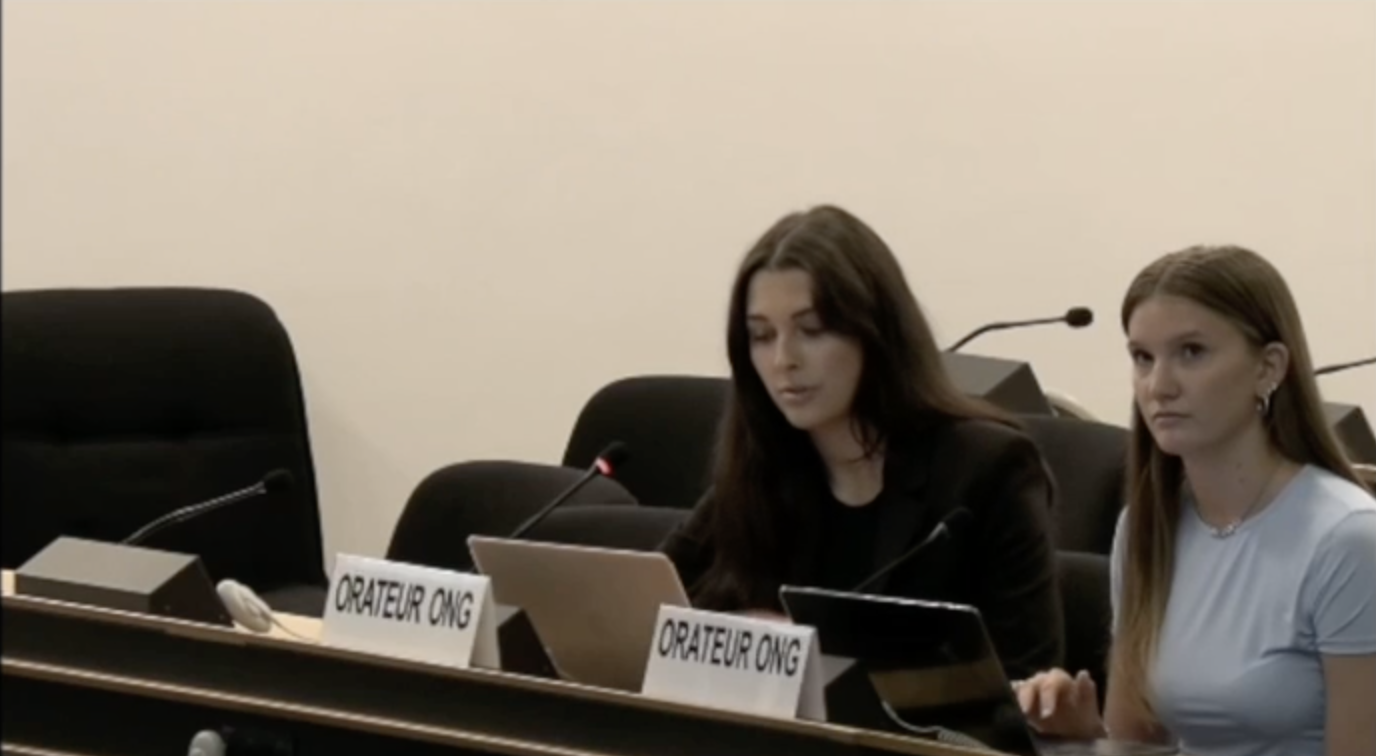
Delivered by Marina Timbalari / GICJ
Thank you, Mr. President, We welcome Mauritania’s engagement during the fourth cycle of the Universal Periodic Review. We commend Mauritania's decision to accept 229 recommendations, which demonstrates a clear political will to advance the state's human rights architecture. We welcome the institutional steps taken to implement the National Strategy for the Promotion and Protection of Human Rights 2024–2028. The establishment of the National Authority for Combating Trafficking in Persons and the specialized courts represents essential structural reforms to eliminate contemporary forms of slavery and hereditary exploitation. We praise the ongoing consultations surrounding the "Karama" draft law, which represents a critical legislative opportunity to protect women and girls from pervasive gender-based violence. However, robust frameworks on paper must be matched by a narrowing of protection gaps in practice. We deeply regret that recommendations to amend the Nationality Code were merely noted, as denying women equal rights to transmit nationality perpetuates systemic gender discrimination and risks statelessness. Additionally, while we acknowledge Mauritania's de facto moratorium on executions since 1987, the refusal to formalize this into a de jure moratorium or to review restrictions on freedom of expression remains a serious concern. To bridge these remaining gaps, we offer the following recommendations:
- First: Enact the Karama‘law while preserving its original protective intent to comprehensively criminalize all forms of gender-based violence.
- Second: Establish a formal, de jure moratorium on executions and, hopefully, the abolition of the death penalty.
- Third: Reform the Nationality Code to guarantee absolute equality between men and women in the transmission of citizenship.
Thank you.