



Human Rights Council
Intersessional meeting
Item 10: Interactive dialogue on updates from the High Commissioner for Human Rights on the situation in Ukraine
16 December 2025
By Astrid Bochnakian / GICJ
Executive Summary
On 16 December 2025, the Human Rights Council (HRC) held an intersessional meeting under Item 10, featuring an interactive dialogue on the human rights situation in Ukraine.
This dialogue was based on the Office of the High Commissioner for Human Rights’ (OHCHR) latest report, documenting a sharp increase in civilian casualties and extensive destruction of civilian infrastructure. Renewed large-scale attacks on energy infrastructure caused prolonged electricity, heating, and water outages nationwide, exacerbating humanitarian risks ahead of winter. Frontline communities experienced severe deterioration in living conditions, mass displacement, and restricted access to healthcare and education, with older persons, persons with disabilities, and children disproportionately affected. The report further highlighted grave violations against Ukrainian prisoners of war (POWs) and civilian detainees, who were subjected to systematic torture, ill-treatment, sexual violence, enforced disappearances, and extrajudicial executions. In Russian-occupied territories, OHCHR also documented persistent patterns of arbitrary detention, deportations, forced conscription, property expropriation, and severe restrictions on fundamental freedoms. The report noted policies targeting children, including forced russification, militarised “patriotic education,” and curriculum changes aimed at erasing Ukrainian identity. These practices were widely recognised during the dialogue as posing long-term risks to social cohesion and post-conflict reconciliation.
During the interactive dialogue, a majority of States and regional groups strongly condemned the Russian Federation’s conduct of hostilities, the targeting of civilians and critical infrastructure, the systematic use of torture, and the forcible transfer and deportation of Ukrainian children. Numerous delegations reaffirmed their support for Ukraine’s sovereignty and territorial integrity, stressed the centrality of accountability, and called for unhindered access for independent monitoring bodies. Some delegations questioned the impartiality of the Council’s engagement, reflecting persistent geopolitical divisions.
In his concluding remarks, High Commissioner Volker Türk reaffirmed that human rights violations in armed conflict are a matter of international concern under the UN Charter. He emphasised that sustainable peace must be firmly anchored in human rights, accountability, and the protection of civilians, calling for concrete confidence-building measures.
Geneva International Centre for Justice (GICJ) welcomes OHCHR’s report and reaffirms its full support for accountability mechanisms to address violations of international human rights law and international humanitarian law committed by the Russian Federation in Ukraine. GICJ strongly condemns the use of torture, inhuman and degrading treatment, and sexual violence against Ukrainian civilians and prisoners of war, as well as attacks against civilian infrastructure, which can never be justified under international law. Rejecting claims that the Human Rights Council is being instrumentalised for political purposes, GICJ stresses that violations of IHL are inherently violations of human rights law and that all States remain bound by their international obligations in times of both peace and armed conflict. GICJ calls for an unconditional cessation of hostilities, the safe return of forcibly displaced children and detainees, and an end to policies aimed at erasing Ukrainian identity, restricting civic space, and curtailing fundamental freedoms.
Background on OHCHR’s report
The report titled 43rd periodic report on the human rights situation in Ukraine (1 June – 30 November 2025) documents a marked escalation of hostilities across Ukraine, resulting in a sharp rise in civilian casualties and widespread damage to civilian infrastructure. OHCHR recorded 1,420 civilian deaths and 6,545 injuries, making July 2025 the deadliest month since April 2022. Most casualties occurred in government-controlled territory and were caused by explosive weapons with wide-area effects, including missiles, loitering munitions, glide bombs, and FPV drones. Long-range Russian attacks increasingly targeted urban centres far from the frontline, while renewed large-scale strikes on energy infrastructure in autumn 2025 caused prolonged electricity, heating, and water outages nationwide, heightening risks for civilians ahead of winter.
Conditions in frontline communities deteriorated severely, with extensive destruction of housing, collapse of healthcare services, and growing displacement. Older persons were disproportionately affected, both by casualty rates and by barriers to evacuation. Over 133,000 people were evacuated during the reporting period, many of them elderly or persons with disabilities, overwhelming transit centres and humanitarian capacity. Access to healthcare was critically impaired in several areas due to the destruction of medical facilities, staff shortages, and the inability of ambulances to reach civilians because of ongoing shelling and drone attacks. Education continued to be disrupted nationwide, with many children reliant on online or underground schooling, affecting learning outcomes and psychosocial well-being.
The report also highlights grave violations against prisoners of war and detainees. Ukrainian POWs held by the Russian Federation continued to experience systematic torture, ill-treatment, sexual violence, and deaths in custody, with OHCHR documenting additional extrajudicial executions in 2025 and an increase in credible reports of executions of captured Ukrainian soldiers since mid-November. While Ukraine conducted large POW exchanges and maintained formal internment systems, OHCHR recorded cases of torture, ill-treatment, and extrajudicial executions of Russian POWs, particularly during transit and in unofficial detention locations. Conflict-related sexual violence remained widespread, overwhelmingly perpetrated by Russian officials against Ukrainian POWs and detainees, though some cases involving Ukrainian officials were also documented.
In Russian-occupied territory, OHCHR documented persistent violations of international humanitarian and human rights law, including extrajudicial executions of civilians, arbitrary detention, deportations, forced conscription, and severe restrictions on fundamental freedoms. Occupying authorities continued to expropriate civilian property deemed “abandoned,” often without effective legal remedies for displaced owners. Access to water in parts of the occupied Donetsk region fell to crisis levels due to infrastructure damage and mismanagement. The report further details the systematic militarisation and indoctrination of Ukrainian children, including mandatory “patriotic education,” military-style training, and curriculum changes designed to enforce allegiance to the Russian Federation, in violation of the law of occupation.
Oral update from the High Commissioner for Human Rights
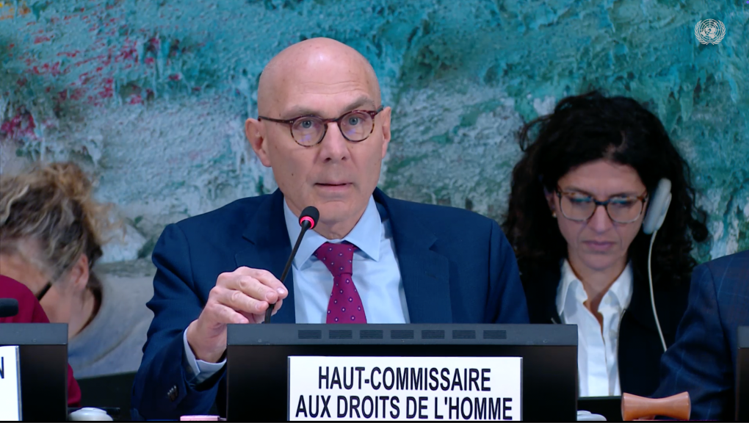
Volker Türk, UN High Commissioner for Human Rights, presented the report to the Human Rights Council (HRC), pursuant to HRC resolution 59/22, adopted on 8 July 2025. In his oral update, Mr. Türk stressed the effects of the intensification of the war in Ukraine on civilians, underscoring the impact of long-range missiles and drones in both the frontline and urban areas. He noted that the use of such weapons has increased during the period and has been reported nationwide, including in Western Ukraine.
He then deplored the impact of the conflict on civilians, who have suffered from the targeting of infrastructures, including energy plants, which leave people without heating, water and public transport for extended periods of time. Mr. Türk underscored the anguish of civilians living at the frontline, whose lives are threatened by the push of the Russian Army. He also cited the use of drones, which cause great harm among civilians, defining such attacks as a violation of international humanitarian law (IHL).
The High Commissioner stressed the dire fate of Ukrainian prisoners of war (POWs) and of civilians detained by the Russian forces, who face extrajudicial executions. OHCHR also documented the use of torture and ill-treatment, based on accounts of released detainees.
He then turned to the situation of internally displaced Ukrainians, whose struggle to settle has led to their returning to Russian-occupied zones. He stressed that Ukrainian populations in occupied territories are subjected to restrictions on freedom of movement, expression and religion, and growing concerns over property confiscation, which are violations of IHL.
Mr. Türk concluded his oral update by calling on the Russian Federation to stop the war, to respect international law and to protect civilians and their rights in occupied zones. He also called on Ukraine to safeguard Russian prisoners of war, stressing that perpetrators of all human rights and humanitarian law violations must be held accountable. He stressed that peace in Ukraine must be aligned with the United Nations charter, international law and General Assembly resolutions anchored in human rights, encouraging confidence-building measures in peace negotiations.
Summary of the Interactive Dialogue
Statements from concerned countries
The delegation of Russia was absent.
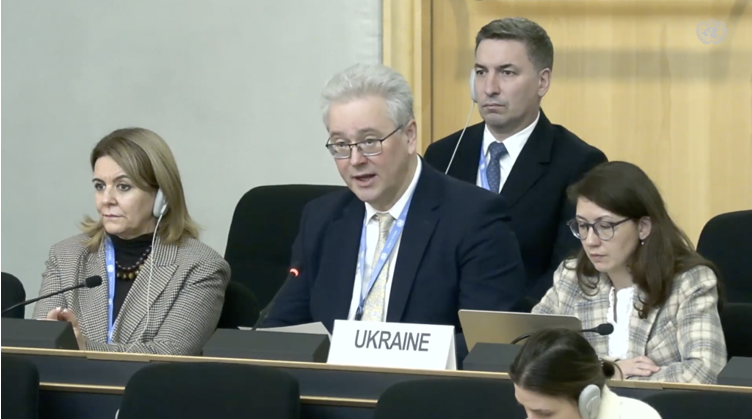
The delegate of Ukraine thanked the High Commissioner for the report, stressing that the evidence presented shows the human cost of Russia's aggression and the scale of violations committed in Ukrainian territory. He noted the intensification of attacks and underscored the harm it caused civilians. The delegation condemned the targeting of populated urban areas and cities far from the frontline and the strikes against schools, hospitals, residential buildings and energy facilities. Those in particular have placed millions of civilians at risk as the temperatures drop.
The Ukrainian delegate noted the patterns of torture and ill-treatment against Ukrainian POWs and civilian detainees, despite calls to refrain from such violations of IHL. He stressed, however, that the most heinous crime committed by Russia is the one committed against Ukrainian children who have been deprived of their homes, safety, families, health and even lives.
Addressing the situation in temporarily occupied territories, the delegate condemned a deliberate and systematic pattern of violations of IHL, human rights law (HRL) and the UN Charter by the Russian Federation. He defined such violations as a coordinated policy aimed at dismantling Ukrainian identity and suppressing dissent. He cited violations amounting to war crimes, namely violations of the right to life, torture and ill-treatment, judicial persecution and application of retroactive criminal laws, illegal military conscription, and unlawful deportation and forcible transfer. He deplored the dire humanitarian situation, including water shortages. He highlighted and condemned Russia's systematic efforts to erase Ukrainian identity, through militarised programs, imposed curriculum, and restriction of civic and cultural rights, further denouncing the approval of a national policy strategy of institutionalised forced russification.
He concluded his statement by denouncing Russia’s unwillingness to bring an end to the war and by calling on all Member States to support Ukraine’s sovereignty and territorial integrity, defining it as the only path to uphold human rights.
Statements from countries and groups of countries
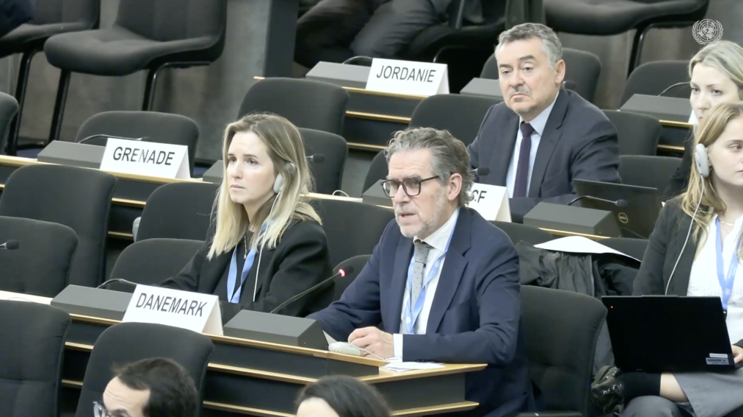
The delegate of Denmark, speaking on behalf of 46 countries, denounced the extensive and brutal torture and ill treatment inflicted by the Russian forces on Ukrainian POWs and civilians. He condemned abuses systematically perpetrated by law enforcement, security and armed forces, detention officials and even medical personnel, which are, according to the UN Commissioner of Ukraine, part of a coordinated state policy in Russia. He concluded by urging all States to combat and prevent the use of torture.
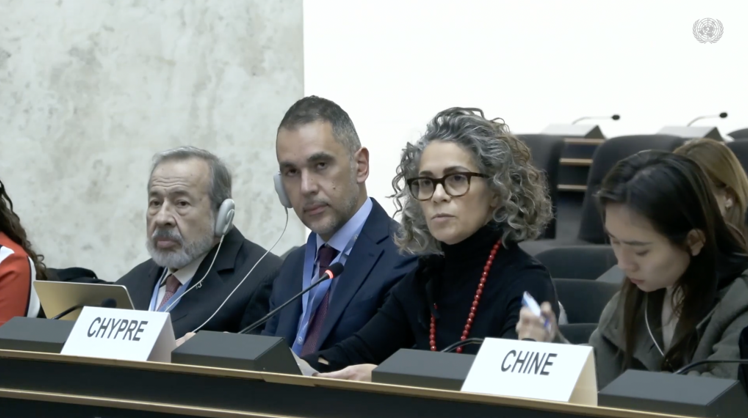
The delegate of Cyprus, speaking on behalf of 26 European Union members, condemned the crimes committed by the Russian forces in the context of the war in Ukraine. She denounced the killing and injuring of Ukrainian civilians and the deliberate Russian campaign against Ukraine's energy facilities, which she defined as essential for survival during winter. The delegate further condemned illegal deportations, forcible transfers, extrajudicial executions, sexual and gender based violence perpetrated against civilians, the executions of prisoners of war and the use of torture and ill treatment, defining those as violations of IHL. She called on the Russian Federation to immediately return all forcibly transferred and deported Ukrainian children.
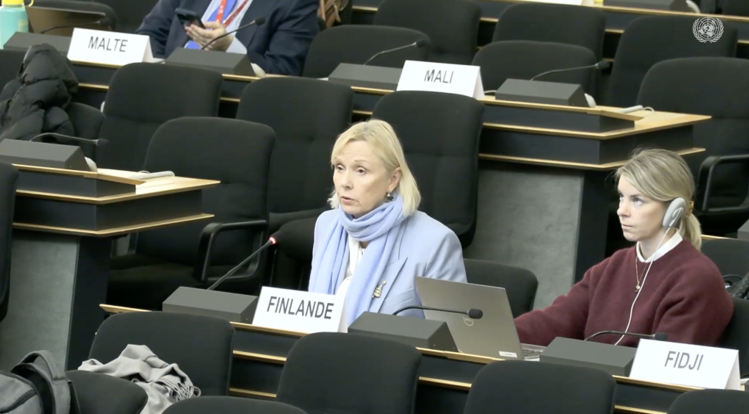
The delegate of Finland, speaking on behalf of the Nordic Baltic States, thanked the High Commissioner for his briefing and commended efforts to find a sustainable peace, stressing the key role of Ukraine in the process. She condemned the Russian attacks against Ukrainian civilians and infrastructure, defining it as an unwillingness to find peace. The delegate welcomed the exchange of POWs but raised Finland’s concerns over the reports of systematic torture and executions of Ukrainian soldiers and civilians, before reiterating the State’s commitment to ensuring full accountability. She concluded by calling on Russia to ensure the immediate and safe return of unlawfully deported and forcibly transferred Ukrainian children, citing international law.
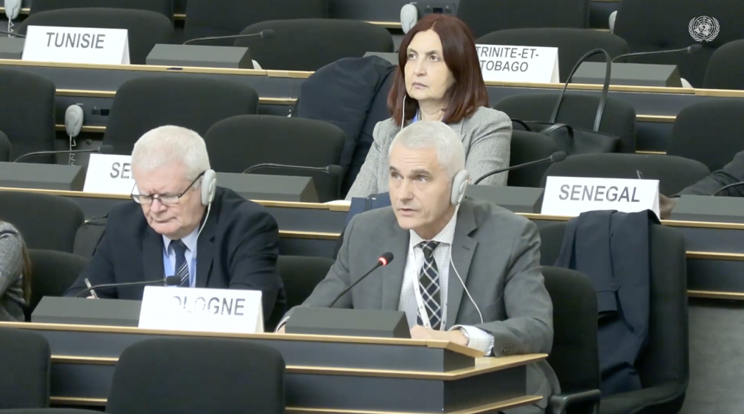
The delegate of Poland commended the UN’s dedication and continued presence in Ukraine, before condemning Russia’s daily attacks against civilians and critical infrastructure across Ukraine. Poland condemned the mistreatment of Ukrainian POWs and the rise in extrajudicial executions of military personnel. The delegate also denounced the intensification of strikes against energy infrastructure, urging the Russian Federation to immediately and unconditionally return all Ukrainian children who have been forcibly transferred or deported. The delegation concluded by stating concerns over Russia’s continuous violation of its obligations as an occupying power and reiterating Poland’s commitment to stand with Ukraine.
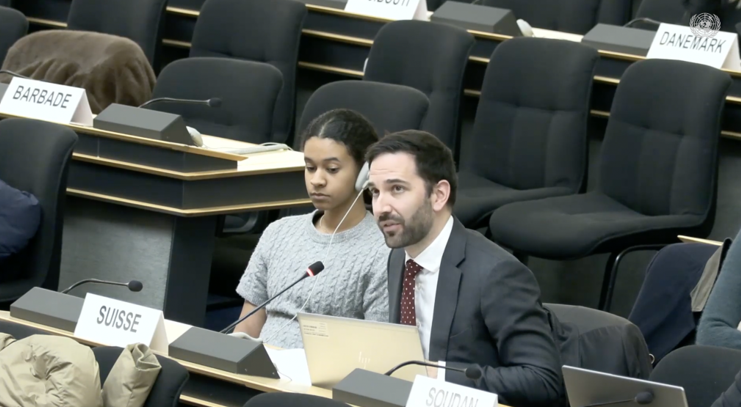
The delegate of Switzerland thanked the High Commissioner for his Office’s report and reiterated the State’s concern over violations of international humanitarian law, international human rights law committed in Ukraine and the temporarily occupied territories. He reminded the Council that parties to an armed conflict ought to fully respect their obligations under IHL, including the protection of civilians and civilian infrastructure. The delegate raised Switzerland’s serious concerns over restrictions on the freedom of expression and movement, and over sanctions imposed by the occupying authorities on civilians supporting Ukraine. He called for the liberation of all arbitrarily detained persons, including members of OECD staff detained since 2022. He concluded by demanding an immediate end to the use of torture and extrajudicial executions, calling for accountability.
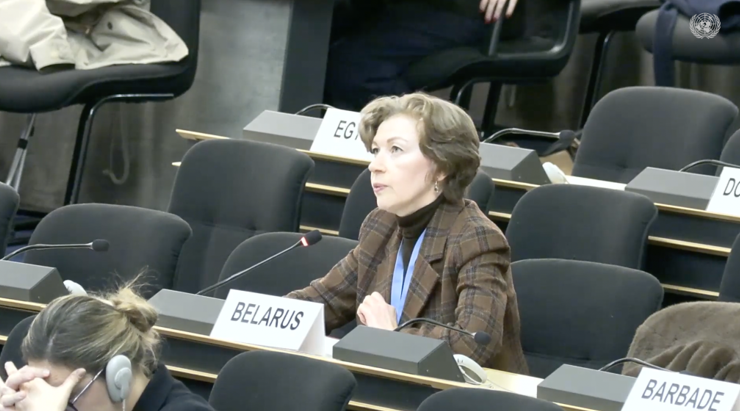
The delegate of Belarus reiterated the State’s support for regional and global initiatives working towards settling the situation in Ukraine and ending the suffering of civilians. She raised her concerns over the actions of Ukrainian authorities and supporting countries, defining them as indicating an interest in the escalation of military and political tensions. The delegate denounced European political statements aimed at feeding fear and tension to increased military budgets, before noting that OHCHR’s report strays from its goals to assess the human rights situation and Ukraine's needs for technical assistance.
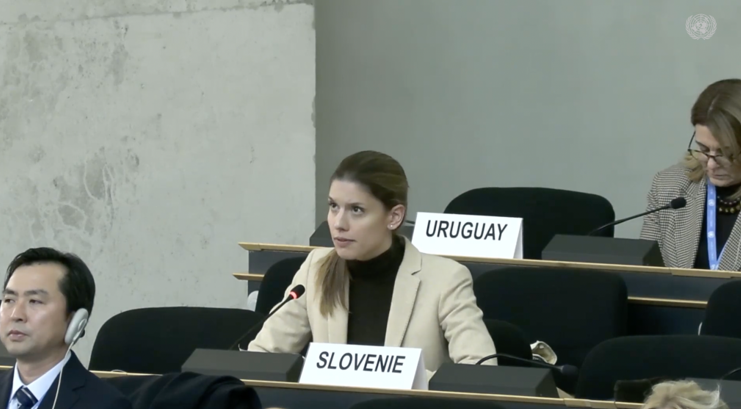
The delegate of Slovenia aligned her statement with the EU and thanked the High Commissioner for his Office’s report and his commitment to documenting human rights abuses and violations of international law during the war in Ukraine. She highlighted the urgent need to fully respect IHL and IHR and protect civilians. Slovenia condemned the use of torture, ill-treatment, arbitrary detention and extrajudicial execution against POWs and detained civilians reported by OHCHR. The delegate also denounced the use of enforced disappearances, unlawful deportation and strikes on civilian infrastructure. She expressed concerns over the treatment of children in temporarily occupied territories, including their forced displacement, russification and the restrictions on fundamental freedoms. Aligning with UN General Assembly resolution 12738, she called on Russia to immediately, safely and unconditionally return all Ukrainian children who have been forcibly transferred or deported. She concluded by reiterating Slovenia’s support for all accountability mechanisms, including the International Criminal Court (ICC).
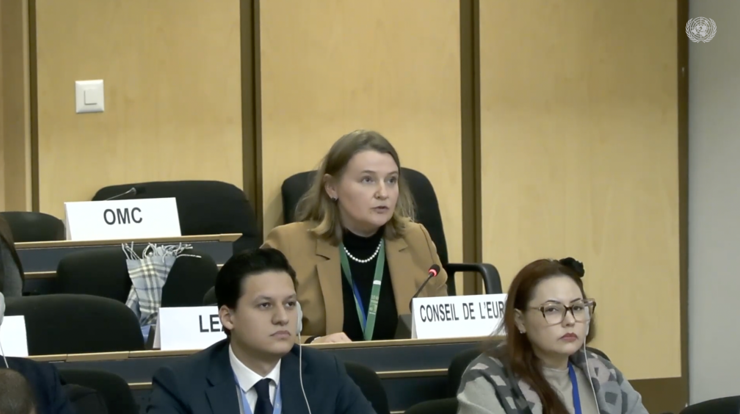
The delegate of the Council of Europe (CoE) thanked the High Commissioner for his update on the situation in Ukraine and raised her concerns over the heavy toll of this war on human rights. She reiterated the CoE’s support for Ukraine, noting developments on the special tribunal against the crime of aggression and the European Court of Human Rights’ judgments in Ukraine and the Netherlands v. Russia. The delegate called on Russia to accept accountability and implement the judgment, according to its international obligations. She concluded by reiterating the CoE’s commitment to protect human rights.
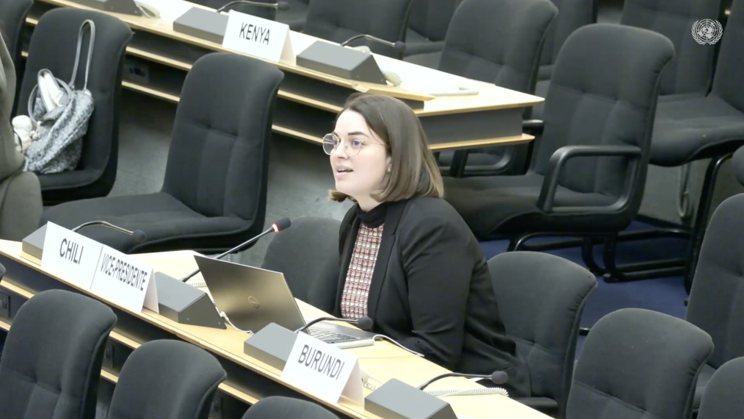
The delegate of Chile thanked the High Commissioner for his update before condemning the abduction and enforced deportation of Ukrainian children. Stressing the impact of such practices on children, their families and their communities, she defined those forced transfers as amounting to war crimes under the 1949 Geneva Conventions. The delegate called for the protection of the rights of children and urged the Russian Federation to provide information related to the whereabouts of these children and comply with its international obligations under IHL.
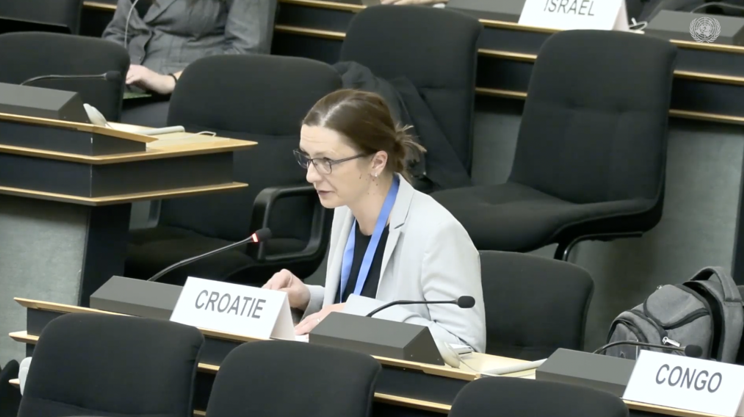
The delegate of Croatia, aligning with the statement of Cyprus, thanked the High Commissioner for his update and thanked his office for its report. She condemned the Russian Federation’s continued attacks on Ukrainian cities and civilian infrastructure, stating her consternation over the massive civilian casualties, damage and power outage. Although Croatia welcome the exchanges of POWs and civilian detainees, the delegate reiterated her concerns over the testimonies of torture, mistreatment and extrajudicial executions perpetrated by Russian forces. She also called out the reported use of sexual violence against POWs and detainees. She concluded by urging Russia to engage in a complete exchange of prisoners of war to release all unlawfully detained persons and to return all civilians forcibly transferred and deported, including children.
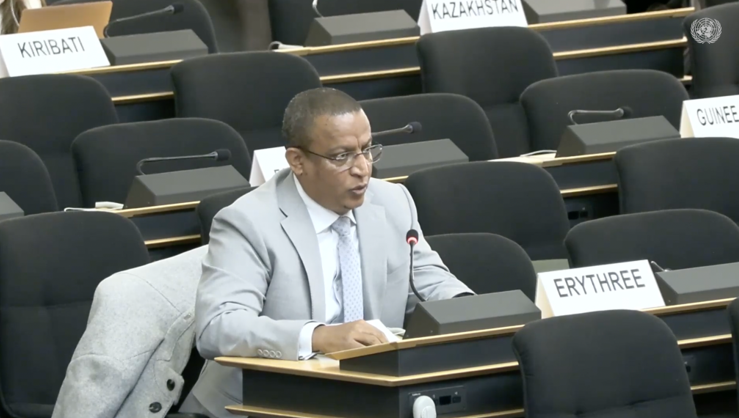
The delegate of Eritrea reminded the Council of the State’s rejection of war, calling on all nations to prevent the loss of human lives. He underscored the flaws of the current UN mechanism regarding the war in Ukraine, stressing a lack of balance and impartiality. He thus called for a new approach to the situation, serving the common good rather than the interests of a few States dominating the narrative. The delegate concluded by condemning the use of the human rights agenda to reach beyond the mandated purpose of the Council.

The delegate of Belgium, aligning with the statements made by Cyprus and Denmark, thanked the High Commissioner for his update. He reiterated Belgium’s condemnation of Russia’s war of aggression against Ukraine and called on the international community to hold the Russian Federation accountable for its violations of IHL and HRL. The delegation expressed its concerns over the withdrawal of Russia from the European Convention for the Prevention of Torture and inhumane or degrading treatment or punishment and its rejection of independent external oversight of places of deprivation of liberty. He further condemned the targeting of civilian infrastructure, specifically power plants, and the weaponisation of winter. He concluded by citing the damage to the Chernobyl shield resulting from a Russian drone attack, stressing the threat such actions represent.
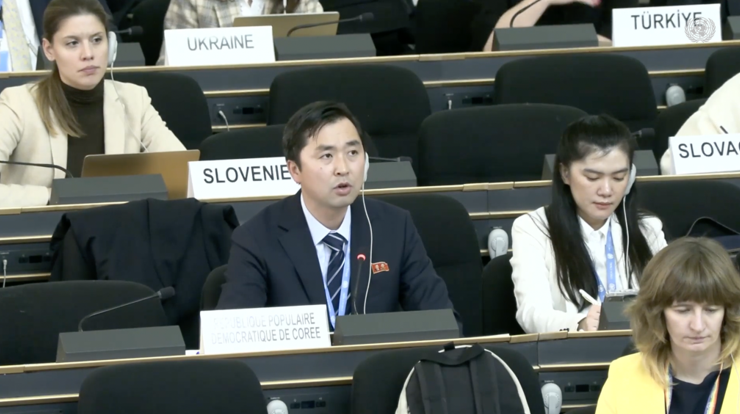
The delegate of the Democratic People's Republic of Korea criticised the use of the interactive dialogue for a politically motivated accusation of a sovereign State. He defined this war as rooted in the hegemonic policies pursued by the United States and its allies, citing NATO’s expansion. He raised the question of the repression of the Russian language, political persecution and the killing of opposition figures before calling out the use of the HRC’s agenda for political interest.

The delegate of Türkiye reminded the Council of her country’s support for the sovereignty and independence of Ukraine since the annexation of Crimea in 2014. She stressed the role of diplomacy and negotiations to reach a just, comprehensive and lasting solution to the conflict, welcoming efforts to this end. The delegate reiterated the State’s prioritisation of the safety, dignity and well-being of the Crimean Tatars, indigenous to the peninsula.
Statements from NHRI and NGOs
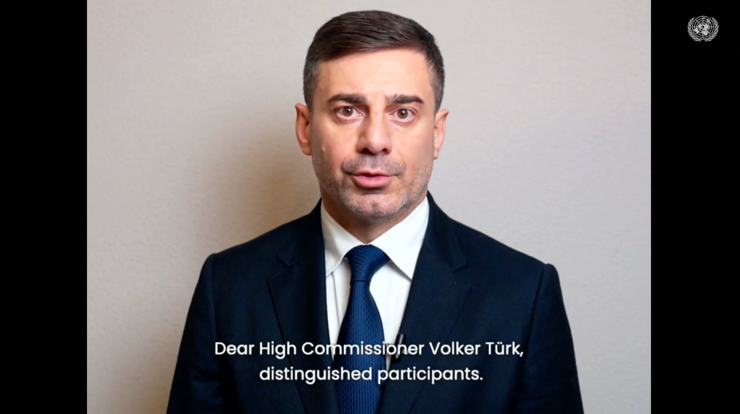
The representative of the Ukrainian Parliament Commission for Human Rights, in a video statement, thanked the High Commissioner for his comprehensive and vital reports on the human rights situation in Ukraine. He highlighted the evidence of systematic violations of IHL and human rights by the Russian Federation, including against civilian detainees and children, defining those as a policy. The representative called on the international community to:
- support efforts to investigate and prosecute violations of IHL and HRL,
- demand immediate and full access for the ICRC and OHCHR to all detention places in Russia and in occupied territories,
- secure the immediate release of unlawfully detained Ukrainian civilians and ensure the safe return of POWs and abducted children.
NGOs collectively condemned the violations of IHL and HRL perpetrated by the Russian Federation and its armed forces, denouncing the illegal annexation of the Crimean peninsula. Civil society called out extrajudicial killings, torture and enforced disappearances, as well as the denial of access for monitoring missions. Some highlighted the steps taken by Russian authorities to exempt their soldiers from being held accountable. Organisations also denounced the use of State propaganda to undermine facts and the Russian efforts to undermine the UN system.
Conclusion of the interactive dialogue
In his concluding statement, Mr. Volker Türk reminded the Council that human rights are a matter of international concern under the UN Charter, meaning that serious violations of international human rights law and international humanitarian law affect all states. He underscored the growing gap between rhetoric and reality, as wars continue to impose an unbearable toll on civilians.
To reduce the toll of the war on civilians, he called on parties to refrain from using long-range missiles and drones in civilian areas, stop targeting civilian and energy infrastructure, protect and repair essential services, and prioritise the protection of vulnerable groups such as children, older persons, women, and persons with disabilities.
Regarding torture and ill-treatment, the High Commissioner reminded the Council that interviews with released Ukrainian POWs and civilian detainees reveal systematic and widespread torture, including sexual violence, alongside inhuman detention conditions and lack of information for families. He stressed that no accountability efforts by the Russian Federation have been identified. He called on Russia to allow full and unhindered access for independent monitors, especially the ICRC and the UN Human Rights Office, to all detention facilities, as well as transparency on detainees’ whereabouts, family contact, and medical oversight.
Addressing the situation in occupied territories, he highlighted that policies imposed on children aim to erase Ukrainian identity, discriminate against children, and risk long-term harm to social cohesion and reconciliation, in violation of international humanitarian law and the Convention on the Rights of the Child.
He further stressed the urgent need for international support to Ukraine’s mental health system, particularly for survivors of torture, sexual violence, and returning POWs, who require long-term medical, psychological, and rehabilitation services.
On accountability, the High Commissioner underscored that continued monitoring, documentation, and reporting by his Office and the Commission of Inquiry are essential for future national, regional, and international justice efforts, especially in the context of a potential ceasefire and peace process.
Finally, Mr. Volker Türk emphasised that sustainable peace must be grounded in human rights. Confidence-building measures, such as civilian protection, restrictions on certain weapons, prisoner exchanges, return of detainees and deported children, humanitarian corridors, and improved rights under occupation, should be, in his view, central to ceasefire and peace negotiations to ensure lasting peace.
GICJ Position
Geneva International Centre for Justice (GICJ) welcomes OHCHR’s report and reiterates the calls to hold the Russian Federation responsible for human rights and humanitarian law violations perpetrated in Ukraine, fully supporting accountability mechanisms. We condemn the use of torture, inhumane treatment and sexual violence against Ukrainian civilians detained by Russian forces and POWs. As attacks against civilian infrastructures can never be justified during armed conflicts, we call on Russia to abide by its obligations under IHL and HRL.
We are appalled by the statements denouncing the instrumentalisation of the HRC for political purposes, as violations of IHL are violations of HRL. All States must respect, protect and uphold human rights, whether in times of peace or in times of war. No conflict can be an excuse to dismiss international obligations nor to disrupt the functioning of international human rights mechanisms.
Altogether, GICJ calls for an unconditional cessation of hostilities and the safe return of forcibly displaced children and detainees. We strongly condemn attacks on Ukrainian identity as well as the restriction on civic space and all forms of restrictions on freedom of expression, opinion and assembly.
