



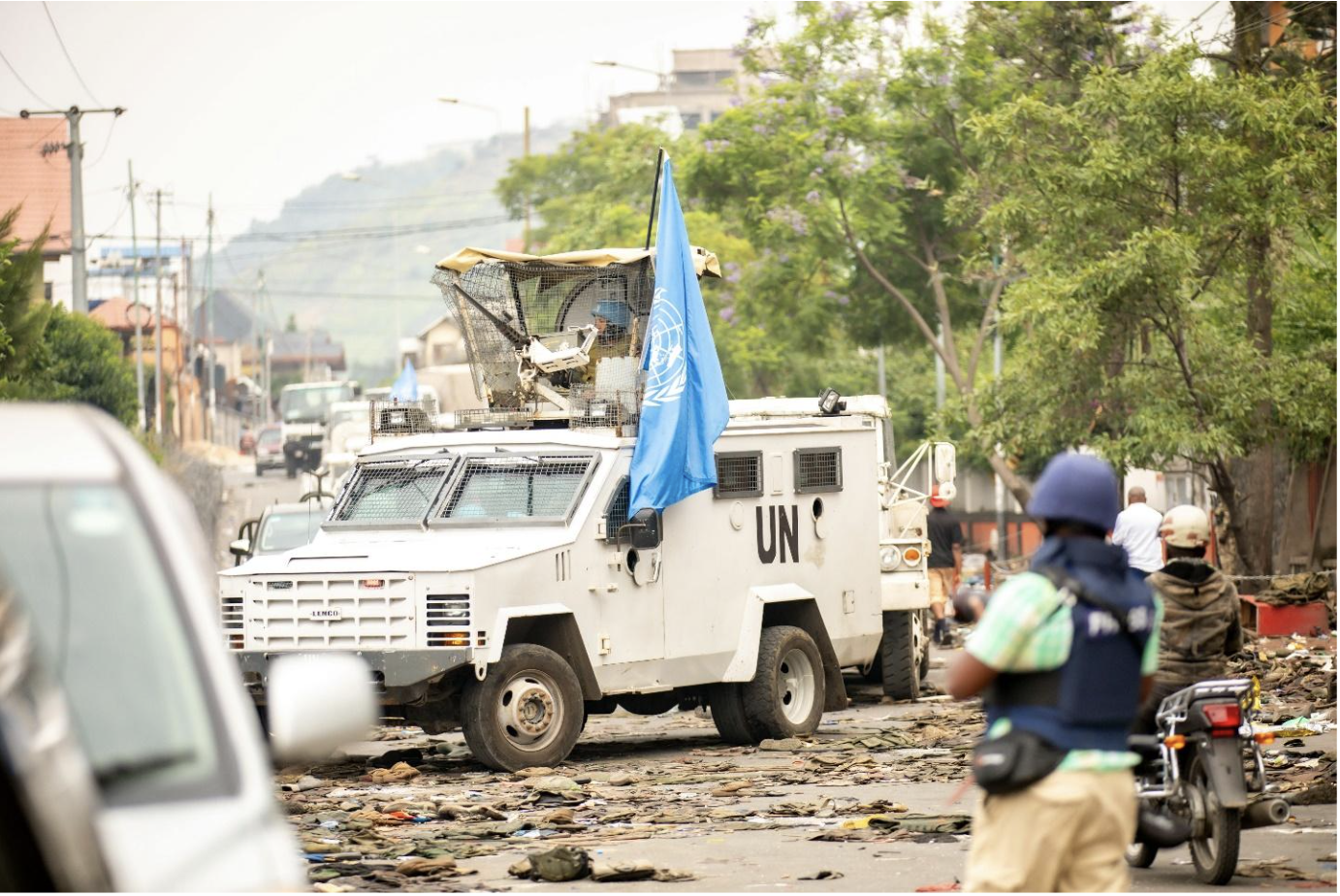
International Day of United Nations Peacekeepers, 29 May
By Kevin Klaus / GICJ
Honouring Those Who Serve in the Cause of Peace
Peacekeeping is often remembered through blue helmets, flags, and ceremonies, but its real measure lies in whether civilians are protected, communities can rebuild, and justice can take root after violence. Every year on 29 May, the international community marks the International Day of United Nations Peacekeepers to honour the women and men who have served, and continue to serve, in United Nations peacekeeping operations around the world. The United Nations General Assembly established this international day through Resolution A/RES/57/129. The resolution designated 29 May as a day to pay tribute to all those who have served in UN peacekeeping operations for their professionalism, dedication, and courage, and to honour the memory of those who have lost their lives in the cause of peace.
The date carries special historical significance. On 29 May 1948, the Security Council authorised the first UN peacekeeping operation, the United Nations Truce Supervision Organization, UNTSO, in the Middle East. Since then, UN peacekeeping has become one of the most visible tools of the international community for responding to conflict, supporting ceasefires, protecting civilians, assisting political processes, and helping societies move from violence toward stability.
Today, more than 53,000 civilian, military, and police personnel serve in 11 UN peacekeeping missions. They operate in some of the most fragile and dangerous contexts in the world, often where political tensions remain unresolved, armed groups continue to threaten civilians, and humanitarian needs are severe. Their work is not only a matter of security. It is closely linked to human rights, international humanitarian law, accountability, and the dignity of affected communities.
The Meaning of Peacekeeping
United Nations peacekeeping is built on the idea that the international community has a responsibility to help prevent conflict from escalating, protect those at risk, and support conditions for lasting peace. Peacekeepers are not only soldiers. They include police officers, civilian experts, human rights officers, electoral advisers, engineers, medical personnel, gender advisers, rule of law specialists, and many others whose work supports peace from different angles.
Peacekeeping missions may monitor ceasefires, support the implementation of peace agreements, protect civilians, assist disarmament and reintegration processes, support elections, strengthen justice and police institutions, and promote respect for human rights. In many situations, they are deployed where state institutions have been weakened by years of conflict and where communities urgently need protection and stability.
However, peacekeeping cannot replace political solutions. It can create space for dialogue, reduce violence, support the rule of law, and protect civilians, but it cannot succeed without the genuine political will of conflict parties and Member States. Peacekeeping works best when it forms part of a broader strategy that includes diplomacy, justice, development, humanitarian assistance, and accountability for violations.
The International Day of United Nations Peacekeepers therefore serves two purposes. It honours the service and sacrifice of peacekeepers, and it reminds the international community that peace requires continuous commitment. The day is not only commemorative. It is also a call to action.
“Invest in Peace”
The theme of this year’s International Day of United Nations Peacekeepers is “Invest in Peace.” This theme is especially important at a time when peacekeeping operations face growing demands, complex threats, and financial uncertainty. Investing in peace does not only mean providing money. It means investing in political solutions, civilian protection, conflict prevention, human rights monitoring, gender equality, local participation, and accountability. It means ensuring that peacekeepers have clear mandates, adequate resources, proper training, and the equipment they need to carry out their work safely and effectively. It also means that Member States must provide consistent political support and fulfil their financial obligations on time.
Peacekeeping missions often operate in places where civilians face displacement, violence, sexual and gender based crimes, destruction of infrastructure, and attacks on humanitarian workers. In such contexts, underfunded or overstretched missions can have serious consequences for human lives. If patrols are reduced, early warning systems weakened, or civilian protection teams cut back, communities may become more vulnerable to armed violence and abuse.
The theme “Invest in Peace” therefore highlights a central truth: peace is not accidental. It requires prevention before conflict erupts, protection during conflict, and justice after violations occur. It also requires long term commitment to rebuilding trust, strengthening institutions, and addressing the root causes of violence. Investment in peace must also include investment in women’s full, equal, and meaningful participation. Women peacekeepers play an essential role in building trust with local communities, supporting survivors of violence, and strengthening mission effectiveness. Gender responsive peacekeeping is not an optional addition. It is necessary for durable and inclusive peace.
Peacekeeping Under Pressure
UN peacekeeping is facing a challenging period. Conflicts are becoming more complex, armed groups are increasingly fragmented, and missions are often deployed in environments where there is no stable peace to keep. Peacekeepers may face attacks from armed groups, misinformation campaigns, political obstruction, explosive devices, drones, and other emerging threats. At the same time, budgetary pressure can limit the ability of missions to fulfil their mandates.
This creates a dangerous gap between what peacekeeping missions are asked to do and the resources they receive. The Security Council may authorise ambitious mandates, including the protection of civilians, support for human rights, and assistance to political transitions, but missions cannot implement those mandates effectively without sufficient personnel, logistics, technology, and political backing.The consequences of this gap are felt most by civilians. In conflict affected areas, communities often depend on peacekeeping missions for protection, early warning, safe movement, and support for local peace initiatives. When missions are weakened, the risks faced by civilians increase.
Peacekeeping also faces a crisis of trust in some contexts. Local populations may have high expectations of UN missions, while political actors may seek to undermine them for strategic reasons. To address this, missions must strengthen communication with communities, respond to local needs, and ensure that their conduct reflects the highest standards of integrity and accountability.
The safety and dignity of peacekeepers themselves must also be protected. Many serve in dangerous environments far from home. Thousands have lost their lives in the cause of peace. Their sacrifice must be honoured not only through ceremonies, but through practical measures that reduce risks, improve training, strengthen medical support, and ensure that missions are properly equipped.
UN Action and the Future of Peacekeeping
The United Nations continues to develop reforms aimed at making peacekeeping more effective, accountable, and responsive to today’s challenges. Initiatives such as Action for Peacekeeping Plus and Action for Peacekeeping Impact seek to strengthen the impact of peace operations, improve performance, enhance the safety and security of personnel, and increase the participation of women in peacekeeping. These efforts recognise that peacekeeping must adapt. Modern conflicts require missions that can respond to new security threats, support political dialogue, protect civilians, and cooperate with humanitarian and human rights actors. They also require stronger partnerships with regional organisations, civil society, local communities, and national institutions.
UN action also includes the annual commemoration of fallen peacekeepers, including through the Dag Hammarskjöld Medal, which honours those who lost their lives while serving under the UN flag. This remembrance is an important part of the International Day of United Nations Peacekeepers. It reminds the world that peacekeeping is not abstract. It is carried out by individuals who accept real risks in the service of peace. Yet remembrance must be matched by responsibility. Member States must ensure that peacekeeping operations receive the resources, political support, and mandates needed to protect civilians and support peace processes. They must also ensure accountability for misconduct, including sexual exploitation and abuse, and for violations committed by any party to conflict.
Geneva International Centre for Justice (GICJ) honours the courage, service, and sacrifice of United Nations peacekeepers who work in some of the world’s most dangerous environments. GICJ recognises the vital role that peacekeeping can play in protecting civilians, supporting political processes, strengthening the rule of law, and helping communities recover from conflict. GICJ stresses that peacekeeping must always place the protection, dignity, and rights of civilians at its centre. Peace operations cannot succeed where they lack clear mandates, adequate resources, accountability mechanisms, and genuine political support from Member States. The international community must not ask peacekeepers to fulfil ambitious mandates while denying them the tools required to do so.
GICJ calls on Member States to invest in peace through timely financial contributions, stronger protection of civilians, meaningful participation of women in peace operations, and strict accountability for all violations, including sexual exploitation and abuse. Peacekeeping must never become a substitute for justice. It must support political solutions, respect international humanitarian law, and help create conditions in which affected communities can live free from fear, violence, and impunity. On the International Day of United Nations Peacekeepers, GICJ reaffirms that lasting peace requires more than the absence of war. It requires justice, accountability, human rights, inclusive political processes, and sustained international commitment. To honour peacekeepers is to strengthen the conditions that allow peace to endure.