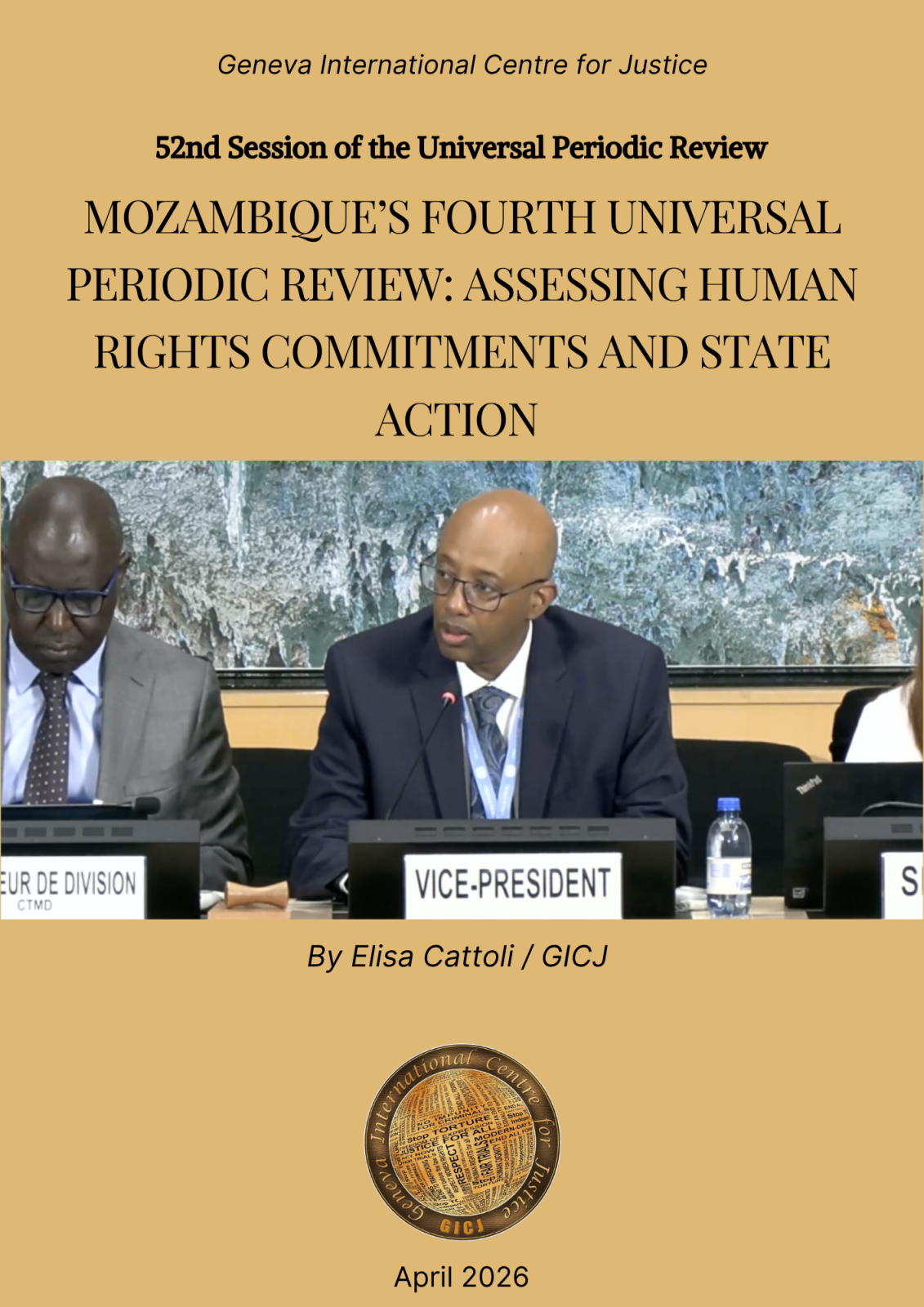



Mozambique’s Fourth Universal Periodic Review: Assessing Human Rights Commitments and State Action
By Elisa Cattoli/GICJ
The fourth Universal Periodic Review (UPR) of Mozambique highlighted a series of interconnected human rights challenges affecting the country’s political, social, economic, and humanitarian situation. One of the principal issues raised during the review regarded the ongoing security crisis in Cabo Delgado, where violent extremism, armed conflict, and insecurity have caused large-scale internal displacement, destruction of infrastructure, and serious security risks for civilians. Several Member States present at the review meeting expressed concern regarding killings, abductions, recruitment and use of children by armed groups, sexual violence, and the limited access of affected populations to basic healthcare, education, and food.
Another major concern raised throughout the review related to civil and political rights. The UN assessment and several delegations referred to allegations of excessive use of force, arbitrary detention, and abuses committed by security forces, particularly in the context of post-electoral violence following the October 2024 elections and counterterrorism operations in northern Mozambique. Concerns were also raised regarding attacks against journalists, shrinking civic space, restrictions affecting freedom of expression and association, and weak or inexistent accountability mechanisms. Although Mozambique acknowledged certain incidents and referred to ongoing investigations and institutional reforms, many Member States encouraged the Government to strengthen judicial independence, ensure transparent investigations into human rights violations, and improve oversight of security institutions.
The protection of vulnerable groups constituted another central theme of the review. The National Report highlighted the ongoing gender-based violence incidents, child marriage, trafficking, child labour, and discrimination affecting women, children, persons with disabilities, internally displaced persons, and refugees. Stakeholders noted that despite legal reforms and national strategies, implementation gaps remained significant, particularly in rural and conflict-affected regions, and particularly regarding women and persons with disabilities. Concerns were also raised regarding limited access to inclusive education, healthcare, social protection, and support services for survivors of violence. In response, many recommendations called for stronger enforcement of laws combating child marriage and gender-based violence, increased investment in child protection systems, expanded inclusive education and healthcare, and improved accessibility for persons with disabilities.
The review also focused on broader structural challenges affecting the realisation of economic and social rights. Additional recommendations addressed corruption, governance reforms, anti-trafficking measures, refugee protection, and the need to align domestic legislation with international human rights instruments. Mozambique was further encouraged to continue cooperation with international organizations and treaty bodies, including through the ratification and implementation of pending international conventions.
While Mozambique presented numerous legislative reforms, policy frameworks, and institutional initiatives as evidence of progress, many of the issues identified during previous review cycles remain unresolved. Persistent insecurity in Cabo Delgado, weak implementation of existing laws, limited institutional capacity, socio-economic inequality, and recurring concerns regarding accountability and civic freedoms suggest that many of these challenges are likely to continue into the fifth UPR cycle. The review therefore reflected both the Government’s willingness to engage in dialogue and reform and the continuing difficulties in translating formal commitments into effective protection of human rights on the ground.
For more information click on the image below: