


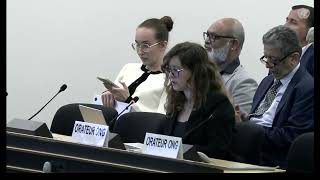
Oral Statement by GICJ on the situation in Iraq and Yemen, delivered during the Human Rights Council item 3 Presentation of SG/HC thematic reports, followed by the general debate

Oral Statement by GICJ on the situation in Iraq and Yemen, delivered during the Human Rights Council item 3 Presentation of SG/HC thematic reports, followed by the general debate

By Aysheh Maslamani / GICJ

Mr. President,


As we discuss the promotion and protection of human rights, we wounder what does that mean to the Iraq people who are- for more than two decades since the 2003 invasion-still suffering from grave and systematic violations to all their basic rights. The growing influence of militia groups represents a real threat to the population. They are preventing displaced persons from returning to their homes. The town of Jurf al-Sakhar remains a stark example: its more than 130.000 inhabitants were forcibly displaced in 2014 and continue to be prevented from returning to their town, homes and lands. The confiscation of homes and agricultural land, and violations of private property rights, require urgent action to ensure the safe and dignified return of all displaced persons, place armed groups under the authority of the law, and guarantee accountability for violations.


In Yemen, the situation remains extremely grave amid the continuing consequences of the conflict, the proliferation of armed groups, and the weakening of State institutions and the rule of law. External interference and support for armed groups operating outside State institutions contribute to deepening divisions, prolonging civilian suffering and undermining the country’s sovereignty. We therefore call on the international community to support a comprehensive political solution that safeguards Yemen’s unity, sovereignty and territorial integrity, restores the effective functioning of State institutions, ends all forms of support that fuel the conflict, and ensures the protection of civilians and respect for human rights and international law by all parties.


Thank you, Mr. President

Oral Statement by GICJ on the situation in Iraq and Yemen, delivered during the Human Rights Council item 3 Presentation of SG/HC thematic reports, followed by the general debate
Watch the video

Oral Statement by GICJ on the situation in Iraq and Yemen, delivered during the Human Rights Council item 3 Presentation of SG/HC thematic reports, followed by the general debate

By Aysheh Maslamani / GICJ

Mr. President,


As we discuss the promotion and protection of human rights, we wounder what does that mean to the Iraq people who are- for more than two decades since the 2003 invasion-still suffering from grave and systematic violations to all their basic rights. The growing influence of militia groups represents a real threat to the population. They are preventing displaced persons from returning to their homes. The town of Jurf al-Sakhar remains a stark example: its more than 130.000 inhabitants were forcibly displaced in 2014 and continue to be prevented from returning to their town, homes and lands. The confiscation of homes and agricultural land, and violations of private property rights, require urgent action to ensure the safe and dignified return of all displaced persons, place armed groups under the authority of the law, and guarantee accountability for violations.


In Yemen, the situation remains extremely grave amid the continuing consequences of the conflict, the proliferation of armed groups, and the weakening of State institutions and the rule of law. External interference and support for armed groups operating outside State institutions contribute to deepening divisions, prolonging civilian suffering and undermining the country’s sovereignty. We therefore call on the international community to support a comprehensive political solution that safeguards Yemen’s unity, sovereignty and territorial integrity, restores the effective functioning of State institutions, ends all forms of support that fuel the conflict, and ensures the protection of civilians and respect for human rights and international law by all parties.


Thank you, Mr. President

GICJ Newsletter