




The 62nd Session of the Human Rights Council
15th June - 7th July 2026
Item 3: ID with WG on Discrimination Against Women and Girls
24 - 25 June 2026
The Working Group on the Discrimination of Women and Girls calls for the gender responsive and human rights-centred regulation of Artificial Intelligence and related digital technologies.
By Pia Mullen/ GICJ
Executive Summary
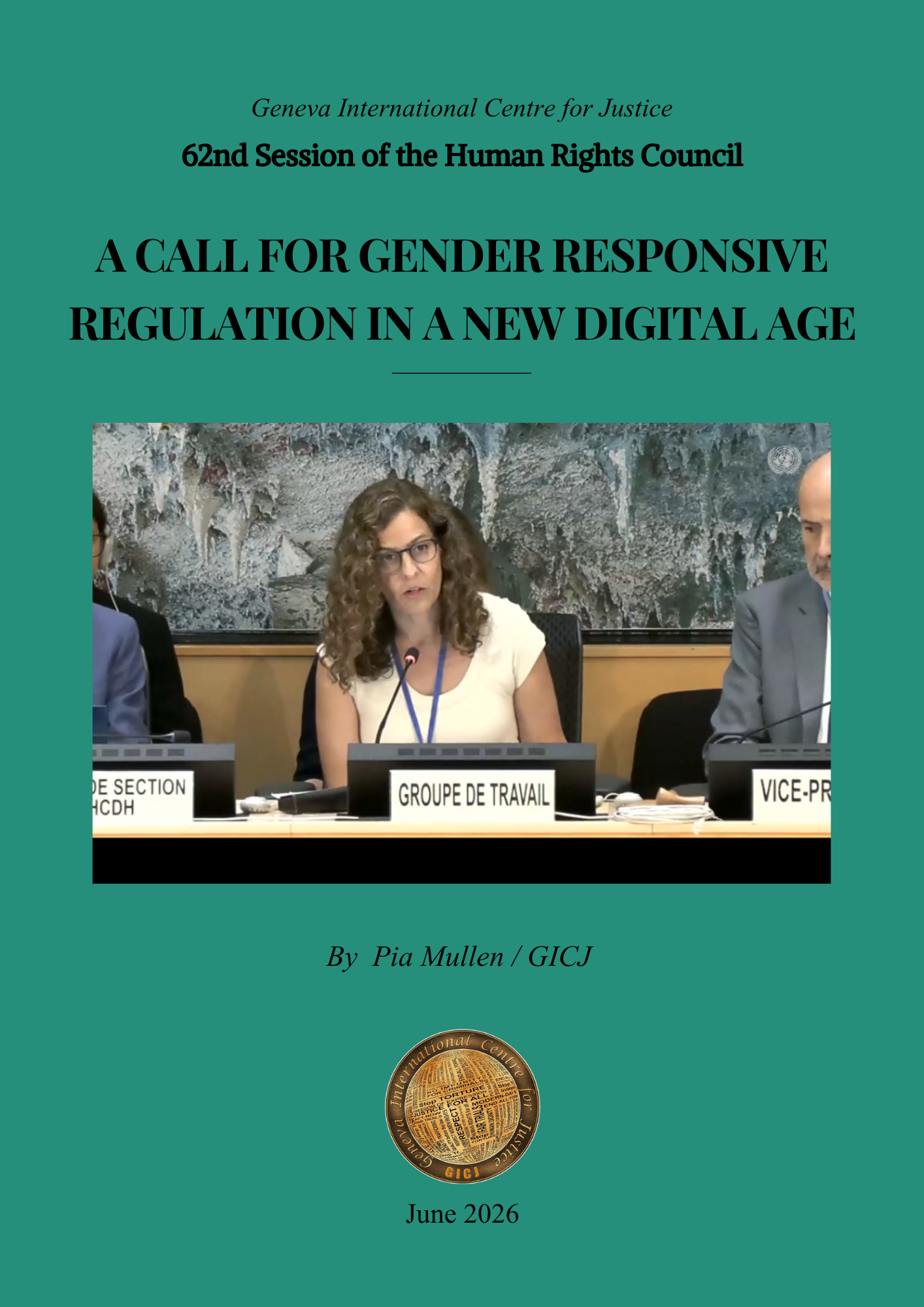
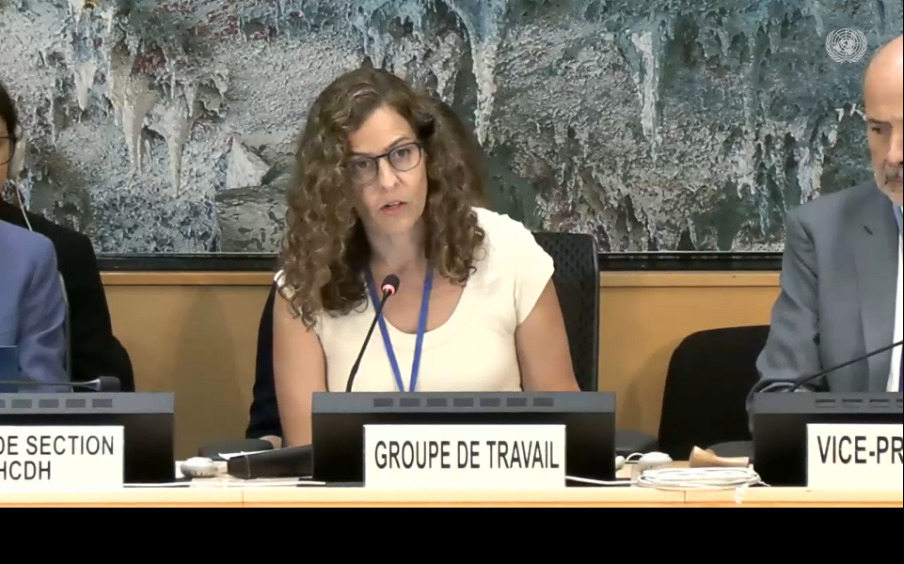
Artificial Intelligence and digital technology governance must be accountable, transparent, inclusive and non-discriminatory for its opportunities for women and girls to be realised. These guiding principles were mentioned by the majority of interventions made during the interactive dialogue of the 15th meeting of the 62nd Human Rights Council. The two day discussion held on the 24 and 25 of June 2026 was centred on two reports by the Working Group (WG) on the Discrimination of women and girls. Claudia Flores, the Chair of the WG, first presented its thematic report titled ‘Women’s and girls’ rights and Artificial Intelligence and related Digital Technologies.’ The WG chair outlined four gendered harms that AI presented to women and girls: lethal autonomous weapons, environmental costs, technology facilitated gender violence and mass surveillance.
The WG presented its report on its visit to Zimbabwe from 28 July to 8 August 2025. During this visit, the WG met with numerous organisations and authorities such as the Women Affairs Community, the Judicial Service Commission and the Gender Commission. The WG congratulated Zimbabwe on its explicit commitment to eradicate all forms of gender discrimination outlined in its 2013 constitution. The WG however, remains concerned at the implementation gaps of these commitments which it highlighted was due to weak enforcement, lack of resources and historically entrenched patriarchal norms.
The interactive dialogue that followed was entirely focused on the issue of AI and related digital technologies. All interventions acknowledged the dual potential of AI, underlining its capacity to create new opportunities in economics and healthcare while iterating how the current trajectory of AI is one of discrimination and harm for women. Delegations such as Kenya on behalf of the African Group and Iceland on behalf of the Nordic-Baltic states, were amongst many to highlight issues regarding deepfake intimate imagery, mass surveillance and the digital participation divide.
The session ended with the WG outlining the best foundations for AI regulation as data protection measures and constructive engagement with private technology companies. Algorithmic bias and technology facilitated gender based violence were also underscored as areas of critical focus for regulatory frameworks. The criminalisation of such abuse is vital for accountability, while the correction of algorithmic bias is necessary to halt AI’s reproduction of harmful stereotypes that reinforce digital violence.
The WG concluded with the reminder that the responsibility to protect human rights lay with the sovereign state, a commitment which cannot be outsourced to the free market. AI design, development and regulation needs to be transparent, accountable and gender responsive, while keeping universal human rights at its guiding core.
Read the full report by clicking on the image below: