



HRC61 – Iran: Crimes Against Humanity and the Human Rights Impact of External Military Strikes
The 61st Session of the Human Rights Council
23 February - 31 March 2026
Joint ID with SR on Islamic Republic of Iran and FFM Iran (Res. 58/21) and Joint ID on Iran
16 March 2026
By Sina Zahmatkesh / GICJ
Executive Summary
During the 61st session of the Human Rights Council, a Joint Interactive Dialogue was held with the Special Rapporteur on Iran and the Independent International Fact-Finding Mission (FFM). The discussion, continued under Agenda Item 4, addressed two intersecting crises: the devastating human rights impact of recent US and Israeli military strikes on Iran, and the severe, pre-existing pattern of violations perpetrated by Iranian authorities against its own people, particularly since the nationwide protests in January 2026. These findings raise serious concerns that may amount to crimes against humanity.
The Special Rapporteur and the Fact-Finding Mission (FFM) presented deeply concerning findings, documenting the deaths of over 1,300 civilians as a result of the strikes, including hundreds of women and children, and reporting the targeting of schools and hospitals, raising serious concerns of violations of international humanitarian law ,including with regard to medical neutrality, in light of reports of attacks on healthcare facilities and the confiscation of hospital records for surveillance purposes. They further highlighted Iran’s ongoing internal repression, including the mass killing of protesters, a significant surge in executions—placing Iran among the world’s leading executing states—systematic persecution of ethnic minorities (including Kurds, Baluchis, and Arabs) and religious minorities (particularly the Bahá’í community), as well as the arbitrary detention of political prisoners and the continued suppression of fundamental freedoms.
States and regional groups expressed deep concern over this dual crisis. Many condemned the unlawful military aggression against Iran and its destabilising regional impact. A larger number, however, focused on condemning the Iranian regime's brutal repression of its citizens, its indiscriminate regional attacks, and its weaponisation of the death penalty. They called for civilian protection, accountability for all parties, and the immediate release of arbitrarily detained prisoners. Civil society provided harrowing testimonies of bombed schools, attacked hospitals, scapegoated minorities, and executions used to instil fear.
Geneva International Centre for Justice (GICJ) views the situation in Iran as a catastrophic convergence of external aggression and internal repression, with ethnic and religious minorities facing a pattern of “double victimization,” as they are subjected both to state-led persecution and the disproportionate impact of external military strikes, particularly in regions such as Minab. GICJ urges the Human Rights Council, Member States, and all stakeholders to prioritize civilian protection under international law, demand an immediate cessation of hostilities, and hold Iranian authorities accountable for widespread human rights violations. The situation of ethnic and religious minorities reflects a pattern of “double victimization,” whereby these groups are subjected both to state-led persecution and the disproportionate impact of external military strikes, particularly in regions such as Minab. A just and lasting peace can only be achieved through genuine dialogue, institutional reform, and full respect for the human rights and dignity of the Iranian people.
Background
For years, the Islamic Republic of Iran has maintained a deeply troubling human rights record, marked by the systematic suppression of political dissent, the severe restriction of fundamental freedoms, such as expression and assembly, and the widespread use of the death penalty, including for drug-related offenses. Ethnic minorities, including Kurds, Baluchis, and Ahwazi Arabs, have long faced institutionalised discrimination, marginalisation, and the suppression of their cultural and linguistic rights. These patterns of discrimination have been further exacerbated by recent hostilities, reflecting a form of “double victimization” whereby minority communities are disproportionately affected by both state repression and external military strikes. Religious minorities, particularly the Bahá'í community, have been subjected to state-sponsored persecution, including arbitrary arrest, property confiscation, and scapegoating by state media. Women and human rights defenders have also been consistently targeted for advocating for their rights.
This repressive environment provided the backdrop for the nationwide protests in January 2026. The unrest escalated dramatically on 8-9 January, when Iranian authorities launched a brutal and deadly crackdown. According to estimates, as many as 30,000 protesters were killed within just 48 hours, with tens of thousands more injured, arrested, or subjected to forced disappearance and extrajudicial killings. According to the Fact-Finding Mission, these violations may amount to crimes against humanity.
While the world's attention was on this internal repression, the situation was dramatically escalated on 28 February 2026, when the United States and Israel launched a series of military strikes against Iran. The strikes, which the Special Rapporteur deemed unlawful, have led to a mounting civilian death toll, the destruction of schools and hospitals, and the displacement of up to 3 million people, further compounding an already dire humanitarian and human rights crisis. These attacks raise serious concerns regarding the violation of medical neutrality, including reports of interference with healthcare services and the use of medical data for surveillance purposes. The Iranian authorities have simultaneously used the war to justify further repression, including internet shutdowns and the silencing of dissent.
Summary of the Interactive Dialogue
Opening statement by Special Rapporteur
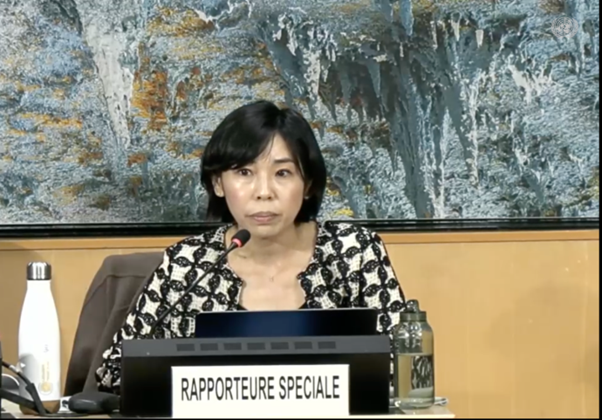
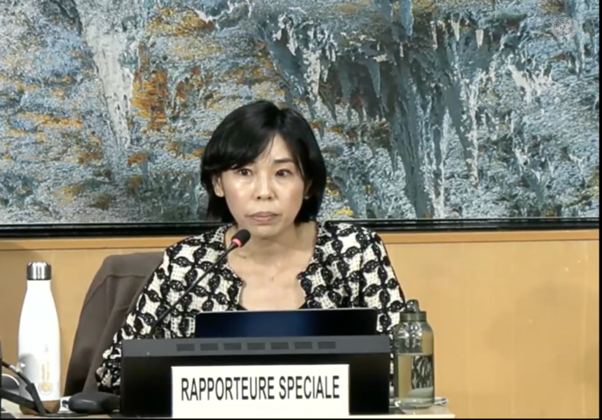
In her presentation to the council, the Special Rapporteur, Ms. Mai Sato, painted a stark picture of a population crushed between unrelenting state repression and unlawful foreign military strikes. She detailed a "pattern of persecution" against protesters, including the violation of medical neutrality, where hospitals were raided and medical professionals arrested for treating the wounded. She emphasized that the volume of submissions to her mandate reflects the "gravity of what the people of Iran witnessed and experienced." The Rapporteur condemned recent U.S. and Israeli strikes as unlawful, noting they have killed over a thousand civilians and caused severe environmental damage. She concluded that the Iranian people have endured an "astonishing accumulation of violence and loss"—caught between sanctions, repression, and military escalation—and urged that any solution must be grounded in human rights and the will of the Iranian people.
Chair of the Fact-Finding Mission (FFM)
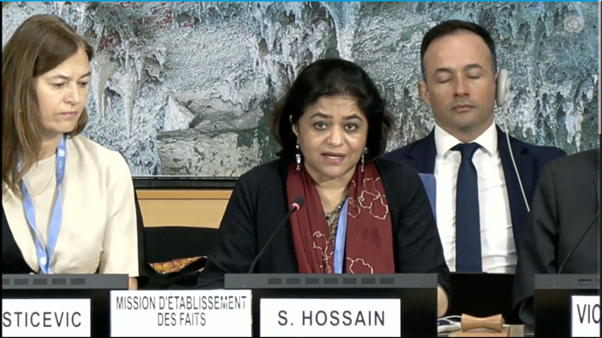
The Chair of the FFM, Sara Hossain, presented the mission’s findings, framing the current situation as one where the Iranian people are trapped between a foreign military campaign and ongoing domestic repression. She reported that the U.S. and Israeli airstrikes have resulted in mounting civilian casualties, including the devastating attack on a school in Minab that killed over 168 people, most of them young girls. Regarding the December protests, the FFM gathered evidence that security forces used military-grade weapons, leading to over 7,000 deaths and the detention of more than 50,000 people, including doctors. The Chair stated that the scale of violations, including murder, torture, and persecution, may amount to crimes against humanity. She stressed that external military action only intensifies domestic repression and called for an immediate end to hostilities, insisting that "war cannot deliver the outcomes that truth, justice, due process, and transformative reparations can achieve."
Representative of the Islamic Republic of Iran
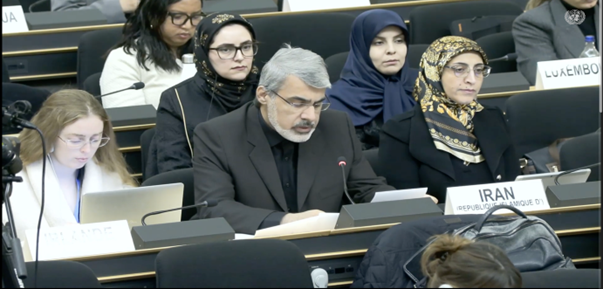
The representative of Iran rejected the council’s focus, arguing that the most urgent human rights issue is the "reckless military aggression" by the U.S. and Israel. He accused Western countries of using 15 years of politically motivated allegations to lay the groundwork for this aggression, citing the "carpet bombing of civilians" and the attack on the Minab school as direct consequences of this manufactured impunity. He detailed the destruction of civilian infrastructure, including hospitals and water facilities, and challenged the council to break its silence on these crimes, warning that inaction would mark the "end of the council's stand." He concluded by affirming Iran's right to self-defence under international law, stating the nation would respond decisively to any act of aggression.
Representative of Canada (on behalf of Australia, New Zealand, and Canada)
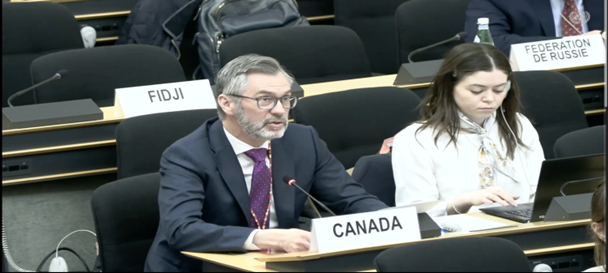
Speaking for the three countries, the representative expressed deep concern over the mounting loss of life from regional hostilities and condemned Iran's destabilising strikes on civilians and infrastructure. The group implored all parties to de-escalate and protect civilians. They expressed fear that Iran's brutal crackdown on dissent—marked by unlawful killings, arbitrary detentions, and over 1,600 executions in 2025—would only intensify amid regional tensions. The representative specifically questioned how states could better support medical staff and facilities facing serious reprisals from Iranian authorities for treating protesters.
Representative of Iceland (on behalf of the Nordic Baltic states)
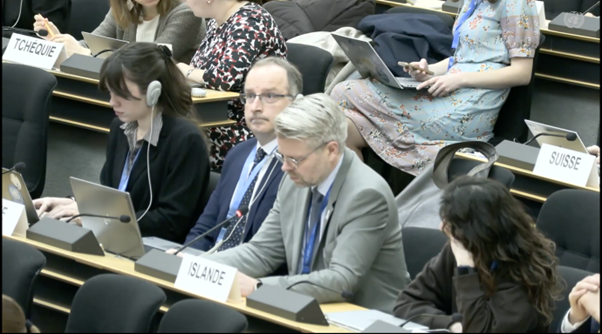
Delivering a statement for the Nordic-Baltic countries, the representative urged Iran to respect its human rights obligations, referencing the violent repression of nationwide protests where thousands were reportedly killed and peaceful protesters sentenced to death. They highlighted the sharp rise in executions, with at least 1,600 in 2025, and expressed alarm over restrictions on civic space, the persecution of women, minorities, and human rights defenders. The group stressed that the ongoing armed conflict has compounded an already profound human rights crisis and urged de-escalation and full respect for international humanitarian law.
Representative of the European Union
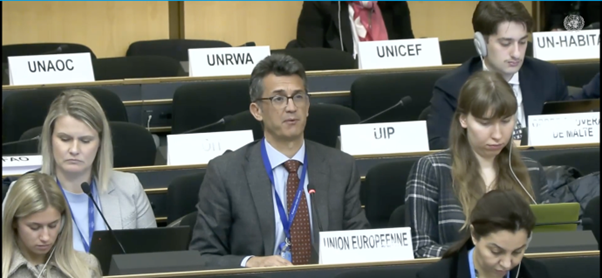
The EU representative thanked the mandate holders and called on all parties to protect civilians and respect international law. The EU strongly condemned the brutal repression of peaceful protesters in January, stressing that accountability is essential. They called for the immediate release of arbitrarily detained individuals and an end to executions. The representative voiced grave concern over harassment, transnational repression on EU soil, and the arbitrary detention of EU nationals. The EU reaffirmed its commitment to taking restrictive measures against violators and intensifying support for Iranian civil society.
Representative of Bahrain (on behalf of the Cooperation Council for the Arab States of the Gulf and Jordan)
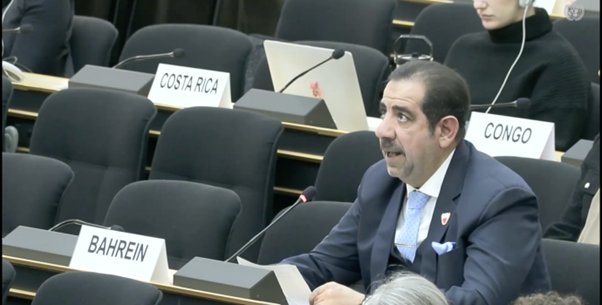
The representative of Bahrain, speaking for the GCC states and Jordan, condemned the attacks by the Islamic Republic of Iran, which they stated targeted civilians and critical infrastructure in their countries, endangering regional security. They described these assaults as a flagrant violation of state sovereignty and international law. The group welcomed UN Security Council Resolution 2817, which condemned these attacks. Crucially, they rejected the reports of the Special Rapporteur and FFM for characterizing these assaults as "retaliatory," stating there is no legal justification for such actions.
Representative of the Philippines
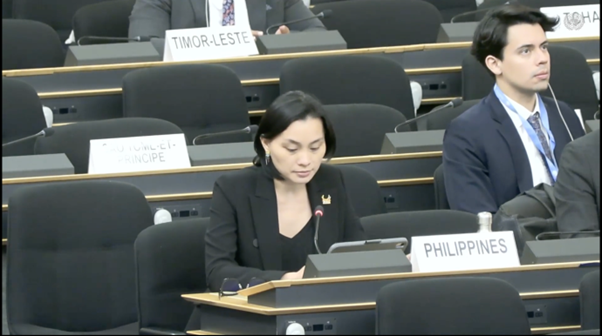
The representative of the Philippines voiced alarm over the escalation of conflict in the Middle East, which has already claimed many innocent lives, including children. She emphasized that international humanitarian law is clear: civilians and civilian infrastructure are not military targets. She expressed deep concern for the safety of millions of migrant workers in the region and called on all parties to cease hostilities, exercise restraint, and return to diplomacy, as this is the only viable way towards peaceful and durable solutions.
Representative of Germany
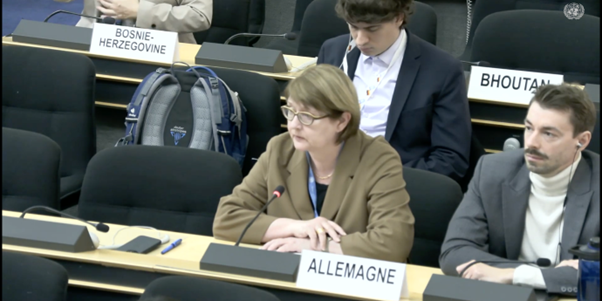
The representative of Germany aligned with the EU statement and thanked the mandate holders. She called on Iran to stop its "unjustifiable attacks on neighbours and shipping routes" and cease its long-standing abuse of international law. In light of the current situation, he reiterated the call for the protection of all civilians and full respect for international humanitarian law. He stressed that the people of Iran must be able to freely determine their future without fear of repression, arbitrary arrests, sham trials, or the excessive force the government has repeatedly deployed against its own people.
Distinguished Representative of France
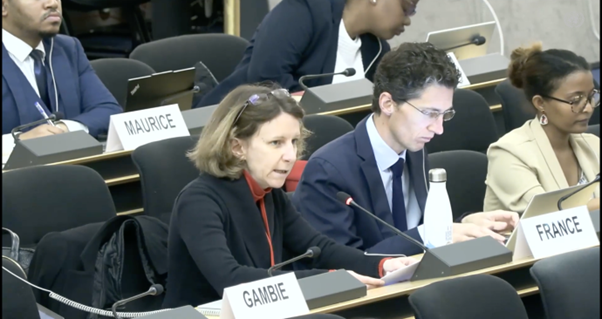
Aligning with the EU, the representative of France stated that the escalation in the Middle East must end, placing primary responsibility on Iran for destabilising the region and international peace. France stood "side by side with the Iranian people" in their quest for a free and decent life. She supported the extension of the mandates of the fact-finding mission and special rapporteur, whose work is crucial for documenting human rights violations, especially the brutal repression of peaceful protests in January. France also reaffirmed solidarity with partners in the region unjustly struck by Iran and recalled that the protection of civilians is an absolute priority.
Distinguished Representative of Belgium
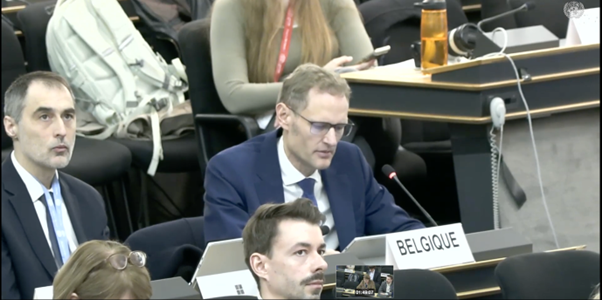
The representative of Belgium, aligning with the EU, thanked the mandate holders for their reports. He stated that decades of systemic repression by Iranian authorities have led to a catastrophic human rights situation, with many violations amounting to crimes against humanity. He urged authorities to immediately stop silencing dissent and instead release arbitrarily detained persons, establish a moratorium on executions, and ensure accountability.
Representative of the Bolivarian Republic of Venezuela
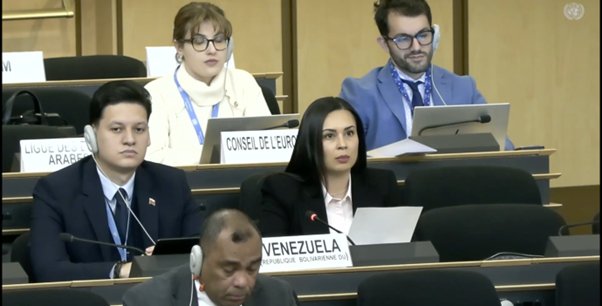
Delivering a national statement, the representative of Venezuela expressed profound concern over the recent special session on Iran, which she described as taking place in a climate of "clear politicization and double standards." She argued that the imposed mandates lack legitimacy and the consent of the state concerned, becoming tools for harassment and geopolitical pressure. Venezuela strenuously rejected the instrumentalisation of the council to promote regime change agendas and repudiated the military action of Israel and its allies against the people of Iran.
Distinguished Representative of Switzerland
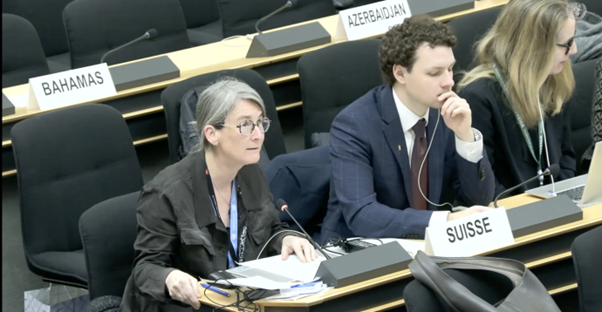
Switzerland thanked the fact-finding mission and expressed profound alarm at the "dangerous escalation" following the military attacks by the US and Israel against Iran, which violate the principle of non-use of force. Regarding the situation inside Iran, Switzerland deplored the violent repression of protests, especially the use of lethal force, and called on Iran to refrain from issuing or implementing death sentences linked to the protests.
Distinguished Representative of the United Kingdom of Great Britain and Northern Ireland
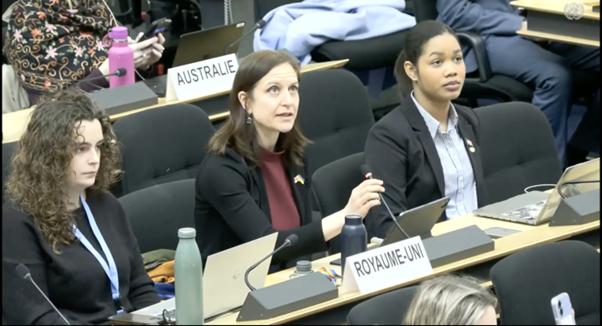
The UK representative described the situation in Iran and the region as "incredibly volatile" and expressed a desire for a swift return to security and stability. She warned that Iranian authorities must not, as they have in the past, exploit conflict to inflict further violence on their own people. He specifically condemned the renewed internet shutdown, noting that it prevents crucial communication and access to emergency services, and serves to "cover up human rights violations." He stated that the brutal crackdown on protesters was the most violent episode in Iran's history.
Representative of Italy

Aligning with the EU, Italy reiterated its support for the mandate holders and followed developments in Iran with deep concern. Italy has long been troubled by systemic restrictions on freedom of expression, persistent impunity, and structural discrimination, particularly against women and girls. The representative condemned the sharp rise in executions and called for a moratorium on the death penalty.
Representative of Japan
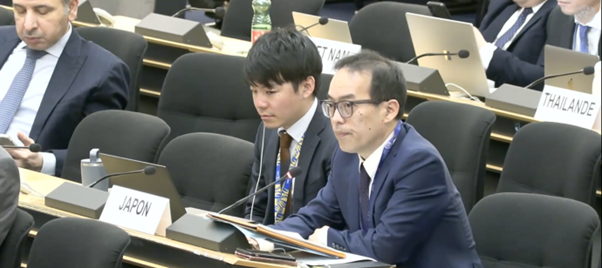
The representative of Japan thanked the mandate holders and stated that the peace and stability of the Middle East is of utmost importance to his country. As a nation that respects values such as freedom, democracy, and human rights, Japan stated it would continue to make all necessary diplomatic efforts to bring about an early de-escalation. Japan opposed any use of force against peaceful protests and attacks on civic space, urging Iran to uphold the right to freedom of expression and peaceful assembly.
Representative of Austria
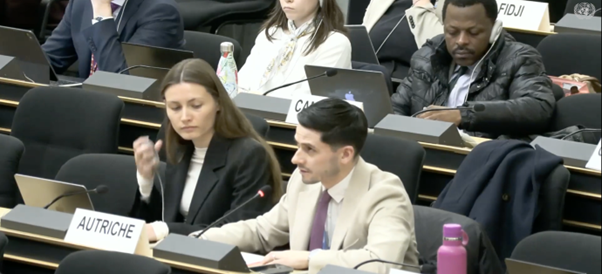
Aligning with the EU, Austria expressed deep concern over the FFM's findings, which include the killings of thousands since the protests erupted, the reported arrest of over 50,000 people, and the targeting of ethnic and religious minorities. Austria condemned Iran's strikes across the region and called for immediate de-escalation and a return to diplomatic avenues, offering Vienna as a potential venue for negotiations. The representative stated that "the Iranian people deserve freedom and the right to determine their own democratic future."
Representative of Argentina
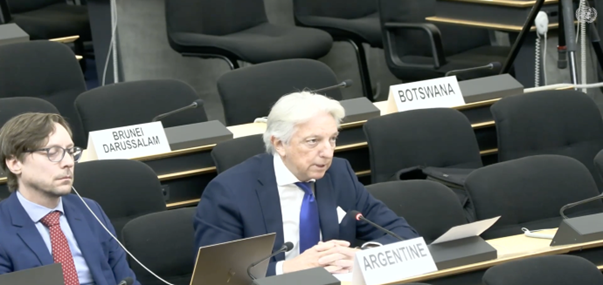
The representative of Argentina delivered a powerful and emotional statement, describing the report as documenting executions, arbitrary detentions, and violent repression against citizens exercising their fundamental right to be heard. He emphasized that these were not isolated incidents but human lives—citizens who went to the street with words and hope and were met with bullets. He declared that these lives were not lost in vain, calling them "true heroes" who understood that the highest value is that of freedom.
Representative of Qatar
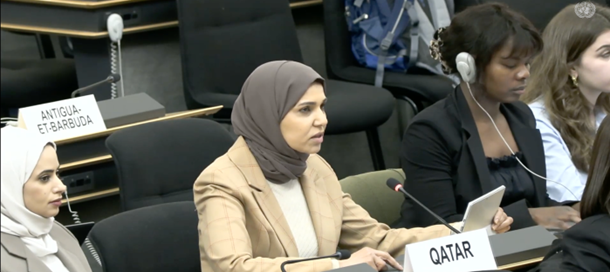
The representative of Qatar condemned in the strongest terms the recent Iranian assaults targeting territories in Qatar and other nations, describing them as a "flagrant violation of state sovereignty" and a "stark breach of international law." Crucially, Qatar rejected the content of the two reports for characterizing these assaults as "retaliatory," stating such a characterization lacks legal basis and might legitimize hostile actions. Qatar reserved its full right to respond in line with Article 51 of the UN Charter.
Representative of Spain
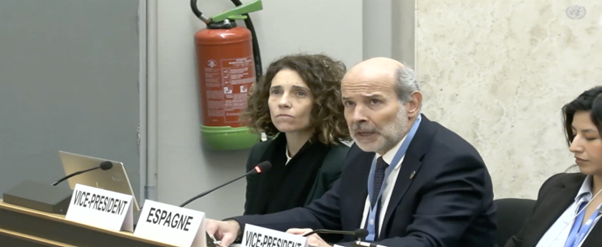
Aligning with the EU, Spain thanked the mandate holders and emphasized the importance of holding the dialogue, as the council "must defend international law in all circumstances with an equal robustness." Spain expressed grave concern over the increase in the death penalty, the restriction of civic space, and the persecution of minorities. The representative robustly condemned the violence and repression meted out against women, whose fundamental rights are systematically violated. In the face of war, Spain rejected the unilateral actions of the United States and Israel and their impact on Iran and neighbouring countries, calling for their immediate cessation.
Representative of Colombia

Colombia noted with concern the deterioration of the human rights situation, stating that the Iranian population is now "trapped between a large-scale military campaign and a national apparatus responsible for human rights violations." The representative emphasized that no military objective can justify civilian populations being trapped in the crossfire or becoming victims of indiscriminate attacks, especially on facilities protected under international humanitarian law, such as schools. Colombia insisted that protecting life should be the top priority and that the use of force by all parties must end.
Representative of the United Arab Emirates (UAE)
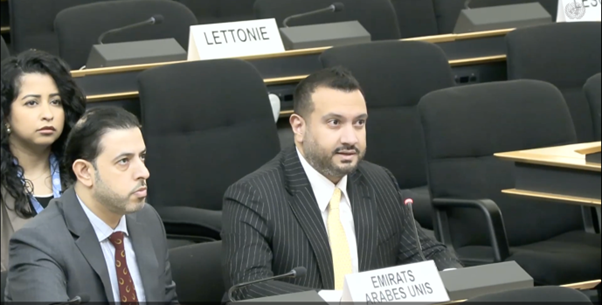
The representative of the UAE commended the adoption of Security Council Resolution 2817 to put an end to Iranian aggression. He refuted any justification by Iran of its military attacks, calling them "misinformation and propaganda campaigns to conceal the aggression against the Emirates." He stated that the UAE was not a party to the conflict and that nothing can justify Iranian aggression against his country, which targeted civilians and civilian assets.
Representative of Ukraine
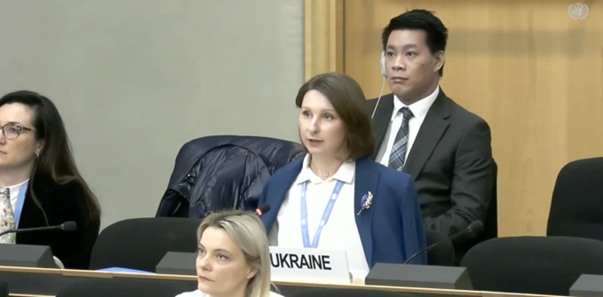
Ukraine thanked the mandate holders for their important work in documenting "widespread, systematic, and persistent human rights violations in Iran." The representative accused Iranian authorities of launching a large-scale policy of violence against its own people and other countries, including direct military support for Russia in its war against Ukraine. He stated that cooperation between Moscow and Tehran results in gross violations of international law. Ukraine called on Iran to cease its involvement in Russia's war crimes and to fully cooperate with the independent international fact-finding mission.
Representative of China
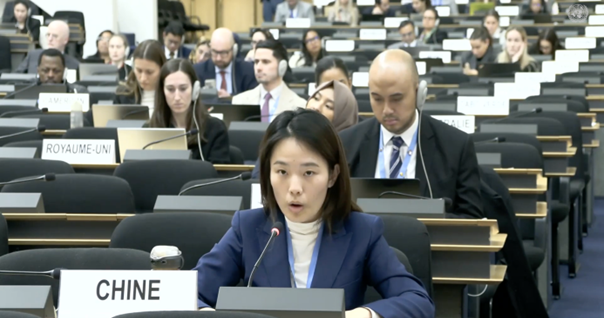
China stated it had taken note of the reports but expressed concern about the use of force and biased information to interfere in the internal affairs of a sovereign state. While welcoming the Iranian government's efforts to promote human rights, China opposed country-specific mechanisms established without the consent of the country concerned and rejected the "politicisation and instrumentalization of human rights issues." China condemned the military strikes launched by certain countries against Iran, stating they violate international law and undermine fundamental rights, and urged all parties to cease military operations and return to dialogue.
Representative of Kuwait
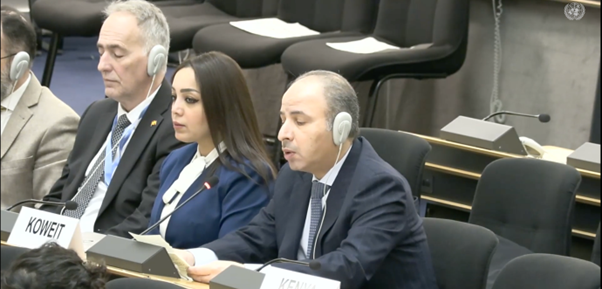
Aligning with the GCC, Kuwait firmly condemned the Iranian "illegal aggression" through drones and missiles against Kuwait and other states of the region. The representative conveyed condolences to the families of the victims and reiterated the full, legitimate right to self-defense. Kuwait welcomed Security Council Resolution 2817, which firmly condemned the Iranian aggression.
Representative of the Russian Federation
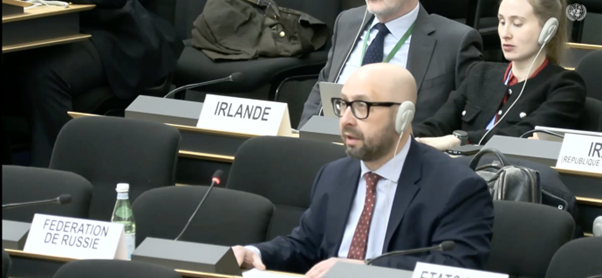
The Russian Federation expressed extreme concern over the situation in and around Iran, describing the actions of the US and Israel as a "clear unprovoked act of armed aggression against a sovereign, independent state" in violation of the UN Charter. The representative called the Western justification for the aggression unjustified and insisted on the immediate resumption of political and diplomatic settlement based on international law. Russia categorically condemned any attempt to politicize human rights, which the West uses as an instrument to confront states that dissent from their line.
A large group of states, including Albania, the Republic of Moldova, Ireland, Chile, Romania, Slovenia, Greece, Malta, the Netherlands, Liechtenstein, Czechia, Luxembourg, and Montenegro, expressed deep concern over the deteriorating human rights situation in Iran. They strongly condemned the use of lethal force against protesters, the sharp rise in executions, and the systematic repression of women and minorities. Many noted that documented violations, including murder and torture, may amount to crimes against humanity and stressed the urgent need for accountability. Several also condemned Iran's regional attacks and reaffirmed solidarity with the Iranian people's aspirations for dignity and freedom.
On the other hand, several states expressed views supportive of Iran or critical of the Council's approach. Belarus, Cuba, and Zimbabwe condemned the US and Israeli military aggression against Iran and called for respect for its sovereignty. The DPRK, Eritrea, and Zimbabwe criticized the Council's selective and politically motivated mandates against Iran, arguing they violate principles of impartiality and non-interference.Malaysia and Ghana expressed concern over attacks on civilian infrastructure, particularly the school bombing in Minab. Uzbekistan, Afghanistan, Ethiopia, and Sudan called for de-escalation, dialogue, and peaceful dispute resolution based on international law.
Special Rapporteur (Concluding Remarks)
In her concluding remarks, the Special Rapporteur addressed comments from the Islamic Republic of Iran, engaging seriously with the argument that the council's focus should be exclusively on the military strikes. While affirming the strikes are unlawful and their human cost severe, she asked the council not to limit its focus, stating: "To do so would imply that the deteriorating human rights situation in Iran began with the strikes and that once they stop, the situation will be resolved. Neither is true." She reiterated ongoing concerns about executions, discrimination against ethnic and religious minorities, and the situation of political prisoners. Responding to member states, she called for the opening of humanitarian pathways, support for civil society documentation efforts, and urged the World Health Organization to investigate violations of medical neutrality. Regarding the death penalty, she stated firmly that the responsibility to publish data lies with the state, and until authorities honour this obligation, civil society organizations and families will remain her primary source of credible information.
Chair of the Fact-Finding Mission (FFM) (Concluding Remarks)
The Chair of the FFM reiterated that the mission has endeavoured to cover all violations of international law thoroughly, independently, and impartially. Responding to questions, the mission echoed the call for unconditional cessation of hostilities and for engaging in systematic legal and institutional reforms that would allow equal participation of women, minorities, and youth in decision-making. He also noted attacks launched by Iran affecting energy infrastructure in neighbouring countries and resulting in civilian casualties. Quoting the chief prosecutor at Nuremberg, he stressed that "aggressive warfare is not a legal means for settling grievances," and reiterated that justice and change must be pursued through lawful accountability, not through violence.
Statements by NHRIs and NGOs
Civil society and human rights organizations painted a harrowing picture of the dual crises facing Iran. Several groups highlighted Iran's status as one of the world's top executioners, with over 900 drug-related executions in 2025, and warned that prisoners now face execution "under the shadow of war." Other organisations focused on the devastating impact of US and Israeli military strikes, providing detailed testimonies of schools and hospitals being bombed, including the attack on a primary school in Minab that killed over 160 children.
Additional groups drew attention to ongoing internal repression, detailing the state-sponsored persecution of religious minorities and warning of ethnic tensions in Iranian Kurdistan. Several underscored that the Fact-Finding Mission has documented how the post-protest crackdown may amount to crimes against humanity, including murder and torture, a situation now compounded by the war. Others warned that civilians in Iran are on a "dual atrocity trajectory," facing both internal repression and the brunt of armed conflict, and urgently called on special mechanisms to investigate all crimes committed since February 2026. Collectively, they called on the Council to investigate all violations, ensure accountability, and protect the most vulnerable, including women, children, and minorities.
Conclusion
The 61st session of the Human Rights Council exposed the tragic reality of a people trapped between the brutality of external aggression and the iron fist of internal repression. The Joint Interactive Dialogue on Iran, along with the subsequent general debate, laid bare two intersecting crises: the devastating human rights impact of unlawful US and Israeli military strikes, and the Iranian authorities' systematic campaign of violence against their own population. The Special Rapporteur and the Fact-Finding Mission presented chilling findings, documenting over 1,300 civilian deaths from the strikes, including hundreds of children, alongside evidence that the post-protest crackdown in January 2026—which killed an estimated 30,000 people in just 48 hours—may constitute crimes against humanity, with the reported targeting of healthcare infrastructure and interference with medical services further raising serious concerns regarding violations of medical neutrality.
States were sharply divided in their responses. A significant number of delegations, particularly from the Arab and Gulf regions, condemned Iran's regional attacks and called for an immediate halt to its destabilising activities. A larger group of Western and like-minded states, however, focused their condemnation on the Iranian regime's brutal repression of its citizens, its weaponisation of the death penalty, and its systematic persecution of ethnic and religious minorities. They called for accountability, the release of arbitrarily detained prisoners, and an end to the violence against peaceful protesters.
Civil society organisations provided the most harrowing testimonies, painting a picture of a population living on a “dual atrocity trajectory”, a reality that reflects a pattern of “double victimization,” whereby already vulnerable groups are subjected both to internal repression and the disproportionate impact of external military strikes. They described prisoners facing execution "under the shadow of war," schools turned into morgues, and entire communities—from the Baha'i to the Kurds—subjected to state-sponsored persecution. Their urgent calls for investigation, accountability, and protection echoed throughout the chamber.
Ultimately, the session underscored a painful truth: the people of Iran cannot wait for one crisis to end before the other is addressed. Both the external aggression and the internal repression demand the Council's immediate and sustained attention.
GICJ Position
Geneva International Centre for Justice (GICJ) expresses profound concern over the grave human rights situation in Iran, compounded by external military action and ongoing internal repression. GICJ emphasizes that the recent US and Israeli military strikes, which have caused significant civilian casualties and damaged schools and hospitals, raise serious questions under international humanitarian law that warrant independent investigation, including concerns relating to the violation of medical neutrality, particularly with regard to attacks on healthcare infrastructure and interference with medical services.
At the same time, GICJ remains deeply concerned by the Iranian authorities’ continued pattern of human rights violations, including the response to protesters, the high number of executions, and the systematic persecution of ethnic and religious minorities. These dynamics reflect a pattern of “double victimization,” whereby vulnerable communities are subjected both to internal repression and the disproportionate impact of external military actions. As noted by the Fact-Finding Mission, some of these violations may amount to crimes against humanity and must not be overlooked.
GICJ calls on the Human Rights Council and Member States to adopt a balanced approach that addresses all dimensions of the crisis. This includes urging all parties to respect international humanitarian law, supporting independent investigations into alleged violations, and encouraging Iranian authorities to uphold their human rights commitments, including the protection of minorities and the release of arbitrarily detained prisoners. A just and lasting peace requires genuine dialogue, institutional reform, and full respect for the human rights of all people in Iran.
