



HRC61ST: When Fighting Terror Threatens Human Rights
The 61st Session of the Human Rights Council
23 February - 31 March
Item 3: Interactive Dialogue with Special Rapporteur on human rights and counter-terrorism
10 - 11 March 2026
By Melissa Fuhrer / GICJ
Executive Summary
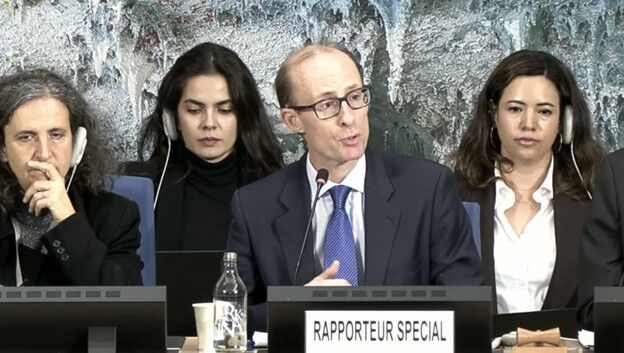
The 25th meeting of the 61st Session of the United Nations Human Rights Council, held on 10–11 March 2026 under Item 3, convened an Interactive Dialogue with Special Rapporteur Mr. Ben Saul on the promotion and protection of human rights and fundamental freedoms while countering terrorism. The discussion centred on Mr. Ben Saul's January 2026 report, which recommends an updated and internationally recognised definition of terrorism aimed at preventing human rights violations that arise from vague and overbroad counter-terrorism legislation. Delegations broadly concurred on the urgent need for a precise and internationally agreed definition. Civil society organisations issued a forceful call for accountability, condemning the systematic misuse of counter-terrorism law to suppress political dissent, target marginalised communities, and justify extrajudicial killings.
Geneva International Centre for Justice (GICJ) firmly supports the Special Rapporteur's call for a narrow, precise, and internationally binding definition of terrorism, and echoes the widespread concern that vague counter-terrorism legislation continues to be weaponised by states against human rights defenders, journalists, political opponents, and civilian populations. GICJ reaffirms that the fight against terrorism must at all times respect international human rights law, and calls on all states to immediately cease the use of counter-terrorism frameworks as instruments of political repression, impunity, and unlawful violence.
Background
The mandate of the Special Rapporteur on the promotion and protection of human rights and fundamental freedoms while countering terrorism was established by the Commission on Human Rights in 2005, reflecting growing international concern that counter-terrorism measures adopted in the aftermath of the September 11 attacks were eroding fundamental rights. The mandate's inaugural report, submitted in 2005, set out a foundational framework emphasising that effective counter-terrorism and the protection of human rights are not only compatible but mutually reinforcing objectives. Subsequent mandate holders have consistently warned that the absence of a universally agreed definition of terrorism creates a dangerous legal vacuum, one that states have exploited to silence dissent, criminalise legitimate political activity, and justify the use of force in ways that violate international law.
Terrorism itself remains one of the most contested concepts in international law. At its core, terrorism is generally understood as politically or ideologically motivated violence directed at civilian populations with the intent of spreading fear, coercing governments, or pressuring international organisations. However, neither the international community nor the academic community has reached consensus on a single, binding definition. This gap has resulted in a proliferation of unilateral national definitions that are frequently overly broad, inconsistent, and susceptible to abuse.
Summary of the Expert’s Report
On 8 January 2026, Special Rapporteur (SR) Mr. Ben Saul published his official report on the promotion and protection of human rights and fundamental freedoms while countering terrorism. This report will be presented at the beginning of this session’s discussion, and it will be referred to by delegates throughout the discussion.
Mr. Ben Saul is a professor of International Law at the University of Sydney and an expert in anti-terrorism law and human rights law. He was appointed as an SR in November 2023, has received numerous awards and research grants, and published a number of books that are considered leading works in their respective fields.
His report aims to update the model definition of terrorism to ensure that counter-terrorism measures respect and protect human rights. For decades, the international community has struggled to reach a consensus on a definition, leading many States to create unilateral, vague, and overbroad laws that often result in rights violations.
Mr. Ben Saul emphasises the necessity of an international definition of terrorism due to the potential of an excess of definitions to trigger violations. Overly broad or vague definitions of terrorism grant authorities wide discretionary powers, which can be weaponised against journalists, political opponents, and human rights defenders. When the threshold for what constitutes a terrorist act is ill-defined, almost any form of dissent or critical reporting can be criminalised. He argues that terrorism should be limited to criminal acts that intentionally cause death, serious bodily injury, or hostage-taking. He specifically recommends excluding mental harm to avoid over-expanding liability and excluding mere harm to property unless it is a direct means of causing death or injury.
Furthermore, Mr. Saul recommends that for a conduct to be defined as a terrorist act, it must be intended to provoke a state of terror in the public or unduly compel a government or international organisation.
Mr. Saul also suggests that the definition of terrorism should require an intent to advance a political or ideological purpose, such as specific policy objectives. He advises omitting "religious" motives from the definition, arguing that targeting religious motives often has discriminatory and stigmatising effects that outweigh the benefits of criminally denouncing them. After 9/11, crimes against Muslims nationals in the United States of America surged immensely, with an average of 138 anti-Muslim incidents annually. Accordingly, Islamophobia rates also surged. In a poll taken directly after 9/11, 60% of Americans reported unfavourable attitudes toward Muslims, and many associate Muslims with fear-related terms such as "violence," "fanatic," "radical," and "terrorism.".
Finally, Mr Saul’s model definition includes explicit protections for humanitarian activities by impartial organisations, acts of protest that do not cause death, and conduct in armed conflict that complies with international humanitarian law.
Summary of the Interactive Dialogue
Ambassador Tsegab Kebebew Daka of Ethiopia (Group of African States), who was elected to serve as one of the four vice-presidents of this 61st Human Rights (HRC) session, promptly gave the floor to SR Mr. Ben Saul to briefly present the main points of his submitted report.
Mr. Saul began by discussing various situations around the world, such as the illegal occupation in Palestine, the invasion of Ukraine, and the massacre in El Fasher, and warned about the continued allowance of impunities on a global scale. He also raised concerns about counter-terrorism legislation being used to punish human rights defenders, a point of discussion mentioned in his report.
A key element of the SR’s report is a call for states to establish a more precise and narrow definition of terrorism and terrorism offences in order to prevent any abuses and violations of human rights under the guise of combating terrorism. Terrorism offences should only be constrained to the greatest of offences to reduce stigma and protect human rights, and religious motives should be removed from the definition of terrorism for the same reasons listed above. Acts of protest that do not cause death or injuries to others should also not be defined as terrorism, and counter-terrorism should not be used by regimes and states as a tool to repress and control communities and civilians. He also appeals for the prevention of arbitrary arrests, and calls for better due process and allowing for humanitarian exemption. Additionally, Mr. Saul warned that prison conditions require urgent ameliorations, and the death penalty for terrorism offences should be phased out. Military forces could benefit from more robust regulations, and security could be enhanced by having more inclusive and representative governments. Finally, he affirms that more could be done to protect victims of terrorism.
He commended Somalia, a country he recently visited in accordance with Human Rights Council resolution 58/14, on its noticeable efforts to strengthen human rights while combatting terrorism despite the massive cuts to humanitarian aid it has endured. He also commended Côte D’Ivoire for having a balanced approach to combating terrorism, including peaceful land disputes and building trust to reduce the conditions that lead to terrorism. He encouraged other member states to invite him for a visit.
Delegations of Concerned Countries
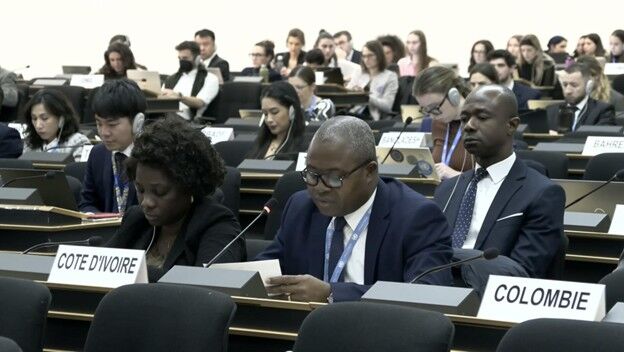
The representative of Côte d'Ivoire thanked the Special Rapporteur for his report and welcomed his recognition of the country's efforts to combat terrorism, noting that Côte d'Ivoire has demonstrated its full commitment to cooperation with HRC mechanisms by accepting visits from mandate holders and intergovernmental working groups. However, the representative expressed regret that certain findings in the report call for clarification. In particular, the representative noted that the country's law on the repression of terrorism was drafted in close collaboration with Financial Action Task Force (FATF) experts, who confirmed its compliance with international law and good practice, and that measures to combat the financing of terrorism are implemented in a manner that is proportionate, targeted, and non-discriminatory so as not to impose unjustified barriers on the legitimate activities of NGOs. On the question of pretrial detention, the representative clarified that under Côte d'Ivoire's judicial system, such detention falls within the preliminary investigation phase under the authority of the regional prosecution, and that a judge is not involved at that stage. The representative further noted that ongoing legislative reform is expected to lead to the establishment of a national mechanism for the prevention of torture, responsible for conducting regular visits to custodial facilities. The representative concluded by reiterating Côte d'Ivoire's readiness to cooperate with all HRC mechanisms for the promotion and protection of the rights of all persons living in the country.
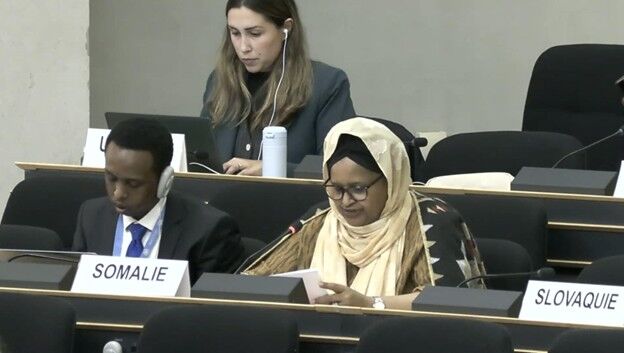
The representative of Somalia thanked the SR for his report and emphasised his country's open invitation to all thematic Special Rapporteurs who wish to visit Somalia. Somalia continues to face the most complex terrorism issue in the world, including sexual violence and the use of children in armed conflict, and consequently has taken significant actions to reduce these harms, such as signing Action Plans with the UN. Lastly, he notes that Somalia's efforts must be bolstered through continued international efforts, including humanitarian aid.
Questions and Comments by Interested Delegations
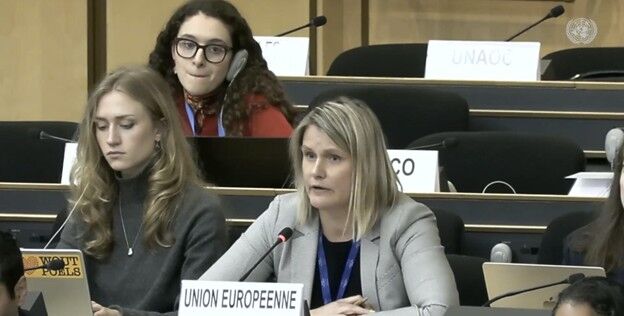
The representative of the European Union (EU) called upon all states to cooperate and accept requests for a visit by the SR and shared the SR’s concern that vague or broad definitions can lead to issues such as discrimination, human rights violations and abuses. The representative reiterated that the EU definition of terrorism respects the human rights framework. The representative asked the following question: which practical steps should we take to make sure counter-terrorism measures don’t impede on human rights?
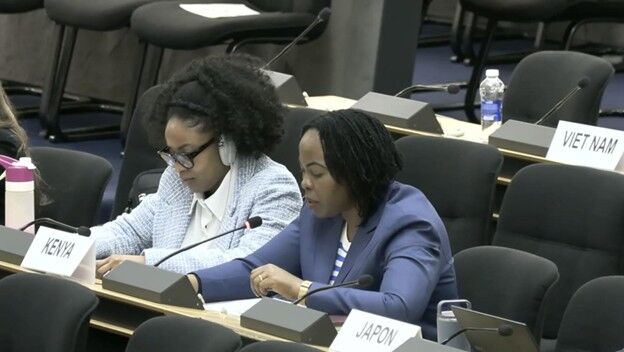
The representative of the African Group noted that terrorism continues to be rampant across Africa. The African group supports the promotion of human rights in combating terrorism, but warns that the reality they face can sometimes create a struggle on this basis. The representative commended Côte D’Ivoire and Somalia for their progress. Finally, the representative noted the importance of solidarity and financial stability to combat terrorism, and called for the international community to support African states through strengthened cooperation.
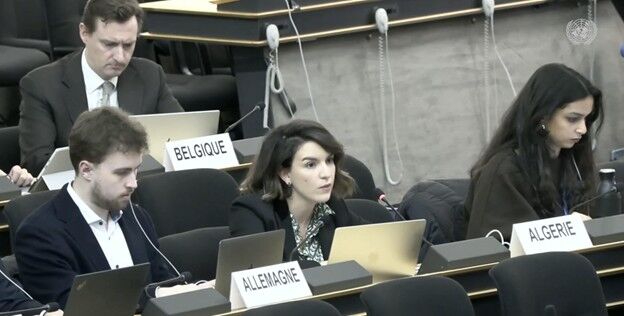
The representative of Algeria noted that, as a nation whose liberation was once labelled as a terrorist movement, Algeria welcomed Mr Saul's principled stance on this issue and encouraged him to keep on giving attention to the situation of occupied countries.
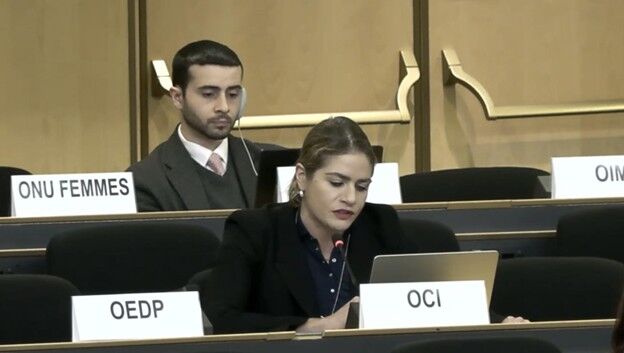
The representative of the OCI (Organisation of Islamic Cooperation) shared the SR’s objective of developing a precise definition of terrorism, but notes that such a definition must exclude the legitimate struggle of people under occupation. In this context, they mentioned their support for Palestine and their struggle against their occupying force.
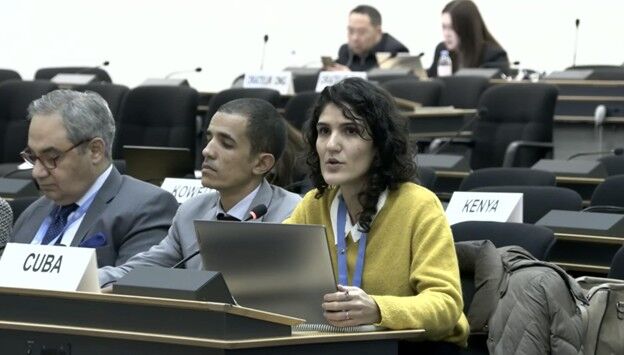
The representative of Cuba concurred that an imprecise definition of terrorism risks giving rise to human rights violations. The representative reiterated calls for Cuba's removal from the United States' State Sponsors of Terrorism list, arguing that the designation has inflicted severe economic and humanitarian damage on the country. The representative further brought to the Council's attention that, as recently as February, Cuba had been subjected to an attempted terrorist attack involving a vessel registered in the United States, in addition to ongoing attempts to smuggle weapons into the country. The representative concluded by expressing gratitude to the Special Rapporteur for drawing attention to these concerns.
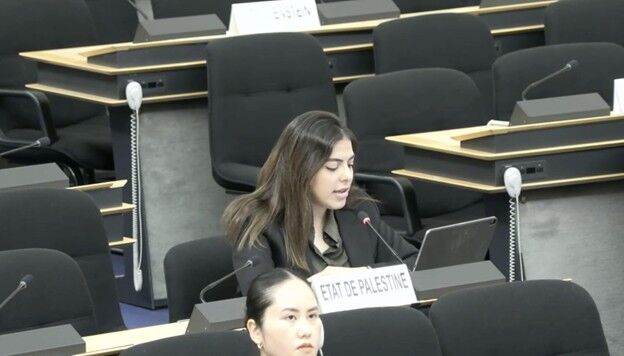
The representative of Palestine encouraged the Special Rapporteur to examine terrorism through the lens of illegal occupation, urging that situations of occupation be incorporated into the broader framework for analysing terrorist acts. The representative drew attention to illegal Israeli settlement activity, characterising it as a source of terror for Palestinian civilians, and cited specific instances, including the burning of villages, the killing of children, raids on Palestinian communities, and the obstruction of Palestinian farmers from accessing their land during the olive harvest season.
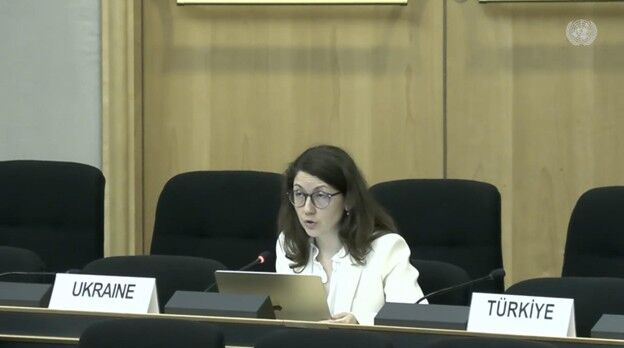
The representative of Ukraine expressed particular welcome for the report's elements, emphasising that terrorist acts encompass serious criminal conduct involving the intentional causing of death, serious bodily injury, or hostage-taking. The representative noted that these elements are tragically visible in the context of Russia's ongoing aggression against Ukraine, where Russian forces continue to deliberately target civilian infrastructure, causing death, serious injury, and widespread destruction, while also engaging in the unlawful detention and hostage-taking of Ukrainian civilians. The representative further cautioned that the Russian delegation was misleading the Council by presenting a distorted interpretation of the ICJ judgement of 31 January 2024, which clearly found that Russia had failed to comply with its obligations under Article 9 of the Terrorism Financing Convention by neglecting to investigate credible allegations relating to Russian attacks on Ukrainian territory. The representative concluded by posing a question to the Special Rapporteur, asking how states can ensure that counter-terrorism frameworks are not misused as a shield against accountability for violence committed against civilians.
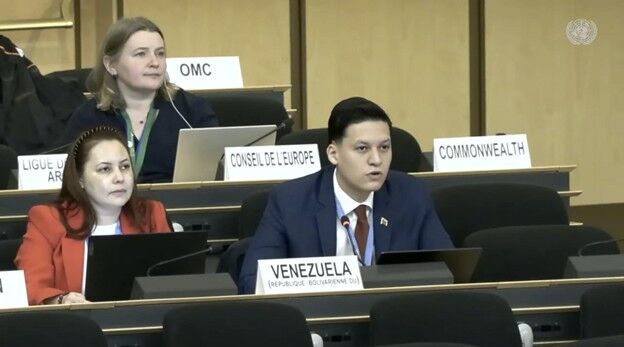
The representative of Venezuela reiterated the country's firm condemnation of terrorism in all its forms, including the financing of terrorism through digital platforms. The representative contended that accusations of coordinating criminal gangs or fueling a non-existent cartel had been used as a pretext to justify a military attack aimed at the abduction of Venezuela's head of state and the First Lady, in violation of the principles of the UN Charter and international law. The representative argued that such unilateral acts seek to circumvent cooperation and demonstrate a complete disregard for the sovereignty and territorial integrity of states. The representative affirmed that Venezuela would continue to take all necessary measures to guarantee peace for its people in accordance with national legislation. The representative concluded by posing a question to the Special Rapporteur, asking how, in a context where his report raises concerns about the abusive use of counter-terrorism measures, the international community can prevent such pretexts from being used to justify attacks against sovereign states.
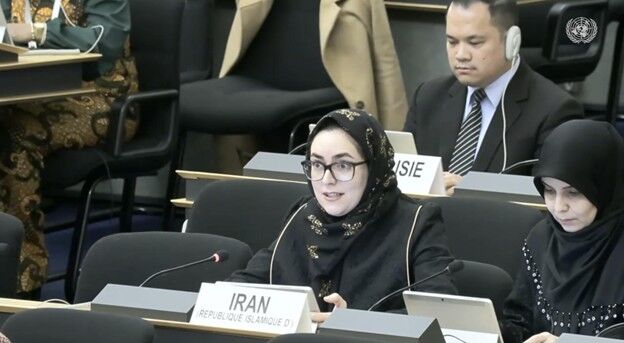
The representative of Iran opened by drawing attention to what the representative described as a tragic reality, asserting that Iran, as a peaceful nation, has itself become a victim of conduct closely mirroring the patterns described in the Special Rapporteur's report. The representative cited several specific incidents in this regard, including a brutal attack on a school in Minab that resulted in the killing of nearly 200 innocent children, the assassination of the Supreme Leader which the representative characterized as a clear case of extrajudicial killing, and large-scale destruction of critical civilian infrastructure apparently aimed at causing loss of life and significant economic damage. The representative argued that these acts correspond to the elements of terrorism as outlined in the Special Rapporteur's report, contending that they were carried out knowingly and deliberately with the evident purpose of spreading fear and terror among the civilian population and coercing an independent government into submitting to external pressure. The representative concluded by posing a question to the Special Rapporteur, asking what concrete mechanisms the international community should pursue, in light of the legal framework and criteria outlined in the report, to ensure accountability for such acts and to prevent impunity for their perpetrators.
NGOs
Several non-governmental organisations took the floor to deliver a series of interventions on the misuse of counter-terrorism frameworks. NGOs broadly concurred with the Special Rapporteur's observation that vague and overbroad counter-terrorism laws have become a tool of choice for states seeking to suppress dissent, noting that this pattern has been used to dehumanise communities and repress social movements for decades. Another NGO drew attention to Tunisia's counter-terrorism law of 2025, which has been used to arrest, detain, and prosecute political opponents, and posed a question to the Special Rapporteur asking how the Global Counter-Terrorism Compact review process could better address entrenched situations such as the one in Tunisia.
Several NGOs further argued that while the absence of a clear definition of terrorism does facilitate the weaponisation of the law against politically disfavored communities, refinement of the definition alone is insufficient to address the scale of the problem, as demonstrated by recent developments from the United States to Palestine. The NGOs contended that counter-terrorism and counter-terrorism measures are by their very nature designed to circumvent due process, deny fair trials, and justify the deprivation of liberty, and have been routinely exploited to perpetrate extrajudicial killings, forcible transfer, and genocide. The NGOs issued a collective call not merely to define, but to dismantle the post-9/11 counter-terrorism and national security apparatus, which they argued has fundamentally altered the United States' political and legal system, decimated the international human rights architecture, and fostered authoritarianism globally.
NGOs also drew attention to grave abuses of counter-terrorism laws in the context of efforts against suspected drug cartels and gangs, citing ongoing United States lethal military operations targeting civilian vessels in the Caribbean Sea and the Eastern Pacific Ocean, which have resulted in the deaths of more than 150 people. The NGOs characterised these operations as extrajudicial executions carried out under the guise of combating narco-terrorism. In this regard, the NGOs called on the Special Rapporteur to continue raising the alarm over this harmful narrative by clarifying that drug trafficking should not be conflated with terrorism, affirming that the extrajudicial and military targeting of individuals suspected of drug trafficking cannot be justified under international law, and urging member states to ensure that all drug control operations are conducted in full compliance with international law.
More broadly, NGOs denounced their respective governments' use of counter-terrorism measures to justify the repression of political dissidents. One NGO additionally raised the issue of Cuba's inclusion on the United States' State Sponsors of Terrorism list, arguing that this designation lacks any legal foundation and has a direct and damaging impact on Cuban society. The NGO posed a question to the Special Rapporteur asking whether he views this list as an instance of political manipulation and the weaponisation of the terrorism issue for purposes of geopolitical dominance.
Special Rapporteur’s Concluding Remarks
The Special Rapporteur then delivered his concluding remarks, responding to the various delegations and civil society organisations that had taken the floor.
In response to the European Union, the Special Rapporteur reiterated his recommendation for a narrower and more precise definition of terrorism, as outlined in his report. In response to Cuba's concerns, the Special Rapporteur expressed solidarity regarding the impact of unjustified sanctions. In response to the African Group, the Special Rapporteur echoed the call for the international community to provide support to African states in their counter-terrorism efforts, and noted that African states should equally look to the African Union as a resource in this regard.
On the question of Palestine, the Special Rapporteur affirmed that certain acts of settler violence could fall within the definition of terrorism, and indicated that sanctions and legal action would constitute an appropriate response to Israel.
On the issues raised by Ukraine, the Special Rapporteur stressed that the deliberate targeting of civilian infrastructure, including energy infrastructure, with the intent of spreading terror among the civilian population constitutes a war crime under international humanitarian law, and noted that such conduct could, under certain conditions, also amount to the crime of terrorism.
Addressing Venezuela, the Special Rapporteur encouraged all states to exclude organised crime from their definitions of terrorism as a means of maintaining a clear distinction between different forms of criminality, each of which is governed by its own distinct legal framework, while emphasising that even where conduct does constitute terrorism, this can never justify aggression against any state.
Responding to Iran, the Special Rapporteur noted that according to the Human Rights Committee, all deaths resulting from aggression constitute violations of the right to life. The Special Rapporteur called on all states to respond to aggression by protesting it, considering sanctions, pursuing non-cooperation with aggressor states, and strengthening international mechanisms capable of addressing such situations in the long term, including through the jurisdiction of the International Criminal Court and reform of the Security Council to prevent the veto from paralysing action against aggressors.
The Special Rapporteur then acknowledged the vital role of civil society organisations in holding states accountable for human rights violations, urging all states to consult and cooperate with civil society in counter-terrorism measures and to take action against reprisals targeting civil society actors. The Special Rapporteur noted that many of the issues raised by civil society colleagues are the subject of communications addressed to states alongside other mandate holders, and drew states' attention to those communications as a basis for addressing identified violations, citing in particular concerns relating to Tunisia, Egypt, violations of international humanitarian law in Yemen, the national security law in Hong Kong, and the Arab Interior Ministers' Council.
The Special Rapporteur concluded by calling on the United States to immediately close the Guantánamo Bay detention facility, which the Special Rapporteur noted does not comply with international law, to lift sanctions on Palestinian human rights organisations, and to end illegal killings in the Caribbean and elsewhere carried out in pursuit of its drug policy. The Special Rapporteur announced that a future thematic report would address in greater depth the relationship between organised crime, cartels, gangs, and counter-terrorism law, and closed by expressing gratitude to all delegations for their engagement with the report.
Conclusion
The Interactive Dialogue with Special Rapporteur Mr. Ben Saul at the 61st session of the Human Rights Council reflected both the urgency and the complexity of reconciling the imperative to combat terrorism with the obligation to protect human rights.
During the Special Rapporteur's concluding remarks, he reaffirmed his core recommendation for a narrow, precise, and legally grounded definition, while acknowledging the need for carefully designed clauses that allow for principled expansion without infringing on human rights. On accountability, he stressed that state officials can and must be held responsible for terrorism offences, that oversight mechanisms must be independent and well-resourced, and that the deliberate targeting of civilian infrastructure constitutes a war crime and may, in certain circumstances, amount to terrorism under international law. He called on the international community to strengthen long-term accountability mechanisms, including the International Criminal Court and a reformed Security Council no longer paralysed by the veto.
The Special Rapporteur affirmed the vital role of NGOs in holding states accountable and voiced explicit concern about entrenched patterns of repression.
GICJ position
Geneva International Centre for Justice (GICJ) fully endorses the Special Rapporteur's central recommendation that terrorism must be defined narrowly and precisely, confined to the most serious criminal conduct. This approach is a fundamental safeguard against the violations that overbroad definitions invariably produce.
GICJ is particularly troubled by the continued and growing weaponisation of counter-terrorism frameworks against civil society. Human rights defenders, lawyers, journalists, and NGO workers who document abuses, advocate for accountability, or assist affected communities are increasingly prosecuted as terrorists and surveilled as security threats. GICJ calls on all states to immediately repeal or substantially amend counter-terrorism laws that have been used to target civil society, to release all those arbitrarily detained under such laws, and to guarantee the full independence of the judiciary in terrorism-related proceedings.
GICJ also reiterates its concern that counter-terrorism discourse has been systematically manipulated to delegitimise the struggles of people living under illegal occupation and foreign domination. As Algeria recalled during the dialogue, liberation movements have historically been branded as terrorist organisations by occupying powers seeking to justify their continued repression. GICJ supports the Special Rapporteur's recommendation that the definition of terrorism must explicitly exclude conduct that is consistent with international humanitarian law, and calls on the international community to resist all efforts to use counter-terrorism language as a shield against legitimate resistance to occupation, apartheid, or systematic oppression.
Finally, GICJ is deeply concerned by the failure of the international community to treat the root causes of terrorism with the same urgency as its symptoms. GICJ urges all states and the international community to support the Global Counter-Terrorism Strategy review process with concrete commitments to address these structural conditions.
