





Ensuring Development for All: Trade, Climate Justice, AI, and Public Participation
Expert Mechanism on the Right to Development
12th Session
27 - 29 October 2025
By Léa Farge and Astrid Bochnakian / GICJ
Executive Summary
From 27 to 29 October 2025, the 12th session of the Expert Mechanism on the Right to Development brought together States, UN bodies, experts, and civil society to examine how global challenges, ranging from climate finance and trade tensions to artificial intelligence, public participation, and civic space, shape the realisation of the right to development. Across all panels, participants reaffirmed that this right is an inalienable and universal human right, requiring equitable international cooperation, meaningful participation, and the dismantling of structural barriers that prevent individuals and peoples from fully benefiting from development.
Delegates underscored the profound impact of escalating tariff measures, which disproportionately affect developing countries and least developed countries, particularly in labour-intensive sectors dominated by women. These measures erode competitiveness, reduce employment, and undermine poverty reduction efforts. Climate finance deficits and widening global inequalities further impede sustainable development, while emerging technologies such as artificial intelligence risk deepening cultural and economic asymmetries if not governed through human rights principles. The session also highlighted the indispensable role of civil society and the need for transparent, participatory decision-making.
Geneva International Centre for Justice (GICJ) commends the Expert Mechanism’s efforts and emphasises the urgent need for a legally binding international instrument on the right to development. GICJ stresses that climate finance must be treated as a human rights obligation; that the multilateral trading system must be fair, predictable, and non-discriminatory; and that artificial intelligence requires rights-based governance to prevent the exacerbation of global inequities. It further calls for the protection of civic space and for public participation to be structurally embedded in all development processes.
Background on the Expert Mechanism on the Right to Development
The Expert Mechanism on the Right to Development (EMRTD) was established by the UN Human Rights Council in 2019 under Resolution A/HRC/RES/42/23. It serves as a subsidiary body of the Council and is hosted by the Office of the High Commissioner for Human Rights (OHCHR). The Mechanism was created to provide distinct institutional space and expertise focused on the right to development, recognising that this right remains under-realised and requires dedicated attention at the international level.
The EMRTD’s mandate is fourfold:
- providing thematic expertise to the Human Rights Council through studies, analysis and recommendations;
- preparing annual thematic reports and submitting these to the Council;
- convening sessions and interactive dialogues with States, UN agencies, civil society and other stakeholders to gather inputs, share best practices and discuss the obstacles to realising the right to development;
- advising on the operationalisation and mainstreaming of the right to development in national and international policies, including dimensions of international cooperation, development financing, and the role of non-state actors.
The Mechanism consists of five independent experts who are elected for a term of three years. For the 2023-2026 cycle, the experts are Mr. Bonny Ibhawoh (Nigeria), who chaired this 12th session, Ms. Klentiana Mahmutaj (Albania), Mr. Mihir Kanade (India), Ms. Isabelle Durant (Belgium), and Ms. Juana María Ibáñez Rivas (Peru). Their independent status ensures that they act in a personal capacity, rather than as State representatives, to provide expert guidance.
The 12th session of the EMRTD took place in Geneva from 27 to 29 October 2025. During this session, the experts presented and discussed thematic studies on topics such as climate justice, sustainable development and the right to development, as well as on how to operationalise the right to development in international development cooperation. There were focused discussions and interactive dialogues on the role of climate finance, carbon markets and biodiversity credits in shaping the right to development, in particular, how these instruments can create both opportunities and obstacles. The session further fostered exchanges with States, UN agencies, national human rights institutions and civil society on how to mainstream the right to development, identify and confront key barriers (including conditionalities, financing and cooperation issues), and formulate recommendations that the Mechanism will forward to the Human Rights Council.
Item 1 – Opening of the session
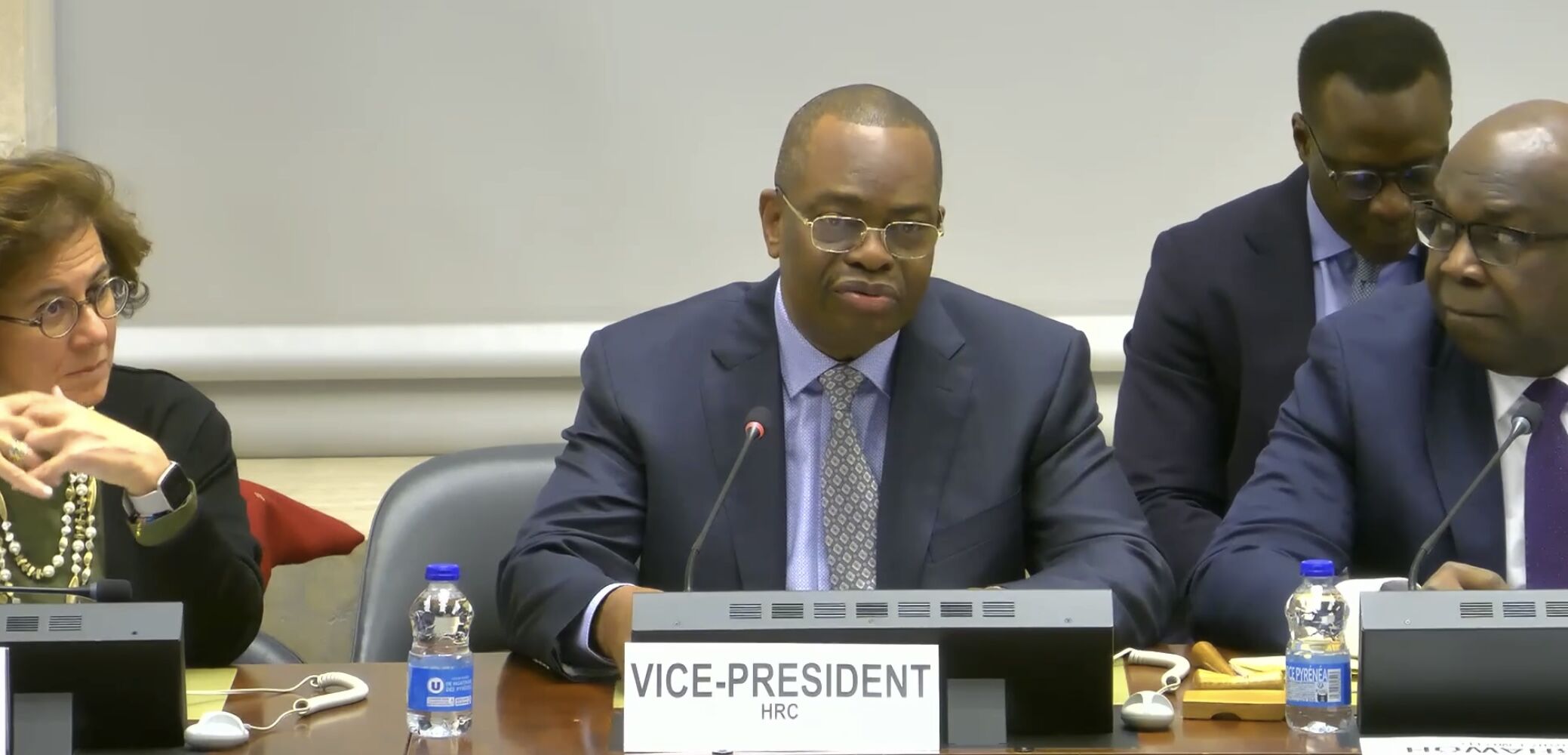
Paul Empole Losoko Efambe, Vice-President of the Human Rights Council, opened the 12th session of the Mechanism by reiterating the need for an inclusive and collaborative framework at international, regional and national levels for all human rights to be fully attained. He stressed the importance of an interconnected UN system for the implementation of the right to development. He emphasised that despite progress, the world continues to face multiple challenges, which threaten the realisation of the fundamental right to development. This includes hunger and poverty, whose elimination remains essential to attain the right to development. He thus reiterated that the work of the EMRTD is more relevant and crucial than ever, underlining that the continued efforts of the Mechanism are a key component of the realisation of the right to development. He emphasised, however, that the UN liquidity crisis undermines the EMRTD’s ability to fulfil its mandate.
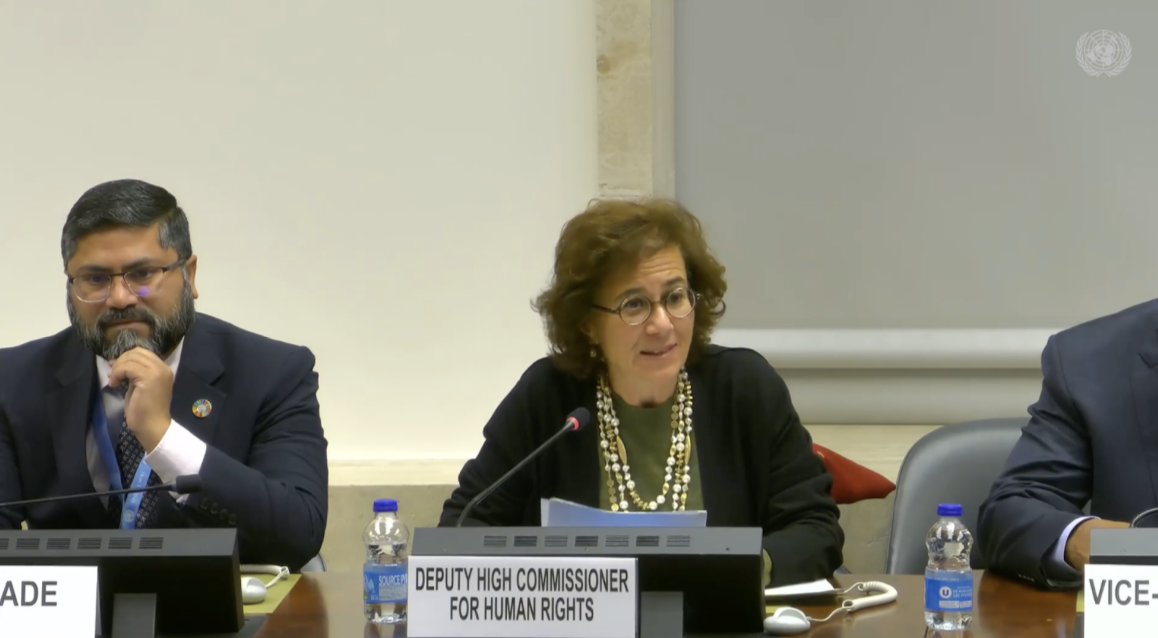
Nada Al-Nashif, United Nations Deputy High Commissioner for Human Rights, underscored in her opening remarks that declining respect for human rights and multilateralism are threatening development, especially in a context of conflict, which causes immense suffering. She reminded the audience of growing pushbacks on multiple fronts of human rights, even in countries that once championed fundamental freedoms. She stressed that, while military spending has soared, global development assistance has shrinked, which impacts the implementation of the seventeen UN sustainable development goals (SDGs). Yet, she emphasised that this path is reversible, as shown through the commitments of Member States during the 80th session of the UN General Assembly. She reiterated that the right to development offers a concrete way to answer this call and translate values into action, reminding the audience that human rights are universal and tangible.
She emphasised the importance of implementing the right to development both individually, collectively, and globally, calling to move from words to actions to realise this right in practice and address structural barriers that continue to hold back development. She reiterated OHCHR’s commitment to advancing the right to development, which includes tackling unilateral measures, assisting the state in building human rights economies, and providing budget analysis and advice on debt servicing. She concluded that, in an interconnected world, progress is only real when it is shared and when every person lives with dignity and hope, which the right to development can help us achieve. Finally, she called to transform commitment into real change on the ground.
Bonny Ibhawoh, Chair of the EMRTD, underscored the session’s focus on challenges that still undermine the right to development, nearly forty years after the adoption of the Declaration on the Right to Development, before moving to the following agenda item.
Item 2 – Adoption of the agenda and programme of work
The provisional agenda was adopted as follows:
1. Opening of the session.
2. Adoption of the agenda and programme of work.
3. General debate.
4. Coordination meeting with other United Nations mechanisms on the right to development.
5. Implementation of the mandate and programme of work:
(a) Consideration of thematic studies:
(i) Climate finance: vulnerability and responsibility;
(ii) Artificial intelligence, regulation and the right to development;
(b) Focused thematic discussions and interactive dialogues.
6. Conclusion of the session.
Item 3 – General debate
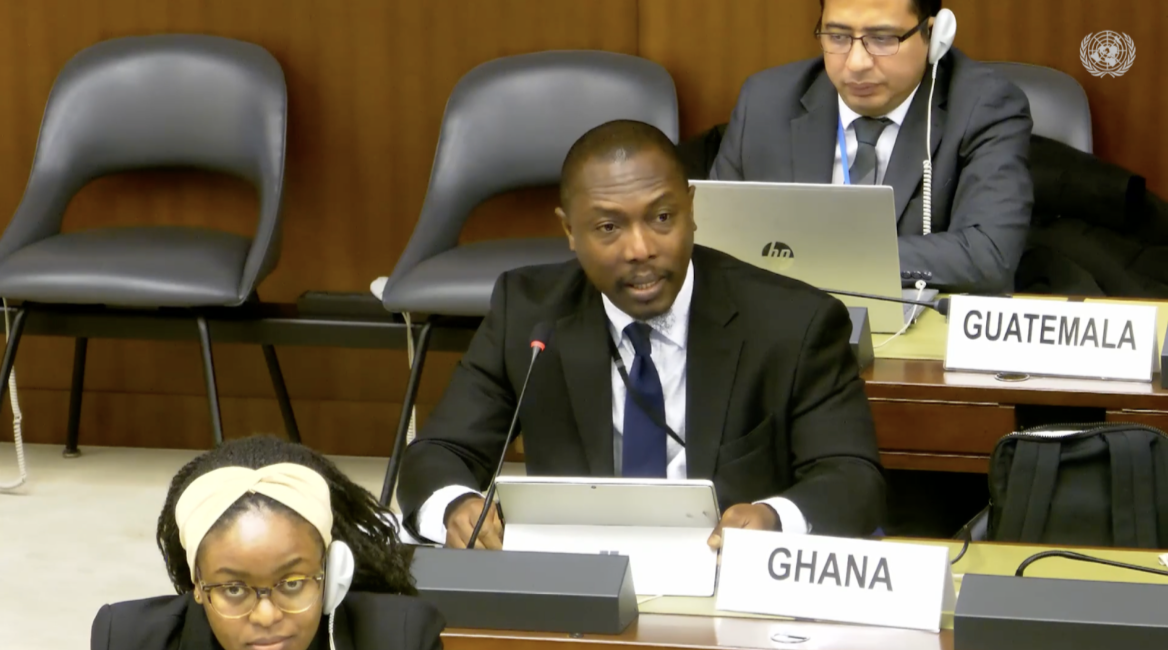
The delegate of Ghana, speaking on behalf of the African Group, welcomed the convening of the 12th session of the EMRTD, reiterating the group’s commitment to protect and promote all human rights, civil, political, economic, social and cultural rights across Africa and globally. He included in this list the right to development, which he stressed must be recognised as an integral component of human rights. He underscored that the responsibility for sustainable development rests with States, which ought to provide an enabling environment. The group emphasised the imperative for urgent reforms through the international finance system and urged developed countries to renew their pledges towards enhancing access to climate finance. The African Group acknowledged the importance of regional cooperation and good practices, which he stressed are fundamental to achieving SDGs.
The delegate further stressed the importance of including the right to development in both regional and national policies and frameworks, before underscoring the urgent importance of finalising a legally binding instrument on the right to development. He stated it would provide a robust legal framework to guide policies, strengthen international cooperation, enhance accountability and ensure the full realisation of the right to development, stressing it will be a decisive step towards promoting sustainable development for all people. The delegate emphasised the importance of transparency, non-interference, respect for the sovereignty of States and impartiality, reiterating that human rights, including the right to development, can be truly promoted and protected only through cooperation, genuine dialogue and solidarity. He concluded his remarks by calling for support for the African-led initiative.
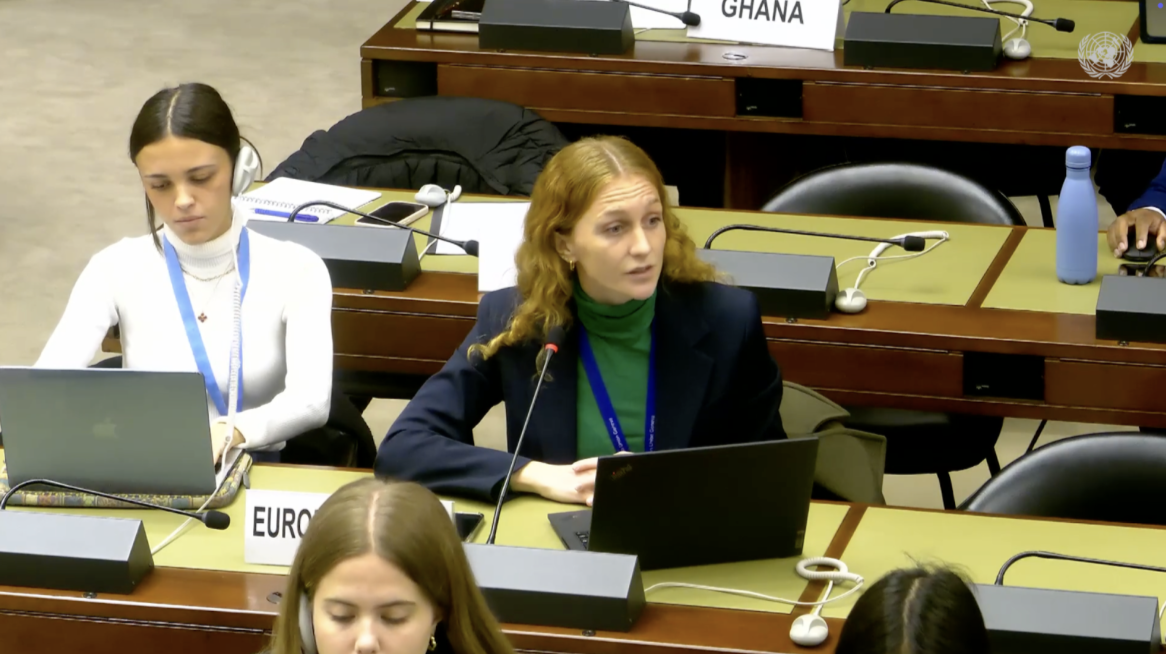
The delegate of the European Union reiterated its commitment to implementing the 2030 Agenda and reminded the audience that the EU is the largest global development assistance provider, accounting for 42% of the OECD’s global Official Development Assistance. She stressed that European efforts serve the broader purpose of sustainable and equitable development, not only economic growth. She emphasised that the right to development must be equally realised among all other human rights, and that any policies that advance the right to development should be in compliance with international human rights law. The delegate underscored that the realisation of the right to development must take into account right holders, that different stages of development cannot be used as a pretext for states not to uphold their human rights obligations. While the EU continues to have reservations about a legally binding instrument, reflecting the diverse views expressed by member states, it will continue to constructively engage in the dialogue.
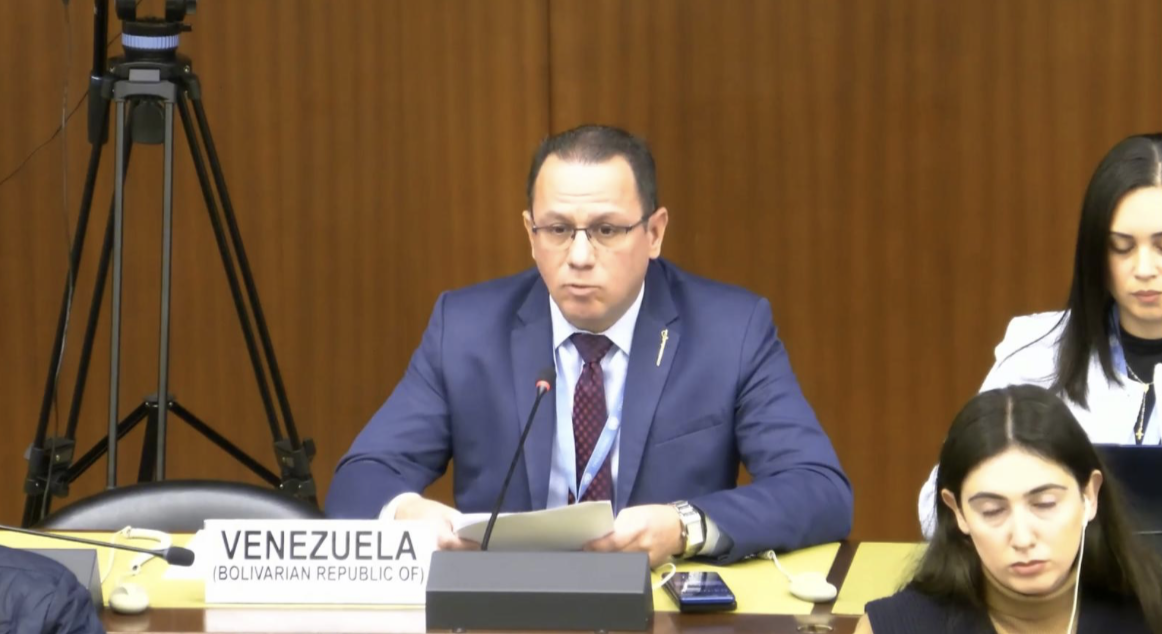
The delegation of Venezuela emphasised that the right to development is a universal and inalienable human right. The representative of Venezuela stressed that the Declaration on the Right to Development is the cornerstone of the State’s commitment to achieving this right. Venezuela highlighted that unilateral coercive measures constitute barriers to international cooperation and contribute to the deterioration of multilateralism. The delegation further underlined that granting fair treatment to migrants is an integral element of the right to development, as migration generates social and economic progress and thus fosters development.
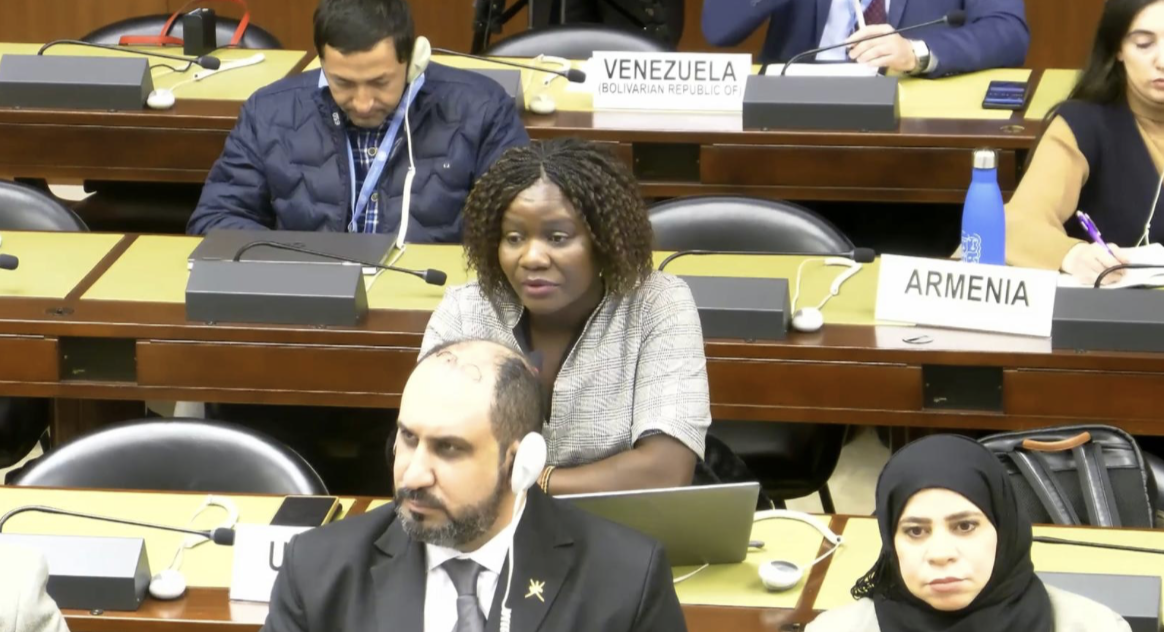
The delegation of Uganda, speaking on behalf of the Non-Aligned Movement (NAM), observed that the right to development should be central to the implementation of the 2030 Agenda for Sustainable Development. Uganda expressed deep concern about the persistent obstacles affecting the mechanism and reminded all states of their duty to strengthen its functioning.
The representative of South Africa, aligning with the NAM and the declaration of the African Group, stressed the need for urgent measures to ensure the establishment of a fair international tax system. The South African delegate urged developed countries to uphold their commitments regarding international financing. The representative emphasised that political commitments must be translated into concrete actions to ensure that no state is left behind. Concerns were also expressed regarding the limited representation of women in decision-making processes, which undermines the right to development. The delegate acknowledged the significant role played by civil society in ensuring the effective implementation of the right to development.
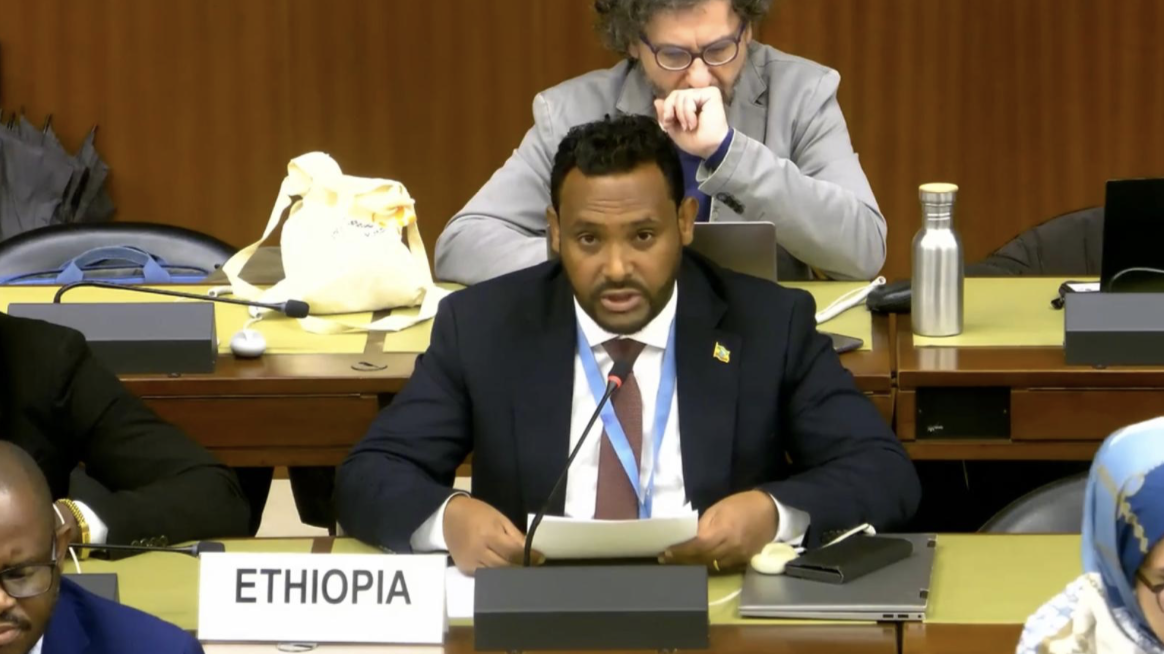
The representative of Ethiopia reaffirmed that the right to development is indivisible, universal and inalienable. Ethiopia called for an equitable trading system that guarantees fair market access and promotes technology transfer. The delegate stressed that trade must not be based on exclusion or dependency. The delegation further emphasised that access to capacity-building is essential to enable all nations to develop adequately. The representative of Ethiopia called for the adoption of a legally binding instrument on the right to development.
The delegation of Uganda, intervening at the national level, observed that the right to development must be granted the same status as other rights. The Ugandan delegate stressed that the right to development is intertwined with every other right. The delegation also highlighted that rights must not be defended selectively. Uganda reiterated the strong link between climate change and development and deplored the fact that Africa is among the greatest victims of climate change despite being responsible for only 4% of global greenhouse-gas emissions.
The delegation of China stressed that, 40 years after the adoption of the Declaration on the Right to Development, its realisation is being undermined by numerous factors, including pressure on international cooperation, increased competition for resources and the rise of protectionism and unilateralism. China reaffirmed that the right to development is an inalienable right enabling every person to contribute to political, social and economic development. The delegation emphasised that new technologies must serve as fundamental tools to realise this right.
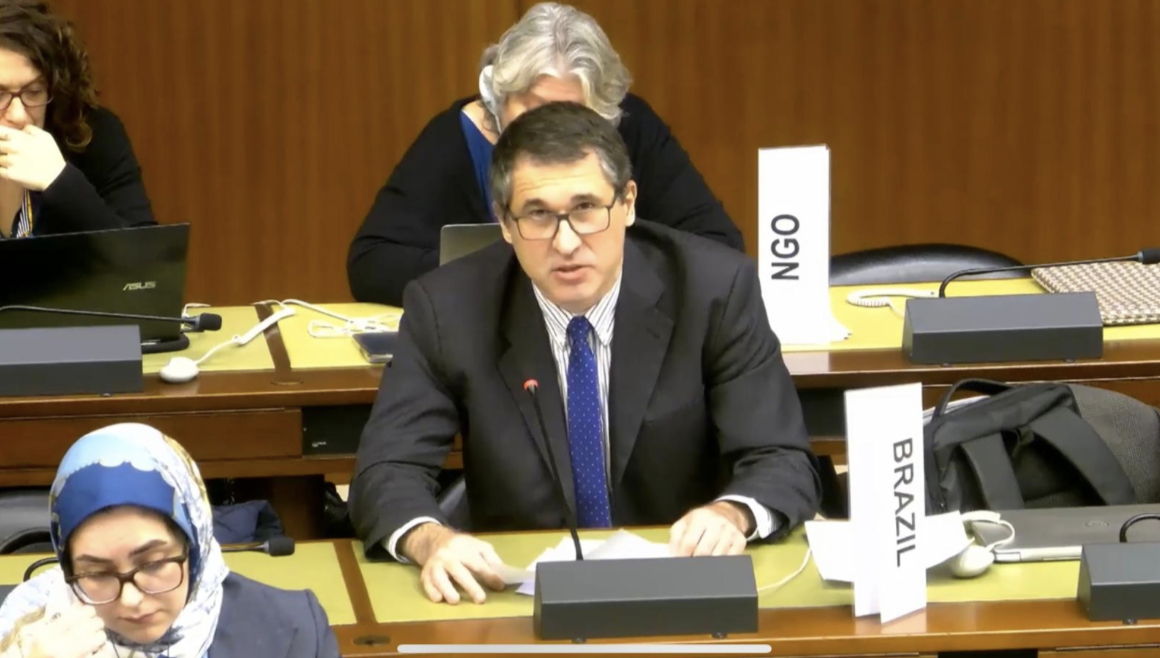
The representative of Brazil stressed that the responsibility of states and businesses is essential for the promotion of human rights, including the right to development. Brazil emphasised that a converging climate and finance agenda is crucial to achieving sustainable development. The representative noted that the right to development requires states to guarantee the same right to every citizen without discrimination on the basis of race, sex or origin. Brazil concluded by emphasising that it is a collective responsibility to uphold the right to development.
The delegation of India noted that international cooperation is essential for the realisation of the right to development and that reforming the global multilateral framework is key to achieving this objective.
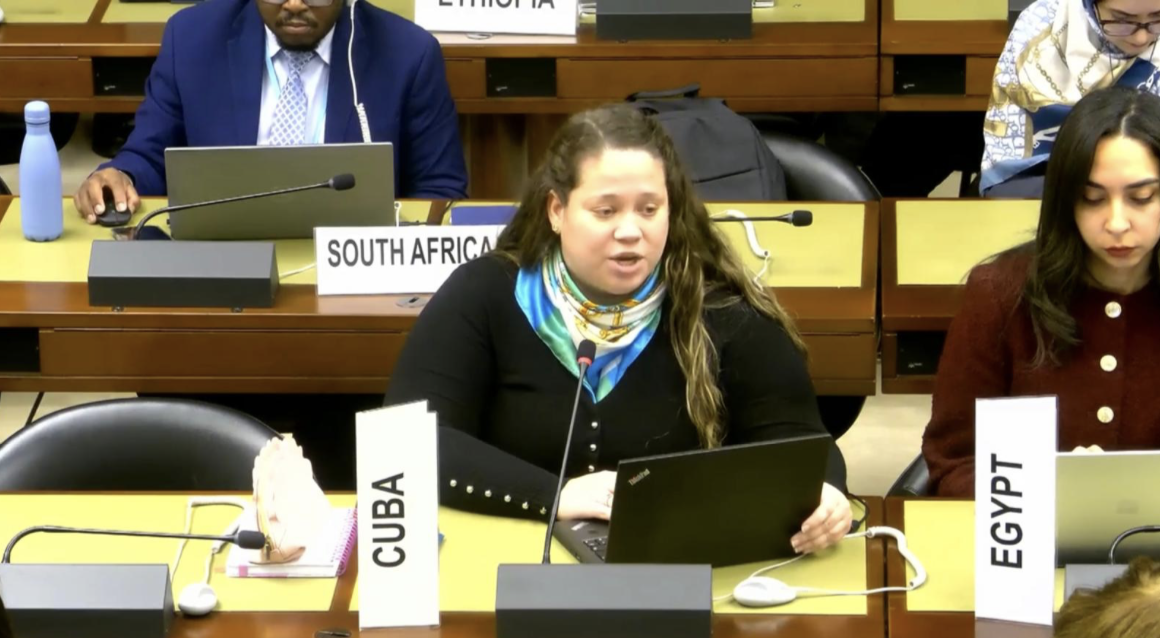
The delegation of Cuba stressed that realising the right to development requires several actions, including reforming the global financial architecture, increasing international cooperation and guaranteeing respect for the United Nations Charter and international law more broadly. Cuba called for increased efforts toward the adoption of an International Covenant on the Right to Development. The delegate affirmed that this covenant should constitute the central objective for the commemoration of the 40th anniversary of the Declaration on the Right to Development.
The delegation of Algeria noted that international cooperation and solidarity form the cornerstone of the realisation of the right to development. Algeria called for the adoption of a legally binding instrument on the right to development. The delegation reiterated the importance of the 1986 Declaration on the Right to Development, which defines the right to development as an inalienable human right entitling all individuals and peoples to participate in, contribute to and benefit from economic, social, cultural and political development, where all human rights and freedoms can be fully realised. Algeria concluded by stressing that the right to development is essential for peace, stability and dignity.
Item 4 – Coordination meeting with other United Nations mechanisms on the Right to Development
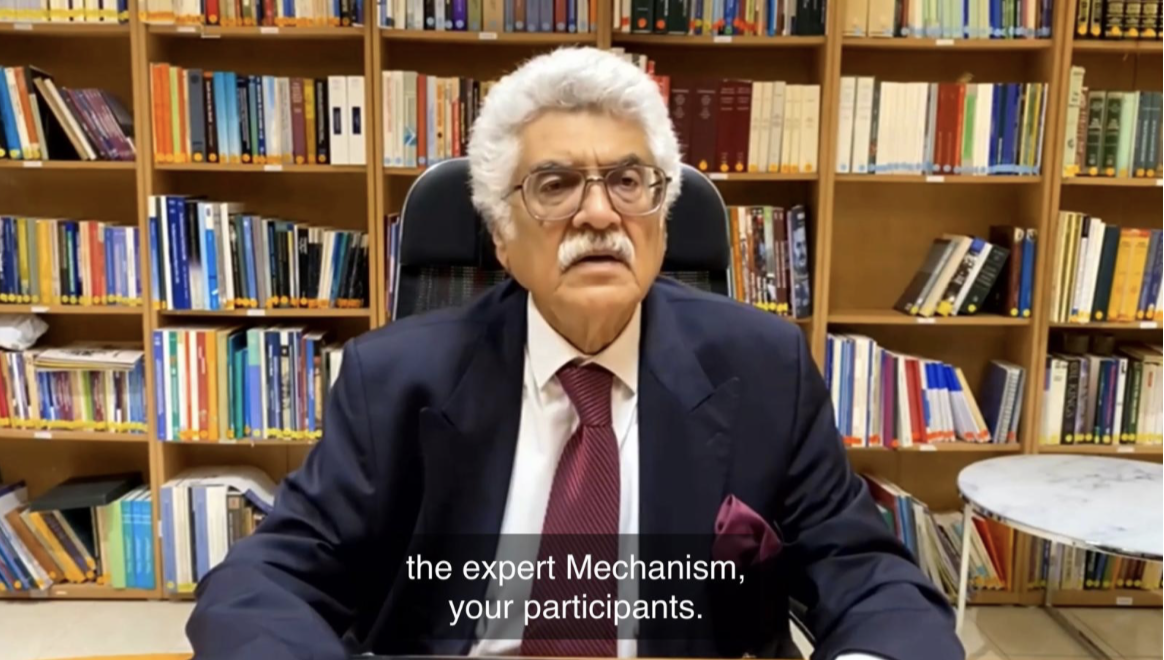
In a video message, Mr. Zamir Akram, Chair Rapporteur of the Intergovernmental Working Group on the Right to Development, recalled that he was addressing the coordination meeting among United Nations mechanisms on the right to development. He stressed that the twenty-sixth session of the Working Group, held from 12 to 15 May 2025 in Geneva, had been highly productive. He noted that the interactive dialogue with the Chair of the Expert Mechanism and the Special Rapporteur provided extensive updates on their activities and on their recommendations for Member States in the current challenging global context.
The Chair Rapporteur of the Intergovernmental Working Group on the Right to Development indicated that the session also included a thematic dialogue on children, future generations and development. He observed that contributions from the Committee on the Rights of the Child, the Special Rapporteur and other experts had significantly enriched the discussions and had highlighted issues of particular relevance to the realisation of the right to development.
Mr. Zamir Akram further highlighted four interactive dialogues intended to address divergences within the Working Group. He stressed that these exchanges covered the debt crisis, the collective dimension of the right to development, unilateral coercive measures and illicit financial flows together with the repatriation of assets. He noted that more than twenty experts contributed, offering diverse perspectives and prompting sustained engagement from delegations.
The Chair Rapporteur of the Intergovernmental Working Group on the Right to Development recalled that the programme of work for the twenty-seventh session, scheduled for May 2026, had not yet been completed. He noted that several recommendations were already adopted, including the continuation of expert dialogues, the proposal for the Human Rights Council to dedicate its twenty twenty six biennial panel to the fortieth anniversary of the Declaration on the Right to Development, and the consideration of intersessional meetings across different regions to incorporate a wider range of perspectives.
Mr. Zamir Akram concluded by emphasising the need for the next report of the High Commissioner to examine existing obstacles to the realisation of the right to development, including unilateral coercive measures, the absence of repatriation of illicit assets and the impact of the debt crisis. He stressed that clear recommendations would be essential for supporting the Working Group in the effective fulfilment of its mandate.
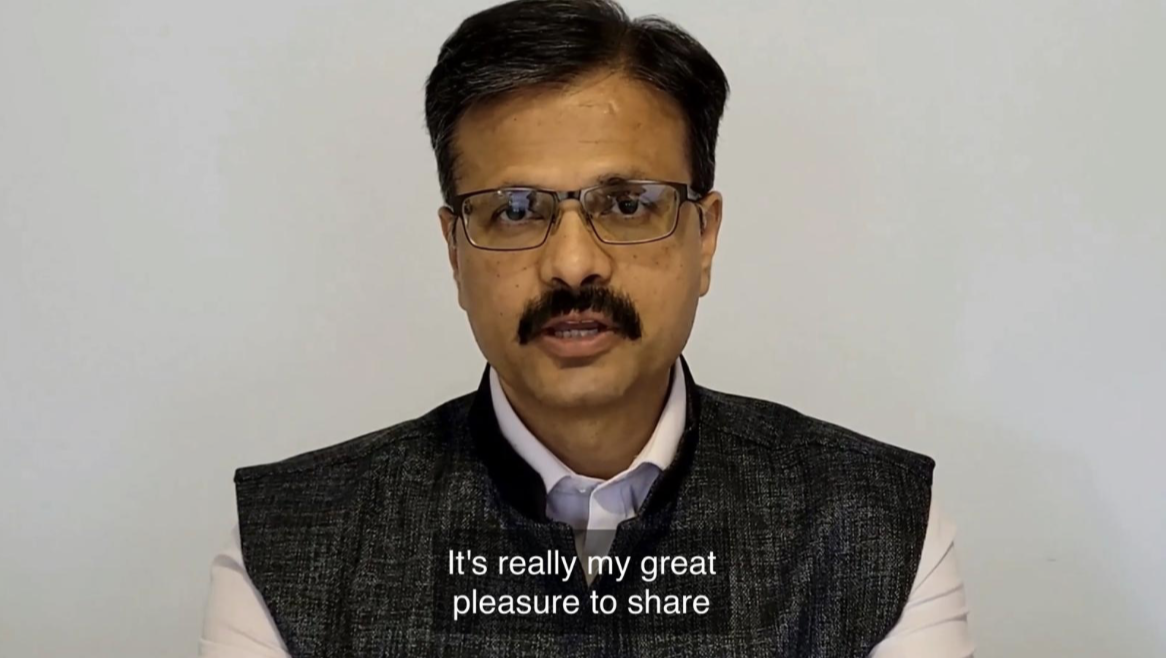
In a video message, Mr Surya Deva, Special Rapporteur on the Right to Development, emphasised the importance of collaboration given limited global resources and the UN’s ongoing political and financial crisis. He outlined all existing mechanisms working on the right to development: the Office of the High Commissioner for Human Rights, the Intergovernmental Working Group, the Expert Mechanism on the Right to Development and the Special Rapporteur on the Right to Development. Consequently, he underscored the need for states to mobilise resources in support of these mechanisms.
He stressed that the world is facing interrelated crises that together form an emerging global disorder, comprising economic disorder, environmental disorder and institutional disorder. He noted the existence of profound economic inequalities both within states and between them. Furthermore, he emphasised the necessity of developing an economic model that respects the environment and biodiversity and operates within planetary boundaries. He also observed that the world is witnessing a continuous rise in conflicts, demonstrating that the Security Council is failing to fulfil its mandate to maintain international peace and security. In this context, the right to development offers a pathway to address these disorders through a model that is inclusive, sustainable and participatory. He characterised development as inclusive when it leaves no one behind, thereby addressing economic disorder. He added that sustainable development is essential to overcoming the environmental disorder he described. Finally, he stressed that governance models at the national, regional and international levels must be participatory in order to overcome the current institutional disorder.
The Special Rapporteur on the Right to Development stated that next year will be crucial for the adoption of the International Covenant on the Right to Development, as the goal is to build a broad consensus for its adoption and implementation. He highlighted recent international legal developments that reinforce the relevance of the right, such as Advisory Opinions from the International Court of Justice linking human rights, climate change and sustainable development. He also referred to the Association of Southeast Asian Nations (ASEAN), which has adopted a declaration on the right to a clean, healthy and sustainable environment and is proposing to adopt a declaration on the right to development and peace. These regional and international developments, he stressed, provide important momentum for realising the right to development universally through an inclusive, sustainable and participatory approach.
Item 5 – Implementation of the mandate and programme of work
(a) Consideration of thematic studies
(i) Climate finance: vulnerability and responsibility
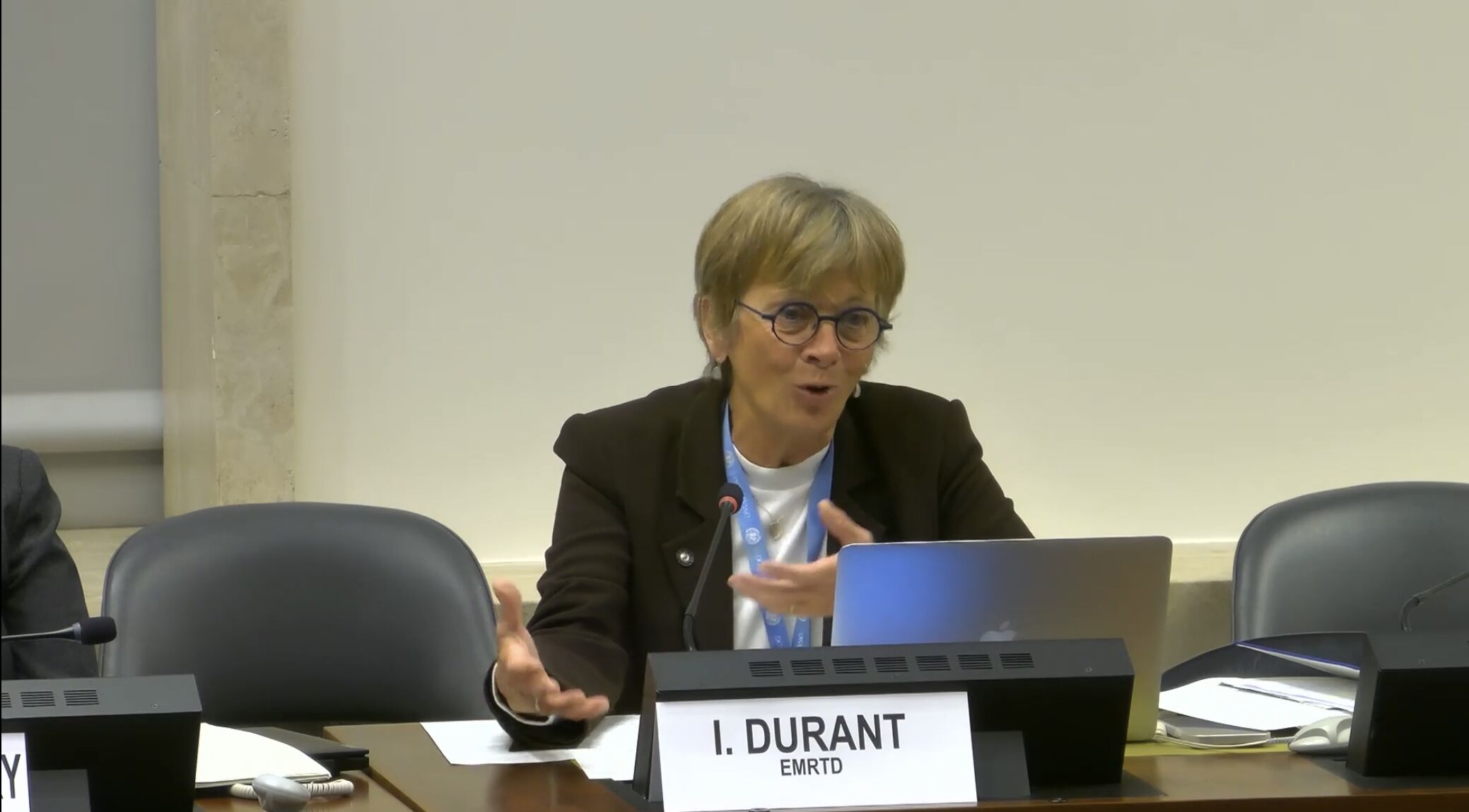
Isabelle Durant stressed that the climate crisis is an existential threat and that a just transition requires substantial and predictable financing. Isabelle Durant noted that her analysis is situated within current international processes, including the upcoming thirtieth session of the Conference of the Parties and the follow-up to the Seville commitment, where adaptation finance will be a central issue. She observed the asymmetry between those most affected by climate impacts and their limited responsibility for causing them.
Isabelle Durant recalled the importance of the Paris Agreement, especially its sixth article, which enables carbon exchanges. She emphasised the principle of common but differentiated responsibilities and examined the potential for carbon pricing and carbon markets to generate income, particularly for regions such as the Congo Basin, the Amazon and mangrove areas.
Isabelle Durant concluded by examining the conditions under which carbon could become a reliable source of revenue without deepening inequalities. She underlined the relevance of the forthcoming Conference of the Parties in Belem and noted that clear rules are needed to ensure that carbon markets support both development and climate objectives.
(ii) Launching EMRTD policy briefs
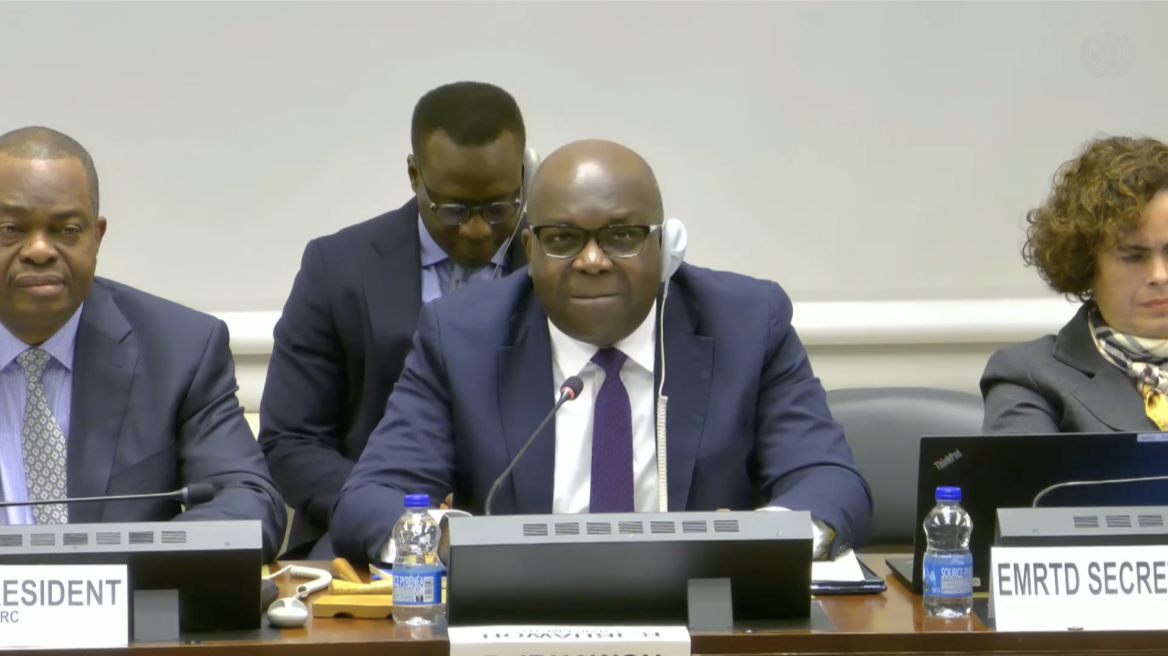
Bonny Ibhawoh presented the remarks and noted that many delegates had requested more accessible material on the work of the Expert Mechanism. He stressed that policy briefs have been created to respond to this demand and explained that they offer concise and targeted guidance for States, international organisations, civil society and the private sector. He observed that these briefs do more than summarise thematic studies, since they translate complex findings into practical recommendations that can be used in real decision-making.
Bonny Ibhawoh added that the policy briefs were prepared with input from stakeholders and are consistent with the mandate of the Mechanism to provide tools and best practices for promoting the right to development. He encouraged delegates to share them widely, noting that they are short, clearly organised and designed to reach audiences who cannot attend the meetings. He explained that the briefs include direct links to full studies and expressed appreciation to the Secretariat for the work undertaken in producing them.
Please find below the link to access the policy briefs: https://www.ohchr.org/en/hrc-subsidiaries/expert-mechanism-on-right-to-development/policy-briefs
(b) Focused thematic discussions and interactive dialogues
(i) How to commemorate the 40th anniversary of the UN Declaration on the Right to Development: reflections and proposals
Bonny Ibhawoh, Chair of the EMRTD, opened his remarks by recalling a central framework of the right to development, namely the Declaration on the Right to Development adopted by the United Nations General Assembly in 1986. He stressed that this text represents a visionary statement affirming that development is not merely a matter of economic progress but a human right belonging to all. He observed that the Declaration arose from the conviction that genuine development must be people-centred, participatory, equitable and inclusive, and anchored in the indivisibility and interdependence of all human rights.
He emphasised that, as the 40th anniversary of the Declaration approaches, the international community must commemorate its adoption and renew its commitment to its implementation. He regretted that this commemoration takes place in a context marked by rising inequalities, persistent conflicts and accelerating climate change. He stated that “this anniversary is not an occasion for nostalgia. It is a call to action”. In this regard, he urged that the 40th anniversary of the UN Declaration on the Right to Development must catalyse the transformation of the right to development from aspiration to concrete action.
He highlighted that, through the work of the Expert Mechanism, the Working Group on the Right to Development, the Special Rapporteur, and successive reports of the Secretary-General and the High Commissioner, the United Nations has progressively clarified the content, scope and obligations associated with the right to development. He noted that these efforts have culminated in the creation of the draft Covenant on the Right to Development, which establishes binding obligations for states and shared responsibilities within the international community.
The Chair of the EMRTD affirmed that the 40th anniversary must become a moment of renewed global commitment and cooperation. He identified three imperatives guiding his reflection. First, he emphasised the importance of reaffirming the right to development as central to the UN’s normative and operational agenda. Second, he underlined the need to link the right to development with the profound global transformations of the present era. Third, he stressed the necessity of building institutional and political momentum towards the adoption of the Covenant on the Right to Development. He emphasised that this final measure will transform the right to development from a moral commitment into a legally binding instrument, carrying real obligations for states and international institutions.
He concluded his presentation by recalling the words of the 1986 Declaration: “The human person is the central subject of development and should be the active participant and beneficiary of the right to development.” He selected this quotation to underline that commemorations must amplify the voices of those facing structural and persistent inequalities, including women and girls, indigenous peoples, persons with disabilities and communities confronted with poverty, conflict and climate change.
(ii) Public participation: a tool for development
Opening this thematic discussion, Ms. Durant stressed that the involvement of long-term residents in the territory is essential to the principle of the right to development, emphasising that it is essential to integrate the experiences, needs, and diverse expectations of all those living in the area, including the most marginalised groups. She noted that it ensures that issues are properly addressed, that outcomes are relevant, and that implementation can be monitored by the inhabitants themselves.
However, she pointed out that participation is not merely a concept but a practice that requires a clearly defined framework. Such a framework must be inclusive, accessible, transparent, and understandable to all, which involves addressing barriers related to language, information, and training.
Mr. Achsanul Habib, Chargé d’Affaires ad interim of the Permanent Mission of Indonesia, defined public participation as a key element of a fundamental human right, in line with the spirit of the Declaration on the Right to Development. He stressed that primary right-holders need to be actively involved by duty-bearers, as the former’s realities shape the latter’s priorities. He gave concrete examples of a legally grounded bottom-up and multi-level participatory development planning system implemented in Indonesia. He underscored that bottom-up drivers to development reinforce social cohesion, foster trust, and ensure that public policy reflects the population’s real needs.
Explaining that public participation in Indonesia is rooted in inclusivity, early engagement, and transparency and inclusivity, he emphasised that Indonesian strategies enable development to be locally rooted, legitimate, and sustainable, thus strengthening trust and mitigating potential social tensions. He concluded by underscoring the main success factors for implementing public participation: sustained political will, an inclusive and data-informed process, and participatory monitoring and evaluation. He also noted ongoing challenges, such as uneven participation across regions, limited budgets, and the difficulty of coordinating multiple levels of government.
Ms. Keleni Tikomaisuva-Seruvatu, Deputy Permanent Representative of Fiji, affirmed that public participation is a cornerstone of sustainable development. She pointed out three areas where Fiji consistently relies on public input: budget consultations, the national development planning process, and the drafting of national legislation, including work on treaties and conventions. While she acknowledged that Fiji faces particular challenges, she highlighted the island nation's efforts to innovate through digital platforms, enabling virtual participation despite persistent barriers. She noted that participation must be a continuous process rather than a simple measure of success or failure.
Furthermore, she stressed the importance of empowering communities on issues such as the environment and climate change, mentioning recent progress in securing direct climate finance for frontline communities as evidence that these efforts are bearing fruit.
In her conclusion, she underscored that bridging the gap between national-level discussions on the right to development and tangible improvements for local communities, including ensuring that all communities are fully involved in the process, remains a central challenge.
Mr. Ahmed Badr, representing the Danish Institute for Human Rights, shared the experience of a National Human Rights Institution (NHRI) regarding public participation as a tool for development. He underscored that public participation is a human right and a structural pillar of the right to development, before pointing out that participation is a legal and substantive component of the right to development; that an effective participatory national human rights system provides the institutional architecture needed to make this right a reality; and that when such systems firmly embed participation, they lead to inclusive, sustainable, and tangible development outcomes. He emphasised that the legal foundations of participation are deeply rooted in international human rights law, citing the Declaration on the Right to Development, the ICCPR, and the 2030 Agenda for Sustainable Development, and noting that participation gives concrete meaning to empowerment, equality and non-discrimination, and self-determination.
He then highlighted the central role of NHRIs and national mechanisms for implementation, reporting and follow-up (NMIRFs), which contribute to creating the bridge between legal commitments and lived realities. He underlined that they embed participatory rights in laws and policies, ensure accessible information, institutionalise participation throughout the policy cycle, and provide oversight and remedies to guarantee that participation is consequential. Giving concrete examples, he stressed that institutionalised participation produces better outcomes: policies aligned with community needs, smoother implementation, more transparent resource allocation, greater trust, and reduced conflict. He concluded by affirming that a participatory national human rights system is not only a guardian of rights but also a driver of the right to development, translating international norms into meaningful engagement on the ground.
Mr. Anthony Zacharzewski, from The Democratic Society, underscored that public participation has become a mainstream approach before pointing out that designing participation processes solely from a top-down, technocratic perspective often fails to account for local conditions, relationships, and existing community networks. He emphasised the importance of combining bottom-up and top-down approaches and creating what he defined as “middle spaces” where participants and government officials can engage on an even footing. He urged governments to establish lasting participatory infrastructure that strengthens both community and institutional capacity. He stressed the need for feedback mechanisms to show participants how their input influences decisions, and he highlighted the importance of over-communicating these outcomes to maintain trust and engagement.
After giving concrete examples, he underlined the distinction between passive and active transparency, stressing the need to understand local networks to communicate effectively, before stressing that building a participatory culture within government institutions and local communities is a long-term process, requiring sustained effort to embed participation as a normative practice. Finally, he emphasised that middle spaces must be carefully designed to avoid replicating existing power structures, ensuring genuine inclusion, equality, and two-way communication between citizens and government over the long term.
(iii) Impacts of trade tariffs on the realisation of the right to development
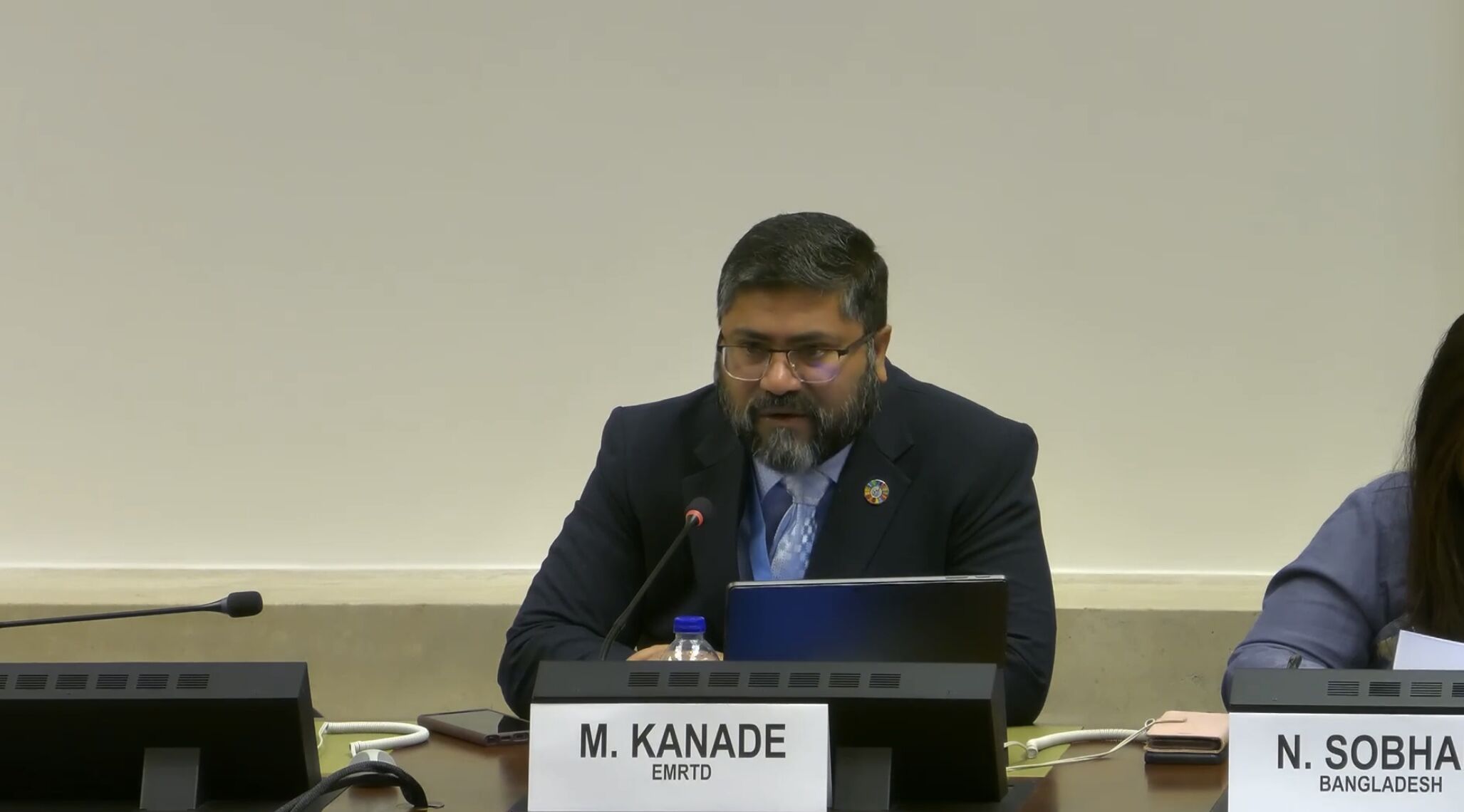
Mr. Kanade reminded the audience that the right to development is inalienable and entitles all people to participate in, contribute to, and benefit from economic, social, cultural, and political development. He emphasised that it seeks equitable distribution of benefits, reduction of inequalities, and requires international cooperation and appropriate conditions for sustainable development, before noting the mutually dependent relationship between realising the right to development and achieving sustainable development.
He then highlighted that a universal, rules-based, open, non-discriminatory, and equitable multilateral trading system is central to both sustainable development and the right to development. He noted that recent global trade tensions, rising tariffs, and disruptions in global value chains have undermined these principles, disproportionately affecting developing countries and hindering progress toward the SDGs, before stressing that integrating a right-to-development perspective into trade policies ensures that trade is inclusive, rights-enhancing, and environmentally sustainable.
Mr. Tšiu Khathibe, Permanent Representative of Lesotho, opened his remarks by underscoring that tariffs imposed by key trading partners pose serious risks to Lesotho’s economic growth, youth employment, social inclusion, and the realisation of the right to development. He mentioned Lesotho’s textile and apparel sector, which is heavily reliant on access to the US market, making it particularly vulnerable to tariff increases. Hence, he emphasised the severe social consequences, as the sector employs 30,000–40,000 workers, many of whom are women: tariff shocks threaten job losses, exacerbate poverty, reduce access to housing, food, and education, and risk reversing gender-equitable development, thereby undermining social cohesion and inclusion. He observed that such trade disruptions also limit local value-added skills development, technology transfer, and cultural and human capacity development, constraining the realisation of the right to development.
Highlighting the role of stable multilateral trade systems, he pointed out that policy solutions to mitigate tariff impacts include trade facilitation, infrastructure and digital investment, market diversification, support for MSMEs, access to affordable finance, safety nets, and regional cooperation. He concluded by stressing that trade policies are not neutral: tariffs directly affect economic growth, social inclusion, cultural empowerment, equality, and participation, while a principled, stable, and fair trade policy is essential to guarantee sustainable development and promote the right to development rather than increasing vulnerability.
Ms. Nahida Sobhan, Permanent Representative of Bangladesh, noted that global trade measures often have profound human rights implications, particularly on this right, and that today’s dialogue serves as a necessary reminder of these impacts. Recalling that the Declaration on the Right to Development guarantees all individuals and peoples the right to participate in, contribute to, and enjoy economic, social, cultural, and political development, she stressed that this right cannot be fulfilled within an international order marked by structural inequalities and discriminatory economic policies. She underscored how trade can be a powerful enabler of development, but when distorted through unilateral measures, it becomes a barrier that entrenches inequality. She pointed out, however, that recent tariff escalations disproportionately harm developing and least developed countries, disrupting production networks and generating uncertainty. Citing UNCTAD, she noted that tariffs on Least Developed Countries (LDCs) exports have tripled and now exceed those faced by developed economies, raising serious concerns of justice and equity.
Finally, she flagged the rise of non-tariff barriers disguised as environmental measures, stressing that climate responsibility must be shared, not shifted, before concluding that trade must not divide countries into winners and losers. Tariffs must not be used against vulnerable economies or marginalised people. Development requires solidarity and fairness, and international trade must function as an enabler of equality and shared prosperity, supporting the realisation of the right to development.
Mr. Carlos Razo, from UNCTAD, focused his presentation on the impact of US tariffs, noting their complexity: the tariff landscape includes sectoral variations, country-specific tariffs, and additional measures under instruments such as the International Emergency Economic Powers Act, making the real exposure for countries complex to assess. He also emphasised that tariff impacts are not only about size but also relative competitiveness. Noting that LDCs have struggled to increase their share of global exports over the past 15 years, he underscored that manufacturing sectors, particularly textiles and apparel, are hardest hit, which is critical as these sectors drive productivity, efficiency, and development in LDCs.
Finally, he warned that tariff increases are not gender-neutral, disproportionately affecting women and girls employed in the textile and apparel sectors, who are among the most vulnerable populations. He concluded by noting the urgent need to discuss solutions and mitigate these adverse effects.
Ms. Yuefen Li, from the South Centre, underscored that the IMF’s reported effective US tariff rate, which is far lower than media figures, still represents a significant burden for vulnerable countries. She criticised inaction, emphasising that such measures ignore the absorptive capacity of LDCs and constitute an attack on multilateralism and the rules-based international order. Highlighting that trade is a key engine for economic growth, industrial production, employment, and poverty reduction, she stressed that tariff hikes create economic uncertainty, disrupt global supply chains, and generate volatility in both trade and financial markets, affecting demand and supply simultaneously. She then described their regressive impact on vulnerable populations, particularly women and girls, and how these effects threaten poverty alleviation, equality, and sustainable development.
She proposed measures to mitigate these impacts, including strengthening South-South cooperation, regional integration, and trade diversification. She pointed to initiatives and new development banks as critical tools to support affected countries. Finally, she stressed that while the global economic order needs reform, rules-based international trade remains essential, and countries should unite with institutions like UNCTAD, the South Centre, and the Expert Mechanism on the Right to Development to strengthen collective action and financing mechanisms.
In a video message, Prof. Akmal Saidov, Director of the National Human Rights Centre of the Republic of Uzbekistan, concluded the panel. Emphasising that the right to development must remain central to global solidarity amid growing geopolitical, economic, and environmental challenges, he noted that trade, finance, and technology are human rights issues, shaping people’s opportunities and dignity, and fair, transparent trade systems are essential to ensure globalisation serves humanity rather than inequality.
After sharing examples of Uzbekistan’s experience, he proposed four key measures to advance the right to development: adopt a legally binding international instrument; enshrine human rights norms in trade treaties; develop E-learning and expert networks on trade and human rights; and promote South–South and Triangular Cooperation through a Right to Development Partnership Platform.
iv) The impact of AI on creative industries, cultural rights, and the right to development
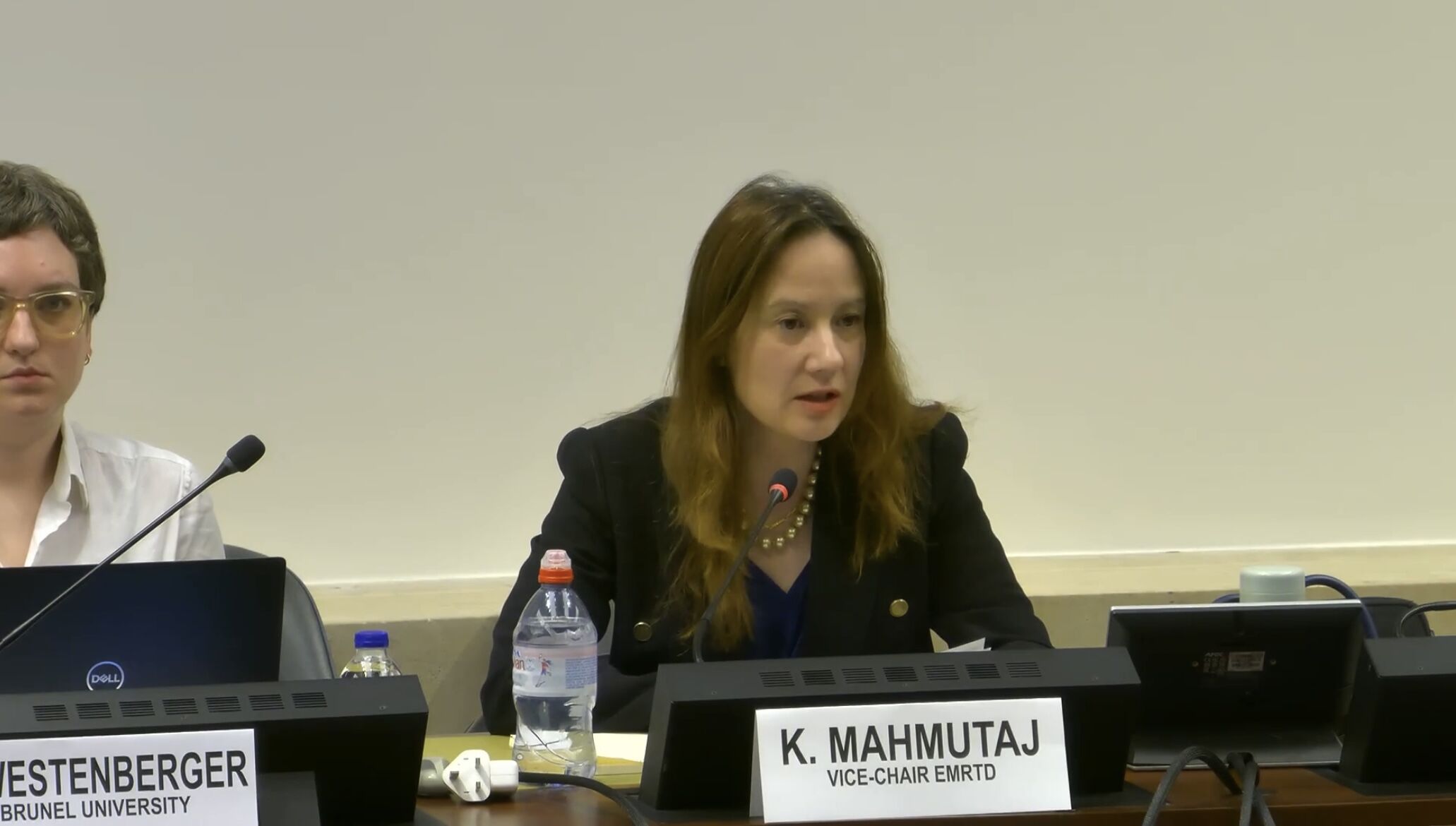
Ms. Mahmutaj stated that creative industries play a crucial role in ensuring the realisation of cultural rights, which lie at the heart of development. Ms. Mahmutaj explained that when these industries prosper, they enhance cultural accessibility, foster diversity, and make the exercise of cultural rights more concrete and inclusive. Ms. Mahmutaj observed that the growing incorporation of artificial intelligence within creative sectors is swiftly transforming the ways in which artistic works are produced, distributed, and experienced. Ms. Mahmutaj emphasised that AI has the capacity to strengthen creativity by supporting artists in their practice, promoting their visibility, and widening public engagement with cultural life.
She cautioned, however, that AI can equally threaten the integrity of creators’ work, for instance, when it relies on their original output to produce new material, replicas, or imitations made available for public use. She warned that such practices risk undermining the economic rights of creators and diminishing the variety of cultural expressions in digital environments. Ms. Mahmutaj underlined that the current regulatory framework remains fragmented and that the effectiveness of existing protective measures is increasingly uncertain. She further observed that voluntary commitments and international declarations often prove insufficient in addressing the rapid technological advances and growing dominance of the AI industry.
Ms. Mahmutaj explained that the aim of this discussion is to analyse both the risks and the opportunities that AI brings to the cultural and creative sectors, and to determine its specific implications for artists and creators, along with the broader effects on cultural rights and the right to development. She expressed that the expected outcomes include, firstly, a clearer understanding of AI’s influence on creative industries, cultural rights, and development, with focused attention on its benefits and challenges for artists, creators, and communities. Ms. Mahmutaj added that the discussion seeks to contribute to the EMRTD’s ongoing thematic study on Artificial Intelligence, Regulation, and the Right to Development. Finally, she indicated that it also aims to collect insights and examples from relevant stakeholders to assess how AI shapes individuals’ and communities’ participation in, contribution to, and fair benefit-sharing from cultural and creative development, thereby informing the EMRTD’s future analytical and policy recommendations.
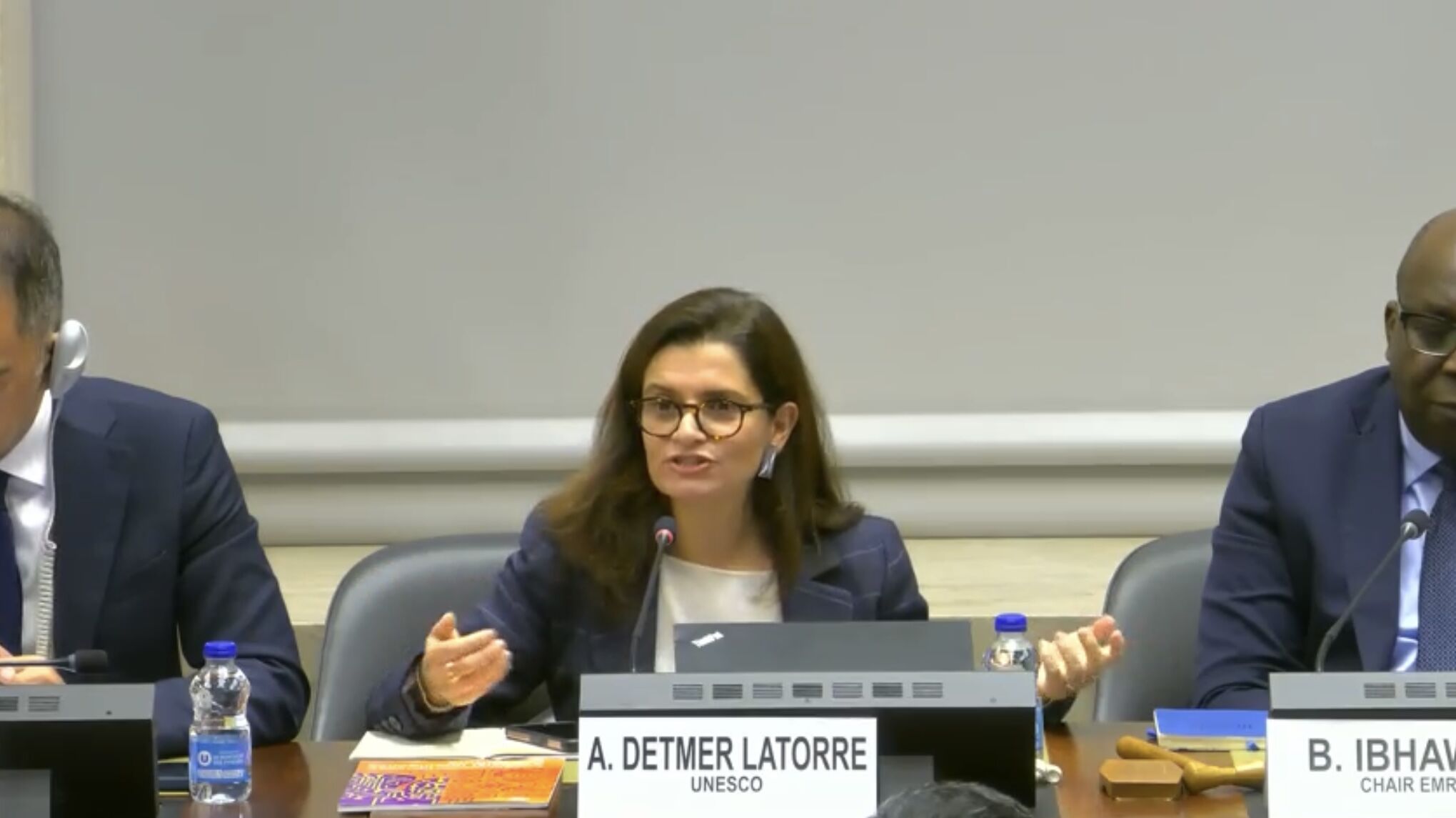
The representative of UNESCO, Andrea Detmer Latorre, presented the challenges and opportunities posed by AI in the cultural sphere.
On the one hand, she outlined the principal challenges associated with new technologies in culture. She stressed that the governance lag surrounding AI risks reinforcing bias, fostering cultural homogenisation and linguistic loss, and marginalising minority voices. She further noted that the concentration of AI power could undermine cultural rights and threaten creators’ compensation and remuneration. She warned that one of the greatest risks lies in the lack of transparency in AI systems and training data, which may lead to the erosion of creative, cognitive and socio-emotional skills, as well as threaten human creativity and agency. She also observed that the North–South divide could result in misuse, bias and distortion in the preservation and representation of cultural heritage. In addition, she emphasised that the high environmental footprint of AI poses a risk that cultural economies may become extractive rather than generative, and that this also represents a threat to cultural sovereignty.
On the other hand, she presented the main opportunities offered by new technologies in culture. She stressed that AI can expand cultural access, personalise experiences and reach diverse audiences. She highlighted that AI can enhance creativity and enable new forms of artistic expression. She noted that AI can lower market entry barriers and thus widen opportunities in artistic and cultural production. She explained that new technologies have the potential to create new cultural jobs and increase productivity. She underlined that AI can foster interdisciplinary collaboration between artists, researchers and professionals across different fields and systems. Moreover, she emphasised that new technologies can promote linguistic diversity and connect local knowledge with global systems. She observed that AI can improve efficiency by automating administrative and technical tasks. Finally, she explained that AI offers an opportunity for art aimed at raising awareness, as AI-powered works can make environmental data more tangible.
To conclude her statement, she stressed the importance of developing policies that sustain cultural diversity and accountability. She highlighted the need to encourage eco-responsible AI practices and to advance AI training. She strongly emphasised that ensuring a fair redistribution of the value generated by cultural data is essential.
The representative of UNESCO called for interoperable governance frameworks guided by ethical standards. She explained that although each state has its own AI policy, the nature of this technology requires the establishment of a single framework capable of functioning across all countries and sectors.
(v) The role of civil society organisations in realising the right to development at the grassroots level
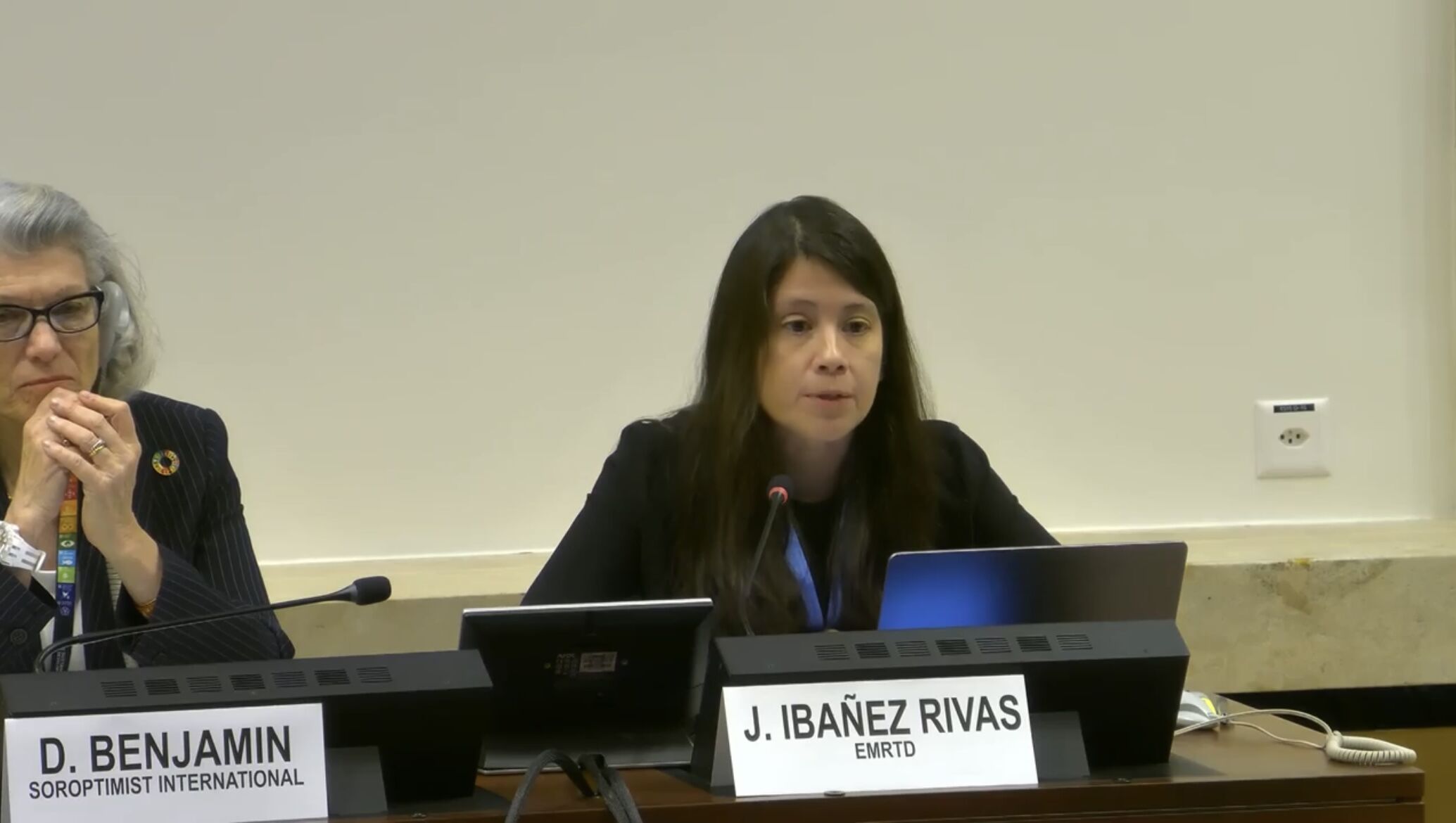
Ms Ibáñez Rivas stressed that all human beings have the right to development. Her presentation emphasised that civil society organisations play a crucial role in protecting the rights holders of the right to development. She underscored that the knowledge held by these organisations is essential for the work of the expert mechanism.
The delegation of Sierra Leone stressed that the work of civil society organisations helps build trust between states and citizens. The representative highlighted their crucial role in representing communities and marginalised groups, particularly in post-conflict situations.
The representative of the ISMUN NGO underscored that civil society organisations carry the voices of those who are not heard sufficiently, such as women, young people, persons with disabilities and indigenous peoples. He emphasised that they play an essential mediating role by creating spaces for dialogue between representatives and the population. He noted that civil society organisations translate complex rules of international law into practical tools for local action. He also outlined the challenges they face, including the lack of institutional recognition, limited financial and technical resources and restrictions on fundamental freedoms such as freedom of expression, association and assembly. He cited the example of France, where the right to peaceful assembly was denied to civil society organisations when the government banned pro-Palestinian protests on grounds of public order. The representative introduced various tools to protect civil society organisations, such as providing sustainable and transparent funding adapted to their needs, encouraging cooperation with them and implementing binding mechanisms requiring states to engage with them.
The representative of the ISMUN NGO further noted that the right to development affirms that all people must be able to benefit from social and economic progress. He stressed the importance of promoting spaces for civil society participation and building strong partnerships, as these organisations help translate and support the promise of development into lived realities for communities.
The representative of Soroptimist International of Europe’s NGO stressed that without gender equality, there can be no right to development. She stated that persistent inequalities mean that women and girls remain disproportionately affected by poverty, conflict and systemic exclusion. She affirmed that “every woman and every girl has the right to act for herself, her family and her world”.
The Director of the Bring Back Green Foundation presented several recommendations to ensure that civil society organisations contribute effectively to the promotion and protection of the right to development. First, he stressed the need to strengthen local government capacity to promote inclusive decision-making and fulfil their duty to cooperate. Second, he underscored the importance of enabling active, free and meaningful participation of young people in negotiation and decision-making processes to advance community development. Third, he highlighted the critical need to strengthen platforms and institutions that support civil society participation and engagement at the grassroots level. He concluded by emphasising that real development occurs only when communities are given power.
Ms Durant stressed that civil society organisations implement innovative projects with the aim that governments eventually integrate them into national and international policies. She strongly emphasised that civil society organisations should never be replaced by governments. She explained that their role is to question government policies, and that it is therefore normal for civil society to challenge the political sphere. If it did not, it would fail to fulfil its mission.
Ms Klentiana Mahmutaj underscored that a strong civil society can enhance state accountability. She emphasised that civil society is a powerful actor, ensuring that the right to development remains inclusive and people-centred, and holding governments and businesses accountable. She stressed that without civil society, there can be no right to development.
The chair of the meeting expressed that the right to development must be understood in terms of choice, freedom and participation.
The delegation of Cuba underscored that Cuban civil society promotes international human rights law instruments, including the Universal Declaration of Human Rights and subsequent international conventions. The representative reaffirmed their support for legitimate civil society actors working for peace, development and global well-being in Cuba and elsewhere.
The representative of the International Social Work Organisation NGO highlighted that the Declaration on the Right to Development does not explicitly mention communities or community development; instead, it refers to “persons” and “peoples”, creating ambiguity about beneficiaries and the collective dimensions of rights. He stressed that local and indigenous communities must be recognised as holders of the right to development and as experts of their own development. He stated that states, the UN and civil society are called upon to adopt inclusive, bottom-up, collaborative and eco-social approaches and to establish a systemic mechanism recognising communities as experts of their own development and aspirations.
The representative of the African Meeting for the Defence of Human Rights NGO stated that civil society plays a catalytic role in implementing the Sustainable Development Goals. He quoted Kofi Annan, “civil society is a crucial partner for governments and international organisations”, to remind us of the vital role played by civil society organisations, particularly in key sectors such as education and health.
Item 6 – Conclusion of the session
The Chair of the EMRTD, Mr Ibhawoh, speaking on behalf of the Expert Mechanism, concluded the session on the right to development. He explained that the discussions had addressed a wide range of key issues, including preparations for the fortieth anniversary of the United Nations Declaration on the Right to Development, climate finance, public participation, the impact of trade tariffs, the implications of artificial intelligence for cultural rights and the creative industries, and the indispensable role of civil society in advancing this fundamental right.
Mr Ibhawoh underscored that the Mechanism notes and echoes concerns raised by delegates regarding climate change, debt burdens, unilateral coercive measures and inequitable financial systems. These concerns highlight the need to reform the international financial architecture and to ensure equitable access to resources. He stressed that the right to development is equal to all other human rights and must not be treated as secondary.
He further observed that climate change poses an existential threat, requiring the allocation of targeted resources according to vulnerabilities and guided by the principle of common but differentiated responsibilities in international climate agreements. He noted that climate finance should be approached holistically by linking development priorities with just transition goals. Referring to the 2025 advisory opinion of the International Court of Justice, he recalled that climate protection and related public funding constitute obligations rather than mere political commitments.
Mr Ibhawoh reiterated the essential importance of civil society participation and the role of technology in promoting inclusive development. He underlined that public participation is a fundamental instrument of the right to development and a prerequisite for inclusive, transparent and sustainable governance. He stressed that civil society plays a crucial role in shaping national priorities and in enabling a better understanding of the claims of groups in situations of vulnerability.
He emphasised that the pledges and contributions of civil society organisations, national human rights institutions and other stakeholders aim to support self-determined development, participation, inclusion and education. He also highlighted work to strengthen the legal recognition and practical implementation of the right to development, including through the establishment of accountability mechanisms and measurable indicators. Sustainable development, he argued, must be co-created through inclusive, long-term and multi-level processes within a participatory ecosystem grounded in a robust legal framework, institutional capacity, empowerment and accountability.
Turning to international trade, he noted that the debate on the implications of trade tariffs for the realisation of the right to development underscored the need for a fair and rules-based multilateral trading system. The Chair of the EMRTD reiterated the panel’s concerns about the disproportionate impact of tariff trends on developing and least developed countries, which hinders their capacity to invest in and promote sustainable growth. He stressed that international trade must advance, rather than impede, the right to development. He recalled the condemnation of unilateral coercive measures, described as forms of economic pressure that undermine equity and development prospects for the global South. He underlined that trade should function as a vehicle for shared responsibility and that coordinated action is required to ensure equity, stability and the realisation of the right to development.
Addressing artificial intelligence, he emphasised that it is essential to ensure that AI contributes to reducing rather than widening inequalities and discrimination. He stressed that AI carries both unprecedented opportunities and significant risks for the right to development. He observed that the panel recognised the importance of adopting inclusive definitions of AI and establishing ethical governance and regulatory frameworks that extend beyond copyright matters to include indigenous rights, environmental considerations and cultural sovereignty. He underlined that the Expert Mechanism urges the international community to promote an ethics of care that values the planet, culture and human uniqueness when shaping approaches to AI. He further suggested that an AI tax could help address widening global economic disparities by ensuring a more equitable distribution of the benefits of AI, rather than allowing them to remain concentrated in technologically advanced states.
The Chair of the EMRTD stressed that goodwill and cooperation are indispensable, as without them the international community cannot fully harness the opportunities offered by AI or adequately confront the risks it presents. He noted that the Mechanism had taken careful account of concerns about AI imitating local creative outputs and deepening digital divides, and he called for inclusive policies and enhanced international cooperation.
He underscored that the upcoming fortieth anniversary of the Declaration on the Right to Development must serve as a call to advance the transformation of this right from principle into practice. He emphasised that the work of civil society organisations at the grassroots level enables a deeper understanding of the needs and claims of persons and groups in situations of vulnerability through an intersectional approach, including indigenous peoples, children, adolescents, women, older persons, persons with disabilities and those affected by armed conflicts and violence.
Mr Ibhawoh stated that civil society organisations, together with individuals and communities, are progressively taking ownership of the right to development. He also underscored that the Mechanism draws attention to the economic and security challenges, as well as the restrictions faced by some civil society organisations in the exercise of their activities, including limitations on freedom of expression, association, assembly and the right to defend human rights. He stressed that the right to development is not a matter of charity; rather, it requires binding commitments and strengthened international cooperation. He underlined that dignity and cultural pluralism must be promoted to build resilient societies.
He concluded his remarks by emphasising that the international community must bridge existing divides and differing perspectives on the right to development, which is not only an inalienable human right of individuals and peoples but also a path towards equitable and sustainable development.
Conclusion
The 12th session of the Expert Mechanism on the Right to Development reaffirmed that the realisation of this right remains both urgent and unfinished. Across all discussions, whether on climate finance, public participation, global trade tensions, artificial intelligence, or the essential contributions of civil society, a consistent message emerged: the right to development must be treated as a universal, indivisible, and enforceable human right, grounded in equality, participation, accountability, and international solidarity.
Discussions highlighted that:
- Climate change, environmental degradation, and insufficient climate finance continue to disproportionately impact developing countries, undermining sustainable development.
- Unilateral tariff measures and disruptions in global trade systems significantly hinder export competitiveness, employment, and poverty reduction, particularly in LDCs and women-dominated sectors.
- Artificial intelligence presents both opportunities and risks for cultural rights, economic inclusion, and global equity, requiring robust governance to avoid deepening disparities.
- Meaningful public participation remains essential for legitimate, rights-based development, yet marginalised groups continue to face barriers to engagement.
- Civil society is a critical actor in the development process, providing accountability, expertise, and grassroots insight that should be fully integrated and protected.
Overall, participants emphasised that advancing the right to development requires renewed multilateral commitment, structural reforms in global governance, and people-centred decision-making. The session stressed that development must be inclusive, equitable, sustainable, and firmly grounded in human rights norms.
Geneva International Centre (GICJ) position
Geneva International Centre for Justice (GICJ) commends the Expert Mechanism’s efforts and reaffirms that the right to development must be translated from principle into practice. We strongly support the adoption of an international covenant on the right to development to ensure accountability, prevent discriminatory policies, and promote equality among nations. GICJ also stresses that climate justice must guide development strategies. Adequate, predictable, and equitable climate finance is essential for protecting the rights of those most affected by the climate crisis.
Furthermore, GICJ is deeply concerned about escalating unilateral tariff measures that disproportionately harm developing countries. Trade systems must be reoriented to promote shared prosperity, gender equality, and human dignity.
Besides, GICJ calls for global norms ensuring that AI technologies do not reinforce inequality, violate cultural rights, or exploit workers, but instead contribute to inclusive and sustainable development.
In a context of shrinking civic space across the world, we also reaffirm that civil society participation is indispensable for transparent, accountable, and rights-based development. Restrictions on civic space must be firmly rejected, and meaningful public participation must be structurally embedded in all development frameworks, with specific measures ensuring inclusion of marginalised communities.
Altogether, GICJ remains committed to advancing the right to development and to supporting the work of the Expert Mechanism, advocating for an equitable international order in which all individuals and peoples can participate in, contribute to, and fully benefit from development, in line with the principles of human dignity, justice, and global solidarity.
