



HRC63: Burundi’s 2027 Elections: Act Before It’s Too Late
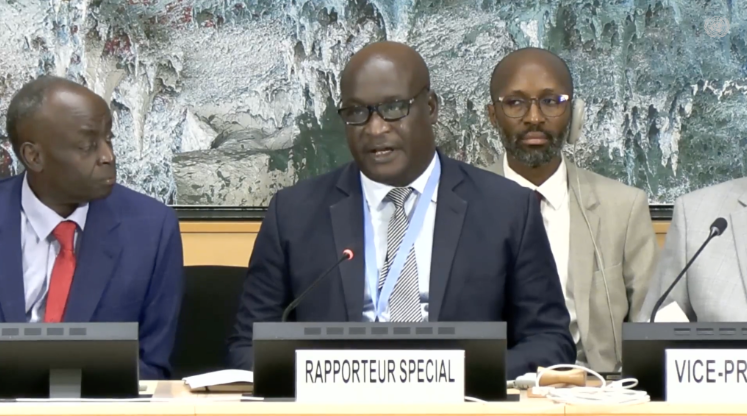
The 63rd session of the Human Rights Council
7 September - 7 October 2026
Item 4: Interactive Dialogue with the Special Rapporteur on the Situation of Human Rights in Burundi
18 September 2026
UN Special Rapporteur Warns that Exclusion, Intimidation and Impunity Threaten Burundi’s 2027 Presidential Election as the Government Denounces his Mandate
By Shirley Victorio / GICJ
On 18 September 2026, during the 18th meeting of the 63rd session of the Human Rights Council (HRC), an Interactive Dialogue (ID) was held with Mr Fortuné Gaetan Zongo, Special Rapporteur (SR) on the situation of human rights in Burundi, under Item 4 on human rights situations that require the Council’s attention. Presenting his report (A/HRC/63/59) under the call to “act before it’s too late”, the SR focused on the risk of an electoral crisis ahead of the presidential election scheduled for May 2027.
He identified four warning signs: severe restrictions on political pluralism; obstacles to genuine competition, including prohibitive candidacy fees and a two-year waiting period for party leavers to run as independents; a coercive environment of extrajudicial killings, enforced disappearances, torture and arbitrary detention, with the Imbonerakure, the ruling party’s youth league, playing a growing paramilitary-like role; and the recurrence of the same pattern of exclusion, intimidation, violence and impunity before the 2015, 2020 and 2025 elections.
He added that the closing of civic space and the economic crisis compound these risks, and that his report had been drafted without any cooperation from the Government of Burundi.
The Republic of Burundi, as the country concerned, rejected the mandate as a “targeted witch hunt” driven by Western powers and the European Union (EU), described the 2025 legislative elections as regular and peaceful, and blamed the Resistance for a State of Law in Burundi (RED-Tabara), an armed resistance group, allegedly supported by the Republic of Rwanda, for insecurity.
The Independent National Human Rights Commission of Burundi presented data on investigations into abuses by public officials and on illegal detention, and drew attention to the humanitarian pressures created by refugee flows. The EU, the Nordic-Baltic states and the Benelux countries expressed deep concern at enforced disappearances, extrajudicial executions, sexual and gender-based violence, and the shrinking of civic and political space, and called on Burundi to grant the SR access, to reopen the country office of the Office of the United Nations High Commissioner for Human Rights (OHCHR) and to combat impunity.

